
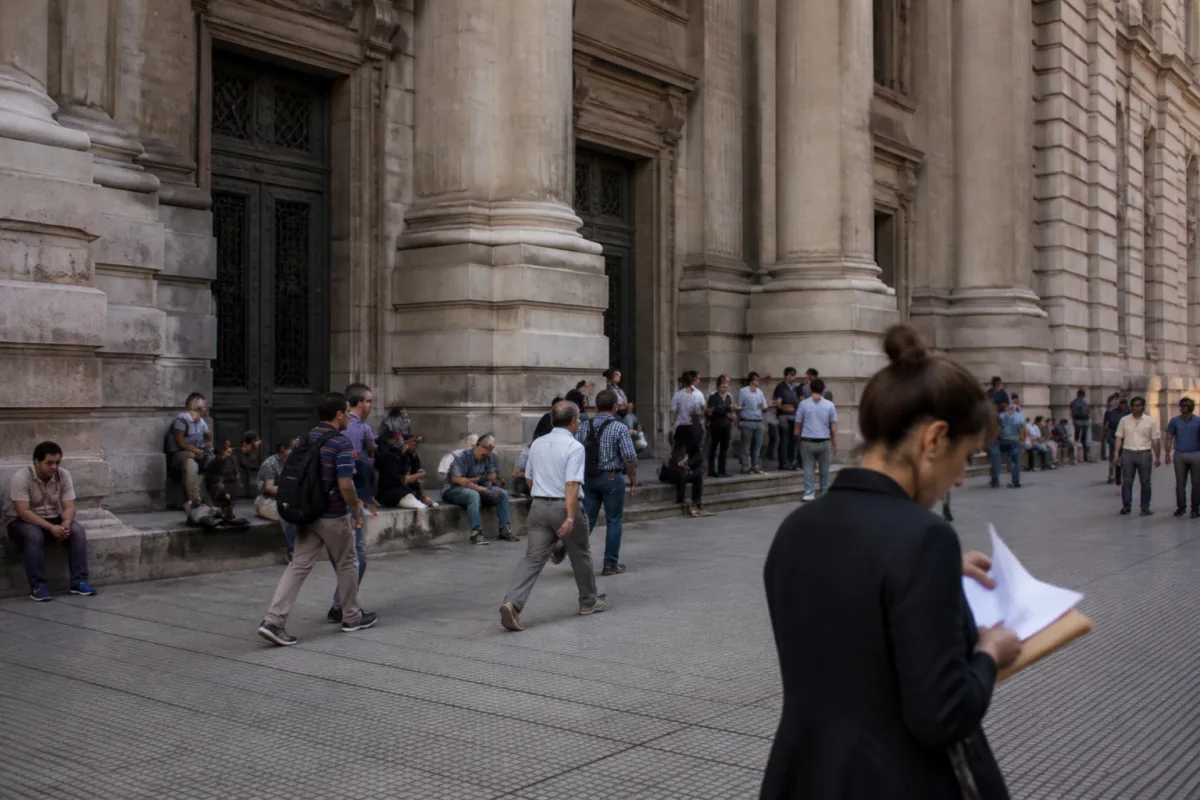

Argentina’s economy minister has for the first time officially named the price of its Citizenship by Investment program — starting at $350,000 — even as two federal courts have already ruled the program itself unlawful.
In short
- The one-time contribution for an Argentine passport is $350,000; the alternative is $800,000 in government bonds
- A family of four with two children under 18 can obtain citizenship for $500,000
- Authorities plan to open applications in Q4 2026, with processing taking about 6 months
- In June 2026, two federal courts ruled the program’s decree unlawful, but applications have not been halted
- The passport’s main value — visa-free Schengen access — is already in question: a similar scenario led to Vanuatu losing its visa-free status
When and by Whom the Price of Argentina’s CBI Passport Was Announced
Argentina’s Minister of Economy, Luis Caputo, announced the price of the Citizenship by Investment program in Paris, during Argentina Week, and confirmed that applications for a passport under this scheme will soon begin to be accepted and processed. This was the first official statement on the passport’s cost — no figures had been published before this point.
The launch itself had been in preparation for some time: the decree introducing citizenship by investment was signed by Argentina’s president 16 months before Caputo’s announcement. The same decree provides for the creation of a separate government agency to administer the program.
Before the official announcement, only rumors were circulating, with estimates of around $500,000 per passport. That would have made it one of the most expensive CBI programs on the market — so Caputo’s statement either had to confirm or refute that figure.
How Much an Argentine Investment Passport Costs
The main applicant has two payment options: a one-time contribution of $350,000, or an investment of $800,000 in interest-free Argentine government bonds.
| Applicant | Amount |
|---|---|
| Main applicant (one-time contribution) | $350,000 |
| Main applicant (government bonds) | $800,000 |
| Spouse | $100,000 |
| Child under 18 | $25,000 |
| Child 18–25 (unmarried) | $100,000 |
Children aged 18 to 25 can be included in the application on the same terms as a spouse — but only if they are unmarried, and the surcharge for them matches the spousal surcharge rather than the surcharge for a younger child.
For a typical family of four — two parents and two children under 18 — choosing the one-time contribution option brings the total to $500,000.
The main option is a one-time contribution of $350,000; the alternative is $800,000 in government bonds. A family of four with two children under 18 can qualify for $500,000 total.
Processing Time and When Applications Will Open
Processing an Argentine CBI application is expected to take around 6 months — a standard timeframe for programs of this type. Economy Minister Luis Caputo expects the first applications to be accepted starting in the fourth quarter of 2026. Both timelines remain government plans for now: at the time the price was announced, there was no official start date for accepting documents.
Timeline for Argentina’s CBI Program Launch
Both dates are still government plans — there is no official start date for accepting documents
- Processing one applicationabout 6 months
- Start of applicationsQ4 2026per Minister Caputo’s expectations
Why Two Courts Ruled the CBI Program Unlawful
In June 2026, two separate federal courts in Argentina independently ruled that the CBI program does not comply with the law. The first ruling concerns the launch procedure itself: the court found that the presidential decree had no legal basis. For a president to introduce a measure by decree, bypassing Congress, extraordinary circumstances must exist — such as an urgent need for economic measures. The court held that launching a citizenship-by-investment program does not qualify for that exception, and the government failed to justify why the decision was urgent.
the presidential decree had no legal basis
There is a political backdrop to this ruling as well: naturalization decisions used to be made by judges, but a decree from President Javier Milei transferred that authority to a new agency under the executive branch.
The second ruling, issued independently by a different federal court, addresses not the procedure but the substance — the constitutionality of the decree itself. Under Argentina’s constitution, every citizen has the right to vote, and the executive branch cannot unilaterally decide who holds that right and who does not. That is why the second ruling is considered far more serious: the first issue could in theory be fixed by Congress passing a separate law, but a constitutional dispute is beyond Congress’s power to resolve — only the Supreme Court can settle it.
One court struck down the decree for lacking legal grounds to be issued by executive order; the other questioned its constitutionality. The second ruling is more serious: only the Supreme Court, not Congress, can overturn it.
What the Government Is Doing and What Happens Next
The government filed an appeal with the country’s Supreme Court even before either ruling took effect. The program has not been halted or cancelled: applications continue to be accepted and processed as usual while the higher court’s decision is pending.
At the same time, President Javier Milei has changed the decision-making process for naturalization itself. Previously, citizenship decisions could fall under the authority of judges — precisely what both federal courts challenged. Now a new agency has been created that reports directly to the government and takes this authority away from the judiciary: naturalization decisions under the CBI program are made by the executive branch, not the courts.
The most likely scenario: the first passports under the program will be issued, and only after that will the case reach the Supreme Court for review.
the first passports under the program will be issued, and only after that will the case reach the Supreme Court for review

Despite two court rulings against the program, applications continue to be accepted and processed as usual — an appeal has been filed, but neither ruling has taken effect yet.
The Risk of Passport Revocation and Precedents from Other CBI Countries
Precedents for revoking CBI passports already exist: similar programs have been shut down, and passports issued under them have been revoked from citizens. The high price of the Argentine passport is explained by the fact that it grants visa-free access to the Schengen Area — the main thing investors are paying for.
But visa-free Schengen access is precisely the most vulnerable point of any CBI program: experience shows that launching such a program often prompts the EU to reconsider visa-free status with that country. This is what happened with Vanuatu: its passport used to allow visa-free entry to the Schengen Area, but after Vanuatu launched its own citizenship-by-investment program, the EU revoked that right.
launching such a program often prompts the EU to reconsider visa-free status with that country
A similar situation is now developing around Caribbean countries that issue passports through CBI schemes — Saint Lucia, Dominica, and Antigua and Barbuda: there are signs that visa-free Schengen access for their passports may also be revoked. If that happens, it raises the question of what these passports are actually worth — the very value investors are paying for in the first place.
The main reason for the high price is visa-free Schengen access. But that’s exactly what the EU already revoked from Vanuatu after it launched a CBI program — and could revoke from Caribbean countries next.
What Advantages an Argentine Passport Offers
Argentina is a member of the G20 — one of the arguments cited for its passport’s high price. The document grants visa-free entry to the Schengen Area and a number of other countries; visa-free access to the United States under the Visa Waiver Program is also being discussed as a future possibility, though there is no official confirmation of this yet.
Compared with other CBI programs — such as those of Vanuatu, Saint Lucia, or Sierra Leone — the Argentine passport looks notably more prestigious precisely because of this range of visa-free destinations.
The appeal of the country itself for relocation is explained by more than just the passport: Argentina is considered one of the safest countries in the world, located on the opposite side of the globe from potential conflict zones in Europe and the Middle East.
Frequently asked questions
Do you need to move to Argentina to get a passport under this program?
A physical residency requirement for obtaining a passport under the CBI program was not mentioned in the economy minister’s announcement — programs of this type are by nature designed for investors who are not required to relocate.
Can parents over 25 be included in the application as dependents?
The program’s published terms name only spouses and children up to age 25 without their own family as eligible dependents — parents or other relatives are not mentioned in the published fee structure.

Comments
Reader experience is useful, but it is not advice: check the rules on the official site.
No account needed: click Sign in, type any name, and you are done.