
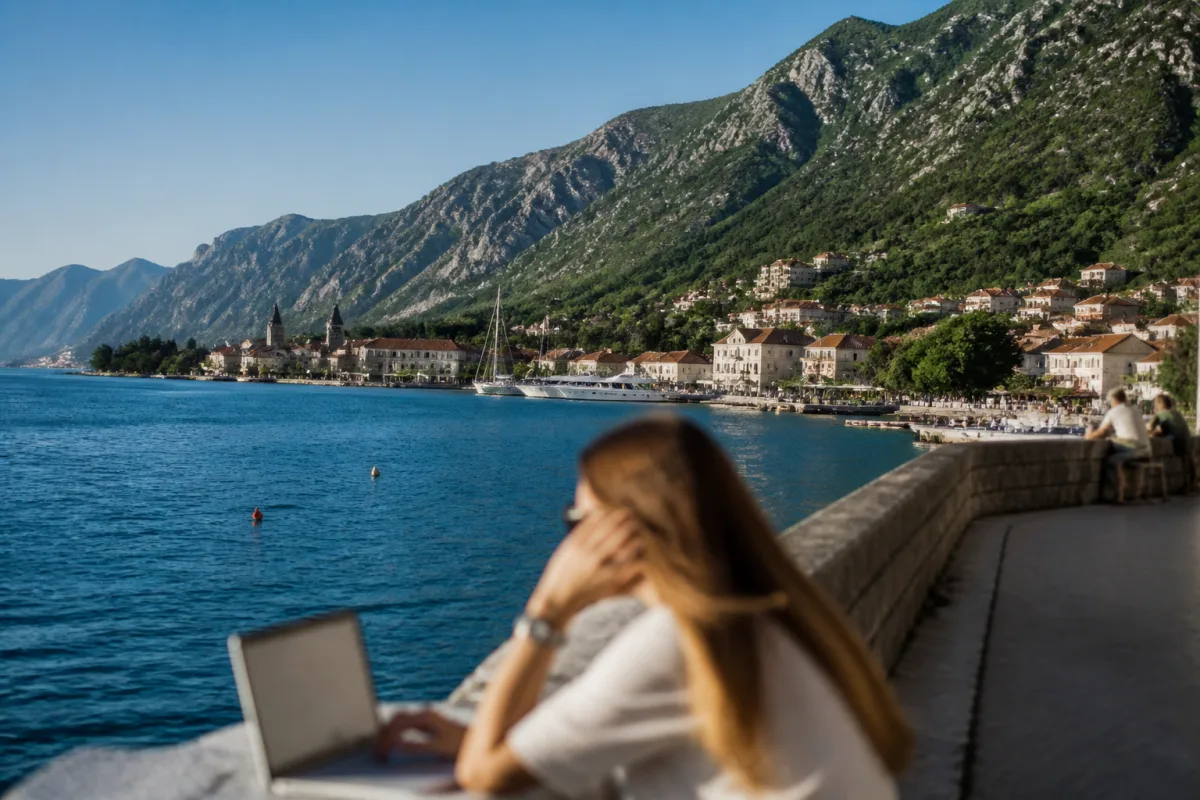

An electrician from Russia’s Bashkortostan region moved to Montenegro with no job lined up in advance, spent about a year preparing for the move, and found his first job just four days after landing — this article covers his experience adapting, finding clients, and running into local traffic fines.
In short
- Preparing for the move, including a scouting trip, took the family two years total — the preparation itself took about a year.
- The electrician landed his first job four days after arriving — through a Facebook post, with no prior connections.
- A traffic fine in Montenegro is 50 euros, paid at the post office, and documents are returned only after payment.
- A school-age child can be turned away from a grade based strictly on age — as happened with the 15-year-old son, who was placed in a vocational college with no entrance exams.
- The electrician travels to job sites all along the Montenegrin coast — income doesn’t depend on one city, which smooths out weeks without work.
Preparing to move: how long it takes and what to decide in advance
Preparation for the move took about a year — and counting the scouting trip he took with his wife before making the final decision, the whole process stretched to two years. The scouting trip let them evaluate the country firsthand, rather than relying only on other emigrants’ stories and videos.
Before deciding on immigration, it’s worth honestly answering one question: how well do you handle stress. People prone to panic and poor at coping with stress are not well suited to immigration — in a new country without knowing the language, even small everyday tasks like buying a bag at a store turn into a problem if you don’t know how to ask for one.
People prone to panic and poor at coping with stress are not well suited to immigration
For those who just want to see a new country rather than live there, it’s better to go as tourists: the purpose of a scouting trip and the purpose of a tourist trip are different, and one shouldn’t be mistaken for the other. Immigration isn’t a vacation, and it’s worth preparing for it in advance, not after the move has already happened.
Before immigrating, it’s worth honestly assessing your own tolerance for stress: without knowing the language, even small everyday tasks become a problem, and a scouting trip helps you get to know the country firsthand rather than through other people’s stories.
First impressions: people, kids, and growing closer as a family
Montenegro welcomes new residents as a small country with warm, responsive people: children are treated well here, especially little ones. At the beach with a small daughter, there’s a sense that the whole beach is watching out for the kids — if a child wanders into the water alone, someone nearby will step in to help. You can approach anyone on the street and ask for directions, and they’ll answer without irritation. That said, it’s worth not idealizing things: people vary, and not everyone is equally responsive — that’s a trait of the individual, not of the country as a whole.
The move also affected relationships within the family. Based on one mover’s experience, instead of the estrangement that sometimes happens between spouses during a relocation, the opposite occurred — husband and wife grew closer and felt more like a unit. The decision to move wasn’t spontaneous or one-sided: back in Russia, after a scouting trip a year before the move, the couple spent several evenings in a row, after putting the kids to bed, discussing their gut feeling about the idea of relocating. In the end, they reached a shared conclusion: not trying would mean regretting it for the rest of their lives.
Moving and bringing tools: what you can take with you
Crossing the border turned out to be easier than the electrician expected: no complications with the flight arose at all. After quitting his previous job — he had worked as a lead electronics engineer at a glass factory in Salavat, Bashkortostan — he took a month off at home, then spent time gathering documents and packing his suitcase.
More than half of the suitcase was taken up by tools alone. He managed to pack almost everything he needed, but had to leave some things behind: he had doubts about bringing batteries, so he decided against taking a cordless screwdriver — in practice, this is best resolved in advance by checking the rules for bringing in household appliances and tools when relocating permanently. He was also worried about carrying a multimeter — on a scanner it looks like an explosive device because of the wires — but no one asked him any questions about it.
The only check happened when departing from Ufa: he was asked whether he was carrying a rotary hammer or an angle grinder. His answer of “no” satisfied the border officers, and the inspection ended there. In Moscow, while the electrician made his way by metro from Sheremetyevo to Vnukovo, everything passed through the scanners without a single question.
At the border on arrival, nothing was asked either — not about a return ticket, not about the purpose of the trip. At Podgorica airport, they didn’t even ask him to run his suitcase through a scanner: the border officer simply stamped his passport and let him into the country.
It’s best to sort out the question of bringing tools and battery-powered equipment in advance, checking the import rules for permanent relocation — that way you won’t have to leave needed items behind at the last minute.
What to consider when packing tools for the move
Fines and dealing with the police in Montenegro
A traffic fine in Montenegro is issued on the spot right away — in this case, it came to 50 euros. The police officer took the driver’s license and vehicle registration, handed over a paper in exchange, and said: if stopped again, show this receipt and go pay the fine at the post office. Without a bank card, there was no way to pay on the spot, so he had to drive without his license or registration — with just the paper as proof.
At the post office, paying took about half an hour — mostly due to the line. After paying, he had to track down the officer on the road to get his documents back, since the officer had already left the original spot. When the documents were returned, the officer turned out to be in a good mood and gave the driver’s two kids each an ice cream — an unexpected gesture for someone who had just arrived from Russia and was braced for a very different kind of interaction with the police.
the officer turned out to be in a good mood and gave the driver’s two kids each an ice cream
The fine-payment process in Montenegro felt unfamiliar specifically because of the order of operations: documents are taken away immediately, not after payment. During a first fine six years earlier, in a similar situation, the officer had instead sent the driver straight to court, explaining that there was no need to show up with documents — everything would be settled on the spot, the fine would be set there, it would need to be paid, and the documents would be returned afterward.
If the fine isn’t paid, according to the officer, the car ends up flagged in a database — and further sanctions can follow from there. That’s exactly why the country operates on a principle of immediate payment: the officer expects it to be settled right away, not put off for later.
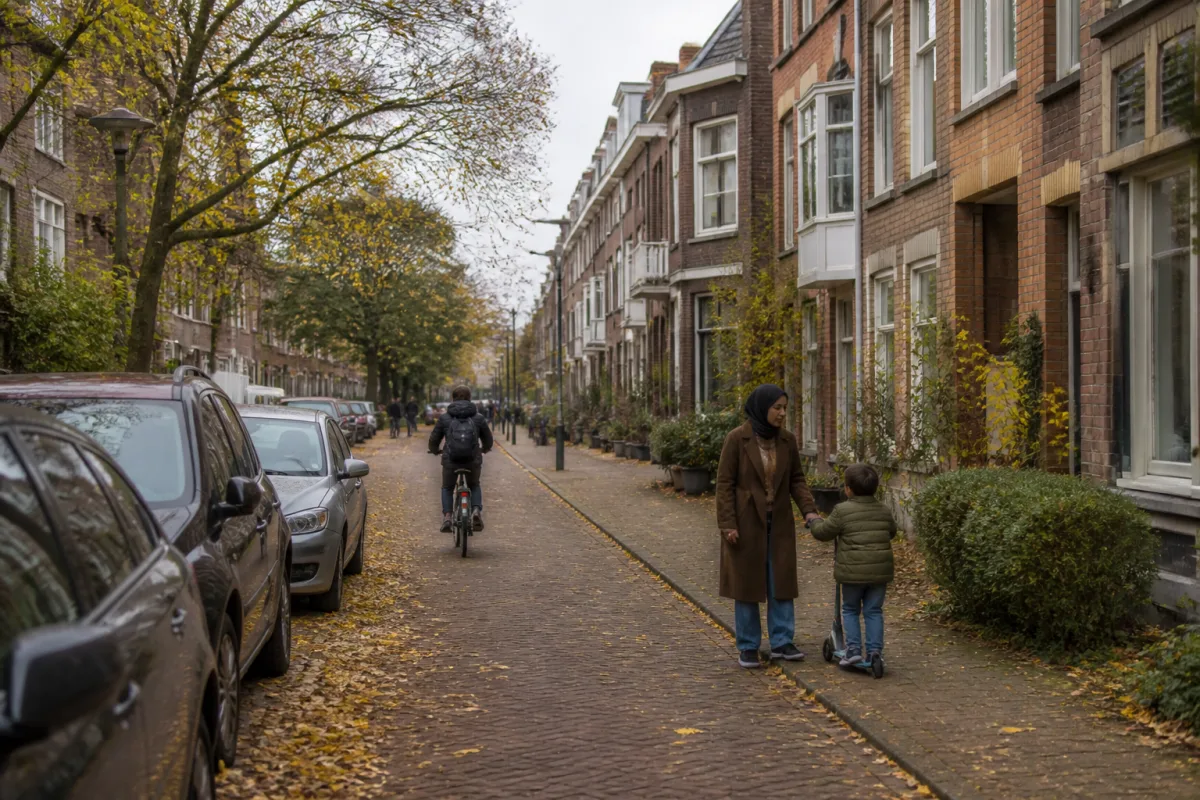
In Montenegro, when you’re stopped for a traffic violation, the officer takes your license and vehicle registration right away, not after the fine is paid — without a bank card, you’ll have to drive without your documents, with only a receipt in hand.
School and kindergarten for emigrant children
Emigrant children are accepted into Montenegrin schools — but strictly by age, and mismatches can happen. In one family, the daughter was 5 and the son was 15: the school considered the daughter too young for first grade, while the son was legally turned away as too old for that same grade. A local acquaintance came along to the meeting as support — she also translated the conversation with the administration.
A solution for the daughter came through a kindergarten: they said there were no spots, the kindergarten was full, and suggested waiting about a month until a spot opened up. For the son, the solution turned out differently — a vocational college, which offered a choice of two tracks: economics and tourism. The director admitted him into the economics track after 8 grades of Russian schooling, without exams like the Russian Unified State Exam, citing his good grades on his school transcript.
The second child in this same family, younger, started second grade at a regular school — and greeted the first day of September with enthusiasm rather than fear of a new place. His class includes children of various nationalities, including a Turkish and a Montenegrin classmate, and they treat him as just a regular classmate who simply hasn’t fully picked up the language yet. In the son’s group at the vocational college, there turned out to be two Mexican students, some Montenegrins, and one more Russian-speaking student — the language environment turned out mixed right from the start.
How an electrician found his first job with no connections
He didn’t look for work in advance — he moved, in his own words, “into the unknown,” with no arrangements or contacts in place. The only thing he managed to do before leaving was book a studio apartment and pay a deposit through Sberbank to a Ukrainian real estate agent he found on Telegram. He lived in that rented apartment for three months.
The first few days in Montenegro passed with nothing to do: the city felt empty, there was nothing to occupy his time, and by the third day the frustration of idleness had built up. But on the fourth day after arriving, the first job appeared — and it came through Facebook.
The approach was simple: create an account and add everyone in sight as a friend, without being selective. On his profile he listed his profession — electrician — and wrote that he’d take on any work involving electricity. One company noticed the post and invited him for a couple of small jobs — and that’s how steady work began.
The logic is simple: if you’re not visible online, no one will find you. A specialist can be as skilled as they like, but as long as no one knows about them, there will be no jobs. So right after arriving, it’s worth posting “ads” everywhere possible and setting up a page with examples of your work — after that, it starts working on its own.
if you’re not visible online, no one will find you
Promoting services with no budget: business cards, social media, word of mouth
His wife made business cards back in Russia and brought them along with a Montenegrin phone number — in the form of fridge magnets. At every job the electrician went to, he left one of these magnets with the homeowners or tenants: the item stays in plain sight and reminds them of him on its own, without follow-up calls.
Jobs often grow out of random side gigs and acquaintances rather than targeted searching. A telling example: a client called him to replace an outlet, and after the job asked him to also hang a picture — for 5 euros — and change a lightbulb. A happy client tells friends about the “handy guy,” and reputation builds like a snowball this way: one recommendation pulls the next one behind it.
What to do when jobs slow down
Week-long stretches of complete silence happen — no calls and no work, no matter what the electrician does. In moments like that, it’s natural to start wondering whether everything’s been done right, but experience shows: a week earlier everything was fine, so the problem isn’t the overall path. One call, one text message — and the rhythm of jobs comes back.
A dip in jobs most often signals that not enough attention has gone into promotion. So it’s precisely during a slow period that you should ramp up activity on social media instead of waiting it out — that way the next wave of work hits even stronger. Advertising is necessary for any tradesperson regardless of profession, and it doesn’t have to be paid: promoting through your own social media is effectively a free option that works just as well.
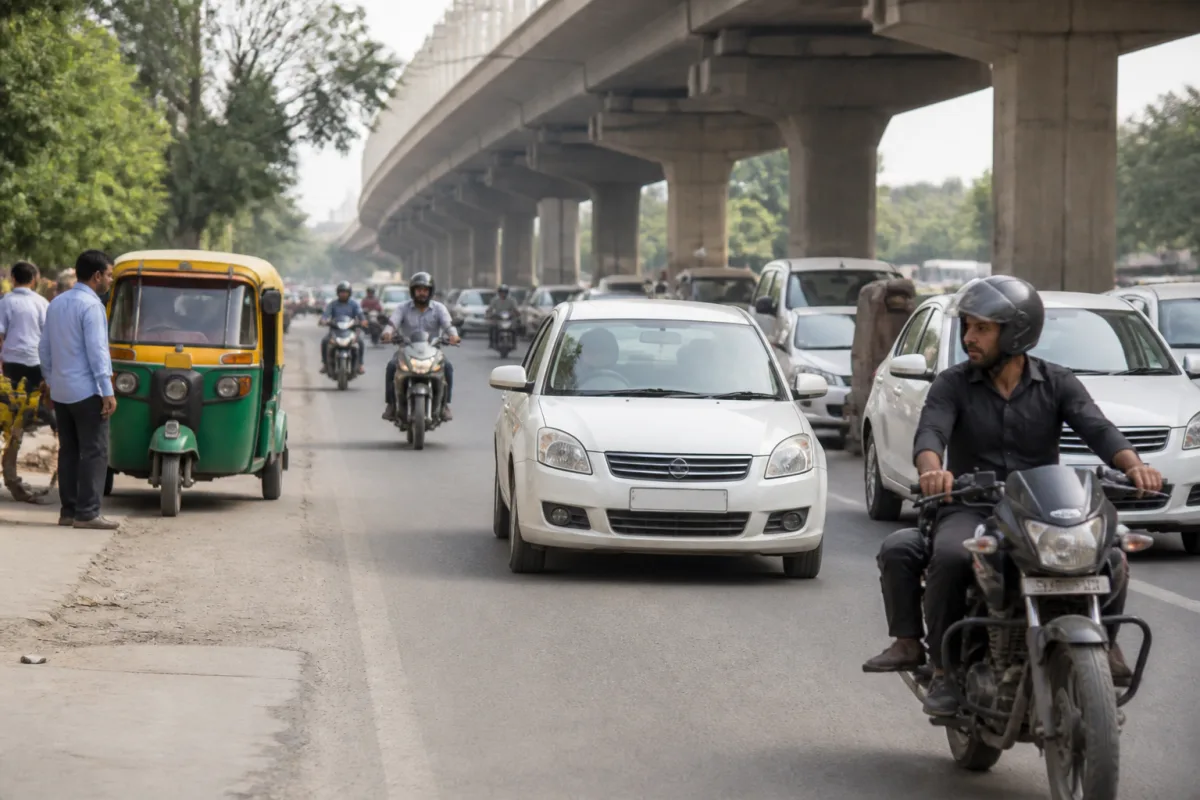
A week without any jobs usually means promotion hasn’t gotten enough attention. It’s precisely during a slow period that you should ramp up activity on social media, rather than wait for things to pick up on their own.
An electrician’s income in Montenegro: how the weeks add up
The electrician isn’t going hungry in Montenegro, though the workload is uneven: there’s enough work, but the amount is unpredictable. Some weeks are packed solid — job after job with no day off. The following week might start out empty, with not a single arrangement lined up in advance.
The factory habit of a fixed shift schedule doesn’t apply here — at his old job he had to show up every day, but here the schedule builds itself. Even a week that starts empty usually fills up: clients start calling and texting on Sunday, and by Monday new requests appear. Because of this, the schedule takes on a life of its own — someone reschedules a call from Wednesday to Thursday afternoon, someone else texts on what was supposed to be a day off.
The work isn’t tied to one location — the electrician travels to job sites all along the coast: he’s worked in Ulcinj, Herceg Novi, Cetinje. The one city where jobs haven’t come up yet is Podgorica. Constant travel means income doesn’t depend on a single hub of clients but on the whole region at once — and that’s what smooths out the slow weeks.
Bottom line: how hard is immigration for an electrician
Immigration is hard, and it’s not something to be relaxed about. Six months of looking for jobs came with nerves and anxiety — that’s part of the process too, not just seaside photos and a happy ending.
There are moments when you sit there worrying, not knowing what to do next or how to move forward. But panicking doesn’t help in that situation: it’s better to keep moving, deal with problems as they come, and not lose your head.

Comments
Reader experience is useful, but it is not advice: check the rules on the official site.
No account needed: click Sign in, type any name, and you are done.