
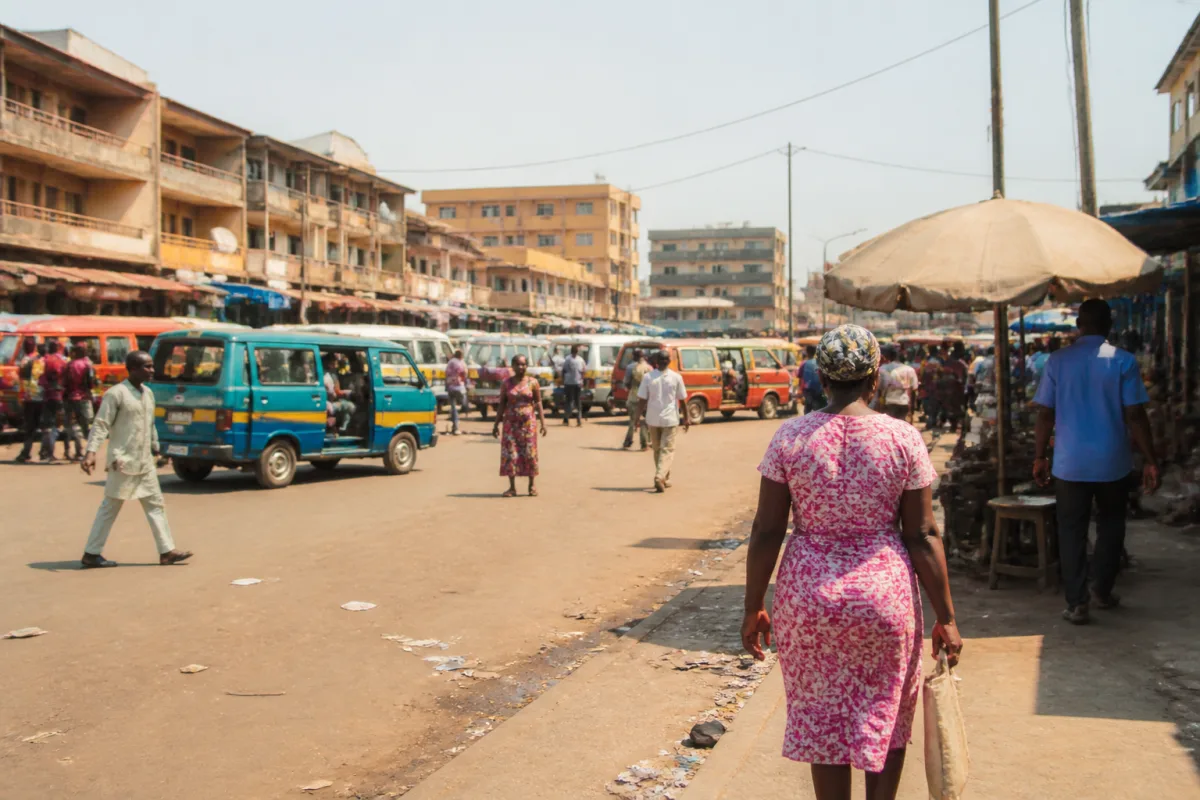

When the Home Office refuses a child’s visa to join a parent in the UK, the applicant still has one route left to challenge the decision — judicial review — as shown by two cases reported by The Guardian.
In short
- A single confirmed case of document forgery from a country creates a presumption of unreliability for every subsequent applicant from there — including India, Pakistan, Bangladesh and Ghana.
- A DNA test doesn’t guarantee approval: the Home Office can refuse an application a second time by switching to a different ground, such as unproven first year of a child’s life.
- Once applications are exhausted, the only route left to challenge a refusal is judicial review — and a case can take 12 months or more to be decided.
- A parent on the 10-year Human Rights route usually cannot reunite with children without ILR, except in cases of exceptional circumstances.
- Discrepancies between a first and second application become a ground for refusal in their own right — getting legal advice before filing reduces this risk.
Case 1: Children left without a parent after their mother’s death
The children’s mother died in 2019, leaving her two children in Ghana without parental care. Their father, based in the UK, applied several times for family reunion so the children could join him. The Home Office refused each time, and the children — aged 11 and 12 by the time their case was being considered — remained in Ghana without a guardian.
the children — aged 11 and 12 by the time their case was being considered — remained in Ghana without a guardian
After repeated refusals, the father had no option left but to challenge the decisions through judicial review — an application to the courts asking them to review the Home Office’s refusal. In his judicial review claim, he argued that caseworkers had made a series of decisions that he and his legal team describe as irrational. One of his arguments in court was that his wife’s death was a genuine, documented fact that had not been properly taken into account in the repeated refusals.
Why the Home Office alleges forged documents
The Home Office refused the father’s application, claiming that the children’s birth certificates were forged and that he was concealing the fact that the children were not his. After the first decision was overturned, the department argued that the documents had been produced with the involvement of local authorities in Ghana — in other words, fabricated on the ground.
Suspicion of forgery arises more often with documents from countries that visa casework practice tends to treat as higher-risk — India, Pakistan, Bangladesh and Ghana among them. On applications for reunion with children from these countries, caseworkers are more inclined to assume the applicant is submitting false information or fraudulent paperwork.
This assumption doesn’t mean documents are actually forged in every individual case: plenty of applicants from these countries submit genuine certificates and accurate information. The problem is that a single confirmed forgery creates suspicion toward every subsequent application from the same country — and it’s genuine applicants who then have to clear that suspicion.
A single confirmed forgery of documents from a country creates suspicion toward every subsequent application from there — and it’s genuine applicants who then have to prove their documents are real.
Case 2: A Skilled Worker family and a second refusal for their children
A couple arrived in the UK in December 2023 on a Skilled Worker visa — the husband held the work visa, and his wife had dependant status. They didn’t bring their children straight away: they decided to get settled first and apply for reunion afterward, worried they couldn’t manage financially at the outset. The children stayed in Ghana with relatives and continued at a boarding school in the Ashanti region.
Soon after the move, the wife died. That changed everything: the children now had to be brought to the UK without their mother. In March 2025, applications were submitted for both children.
The Home Office refused the first application on the grounds that the applicant had failed to prove the children were his. On the second attempt, the family submitted DNA test results along with other documents as proof of parentage and of the wife’s death. Despite this, the second application was refused too — this time on the grounds of alleged forged documents: the birth certificates issued for each child reportedly failed to confirm details covering the child’s first year of life.
Despite this, the second application was refused too — this time on the grounds of alleged forged documents
DNA testing and proof of parentage on a second application
In both cases, the first application was refused specifically on grounds of parentage: the Home Office claimed the applicant could not prove the children were biologically his (c21, c32). A common response to this kind of refusal is to voluntarily submit a DNA test confirming biological parentage: the Home Office cannot require such a test, but an applicant may submit the results as additional evidence (c22).
In the second case, the applicant did exactly that: on reapplying, he submitted DNA test results together with evidence of his wife’s death and his relationship to the children (c33). But even a DNA test didn’t guarantee a positive outcome: the department shifted to a new ground for refusal, demanding proof of each child’s first year of life separately, on top of parentage itself.
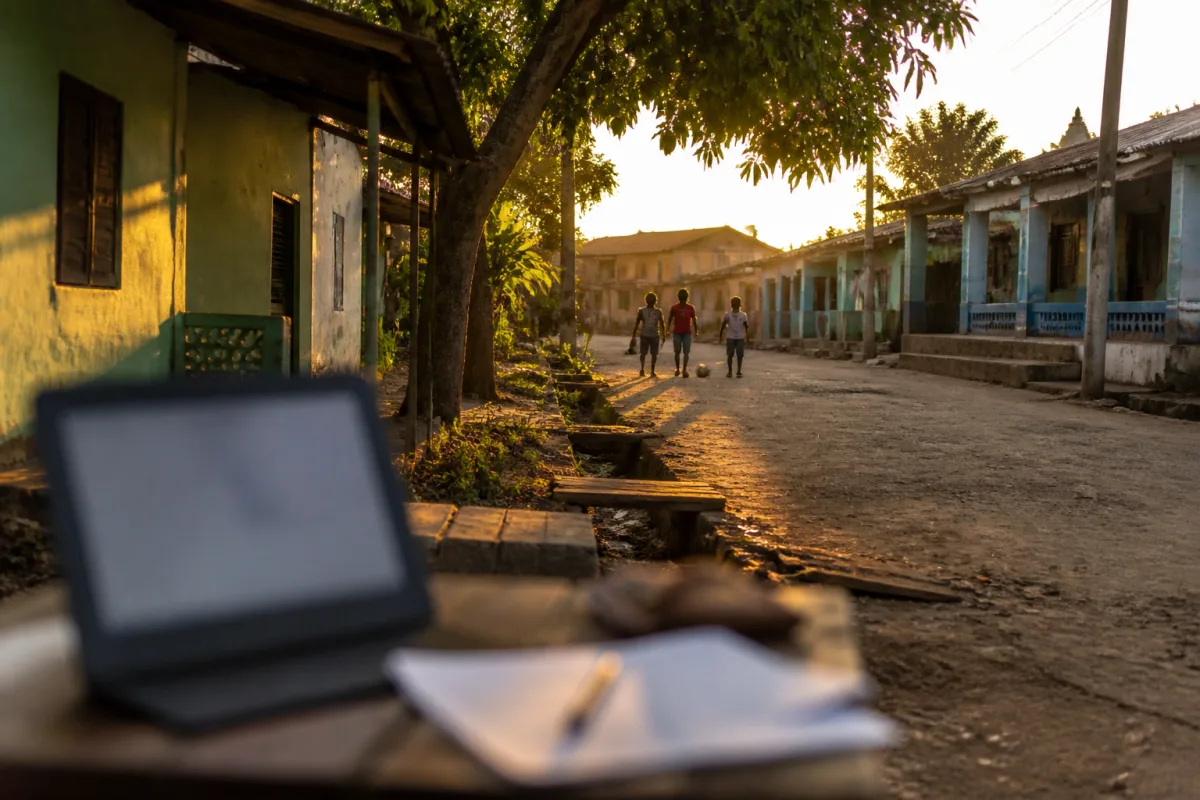
Even after a voluntary DNA test, the Home Office can switch the ground for refusal and demand proof of a child’s first year of life separately from parentage itself.
What comes after a refusal: judicial review and Home Office processing times
Once the Home Office issues a refusal and further applications fail to change the outcome, an applicant has one route left — challenging the refusal through judicial review. The father in the first case filed for judicial review, arguing that caseworkers had made a series of irrational decisions: it was this ground — not new documents — that became the subject of the court proceedings.
The case is currently at the judicial review stage, with the court requiring the Home Office to explain the delay in processing. This week the department sent the applicants a standard letter warning of further delays — of 12 months or more. The letter also claimed the applicants were allegedly ignoring the facts of the case entirely.
this week the department sent the applicants a standard letter warning of further delays — of 12 months or more
If the judicial review is decided in the applicant’s favour, the father will be able to reunite with his children, who remain in Ghana without parental care in the meantime.
The Human Rights route, ILR and fee waivers for reuniting with children
A parent on the 10-year Human Rights route usually cannot bring dependant children to join them (c41, c42). The reason is the lack of ILR (indefinite leave to remain) and settled status — these are typically required for reunion with dependent family members (c43).
The exception is where exceptional circumstances exist. If they do, an application for reunion can be made without ILR or settlement (c44). The source material doesn’t specify what the Home Office treats as exceptional circumstances — that’s assessed case by case.
A separate problem for applicants on the 10-year route is the cost of applying. If paying the fee isn’t possible, an applicant can apply for a fee waiver while outside the UK, submitted as an overseas application (c45, c46).

If an applicant on the 10-year route can’t afford the fee, a fee waiver application can be submitted from outside the UK as an overseas application.
Section 55 and Article 8: how a child’s best interests are assessed
Applications for reunion with children are assessed under Section 55 — the duty to consider the best interests of the child. Within that framework, the Home Office weighs up several elements of the case, the first of which is Article 8 of the European Convention on Human Rights, the right to respect for private and family life. For the applicant, this means showing exactly how family life with the child developed during the time they were apart.
Caseworkers also examine what kind of parent the applicant has actually been and how they’ve provided care in practice: who arranges the child’s schooling, who pays for medical care, who maintains contact across the distance. The central question is whether the applicant holds sole responsibility for the child. This has to be proven across every area at once — upbringing, the child’s future, school, healthcare, and genuine involvement in their life, not just formal parental status. It’s precisely the absence of convincing evidence of sole responsibility, combined with doubts over parentage, that often forms the basis of a refusal — and it’s the applicant who has to close that gap with documents, since the circumstances of divorced, widowed, or absent parents who left children with relatives differ from case to case.
What you need to prove for reunion with children under Section 55
Why you shouldn’t file applications like this on your own
In cases of this kind, the applicant and their lawyer need to work in close coordination — that’s the first condition on which the outcome depends (c53). The problem often starts earlier: many people file their first application on their own, without understanding exactly which documents are needed or how to prepare them (c54). A common mistake is to assume the application will be waved through automatically just because the applicant is already in the UK on a Skilled Worker visa and their own documents and dependant status are broadly in order (c55). The same reasoning goes: since the first visa was sorted out alone without complications, an application to reunite with children can’t be much harder — but that assumption doesn’t hold up in practice (c56).
The real danger lies elsewhere: on a second application, any discrepancies with the first one become a problem in their own right — the applicant then has to explain their own contradictory statements (c57). The end result of this chain of mistakes is refusal, a long wait, psychological strain on the applicant and the children, and ultimately a court process where queues have already built up and cases are heard with delays (c58).
On any legal question, and especially in cases of this kind, getting advice first is strongly recommended (c59). Before filing, it’s worth discussing the case with two or three lawyers, comparing their positions, and only then submitting the documents (c60).
On a second application, any mismatch with the first one becomes a problem on its own — the applicant then has to explain away their own contradictions.
Frequently asked questions
Can you apply for reunion with children if the parent hasn’t yet obtained British citizenship or settled status?
On the 10-year Human Rights route, a parent usually cannot bring dependant children over until they have ILR or settled status — these are typically required for this kind of application. The exception is where exceptional circumstances exist: then an application can be made without ILR or settlement, but what counts as exceptional is decided case by case.
What happens to the children while the court case over a Home Office refusal is ongoing?
While a case is at the judicial review stage, the children remain in their home country without the applicant parent — meanwhile the court requires the Home Office to explain the delay in processing. If the decision goes in the applicant’s favour, they’ll be able to reunite with their children, but until then the situation doesn’t change.
How long do DNA test results remain valid if you need to reapply for your children?
A DNA test on its own only confirms biological parentage and remains a valid fact regardless of how many applications are filed. But as these cases show, even confirmed parentage doesn’t guarantee a positive decision: the Home Office can switch to a different ground for refusal, such as requiring separate proof of a child’s first year of life.
Can you apply for children if birth documents are lost or hard to obtain because of conditions in the country?
There’s no direct answer to this scenario, but in practice, suspicion of document forgery arises more often with countries treated as higher-risk, including Ghana — and this creates an extra burden of proof for every applicant from there, even when their documents are genuine.
What counts as proof of sole responsibility if the parents are divorced or the child was living with relatives?
Sole responsibility has to be proven across every area at once: who arranges the child’s schooling, who pays for medical care, and who maintains contact across the distance — formal parental status on its own doesn’t count. The circumstances of divorced, widowed, or absent parents who left children with relatives differ from case to case, so it’s up to the applicant to document their own specific situation.
How much does it cost to consult several lawyers before filing an application?
No specific cost is given, but the recommendation is to discuss the case with two or three lawyers and compare their positions before filing. This matters especially in cases involving reunion with children, where discrepancies between a first and second application become a separate problem if the case is refused.

Comments
Reader experience is useful, but it is not advice: check the rules on the official site.
No account needed: click Sign in, type any name, and you are done.