
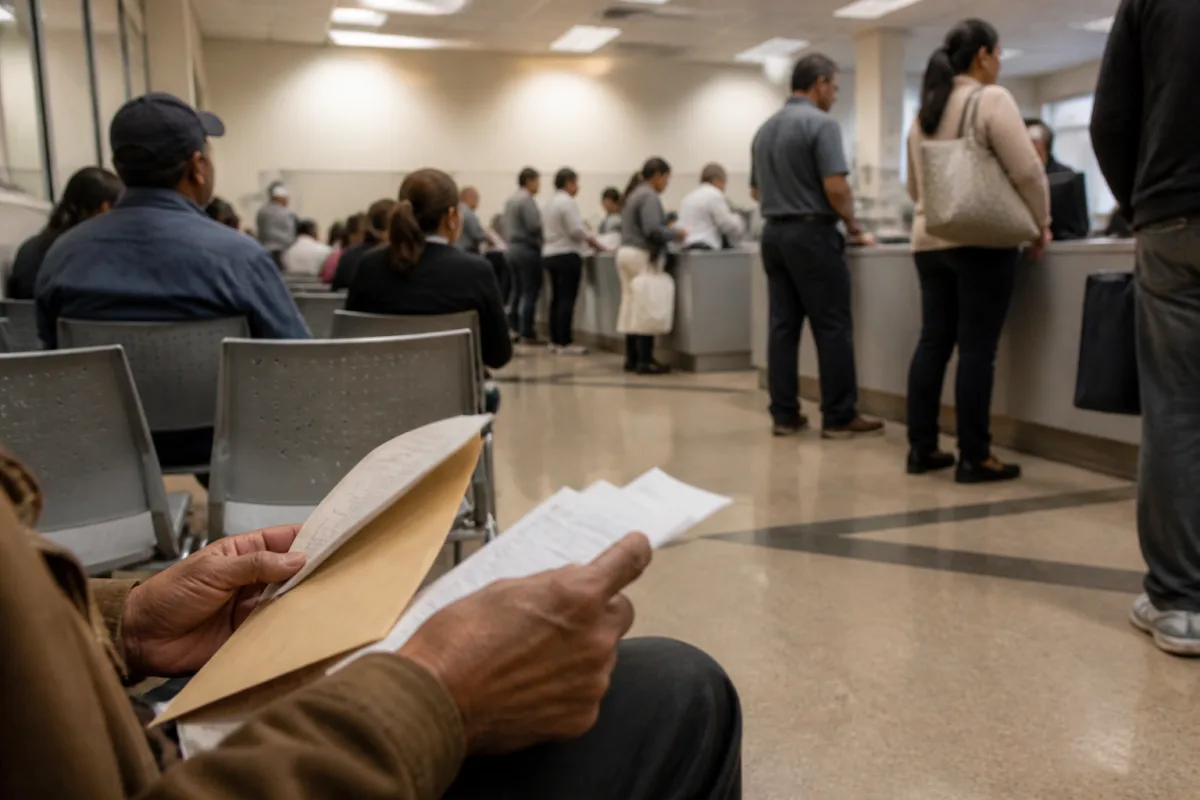

The U.S. State Department has changed the requirements for participating in the Diversity Visa lottery for 2027. Now applications can only be submitted with a valid passport, with scans uploaded alongside the completed form. This is aimed at combating fraud, which in the previous lottery reached the scale of 2.5 million fraudulent entries.
Mandatory Requirement: Valid Passport at Time of Entry
In 2027, the rules of the game have changed dramatically. Your passport must be valid not after the drawing, but at the very moment you fill out the DV form. Without a valid passport, you cannot submit an entry.
The State Department published the new requirements on March 11, 2026. They took effect on April 10, 2026, and apply starting with the DV-2027 lottery.
What You Need to Upload: New Fields in the Form
Mandatory fields have been added to the form:
- passport number and issuing country
- first name, last name, and middle name (if any) — exactly as written in the passport
- passport expiration date
- scan of the biographic data page with photo
- scan of the signature page (if it is on a separate page)
The last name, first name, and middle name must be entered exactly as they appear in the passport. If there is no middle name, it should not be added. If you only have one name, it should be entered in the last name field.
Now, during the interview, the consul will see both your application and the passport scan. This eliminates the possibility of submitting data that does not match the document.
Technical File Requirements
The passport scan must be uploaded in JPEG format. The system does not accept PDF files. The maximum file size is 5 MB.
The Department rejected requests to allow PDF files and increase the file size limit. The website also will not have a built-in file compression tool — you will have to compress files yourself.
The estimated time required to fill out the form has been officially recalculated from 30 minutes to an hour and a half.
Why the Requirements Were Tightened: Scale of Fraud
In the DV-2025 lottery, 2.5 million fraudulent and duplicate entries were identified and screened out. For comparison, in years when the passport requirement was in effect, around 760 thousand such entries were screened out.
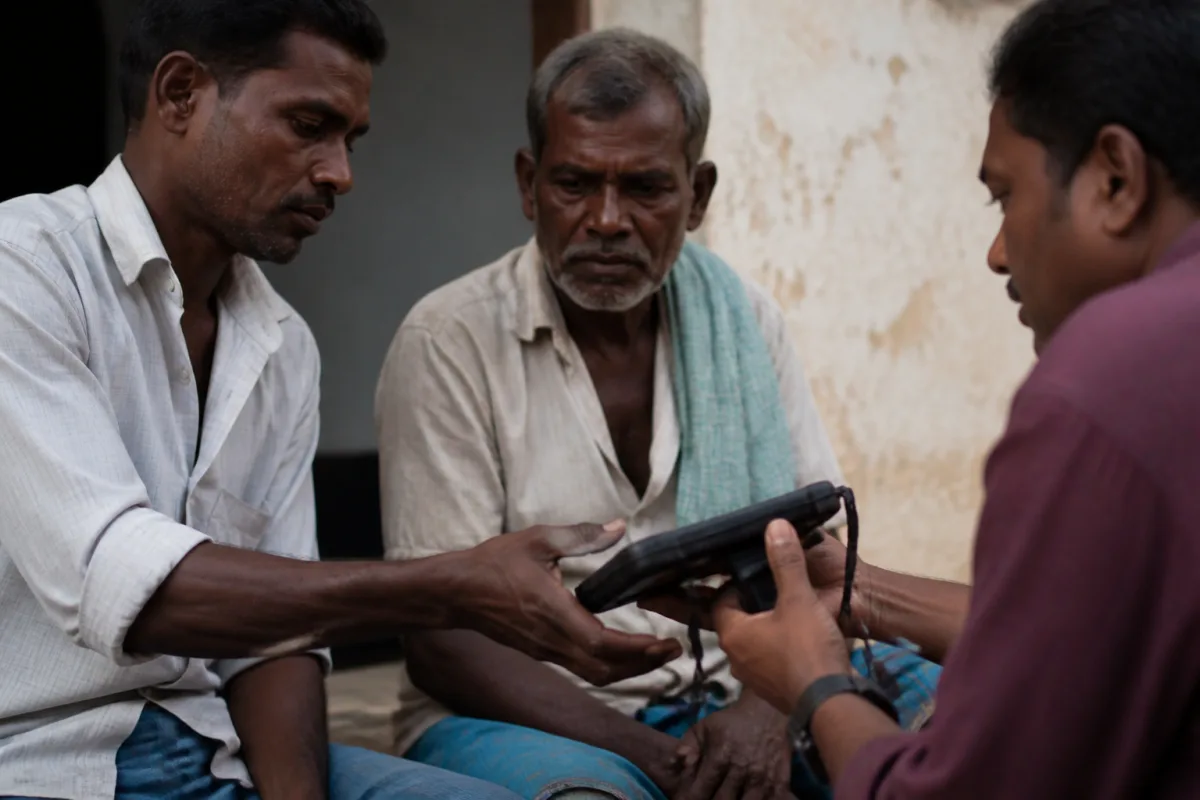
The State Department’s document cites specific examples. In 2012, the U.S. Embassy in Bangladesh discovered that more than 634 thousand entries had come from a single IP address. Upon investigation, local authorities found computers with thousands of applications, forged education documents, and staged photographs.
In Ukraine, fraudulent groups posing as travel agencies collected people’s personal data from open sources or purchased it, and submitted entries on people’s behalf without their knowledge. When someone ended up on the list of winners, the fraudsters demanded up to 15 thousand dollars for the confirmation number.
Similar schemes were found in Uzbekistan, where people were offered fictitious marriages with someone wishing to move to the U.S., and in Cambodia in 2023, where bribe amounts ranged from 5 to 30 thousand dollars.
The passport is required precisely so that an outsider cannot submit an entry on your behalf. Finding a name and date of birth is easy, but a passport scan is much harder to obtain.
Exceptions to the Rule
Not everyone is required to have a valid passport at the time of entry. Exceptions are provided for:
- stateless persons
- citizens of countries under communist rule who cannot obtain a passport from their own government
- those who have been granted an individual waiver approved by the Secretary of Homeland Security and the Secretary of State
The last type of exception is decided on a case-by-case basis at the interview stage.
The State Department rejected proposals to expand the list of exceptions to cover cases of armed conflict, political instability, severe financial hardship, or the possibility of submitting a national ID instead of a passport. The response was categorical: the average cost of a passport across participating countries is 74 dollars, and in some countries it exceeds 200 dollars. The State Department’s position is that the U.S. immigration process itself is costly, and if someone cannot afford a passport, they are unlikely to be able to complete the process anyway.
How to Preserve Proof: Recommendations for Applicants
The State Department’s document contains an important note: applicants are advised to keep a copy or scan of the passport they specified when entering. A person may be denied if they cannot prove that the passport listed was valid at the time of registration.
A year, sometimes a year and a half, passes between submitting an entry and the interview. During this time, a passport may become damaged or lost, or you may change your last name and get a new document. At the interview, you may have a different passport, with no way to prove the old one was valid on the day of entry.
It is recommended to make scans of the biographic data page and the signature page (if separate) and store them in several places. It is best to prepare a notarized copy of all passport pages along with printed confirmation pages and the entry number. Keep the documents until the entire process is complete.
When Registration Opens and When to Get a Passport
At this time, DV-2027 registration has not opened, and no dates have been announced. The period during which DV-2027 visas will be issued or a status change may be approved remains from October 1, 2026, to September 30, 2027.
This means you currently have more time to obtain a passport than you will later. Do not wait for the registration window opening date to be announced. Once registration opens, it will last about a month, and lines at passport offices in your country may be significantly longer. Starting with DV-2027, registration involves a 1 dollar fee.

Comments
Reader experience is useful, but it is not advice: check the rules on the official site.
No account needed: click Sign in, type any name, and you are done.