
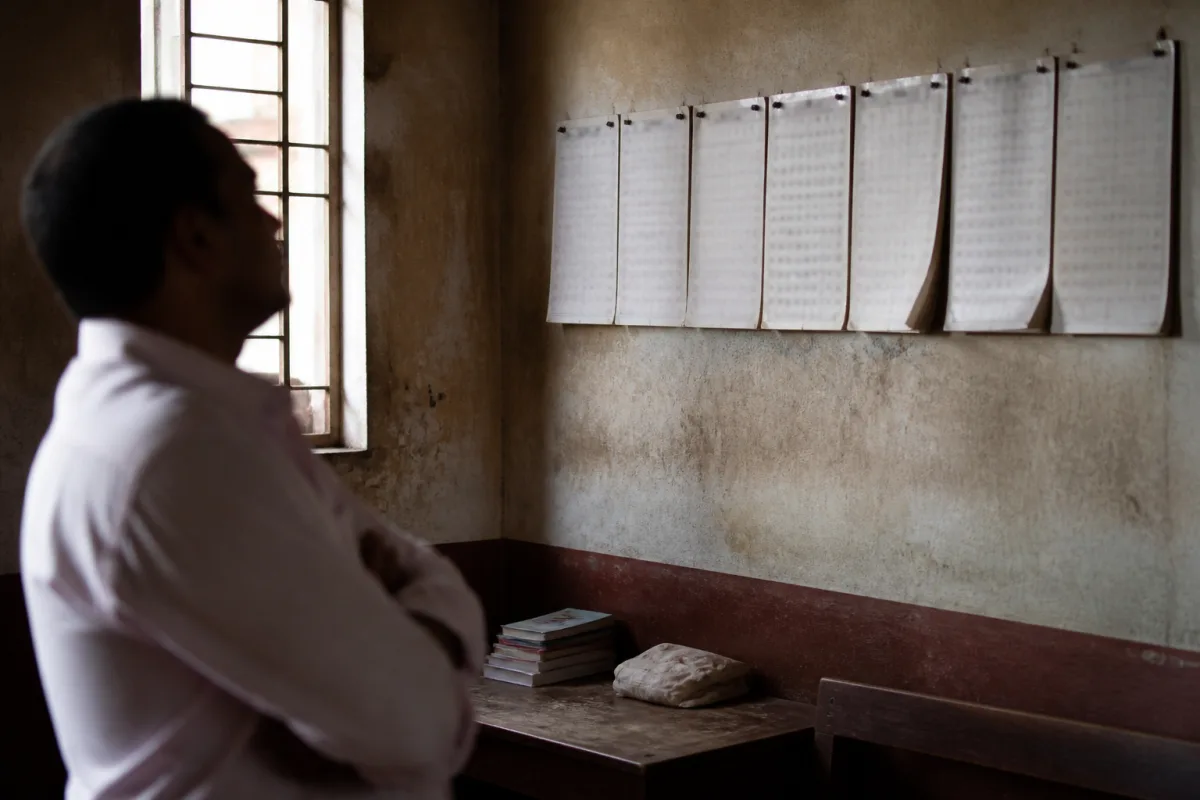
The EB-1A green card lets Indian citizens get a green card in 1-3 years by bypassing the EB2/EB3 backlog, where 2026 processing for India sits at 2015 priority dates and runs 20-25 years.
In short
- The EB2/EB3 backlog for Indian nationals runs 20-25 years, while EB1 in 2026 is processing petitions filed in December 2023.
- EB-1A is filed without an employer sponsor and skips PERM labor certification, which typically takes about 2 years.
- Approval requires meeting at least 3 of 10 USCIS criteria, followed by a separate final merits determination review.
- A priority date from a previously filed EB-2/EB-3 petition can be carried over to EB-1A through a new I-140 filed before the earlier one expires.
- Premium processing at $2,965 gets a decision on the petition in 15 days but doesn’t shorten the roughly 3-year backlog for applicants from India.
Why EB2 and EB3 don’t work for Indian nationals: a 20-25 year backlog
As of 2026, the Visa Bulletin is processing EB2 and EB3 petitions for Indian citizens filed back in 2015. Thousands of applicants with a 2015 priority date still haven’t received a green card — the queue has barely moved in over a decade.
The reason is structural: EB2 and EB3 numbers are allotted through annual per-country caps that are identical for every country of origin, while the number of Indian applicants exceeds that cap many times over. As a result, clearing either category takes roughly 20-25 years — meaning an applicant filing today, based on the current pace of the queue, could be waiting two to three decades. No exact year can be predicted, since the timeline depends on annual quotas and fluctuations in demand.
By comparison, the EB1 queue at the same point is processing petitions filed in December 2023 — a gap of decades that makes EB2/EB3 an unworkable option for most Indian applicants.
By comparison, the EB1 queue at the same point is processing petitions filed in December 2023 — a gap of decades that makes EB2/EB3 an unworkable option for most Indian applicants.
The gap between EB1 and EB2/EB3 backlogs for India
As of 2026, EB1 is processing December 2023 petitions, while EB2/EB3 is still working through 2015 filings.
- EB2/EB3 backlog (India)20-25 yearsprocessing 2015 filings
- EB1 backlog (India)about 2 yearsprocessing December 2023 filings
EB2/EB3 run on a per-country quota that’s identical for every nation, but Indian applicants outnumber the cap many times over — the backlog stretches to 20-25 years, so filing today means waiting two to three decades.
What EB-1A is and how it differs from EB2/EB3
EB1A stands for the first-preference employment-based category — the highest priority tier among all green card classifications. EB1 itself splits into three subcategories: EB1A, EB1B, and EB1C, and only EB1A can be filed without an employer sponsor. The applicant files the petition on their own behalf, regardless of whether they are still in India or already in the U.S. on an H-1B or F-1.
The key difference from EB2 and EB3 is that EB1A skips PERM labor certification entirely — a process that typically takes about 2 years on its own. That’s why EB1A is considered the fastest green card category available: based on December 2023 processing, the chance of obtaining status within 1-3 years remains high.
A green card obtained through EB1A comes with no added restrictions: holders can live, work, and study anywhere in the U.S. and remain in the country even after losing a job. The applicant can also include a spouse and children on the petition — each of them receives their own independent green card, not a derivative status.
Who qualifies for EB-1A: extraordinary ability
EB-1A is a category for individuals with extraordinary ability: the applicant must demonstrate a top-tier level of achievement in the sciences, business, arts, education, or athletics. This isn’t a catch-all category — not every strong professional in their field will qualify.
A Nobel Prize or an Oscar is not required for EB-1A: a single major one-time achievement of that caliber is just one of two possible paths. Without it — which is the case for most applicants — extraordinary ability can be established another way: by meeting enough of USCIS’s set list of criteria.
A Nobel Prize or an Oscar is not required for EB-1A: a single major one-time achievement of that caliber is just one of two possible paths.
The 10 EB-1A criteria: how to meet the required three
A single major achievement on the level of a Nobel Prize or Oscar settles the matter outright, but for most applicants the path runs through a different rule: USCIS approves a petition once at least three of ten established criteria are documented. More than three strengthens the case, but three remains the floor.
- High salary. Compensation ranks in the top 10% of the range for the occupation and location. A practical example: if data engineers in the region earn between $77,000 and $129,000, and the applicant earns $130,000 or more with comparable experience, that alone can support this criterion.
- A critical role at the company. The applicant holds a position whose departure would noticeably affect the company’s operations or revenue.
- Scholarly articles or patents in use. Publications or patents are already applied within multiple organizations.
- Participation in artistic exhibitions. Work has been displayed at exhibitions or specialized showcases.
- Publications from academic years. Articles written during undergraduate or graduate study, provided they remain relevant.
- Developments adopted by others. Patents or research are used by other scientists or companies on a meaningful scale.
- Open-source contributions. Code or projects are used at scale.
- Expert activity. Peer-reviewing work, judging hackathons or competitions, allocating grants.
- Media coverage. The applicant has been covered by newspapers or magazines.
- Membership in exclusive associations. Membership is limited to the top 1%, 5%, or 10% of specialists in the field.
- National or international awards. Only awards of the corresponding caliber count — local ones don’t.
Meeting three of these criteria is formally enough to file, but every criterion needs documentary proof — a claim without evidence doesn’t count.
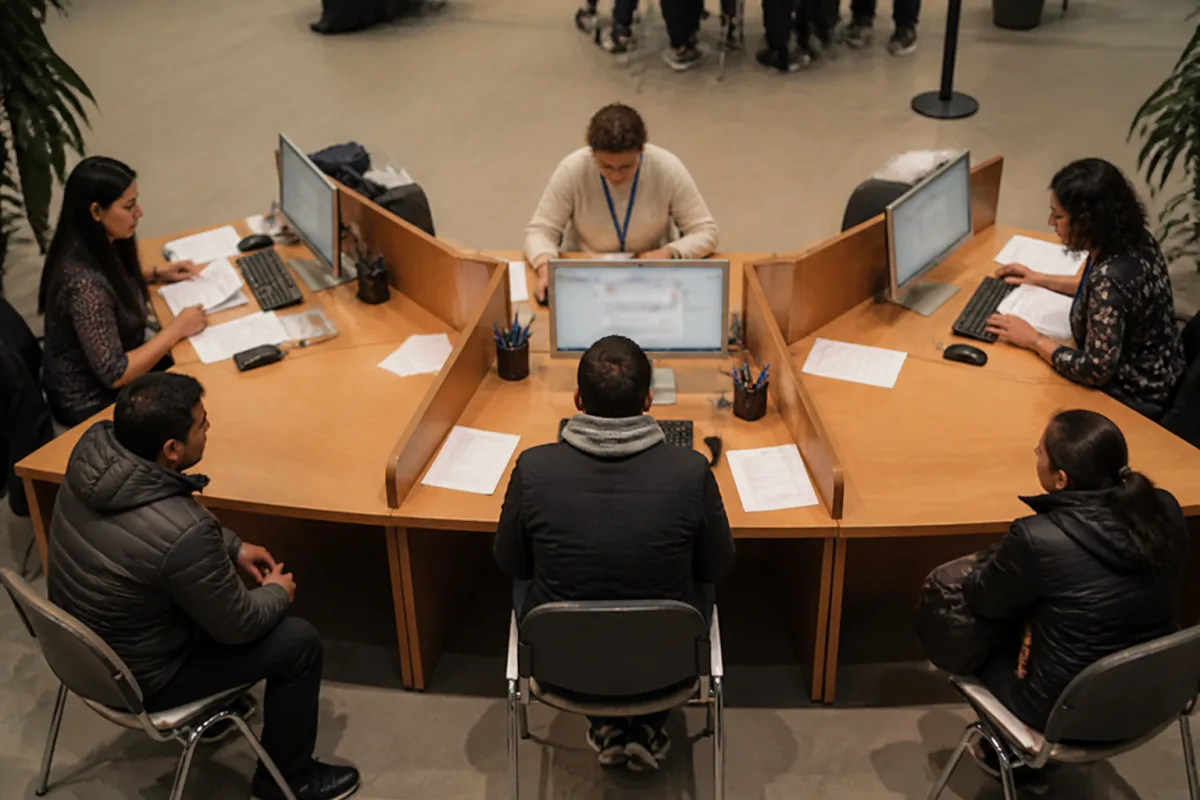
Transferring a priority date from EB2/EB3 to EB1
If an employer has already filed an EB-2 or EB-3 petition on the applicant’s behalf, that priority date can be carried over to EB-1 — a procedure known as portability. This requires filing a new I-140 petition under EB-1A before the previous one expires: the date doesn’t automatically disappear when the category changes, but it only transfers along with the applicant if this condition is met.
For those whose EB-2 or EB-3 petition was filed in 2023 or earlier, transferring the priority date sometimes makes it possible to obtain a green card in under a year — instead of waiting decades for the EB-2/EB-3 queue. The difference comes down to the fact that the EB-1 queue for Indian applicants moves noticeably faster.
If an employer already filed an EB-2/EB-3 petition, the date doesn’t expire on its own: file a new I-140 under EB-1A before the previous one lapses, and the priority date carries over with you.
How to file an EB-1A petition without an employer
- Gather evidence for each chosen criterion. The final petition file typically runs 300-400 pages — every piece of evidence needs documentary backing rather than a bare claim.
- Submit the package to USCIS. The petition can be filed from anywhere in the world: the applicant doesn’t need to be physically in the U.S. at the time of filing — the file is accepted from Singapore, the UAE, Dubai, or from within the U.S. itself. No employer is required to file EB-1A.
- Pass the formal criteria review. At this stage USCIS checks whether the minimum of three out of ten criteria has been met — clearing this particular bar is often not the hardest part for many applicants.
- Pass final merits determination. This is a second, less-known stage of evaluation: USCIS compares the applicant’s profile against profiles of already-approved EB-1A candidates. For example, if the average approved applicant has seven scholarly publications and 200 citations, while the candidate has one or two articles in field-specific journals, a criterion may be technically met but still fall short of the bar set by that comparison. This applies not just to publications but to every claimed criterion.
- Respond to an RFE if USCIS issues one. A Request for Evidence is sent when the service knocks out enough claimed criteria that fewer than three remain substantiated, or when final merits determination isn’t satisfied. The RFE gives the applicant a chance to address the disputed points and submit additional evidence.
- Wait for the decision. After reviewing the RFE response, USCIS either approves the petition — if the evidence provided satisfies the requirements — or denies it outright.

Formally meeting three criteria isn’t always enough: USCIS separately compares the applicant’s profile against already-approved candidates. Falling short of that bar risks denial even when the criteria are technically met.
Steps to file EB-1A without an employer
EB-1A petition cost and processing time
| Item | Value |
|---|---|
| Standard I-140 filing fee | $715 |
| Premium processing surcharge | $2,965 |
| Response time with premium processing | 15 days |
| Standard processing time | 4-8 months, up to 12 months for some applicants |
| Wait due to the backlog for Indian applicants | about 3 years |
Premium processing only speeds up USCIS’s formal decision on the I-140 petition itself — a yes or no on whether extraordinary ability has been proven. It has no effect on the separate backlog that exists specifically for applicants from India: even with a decision on the petition in 15 days, the applicant still waits roughly 3 years for their place in the queue for a green card. In other words, the $2,965 buys processing speed, not a spot in line.
In other words, the $2,965 buys processing speed, not a spot in line.
EB-1A petition cost and timeline
The premium processing surcharge only speeds up the decision on the petition, not the wait in the queue.
- I-140 filing fee$715
- Premium processing surcharge$2,965decision in 15 days
- Standard processing4-8 monthsup to 12 months for some applicants
- Backlog wait for Indian applicantsabout 3 yearsunaffected by premium processing
The $2,965 surcharge gets a decision on the petition in 15 days, but it doesn’t remove the roughly 3-year wait in the queue for applicants from India.
Green card validity and moving with family
An EB-1 green card is issued for 10 years with the option to renew for another 10 — effectively open-ended until the holder decides to move toward citizenship. Only a spouse and children can move to the U.S. together with the applicant — this right doesn’t extend to other relatives.
An age limit applies to children: they can only obtain a green card alongside a parent if they are under 21. Once the status is granted, their green card remains valid indefinitely regardless of their age afterward.
Frequently asked questions
What happens to the priority date if an EB-1A petition is denied after an RFE
If the petition is denied outright after RFE review, that denial concerns the I-140 petition under EB-1A specifically. If an EB-2 or EB-3 petition was filed earlier and its priority date hasn’t expired, the applicant formally retains standing under that category — but transferring the date to EB-1A only works through a new, successful I-140 filing.
Can an applicant file an EB-1A petition on their own while already in the U.S. on H-1B or F-1
Yes, EB-1A can be filed regardless of where the applicant is located — whether still in India or already in the U.S. on H-1B or F-1. No employer is required to file in either case, and the petition itself can be submitted from within the U.S. or from abroad.



Comments
Reader experience is useful, but it is not advice: check the rules on the official site.
No account needed: click Sign in, type any name, and you are done.