


The bare minimum for moving to the US is around $5,000, a comfortable level is about $10,000, and $15,000–$20,000 covers the first month of living without cutting corners on housing, setup, and a car.
In short
- The minimum budget for moving to the US is $5,000 cash on hand, comfortable is $10,000, optimal is $15,000–$20,000.
- Renting without a credit history or proof of income is realistically found through private, often Russian-speaking, landlords.
- A car loan with no credit history runs around 20–22% APR, versus 6–7% for a borrower with good credit.
- US rentals come completely empty — furniture, kitchenware, and household supplies alone add up to around $2,000–$2,500 right away.
- A reliable used Japanese car like a Toyota Camry costs $5,000–$5,500 and can still run another 200,000+ miles.
First expenses after landing: phone service, clothes, temporary housing
Right after landing you need to set up mobile service and get a SIM card — that means transport to the carrier’s store and some travel costs along the way. A detail worth knowing from practice: some Chinese smartphones (Xiaomi, Redmi, and similar models) have trouble activating local SIM cards — it’s worth checking compatibility ahead of time or being ready to buy a local phone.
some Chinese smartphones (Xiaomi, Redmi, and similar models) have trouble activating local SIM cards
The second expense is clothing and shoes. People usually arrive with little luggage, packing light, so once they land they end up buying sneakers, pants, a jacket — especially if the season is cold. Clothing and shoes typically run $500–$1,000, depending on family size: around $500 for one person, the upper end of the range for a family.
The third item is temporary housing while you look for a permanent place. A cheap, non-luxury hotel runs about $100 a night. Over a few days, a family of two or three should budget around $1,000 for this, while one person needs $500–$700.
If you have a Xiaomi, Redmi, or similar Chinese smartphone, check its compatibility with local SIM cards before you fly out — otherwise you’ll need to buy a local phone once you land.
Renting without a credit history: what landlords actually require
The idea that you can’t rent a place in America without a credit history and paperwork doesn’t hold up in practice: this option exists, and plenty of newcomers use it.
The idea that you can’t rent a place in America without a credit history and paperwork doesn’t hold up in practice
By law, a landlord can require a solid credit score, a hefty deposit, and documented proof of income — that’s the standard package for a formal lease. For someone who has just landed in the country without any of that history or paperwork, these requirements shut the door on the regular rental market.
In practice, private landlords fill this gap — mostly Russian-speaking ones who rent specifically to people who just arrived. They don’t ask for a credit score, proof of income, or an inflated deposit. This isn’t a way around the law; it’s a parallel market segment built for newcomers without paperwork.
A formal lease requires a credit score, a deposit, and proof of income, but private landlords — often Russian-speaking ones — rent to newcomers without any of that.
How much rent costs: a house, an apartment, a room
Rental prices vary widely depending on the type of housing and the neighborhood — here’s what that looks like using Sacramento as an example:
| Housing type | Monthly rent | Deposit |
|---|---|---|
| House | $2,200–$3,000 | usually one month’s rent |
| Apartment complex | around $1,000 | around $1,500 |
| One-bedroom apartment (750 sq ft) | $1,300 | sometimes not required |
| Room | $700–$800 | — |
| Master bedroom (with private bathroom) | $1,000–$1,200 | — |
A house at $2,200–$3,000 a month means housing in a less upscale neighborhood, nothing fancy, but perfectly livable for a first stretch of time before you have a credit history or documented income. The final price depends on the number of rooms and the specific neighborhood.
The deposit on a house is usually one month’s rent, but in practice the amount can end up higher: in one case, a tenant renting a house for $2,700 was asked for a $4,000 deposit, and after negotiating, the amount was lowered to $3,000.
A cheaper option is an apartment complex at around $1,000 a month, with nearby amenities (schools, parks, sometimes a pool), plus a deposit of around $1,500. Another real example: a one-bedroom apartment at 750 square feet in an unglamorous but clean neighborhood was rented for $1,300 a month with no deposit at all — the landlord didn’t ask for anything extra.
The most budget-friendly option is renting by the room. Sacramento has plenty of houses shared by several families or tenants with a common kitchen and bathroom: a room in one of these houses runs $700–$800 a month. A separate category is the master bedroom — a room with its own bathroom, and sometimes even a separate entrance — which runs $1,000–$1,200 a month.
The deposit a landlord quotes isn’t always final: in one case, a $4,000 deposit was talked down to $3,000.
Furnishing a rental: furniture, kitchenware, and first purchases
Rentals in the US come completely empty: apartments, houses, and rooms are bare walls, at best with wall-to-wall carpet on the floor. You’ll have to buy all the furniture and appliances from scratch — from a mattress and bed frame to pots, forks, and a slow cooker.
For the first stretch, an air mattress will do: an Intex King Size model costs around $120, and you can realistically sleep on it for up to six months — the only downside is the squeaky rubber sound whenever you move. The logical upgrade after that is a regular mattress from Amazon for around $500, plus a bed frame for another $200 or so (for a version with built-in lighting).
A separate line item is the kitchen: pots, pans, spoons, forks, knives, a slow cooker, a steamer, glasses, and other utensils add up to about $1,000.
The first grocery and household-supplies run is the most painful one. Beyond food, you immediately need to stock up on laundry detergent, bleach, conditioner, softener, shampoo, toothpaste — items meant to last 2–3 months but bought all at once. This adds up to around $1,000.
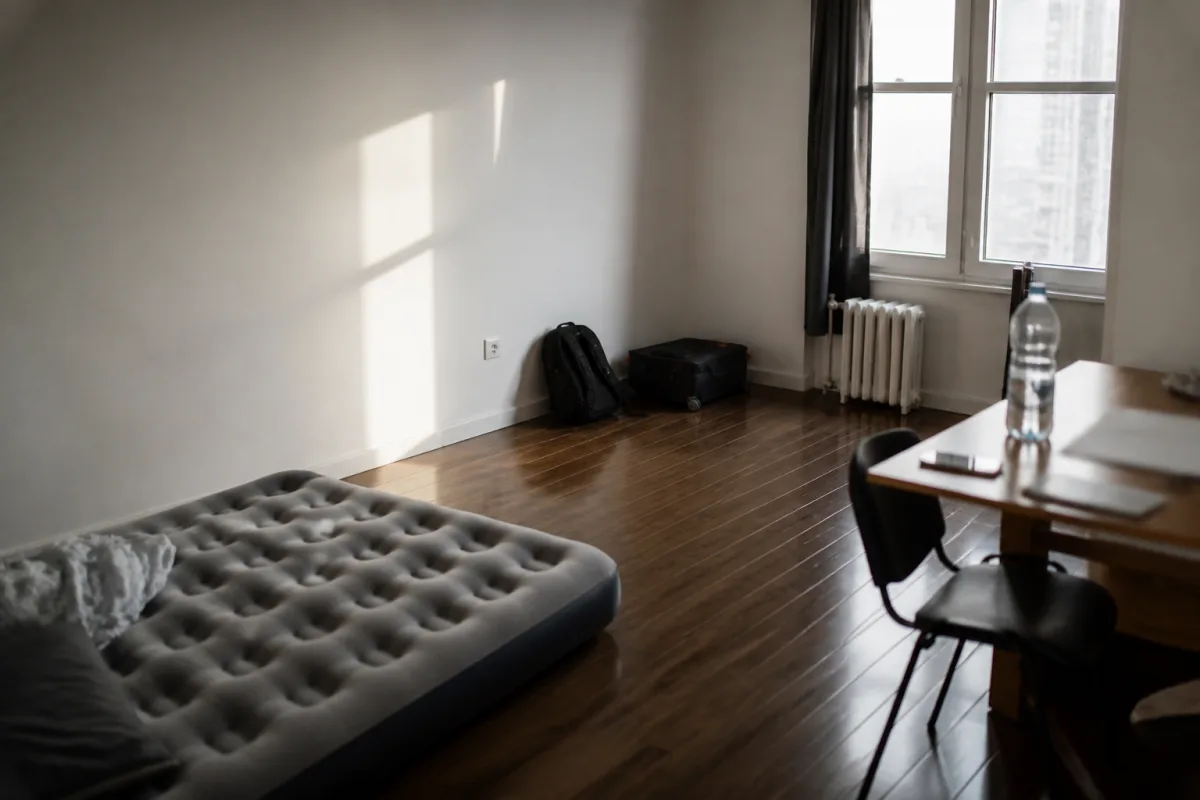
What to buy for an empty rental
Internet and phone service in a new place
- Installation — free; you only pay for the plan itself.
- 1-gigabit plan — $50 a month, enough for everyday needs.
- 2-gigabit plan — $100 a month, twice the price for twice the speed.
The price difference scales directly with speed: one gigabit costs half as much as two gigabits. For most needs, the entry-level $50 plan is enough.
For comparison: home internet in the US typically doesn’t come with a separate equipment installation fee — the provider connects the router for you, and the monthly bill depends only on the speed tier you choose. The entry-level plan covers streaming music, video calls, and regular browsing just fine; the higher speed tier only makes a noticeable difference when several devices are running at once or you’re downloading large files.
Buying a car: a used option and what it costs
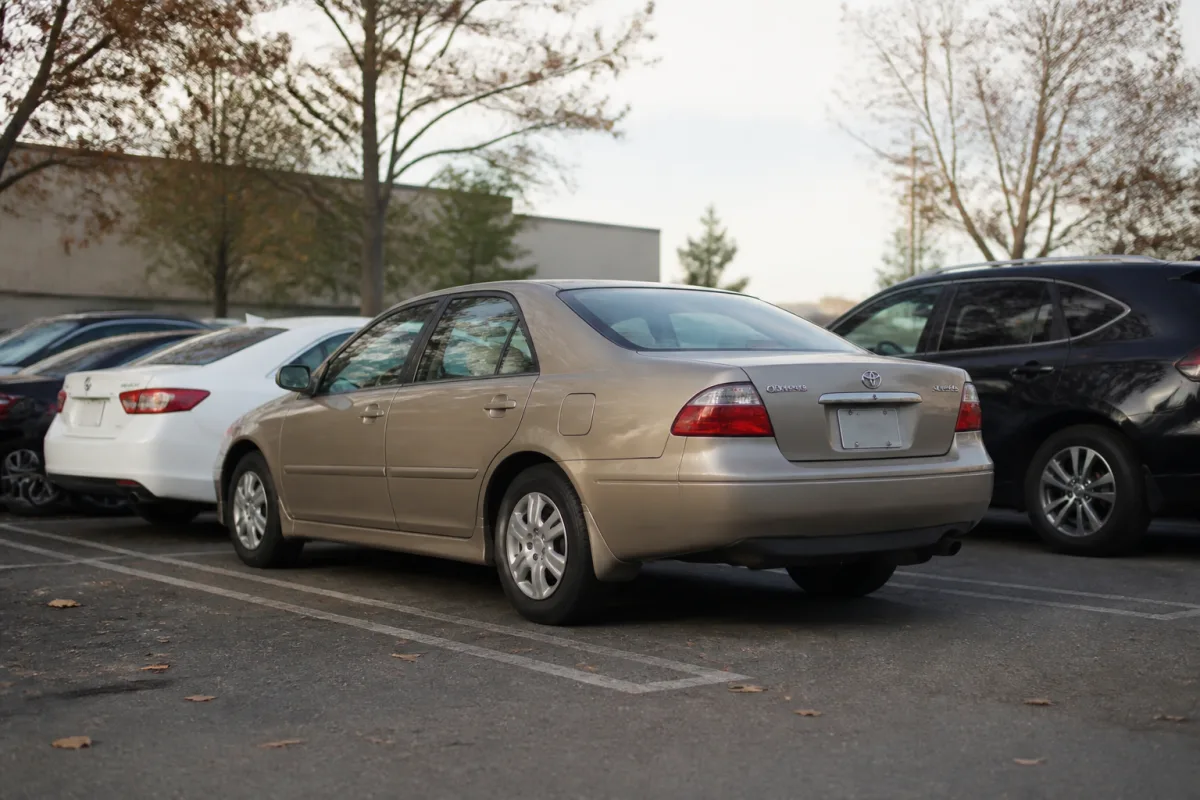
One option is a reliable, inexpensive used Japanese car: a Toyota Camry, for example, cost $5,500 with about 180,000 miles on it. Over 2.5–3 years of ownership, the mileage climbed to 260,000 miles (over 400,000 km), and the only repairs needed were a radiator fan, tires, and consumables like oil — the engine and transmission on this model practically never break down.
The hybrid Camry gets around 30 miles per gallon, which works out to 7–8 liters per 100 km. Parts and repairs for this model are cheap, and the single most expensive part that could fail is the hybrid battery. There’s a shop in Sacramento where an old battery gets swapped for a refurbished one with a one-year warranty for $1,000–$1,100 — cheaper and faster than repairing it yourself. Separately, a regular battery was recently replaced, and that job cost $100.
The car is a 2007 model, turning 20 next year, but it still handles everything asked of it and starts without any issues. Selling a car like this today would fetch around $2,500–$3,000 — and based on the owner’s experience, the next buyer gets a working car capable of covering roughly the same distance again without any major investment.
Car loan vs. lease: which one makes more sense
Without a credit history or paperwork, a car loan isn’t off the table: the rate comes out to around 20–22% APR, compared to 6–7% for a borrower with a good credit history. The difference is felt less in the percentage itself and more in the monthly payment.
Without a credit history or paperwork, a car loan isn’t off the table: the rate comes out to around 20–22% APR, compared to 6–7% for a borrower with a good credit history
Using a $20,000 car with a $3,000 down payment as an example, the difference looks like this:
| Credit history | Rate | Monthly payment |
|---|---|---|
| Good | ~7% | ~$300 |
| None | ~20% | ~$450 |
For comparison: a 2021 Tesla Model Y priced at $24,000 ($26,000 with taxes, minus a $4,000 state incentive — $22,000 net) with a $10,000 down payment and a 6% rate came out to $250 a month, and the $12,000 loan was paid off early after a year with a lump-sum payment — total interest paid was just $2,000. With a $3,000 down payment instead of $10,000, the same loan would have come out to $400–$500 a month.
Leasing is an alternative for people who already have some initial paperwork but haven’t built a credit history yet. The setup is different from renting: the leasing company calculates in advance how much the car will depreciate over the contract term, and that difference is what you’re financing. A new Tesla priced at $45,000, leased for 3 years with a 12,000-mile-per-year limit (36,000 miles total), is projected by the company to depreciate down to $30,000 — meaning only the $15,000 difference gets financed, which is why the monthly payment is low.
The main catch with leasing is the mileage cap. Going over it costs 25 cents per mile in penalties, but extra miles can be bought in advance for less — 10 cents each, so $1,000 buys an extra 10,000 miles as a cushion. In exchange, you get a new car under warranty, and on some models, free maintenance as well.
Which option makes more sense depends on your priorities. A used car bought outright is cheaper in the moment (comparison above), a loan on a new car with no credit history nearly doubles the payment because of the rate, and a lease gets you a fresh car under warranty for a reasonable payment at the cost of a mileage limit.
Car loan: the difference in monthly payment
On a $20,000 car with a $3,000 down payment, having no credit history nearly doubles the payment.
- Payment with good credit history (
7%)$300/month - Payment with no credit history (
20%)$450/month
If you don’t have a credit history yet but have some initial paperwork, leasing gets you a new car under warranty without a punishing interest rate — you only pay for the car’s projected depreciation over the contract term.
Insurance, renting a car, and other car-related costs
Renting instead of buying runs $300–$400 a month — not a great deal financially, but it takes the car question off the table for a while. During the peak wave of emigration, demand for rentals was so high that a used Toyota Prius went for $1,000 a month — simply because there were almost no cars available. One option around that time was a 2009 Ford Focus for $400 a month.
Buying an old Japanese car outright typically runs around $3,000 — which is roughly the same amount usually put down as a down payment if the car is financed instead.
A separate line item is car insurance, which is mandatory in the US. A cheap plan from a small insurer with minimal coverage cost $50 a month for one car — enough to formally avoid trouble if pulled over by police, but the coverage is bare minimum. Insurance from a higher-tier company cost $200 a month for two cars.
If the car is financed or leased, the bank or leasing company requires full coverage — insurance that covers damage to the car regardless of who’s at fault in an accident. There’s no obligation to switch to a cheaper policy once the loan is paid off: the price difference between full coverage and a basic policy without it can be as little as $40–$50 a month, and some owners deliberately keep paying for full coverage for peace of mind.
A personalized license plate can also be arranged separately — it costs $50 a year, provided the chosen combination of characters is available and doesn’t violate any rules.
Bottom-line budget: minimum, comfortable, and no-compromise levels
Pulling individual costs together — housing, furniture, a car, phone and internet — into one benchmark works best as a three-tier scale: minimum, comfortable, and no-compromise.
| Level | Cash on hand | What it covers |
|---|---|---|
| Minimum | $5,000 | A first stretch on a tight budget, at the expense of comfort |
| Comfortable | $10,000 | Renting a good place and buying a car right away, without waiting to earn locally first |
| Optimal | $15,000–$20,000 | A start with no rush and no compromises on housing or transportation |
The minimum option of $5,000 is a cash-on-hand figure meant for a bare-bones first move with no cushion for surprises: it’s made up of rent (from $2,000 to $7,000 depending on type and neighborhood), roughly $1,500 for furniture and household items — beds, mattresses, a couch, a TV — plus car-related costs. With this budget, you don’t have to cover every expense at once: some purchases can be pushed back and paid for as local income starts coming in.
$10,000 counts as the comfortable threshold: this amount is enough to rent a good place and buy a car right away, without cutting corners on early purchases or stretching out the setup process over time.
$15,000–$20,000 is marked as the optimal level — the move and setup happen with no restrictions and no compromises. Anything above that threshold already falls into lifestyle spending rather than basic setup: buying a premium car or a house in an upscale neighborhood goes far beyond a typical start and belongs in a separate, much higher spending category.
$5,000 covers a bare-bones start, $10,000 covers comfortable setup right away, and $15,000–$20,000 covers a move with no compromises.
Frequently asked questions
Can you rent a place in the US right after moving if you don’t have a green card or residency yet
Yes, some landlords rent out housing without checking immigration status — in practice the real obstacle isn’t status but the lack of a credit history and documented income. That’s exactly the gap filled by private, often Russian-speaking, landlords who don’t ask for a credit score or income statements. So first housing is usually found through this parallel market segment rather than through official agencies.
What happens if you go over the mileage limit on a lease and didn’t buy extra miles in advance
Going over the limit costs 25 cents per mile, which is more expensive than buying extra miles ahead of time at 10 cents each. If mileage wasn’t estimated in advance and no extra miles were purchased, the penalty gets charged at the end of the lease term based on the actual overage. So it makes sense to estimate annual mileage upfront and buy a cushion of miles before the contract ends, not after.
Is it worth keeping full coverage insurance after a car loan is paid off
Not necessarily, but many people deliberately keep it: the difference between full coverage and a basic policy can be as little as $40–$50 a month. Full coverage protects against repair costs regardless of who’s at fault in an accident, while a basic policy doesn’t. So the decision here is more about peace of mind than savings — with such a small price gap, dropping full coverage isn’t always worth it.
What should you do if you didn’t check your phone’s SIM card compatibility beforehand and it won’t activate
In practice, some Chinese smartphones, including Xiaomi and Redmi models, run into trouble activating local SIM cards. If this turns out to be an issue after you’ve already landed, the only practical fix is to buy a local phone rather than spend time trying to make an incompatible device work. That’s exactly why it’s better to check compatibility before departure rather than deal with it after the fact.
Can you rent an apartment with no deposit at all
Yes, it happens: in one case, a 750-square-foot one-bedroom apartment was rented for $1,300 a month with no deposit at all. This is more of an exception tied to a specific landlord and neighborhood than a market rule — renting a house or an apartment complex usually does involve a deposit. So it’s not something to count on in advance, but it’s worth asking the landlord directly when apartment-hunting.
How many people is the $5,000 minimum moving budget meant for
In the source material, $5,000 is given as a benchmark for a bare-bones first stretch, without a clear split between one person and a family. It’s made up of rent ($2,000 to $7,000), roughly $1,500 for basic furniture and household items, plus car-related costs. Some purchases can also be delayed and paid for once local income starts coming in, which eases the pressure on the starting budget.



Comments
Reader experience is useful, but it is not advice: check the rules on the official site.
No account needed: click Sign in, type any name, and you are done.