
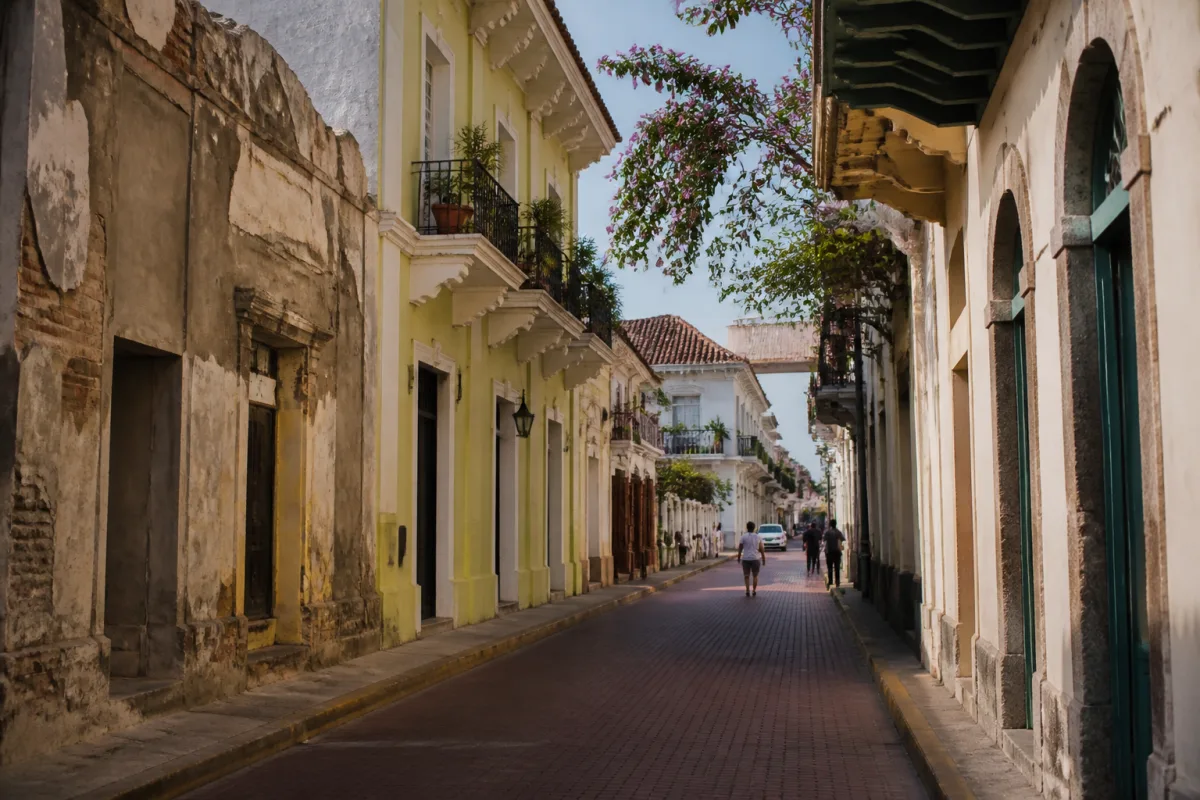

In Panama, a $300,000 real estate investment can grant either a three-year residence permit or permanent status — depending on the migration category selected. Choosing the wrong program is the costliest mistake, so the correct sequence starts with defining your goals, not searching for an apartment.
Two Investment Routes: Economic Solvency Residency and Qualified Investor Program
Panama offers two main investment paths to obtain resident status with a $300,000 investment.
The first is economic solvency residency. The funds can be invested in real estate, placed in a time deposit at a Panamanian bank, or split between both. Under the basic scheme, the property is registered in the applicant’s name and must be free from encumbrances. The money must come from abroad, and its source must be verified. If the property costs more, the difference can be covered by a local bank mortgage. If dependents are included in the application, the required amount increases by $2,000 for each. Under this route, a two-year permit is issued first, and only after maintaining the conditions can one apply for permanent residency.
The second path is the qualified investor program. The funds are invested under a preliminary agreement in a development project. The money either passes through a licensed trust structure, or the property is fully paid to the developer with a bank guarantee. This investment must be maintained for a minimum of 5 years. Under this route, permanent residency is issued immediately — without an initial three-year period.
Thus, for the same amount, the difference lies not in the money but in the migration category under which the documents are filed.
Developer Marketing Program and Actual Migration Category Are Not the Same
When a developer claims that an apartment qualifies for permanent residency, this guarantees nothing. The developer’s program is a marketing term that does not exist in Panamanian migration legislation. The developer sells the property or concludes a preliminary agreement, while the migration service issues the status after reviewing the entire transaction.
This review includes verification of the investment amount, payment method, property rights, and source of funds. If the property is still under construction, it is especially important to verify the contract form, payment scheme, and whether the transaction fits a specific migration category in advance.
For a qualified investor, the law separately regulates preliminary agreements — either through a trust structure or with full payment and a bank guarantee. A manager’s promise that the apartment qualifies for permanent residency means nothing without verification of the legal form of the entire transaction.
What You Need This Property For: Three Investment Models
Before making a purchase, you should honestly answer why you need the real estate.
The first model is to buy an apartment for personal living. This is direct personal ownership, housing for current residence or a base for a future move. Here, migration requirements matter, but so do the neighborhood, infrastructure, and maintenance costs.
The second model is to buy an apartment and place it under property management. The owner remains the owner, while the management company handles rental and maintenance.
The third model is to invest not in a specific apartment but in a financial instrument or project. Here, special caution is needed: if the investment model does not involve purchasing a specific real estate property at all, this is already a different route. Such a model can work, but only if the legal form of investment meets program requirements. Dividends or promised income alone do not serve as a basis for residency.
Source of Funds: Documentary Chain From Source to Investment
All three investment models require one common condition: verification of the source of funds. Simply showing the required amount on your account is not enough. The money must come from abroad with a documented chain: capital source, bank account, transfer, then the investment itself.
Depending on the situation, you may need bank statements, contracts, tax documents, financial reports, and other evidence. These may be reviewed by the bank, transaction participants, trust companies, and migration authorities.
Therefore, it is better to collect this chain before transferring the money, not after. This will help avoid delays and additional requests from authorities when reviewing your case.
From Residency to Citizenship: 5 Years of Residence and Separate Naturalization Procedure
Permanent residency and citizenship are different things. The Panamanian Constitution establishes that naturalization can be applied for after five consecutive years of residence. If the applicant has a spouse with Panamanian citizenship, or if they qualify on family grounds through a child and a Panamanian parent, the period can be reduced to 3 years.
But 5 years is not the date the passport is issued. It is the moment when the right to submit an application arises. Then a separate procedure begins: a valid permanent resident card is required, a Panama address, and a separate package of documents. You will also need to prove Spanish language proficiency and basic knowledge of Panama’s geography, history, and political system.
Correct Sequence: Goal, Category, Program, Property
The costliest mistake in Panama is to choose a property you like, then find out what program it belongs to and what status comes with it. The correct sequence is the opposite.
First, define your goal and immigration category. Then check the program, suitable properties, source of funds, and deal conditions. Only then select a specific apartment. This order helps avoid expensive alterations or migration service rejections at a late stage.


Comments
Reader experience is useful, but it is not advice: check the rules on the official site.
No account needed: click Sign in, type any name, and you are done.