


A Portuguese passport is a European Union passport. It grants the right to live and work freely in any EU country, travel to 185 destinations without a prior visa, and eliminates the need to maintain grounds for residence. Citizenship in most cases requires 10 years of legal residency, but how to achieve it depends on the chosen route.
The Difference Between Citizenship and Residence: Rights in the EU and Beyond
A Portuguese residence permit or permanent residence grant you the right to live permanently in the country and travel within the Schengen zone within set timeframes. A Portuguese passport is European Union citizenship, which opens fundamentally different opportunities.
With a passport, you can move to any EU country—Spain, France, Germany, Italy, or another—and live there with equal rights as local citizens. This means no separate work residence permit, student visa, or business visa is required. An EU citizen can work as an employee, study, or conduct professional activities on the same grounds available to citizens of that country.
Travel geography expands significantly. With a Portuguese passport, visa-free entry is available to 185 destinations, including all of Europe, Japan, South Korea, Singapore, Persian Gulf countries, and several Latin American states. For the USA, Canada, Australia, and the United Kingdom, electronic authorization is required (ESTA, ETA, eVisitor, or ETA respectively), but this is considerably simpler than a full visa procedure.
Multiple Citizenship and Independence from Residence Grounds
Portugal permits multiple citizenship. When naturalizing, you are not required to renounce your existing passport, but you must consider the legislation of your country of original citizenship on this matter.
After obtaining a Portuguese passport, you end your dependence on the grounds by which your residence permit was obtained. You no longer need to maintain a contract for digital nomads (D8), confirm passive income under D7, develop a business, or maintain an investment for a Golden Visa. A citizen is no longer bound by the conditions of residential status.
Naturalization Timelines Depending on Category
Following changes in 2026, the standard naturalization period for most foreign applicants, including Russian citizens, is 10 years of legal residency. For citizens of other EU countries and nations where Portuguese is an official language, the period is reduced to 7 years.
However, it is important to understand: 10 years of legal residency and 10 years of actual life in Portugal are not the same thing. This depends on the route by which the status was obtained. For most standard residence programs—D7 for individuals with their own income, D8 for digital nomads, D2 for entrepreneurs, D3 for highly qualified specialists, work residence permits, Blue Card, startup, studies, research activities, or family reunification—you must reside in Portugal and relocate your center of life there.
Golden Visa as an Exception: Minimal Presence While Holding Resident Status
Golden Visa is structured differently. An investor is not required to spend most of the year in Portugal. To maintain status, minimal actual presence is sufficient: 7 days in the first year and 14 days in each subsequent two-year period.
During all this time, legal resident status is maintained, which is counted when calculating the periods for naturalization. Thus, a Golden Visa allows you to formally accumulate the required 10 years of legal residency without permanently relocating to Portugal.
Naturalization Requirements: Language, Culture, and Good Standing
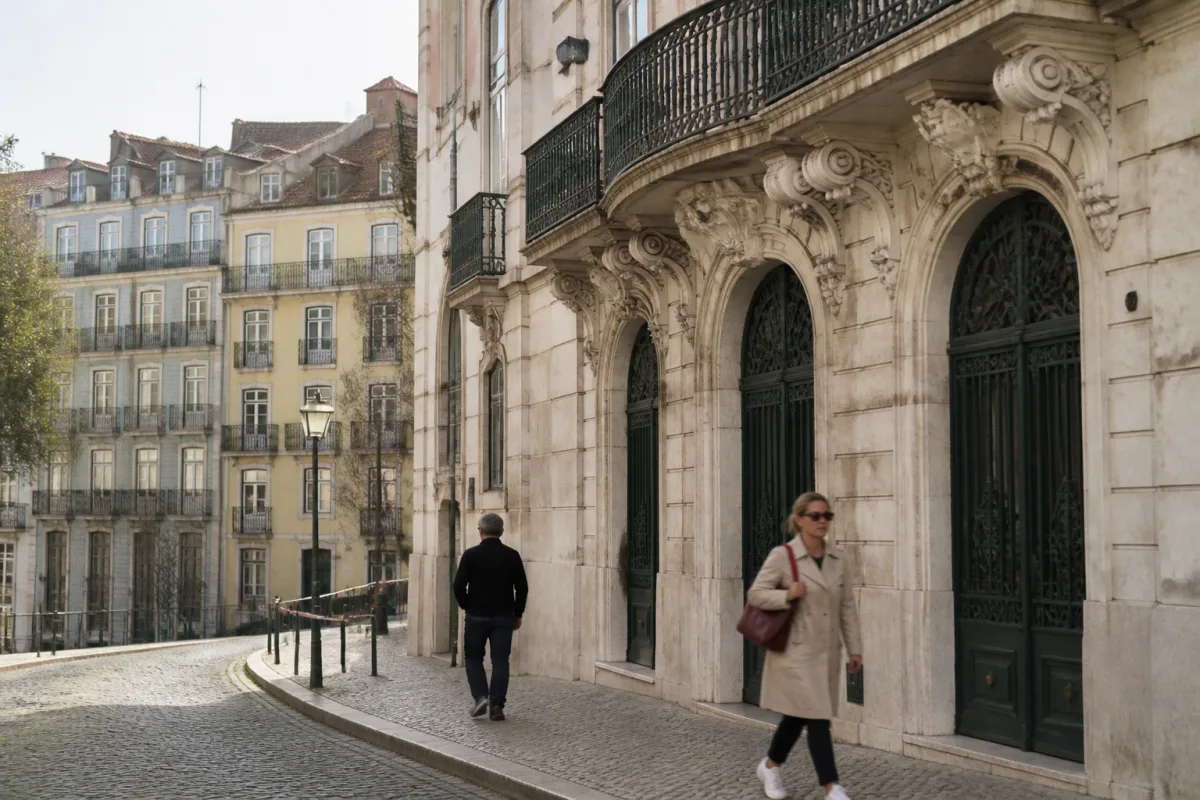
Naturalization requires demonstrating sufficient knowledge of the Portuguese language and culture, the country’s history, national symbols, as well as the basic rights and duties of citizens and state structure.
In practice, the required level is achievable in approximately 2–3 months of systematic preparation, even if starting from near zero. Apart from the residency period and knowledge, an applicant must meet reputation and security requirements and be able to support themselves financially. Once all conditions are met, you can submit an application for naturalization.
Choosing a Route—The Main Decision
The main question is not that 10 years are required before a passport, but how to live them. There are two poles.
The first is to actually live in Portugal: under D7, D8, work, entrepreneurial, or another residence basis, moving your center of life there and meeting all status requirements.
The second is to choose the investment route of a Golden Visa, maintain legal status with minimal physical presence (7–14 days per year), and continue to live primarily in a country comfortable for you. In both cases, the ultimate goal is the same—Portuguese citizenship with the full set of rights of a European Union citizen.


Comments
Reader experience is useful, but it is not advice: check the rules on the official site.
No account needed: click Sign in, type any name, and you are done.