


Before filing Form N-400, it’s worth checking five types of records — your full immigration history via a FOIA request, DMV voter-registration data, criminal records, traffic tickets, and tax records — because these are where USCIS most often finds grounds for denial.
In short
- A FOIA request reveals your full immigration history and can surface a green card defect before you file N-400.
- Automatic DMV voter registration can resurface at naturalization — check your status in your state’s public registry ahead of time.
- The good moral character period (5 years, 3 through marriage) is counted from the end of the sentence, not from the date of the offense.
- A traffic ticket must be disclosed on the N-400 application regardless of how long ago it happened, and it’s best to have proof of payment for each case rather than relying on a general driving-record printout.
- As of October 2025, USCIS may treat a late tax return or an IRS payment plan as grounds for denying naturalization.
Record #1: Full immigration history via a FOIA request
A request under the Freedom of Information Act (FOIA) gives an applicant access to a complete copy of their immigration history — every document USCIS has accumulated on the case since the person’s first contact with the immigration system. This is the first thing worth checking before filing N-400, because denials on this form are increasing, and one recurring ground for denial is the finding that “you were never lawfully admitted for permanent residence.” That ground sounds absurd to someone holding an approved green card, but it arises from a defect in the process of obtaining it that went unnoticed at the time of approval.
you were never lawfully admitted for permanent residence
A telling case: an applicant filed N-400 on their own, and USCIS discovered a discrepancy between information given on his earlier nonimmigrant visa and on his green card application — he had answered the same questions differently. USCIS classified this discrepancy as a material misrepresentation: a substantive inaccuracy, not a minor one. With a material misrepresentation on record, an applicant is required to obtain a fraud waiver for the underlying I-485 to be approved at all. In this case, USCIS never requested that waiver, and the green card was approved without it — only for the agency to return to the same fact years later, at the citizenship stage, and claim that permanent residence had been obtained unlawfully.
Even an approved green card doesn’t close the matter: if there was a material misrepresentation at the time it was obtained, without a fraud waiver, USCIS can revisit that fact at the citizenship stage and deny naturalization.
Record #2: Voter registration through the DMV
The second thing to check is Department of Motor Vehicles (DMV) records for a voter registration the applicant may not even know about. The problem is that a number of states and jurisdictions automatically register a person to vote when they apply for a driver’s license. In New York, a similar effect can occur when someone changes their address: the fine print on the form sometimes states that the person is being registered to vote, and sometimes that the person is affirming they are a U.S. citizen. Signing that form creates a problem not because of the registration itself, but because of the false citizenship claim attached to it.
There are also cases where registration happens with no action from the applicant at all: one state’s motor vehicle agency registered a person to vote by mistake, even though he had never submitted such a request, and the agency itself acknowledged the error. In a situation like that, it’s worth getting written confirmation of the mistake from the agency — it will come in handy if the registration question comes up during naturalization.
Before filing N-400, it’s worth checking your registration status yourself: most states maintain a public voter registry on their website where this can be done without contacting the DMV at all. If a registration is found and it was accidental, it should be removed, and you should consult an attorney before deciding whether to move forward with a naturalization application.
Before filing N-400, check your voter registration status in your state’s public registry. If the registration was accidental, cancel it and consult an attorney before filing.
Record #3: Criminal records and the good moral character period
Having a criminal record does not by itself disqualify an applicant from naturalization — what matters is the good moral character period that precedes the N-400 filing. For standard naturalization, that period is five years; an offense that falls outside it is not formally counted. For applicants filing under the three-year rule through marriage to a U.S. citizen, the period is shorter — three years — and good conduct during that time needs to be documented.
There’s a nuance that’s easy to miss: the period doesn’t start on the date of the offense, but from the moment the sentence is fully served. USCIS generally treats good moral character as not yet established until the entire sentence is complete — including any probation.
A telling example involves a DUI from 2019: the case took a long time to resolve, and it was only a year later that the court imposed two years of probation along with license suspension, fines, and mandatory classes. While that probation was ongoing, the good-character period, in USCIS’s view, had not even begun. After it ended — in this example, in 2022 — it’s recommended to wait another three to five years without a single violation before filing.
Having no new offenses may not be enough on its own. A memo issued in October 2025 states that the absence of a criminal history does not, by itself, automatically establish good moral character — and although some USCIS officers still treat a clean record as sufficient proof, relying on that alone is risky. It’s safer to support the case with independent evidence of good conduct rather than relying solely on a clean past.
How many years of good moral character N-400 requires
The period is counted from the end of the sentence, not from the date of the offense.
- Standard naturalization5 years
- Through marriage to a U.S. citizen3 yearsthree-year rule
- Recommended wait after probation ends3–5 yearsbased on the 2019 DUI case example
The good moral character period starts not from the date of the offense, but from the moment the sentence — including probation — is fully completed. It’s easy to overlook this when planning your filing.
Record #4: Traffic tickets and certified dispositions
A certified disposition is a court document from a traffic court confirming how a violation case was resolved — typically showing that the fine was paid, and bearing the court’s seal or stamp. The N-400 instructions waive the requirement to bring this document to the interview if three conditions are met at the same time: the fine for the violation was under $500, the applicant was not physically detained, and no one was seriously injured. If even one of these conditions isn’t met, the certified disposition is required.
But even when the document itself isn’t required, the violation still has to be disclosed on the application — no matter how long ago it happened: even a case from 30 years ago falls under the disclosure requirement.
Here’s where the trap lies: a separate instruction on the N-400 requires confirming that all fines were paid. A telling case involved an applicant who didn’t bring a certified disposition for a 2011 violation — technically she was entitled to skip it, since the fine was below the threshold. At the interview, she presented a DMV printout showing a clean driving record aside from that one case, which effectively confirmed payment. Nevertheless, the USCIS officer found that there was no proof that specific fine had been paid, and denied naturalization, citing a lack of good moral character. A decision like that can be appealed through Form N-336 — attorneys consider a denial in a situation like this legally questionable.
the USCIS officer found that there was no proof that specific fine had been paid, and denied naturalization, citing a lack of good moral character
The takeaway from this case: simply disclosing the violation may not be enough — it’s worth gathering proof of payment for every traffic ticket ahead of time, rather than relying only on a general printout of a clean driving record. Before filing N-400, it’s worth reconstructing the full picture of every traffic incident, since tickets like these are increasingly becoming a cause of trouble when applications are reviewed.
When a certified disposition isn’t needed at the interview
All three conditions must be met at once, or the document is required.
- Fine amountunder $500
- Detentionapplicant was not physically detained
- Injuriesno one was seriously injured
Record #5: Tax records — late filings and IRS payment plans
The last thing worth checking before filing N-400 is your tax records: USCIS currently takes the position that filing a return late, or requesting a filing extension after April 15, can be treated as grounds for denial. The same logic is now applied to having a payment plan with the IRS — formally, that can be presented as an indicator of a lack of good moral character, even if the applicant filed for the extension on time and is making payments on schedule without fail.
This is a reversal of previous practice. USCIS’s position used to be the opposite: if an applicant owed the IRS but could show they were in an active payment plan and not falling behind on it, that was considered sufficient — being enrolled in a payment plan was not, by itself, treated as a sign of bad character.
Requesting a filing extension is lawful on its own and doesn’t create problems if the entire tax debt was fully paid off before the April 15 deadline — that’s precisely the condition a lawful extension request is built on. One question remains unresolved: how a situation will be treated where an applicant lawfully requested an extension, overpaid by April 15, but filed the actual return later, within the extended deadline — USCIS doesn’t yet have a clear answer for that scenario.
According to unofficial reports, staff at the Tampa Field Office were reportedly advised to apply extra caution to N-400 applications from applicants who are on a payment plan or who requested a filing extension. This is an unofficial practice, not a published rule, so it shouldn’t be treated as a confirmed fact — but it’s worth factoring in that this kind of risk currently exists before filing.
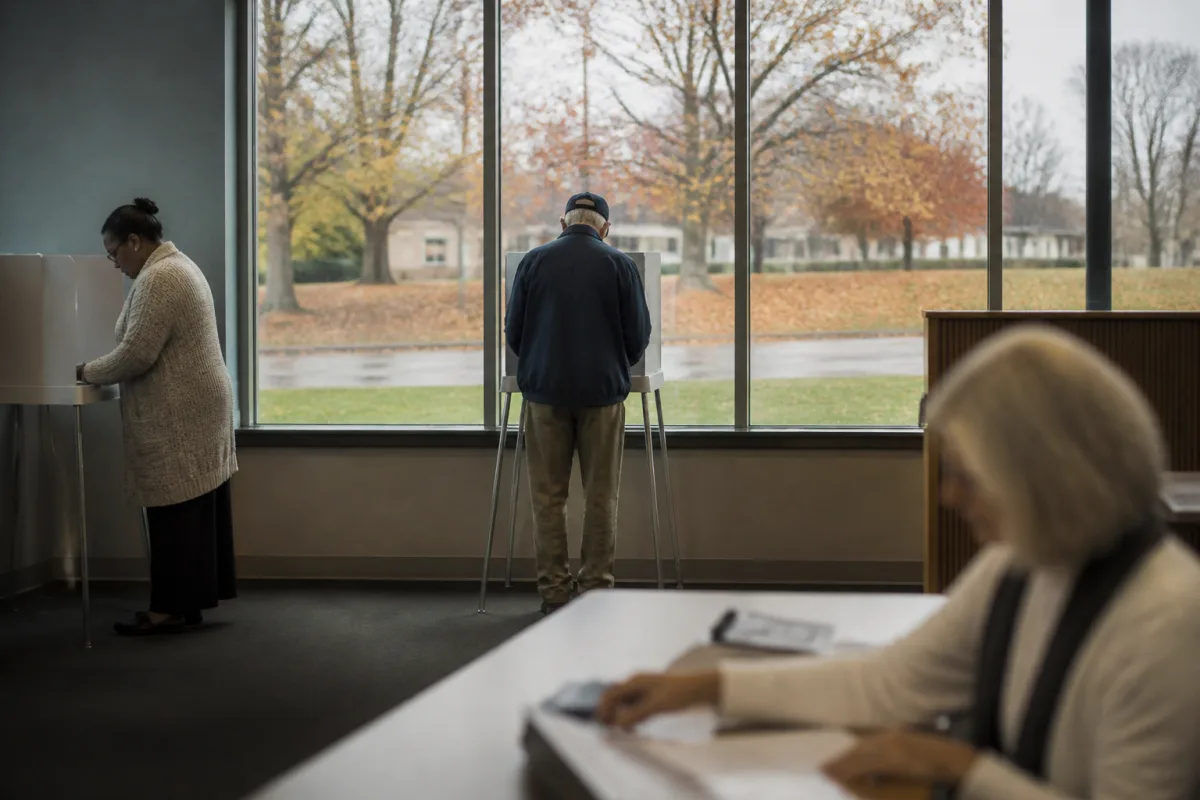
An active IRS payment plan used to not count as a sign of bad character. Now USCIS may treat both a late return and a payment plan as grounds for denial.
Also worth knowing: processing times and the risk of ICE detention
N-400 processing times are growing — if you’ve already filed, it’s worth planning for a longer wait before the interview and the oath ceremony than originally expected. If checking the five records above turns up a problem (for example, a voter registration the applicant didn’t know about), it’s worth taking action before the interview: cancel the registration, or get a letter from your jurisdiction’s election board confirming that the registration happened automatically, without the applicant’s intent.
There’s a separate risk tied to ICE detention: on average, it takes two weeks before an attorney is able to start working on a detained person’s case. Those two weeks are spent inside a detention facility, cut off from family and work.
on average, it takes two weeks before an attorney is able to start working on a detained person’s case
What to check before filing N-400
Frequently asked questions
Can I file N-400 if I have an outstanding IRS debt or I’m on a payment plan
Technically yes, but USCIS may now treat the mere fact of being on an IRS payment plan as a sign of a lack of good moral character, even if the payment schedule is being followed without any missed payments. This is a reversal of earlier practice: an active payment plan used to be considered sufficient proof of good conduct. There’s no clear-cut resolution for cases like this yet, so the risk of denial should be factored in ahead of time.
What should I do if I found out about a voter registration only after filing N-400
You should cancel that registration as soon as possible and get a letter from your jurisdiction’s election board confirming that the registration happened automatically, with no intent to vote. It’s worth having that letter on hand at the interview in case the officer raises the issue.
Who qualifies for the three-year good moral character period instead of five years
The three-year period applies to applicants filing for naturalization under the rule for spouses of U.S. citizens. For everyone else, the standard review period is five years, and an offense that falls outside it is not formally counted.
If a traffic ticket was under $500, do I still need to mention it on the N-400 application
Yes, the violation itself must be disclosed in any case, regardless of the fine amount or how many years have passed — even a case from 30 years ago falls under the disclosure requirement. The amount and circumstances only affect whether you need to bring a certified disposition as a supporting document.
Can a green card issue resurface years after approval, at the citizenship stage
Yes, that’s exactly the kind of case described here: a defect in the green card process that went unnoticed at the time of approval can be raised again by USCIS when reviewing N-400 years later.
What happens to a pending naturalization application if the applicant is detained by ICE
The application itself isn’t automatically canceled, but detention creates a practical problem: on average it takes two weeks before an attorney is able to start working on the detained person’s case, and during that entire time the person is held in a detention facility, cut off from family and work.
Is there a way to prepare in advance for the possibility of ICE detention during the naturalization process
There is an ICE Emergency Preparedness Retainer Program; enrolling in it involves providing a full copy of your immigration history, and during a promotional period the enrollment cost was $25.

Comments
Reader experience is useful, but it is not advice: check the rules on the official site.
No account needed: click Sign in, type any name, and you are done.