

Two practical routes suit people without headline-making achievements — Spain’s program for remote employees under contract with a company, and France’s residence permit for setting up a classic business.
In short
- Spain’s remote-worker program requires a contract with a legal entity — freelancers with private clients don’t qualify.
- France’s residence permit through company formation is open to classic businesses: cafes, dental clinics, construction, logistics.
- The main condition in France is willingness to create jobs, not how innovative the project is.
- The entire relocation — settling in plus launching a business — takes several years, not months.
- 5 years of legal residence is the minimum, but not the only, threshold for applying for naturalization in France, the Netherlands, or the UK.
Who are “ordinary applicants” and which programs fit them
Global Talent-type programs are built for people with striking achievements: a digital product that changed millions of lives, or a project in robotics, space technology, biotech, or medicine. Startup Visa programs target entrepreneurs working with cutting-edge technology who are building a tech startup. For those who can’t point to achievements like these, another path remains — moving through remote-worker status under a contract that explicitly allows working from a distance. A good number of European countries now offer exactly this option.
This article covers two telling examples of that path. The first is Spain’s program for remote employees working under contract with a foreign employer. The second is a French residence permit obtained by opening one’s own company. Neither program requires an outstanding product or tech-entrepreneur status — just a contract or a registered business.
If you don’t have a product that changed millions of lives or tech-entrepreneur status, there’s still a path through a remote-work contract or opening an ordinary company.
Spain: a residence permit for remote employees under contract
Spain’s program is built for remote employees — people freed from the office by the COVID pandemic and allowed to work from a distance. The condition is simple: you need a contract with a company, or with several companies at once — but it must be with a legal entity, not an individual. Freelancers who provide services directly to private clients don’t meet this requirement.
Freelancers who provide services directly to private clients don’t meet this requirement.
The residence permit under this program is issued to those who meet the conditions; the exact validity period is worth confirming at the time of application, since reports vary on this point. The program does have a weak spot, though: Spain’s tax system for this type of resident is not the simplest to navigate.
Applicants under this program are ordinary people doing routine work as company employees, not holders of outstanding achievements or rare qualifications. And they’re far from always programmers: the program’s requirements fit people across many different professions.
The program only works with a contract signed with a company. If you take orders directly from private clients as a freelancer, you don’t meet the program’s conditions.
France: a residence permit through opening a company
Opening a company in France grants a residence permit to entrepreneurs running a classic, traditional business rather than a tech startup. It’s the only active program in Europe for “ordinary” entrepreneurs — those who feed, clothe, educate, and entertain people, rather than working in artificial intelligence or biotech.
Businesses that fit the program’s requirements include construction, hotel management, clothing production, interior design, architecture firms, logistics and marketing companies, online and offline education for children, dental and cosmetology clinics, and cafes and restaurants.
For a long time, a cafe was considered a project unlikely to qualify for a European residence permit, since it has no innovation or technological component. In practice, though, cases of approval for such classic-format projects do occur.
For a long time, a cafe was considered a project unlikely to qualify for a European residence permit
The main condition is a willingness to create jobs, not how innovative the project is: France accepts entrepreneurs regardless of field, as long as they’re ready to hire. No one expects hundreds or thousands of jobs to be created — a small number of new positions can already count as a meaningful contribution to the French economy, though each project receives an individual assessment against the exact criteria.
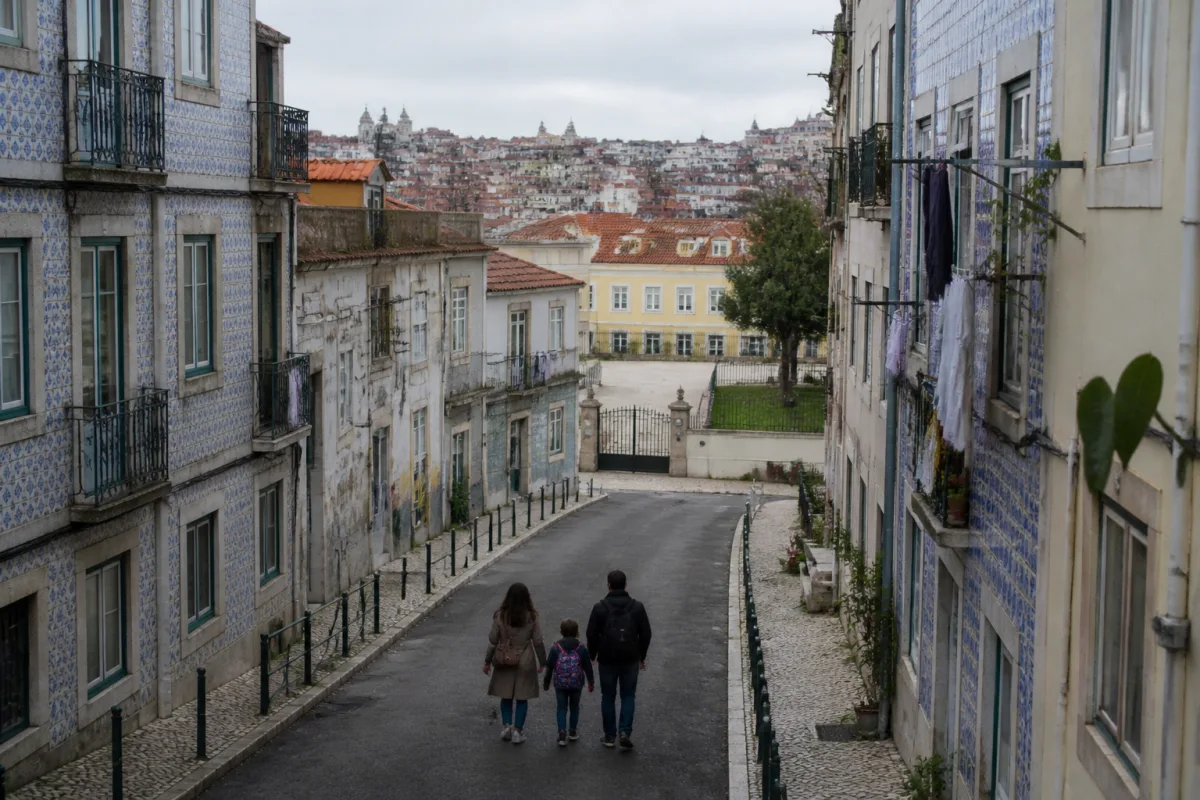
France approves projects in any classic field — from cafes to dental clinics — as long as the entrepreneur is ready to create jobs. The number can be small.
Spain and France: two paths for ordinary applicants
| Criterion | Spain | France |
|---|---|---|
| Basis of status | Contract with a foreign company | Opening your own company |
| Who qualifies | Remote employees | Classic-business entrepreneurs |
| Who doesn’t qualify | Freelancers with private clients | Tech startups (different program) |
| Key condition | Contract with a legal entity | Willingness to create jobs |
| Weak spot | Complex tax system for residents | Individual project assessment |
Data follows the article’s text; exact timelines and criteria are worth confirming at the time of application.
What happens after the move: settling in, timelines, getting a passport
The hardest part of the journey doesn’t start with filing paperwork — it starts after the move: finding housing, switching a driver’s license, enrolling kids in school, opening a company, and sorting out taxes are the issues that worry relocators the most. Taxes really are nothing to joke about: the new country’s system has to be built from scratch, and that takes time.
The hardest part of the journey doesn’t start with filing paperwork — it starts after the move
The whole relocation — settling in followed by launching a business — takes several years, not months. Once the settling-in period, which usually turns out to be no easier than the move itself, is behind you, the next stage begins: launching or growing the business in the new location.
Getting a residence permit, or even permanent residency, isn’t the finish line. In countries like France, the Netherlands, or the UK, 5 years of legal residence is the minimum period after which you can apply for naturalization. That alone doesn’t guarantee a passport: you also need to meet additional conditions — lawful stay, no violations, and other country-specific requirements. Meanwhile, relocators’ children often adapt to a new language environment fairly quickly, studying and getting into universities alongside their peers.
The move can also be handled on your own — plenty of people do it that way, and there’s nothing wrong with it. The difference between countries, though, is substantial: moving to some countries, the US for example, is harder, while moving to others, France for example, is easier right now.
Even 5 years of legal residence doesn’t guarantee a passport: you also need to meet requirements on lawful stay and a clean record.
Frequently asked questions
Can I apply for Spain’s remote-worker program if I’m a freelancer working directly with private clients?
No. The program requires a contract with a legal entity — a company or several companies — not with individuals. Freelancers providing services directly to private clients don’t meet these conditions, even if their income and work pattern fully match the remote-work format.
How long is the residence permit valid under Spain’s remote-worker program?
The permit is issued for a period to those who meet the program’s conditions. However, the exact length is worth confirming at the time of application, since reports vary on this point.
Is it true that a cafe project can’t get a residence permit in Europe?
For a long time it was thought so, due to the lack of innovation or a technological component. In practice, though, such classic projects do get approved: there are known cases of approval for several cafe projects, so the business format itself isn’t an automatic rejection.
Exactly how many jobs does France’s program require you to create for approval?
There’s no fixed universal number — each project is assessed individually. But the benchmark is small: a few new positions are enough, and France doesn’t expect an entrepreneur to create hundreds or thousands of jobs.
Can I go through the move and the application process on my own, without support?
Yes, handling the move independently without support is possible, and plenty of people do it that way. But keep in mind that settling into a new place — including opening a company, switching documents, and sorting out the tax system — takes considerable time and effort regardless of whether you go through it alone or with support.
Is there a difference between countries in how hard it is to get a residence permit through programs like these?
Yes, the difference is substantial. Moving to some countries, the US for example, is harder, while moving to others, France for example, is easier right now, thanks to programs like the one described here, aimed at entrepreneurs with traditional businesses rather than only at tech startup founders.


Comments
Reader experience is useful, but it is not advice: check the rules on the official site.
No account needed: click Sign in, type any name, and you are done.