


According to the video’s speaker, Spain’s digital nomad residence permit is the simplest in Europe: by law, a decision is made within 20 working days. The key criterion is a financial base, with no requirements for language, degree, or age. The process has three stages, and the whole path takes about 2.5–3 months and requires three trips to Spain.
Who the program suits
The program’s main criterion is a financial cushion, or financial base: funds or assets in one form or another. With it in place, according to the video’s description, one can apply for a 3-year digital nomad residence permit for the applicant and family members, with a high chance of approval.
If there’s no financial cushion, the ARIgo program is considered. It’s significantly less comfortable and slower, but available to almost everyone. According to the author’s description, this path is more often chosen by people in manual trades: repair technicians, drivers, tilers, gardeners.
Timelines in this case are noticeably longer: about two years, since the first two years must be spent living in Spain on the initial tourist visa used to enter the country, and only afterward can the status-change procedure be completed.
Based on the cases described, financial documents can be prepared even when income doesn’t fully match the program’s direct criteria, for example if the funds are sitting in a bank account. It’s also possible to include retirement-age parents or adult children in a single application.
Three stages and timelines
The first stage is preparing the migration plan and documents. According to the described timelines, it takes about two weeks, in some cases three to four if special documents are needed. Before filing, consulting a tax specialist is recommended: in Spain, taxes on employment income are around 20–25%.
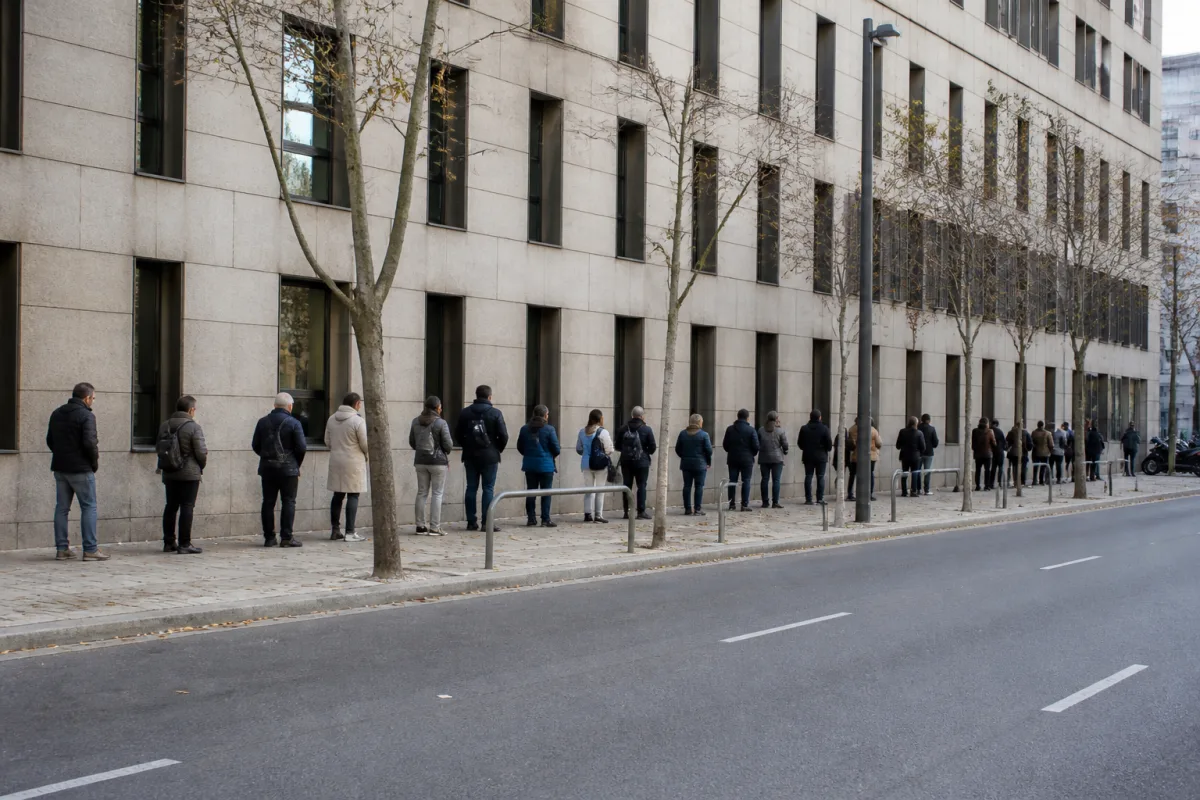
The second stage is entering the country, filing documents online, and submitting biometric data. Migration service approval arrives in about two to three weeks, and a biometric appointment is scheduled a couple of weeks after that. This is the stage requiring an in-person visit to the office. It takes about a month, sometimes two. Long queues for biometric submission in Barcelona and Madrid are noted separately, so other regions of Spain are sometimes recommended to speed things up.
The third stage is processing the biometric data and printing the residence permit card. It takes about a month, rarely more. The card is picked up during a second visit to the office.
In total, the whole process takes 2.5–3 months, and the applicant needs to be in Spain three times: either flying in three times, or flying in once and staying for the entire period.
Taxes and autonomo status
There are two main ways to confirm income. The first is declaring services provided to one or several companies. In this case, you need to register as self-employed in Spain (autonomo status) and pay monthly social security contributions. The second is declaring direct remote income. This doesn’t require registering as autonomo, but it does require paying for medical insurance, which can be expensive for large families and for applicants over 63–64 years old.
In the described case, a refusal threatens those who declared activity but did not register as autonomo. Recently, Spanish immigration chats have recorded dozens and even hundreds of refusals for exactly this reason. Therefore, as noted in the material, most applicants choose the path without autonomo.
Who Spain isn’t a good fit for
If the goal is second European citizenship, the digital nomad program may not be a good fit. Applying for a Spanish passport requires 10 years of residency in the country, and second citizenship is not allowed in Spain: you would have to give up your home passport.
Instead, many migrants in Spain obtain permanent residency after 5 years of living on a temporary residence permit. Permanent residency is issued indefinitely and grants rights close to citizenship: free healthcare, the right to work and conduct any activity. You cannot travel the world visa-free with it, and you cannot vote in local elections. To keep the status, you need to appear in EU territory at least once every 5 years.
Other EU countries for second citizenship
If Spain doesn’t fit, the material names other options. France is the most convenient of them: citizenship applications can be filed after 5 years of residency, there’s no need to give up your home passport, and renewing the residence permit is described as predictable and straightforward. The UK also grants citizenship after 5 years. In the Netherlands, the initial residence permit is issued for only 1 year, which the author considers too short.
Other EU countries are recommended to a lesser extent in the material. Before choosing, keep in mind that each of the 27 EU countries has its own migration service and rules.


Comments
Reader experience is useful, but it is not advice: check the rules on the official site.
No account needed: click Sign in, type any name, and you are done.