


From 8 October, the UK tightens reporting requirements for foreign nationals on immigration bail conditions, and a missed check-in can now become grounds for a future visa refusal.
In short
- From 8 October, failing to meet the reporting condition under bail conditions can become grounds for refusal of a future visa application.
- Reporting comes in in-person and digital formats — both are equally mandatory; the only difference is how you comply.
- A change of employer or route by the main applicant does not require reissuing the spouse’s and children’s visa.
- The UKVI website currently lists no standard processing time for FLR(FP) Partner; in practice a decision arrives within 6–12 months.
- If you lose your CoS on a Skilled Worker visa, the key is to submit a new application before the current visa expires, or you fall into an overstay.
What changes in reporting from 8 October
The change affects people on immigration bail conditions, one of which can be a requirement to report — to check in with the Home Office periodically, either in person or digitally. In practice, whether to attend a reporting appointment used to feel, for many, like something left to their own judgement: people were often unsure whether to go or what would happen if they skipped it. From 8 October, the Home Office is tightening its approach to this requirement: according to available information, attending becomes mandatory by default, with no exceptions — the exact wording of your own bail conditions should be checked directly on gov.uk.
If someone cannot attend, they must report the reason in advance — this is no longer a formality but part of how their good faith is assessed in any future application. Under the new approach taking effect on 8 October, failing to meet the reporting condition can become grounds for refusal of a future application: when a new visa or file is submitted, the Home Office is entitled to note that bail conditions were not met and refuse on that basis alone.
From 8 October, failing to meet the reporting condition can become formal grounds for refusal of a future visa application.
In-person vs digital reporting: what’s the difference
Reporting comes in two formats — in-person and digital — and both count equally as meeting the mandatory attendance condition (c5). In-person reporting means physically visiting a reporting centre: the applicant turns up there themselves at the scheduled time (c9). Digital reporting works differently — the Home Office sends a text message to a mobile phone or an email, and it is that notification you need to respond to (c9).
The difference isn’t in how strict the requirement is, only in how it’s carried out: the in-person format requires physical presence at a specific location, the digital one requires a timely response to a message or email. Which of the two formats applies to a given person is set out in their own bail conditions, but either way, reporting remains mandatory.
The difference isn’t in how strict the requirement is, only in how it’s carried out: the in-person format requires physical presence at a specific location, the digital one requires a timely response to a message or email.
What happens if you miss a reporting appointment
Attending reporting is mandatory: even where some applicants used to feel uncertain about whether to show up, formally this requirement must be met in every case (c6). Missing a check-in without explaining why is not an option — if attending in person or checking in digitally isn’t possible, the Home Office must be told in advance, along with the reason for the absence (c7).
The Home Office treats failure to meet this condition as a breach of bail conditions, of which reporting is a part. Formally, this doesn’t feed into the suitability assessment of an application, but in practice a missed check-in can become one of the grounds on which the Home Office refuses a visa (c8).
This matters especially for anyone previously placed on so-called sign lines — a particular monitoring arrangement. If an applicant was under that arrangement, from 8 October they need to contact the Home Office themselves, submit a new application, and keep attending reporting in parallel (c63, c64). Failing to do so means that, when a new application is submitted, the Home Office may refuse the visa specifically on the grounds that bail conditions were not met — a missed check-in becomes the formal basis for refusal (c65, c66).
Tell the Home Office the reason in advance — silence is treated as a breach of bail conditions.
If you were placed on so-called sign lines after 8 October
Visas for children and dependants when parents hold different statuses
One case involved parents with different immigration statuses: the wife held a Health and Care Worker visa, the husband was on asylum status, and an application had already been submitted under her route (c11, c14). The couple have two children — one about two years old, the other five months, both born in the UK (c12, c13).
On the question of whether children need their own separate visa application, the answer is clear: yes, an application for the children must be submitted, and they cannot be left without status (c15). What remains open is only the question of route — which category to apply under, given that the parents hold different statuses (c16).
Choosing a route when spouses’ statuses diverge isn’t a routine case, and a mistake here directly affects the children’s status, so independent legal advice is worth getting before applying.

Do dependants need to renew their visa when the main applicant’s status changes
When the main applicant changes employer or switches route, the spouse’s and children’s visas don’t need to be reissued — only the main applicant’s visa is updated (c35). In the case discussed, the applicant changed companies and obtained a new work visa, while his wife’s and child’s visas, originally issued as dependant visas, stayed the same (c34, c45).
The old dependant visa remains valid until 2030 and continues to run alongside the main applicant’s new status (c45, c48). There’s no need to change anything in the dependants’ passports either — the main applicant moving to a new route or a new employer does not by itself cancel their current status (c46, c47).
In practice, this means the spouse and child can continue using the old visa until it expires in 2030, even if the main applicant has already changed employer and obtained a new visa (c45). There’s no need to submit a separate application to update the dependants’ status in this situation (c47).
A change of employer or route by the main applicant does not cancel the spouse’s and children’s visa — it stays valid until its own expiry date.
Processing times for the partner route (FLR Partner)
Previously, the extended service standard for the FLR(FP) Partner route was set at 12 months — the Home Office promised a decision on an application within a year. Right now, the UKVI website doesn’t list a standard processing time for this route at all — the department puts this down to a large backlog of applications awaiting a decision.
In other words, there’s currently no official fixed timeframe to plan around when applying. That doesn’t mean applications are stuck indefinitely: based on the experience of a consultant who has handled such cases, a decision on an FLR(FP) Partner application typically arrives within 6 to 12 months. If there’s still no answer by the end of that period, it means you need to keep waiting — sometimes processing simply takes longer.
A private life application after many years of residence
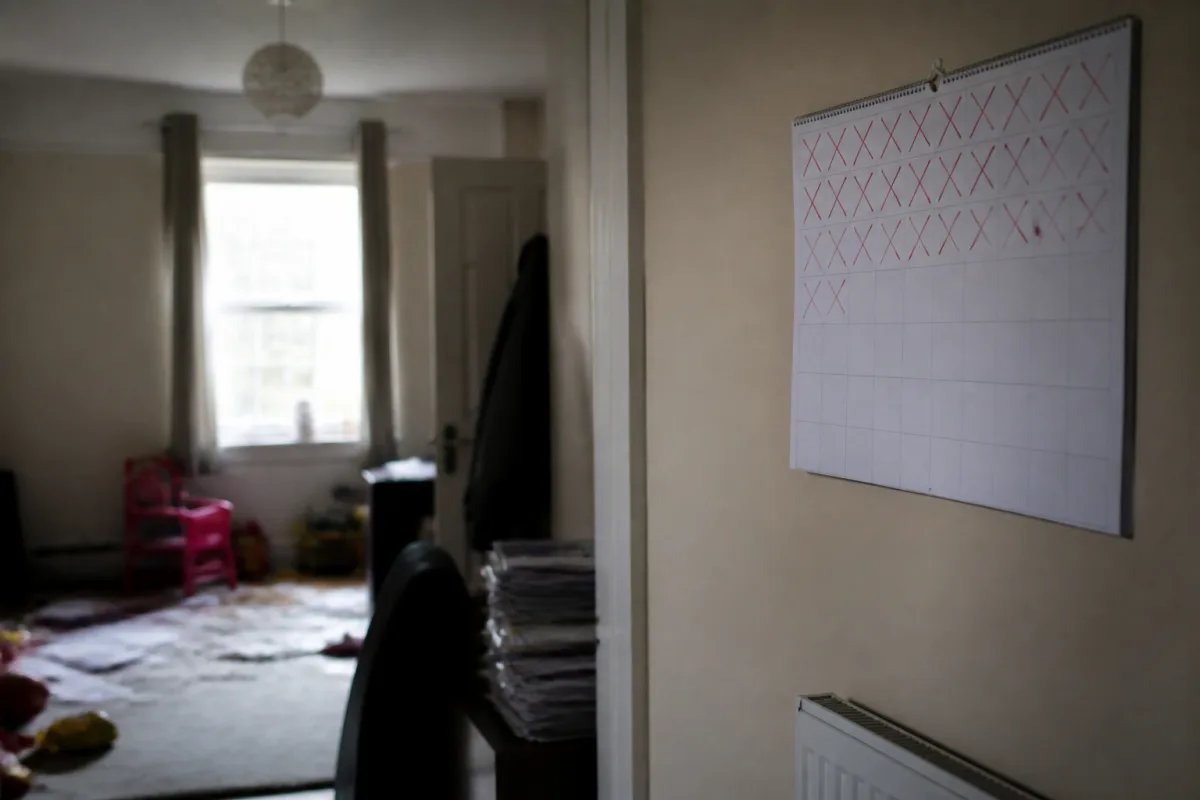
One case discussed: the applicant arrived in the UK in 2009 — by the time of the consultation that’s 17 years of residence, and he has two children (c49). At that length of residence, a private life application can be submitted (c53).
There are two different grounds for this type of application. The first is “within the rules”: the applicant formally reaches the required length of residence — for example, 20 years in the country — while also having a 7-year-old child who has lived in the UK for more than half their life and is under 25 (c50, c51). The second ground isn’t about a formal time period at all, but an argument that returning to the country of origin would create serious integration difficulties there and severe consequences for the applicant (c52).
For a case involving 17–18 years of residence and children, both routes are theoretically open, but the Home Office’s final decision is based on the individual person’s circumstances — there is no blanket rule that says “live here N years and you’re approved” (c54).
there is no blanket rule that says “live here N years and you’re approved”
Submitting a private life application requires paying a Home Office fee. If there isn’t money for the fee, it’s possible to apply for a fee waiver (c55, c56). Because these cases are so individual, it’s recommended to book a consultation with a qualified adviser before preparing the application (c57).
Losing your job on a Skilled Worker visa: what are the options
One case discussed: the applicant lost his sponsoring employer and can’t obtain a new Certificate of Sponsorship (CoS) — without it there’s no basis to remain on a Skilled Worker visa (c95, c96). He got the visa in 2024 and had been on it for two years; before that he was on a student visa, then a Graduate visa (c97, c98). His daughter came with him from India and is now 10 years old (c99, c100).
In a situation like this, three options are named:
- Find another employer willing to issue a CoS (c101).
- If that doesn’t work out — switch to a student visa (c102).
- If that doesn’t fit either — submit an application setting out the circumstances to the Home Office, including an application for leave to remain outside the standard immigration rules or on private life grounds (c103, c104, c105).
The last option is described as difficult, and it’s recommended to get legal advice rather than act alone (c106).
The key condition under any of these options is to avoid an overstay: the application must be submitted, or the visa switched, before the current visa expires (c107). A telling example is given: an applicant whose visa was expiring was told by his employer not to worry — supposedly the Home Office would send a letter after 60 days and the CoS would be arranged then. In reality, no such letter arrives once the visa has already expired, and the person ends up staying in the country unlawfully on the strength of someone else’s bad advice (c108, c109).
In reality, no such letter arrives once the visa has already expired, and the person ends up staying in the country unlawfully on the strength of someone else’s bad advice
Losing your Skilled Worker sponsor: three options
Course of action after losing a CoS, from preferred to last resort
- Find another employer willing to issue a CoS
- Switch to a student visa
- Submit an application setting out the circumstances to the Home Officeoutside the standard rules or on private life grounds
Submit your application or switch visa before the current one expires — an employer’s promise to ‘wait for a Home Office letter’ won’t protect you from falling into illegal status.
Frequently asked questions
What happens if someone already on bail conditions simply doesn’t report a missed check-in and does nothing about it
If the reason for the absence isn’t reported in advance, the Home Office treats this as a breach of bail conditions. Formally this doesn’t feed into the suitability assessment, but in practice a missed check-in left unexplained can become grounds for refusal of a future visa application.
Can you switch from in-person to digital reporting in advance if attending the centre in person is inconvenient
Which format applies to a given person — in-person or digital — is set out in their bail conditions, not chosen by the applicant’s personal preference. Switching from one format to the other isn’t described as a default option: the format is tied specifically to the conditions of that particular bail.
How can I find out which reporting format — in-person or digital — applies to me personally
The reporting format is set out in the specific bail conditions issued by the Home Office, and to get an exact answer for your own case you should check those conditions directly on gov.uk rather than rely on the general rule.
What should I do if I was on so-called sign lines and already missed a check-in before 8 October
After 8 October, you need to contact the Home Office yourself, submit a new application, and keep attending reporting in parallel. Failing to do so means that when a new application is submitted, the Home Office may refuse the visa on the grounds that bail conditions were not met.


Comments
Reader experience is useful, but it is not advice: check the rules on the official site.
No account needed: click Sign in, type any name, and you are done.