


From 8 October 2026, changes to paragraph 34G of the Immigration Rules mean that switching immigration routes after submitting a fee waiver no longer automatically preserves the original application date — the date becomes the day the new application is actually submitted under the different route.
In short
- From 8 October 2026, the fee waiver date is preserved only if the new application is submitted under the same route and within 10 working days of the decision.
- Changing the application route after a fee waiver no longer allows the original date to be preserved — the date becomes the day the new application is submitted.
- HC 584 preserves the old rules for applications validly submitted up to and including 8 October 2026.
- Section 3C protects against overstayer status only where the correct route, submission deadline, and procedure are all met.
What a fee waiver is and how the application date was determined before
A fee waiver is an application for exemption from paying the fee charged by the Home Office. It can be submitted by an applicant relying on human rights grounds, or on family or private life grounds, if they are unable to afford the required fee.
The application states that the applicant’s financial situation would not allow them to meet basic needs — their own or their family’s — if they paid the required amount. But the key legal question here isn’t the fee itself, it’s the application date.
Under the rules that applied before, the process has two steps: first, a fee waiver application is submitted online, and only after a decision on it — within a set period — is the substantive application submitted. The date of the entire application is treated as the date the fee waiver was requested, not the date the substantive application was lodged.
There’s also a technical detail: current Home Office guidance already requires that an application made after Section 3C protection must be of the same type as the one for which the fee waiver was originally requested.
With a fee waiver, the date of the entire application is treated as the day exemption from the fee was requested, not the day the substantive application was lodged.
What changes in paragraph 34G from 8 October 2026
From 8 October 2026, the Home Office is amending paragraph 34G of the Immigration Rules, a change the drafters of the new wording describe as significant. The new wording states directly: the original fee waiver application date is protected only if two conditions are met at the same time.
The first condition is that the subsequent application for leave to remain must be submitted under the same route for which the fee exemption was requested. The second is that it must be submitted within 10 working days of the fee waiver decision. If a decision on the waiver hasn’t been made yet but the applicant has already submitted a fee-paid application, the original date can still be preserved — but only if that application is under the same route the fee waiver was originally requested for.
The Home Office didn’t add this clarification arbitrarily: the explanatory memorandum to the change states the purpose directly — to close off an approach where a position was first secured through a human rights fee waiver and the application was then switched to a different, non-human-rights route. Previously, the gap between paragraph 34G and the Immigration Rules allowed for this manoeuvre; from 8 October 2026, it’s specifically stated as not permitted.
to close off an approach where a position was first secured through a human rights fee waiver and the application was then switched to a different, non-human-rights route
How the application-date protection rule changes from 8 October 2026
Paragraph 34G tightens the conditions for preserving the original fee waiver date.
- Changing route after a fee waiver
- Deadline to apply after the fee waiver decision
- Switching from a human rights route to another route
From 8 October 2026, the original fee waiver date is preserved only if the new application is submitted under the same route and within 10 working days of the decision. Miss either condition and the date is lost.
Changing the application route: what happens to the date and Section 3C
Here’s the typical scenario the Home Office intends to close off: an applicant’s current leave to remain is coming to an end, and they submit a fee waiver under the human rights route (c18). While the application is being considered, the visa expires (c19), and the applicant then decides to submit not a human rights application, but an entirely different one — under a route unrelated to human rights, or under the points-based system, PBS (c20, c22). It was precisely at the intersection of paragraph 34G and the variation rules that a loophole used to arise, allowing the original date and Section 3C protection to be preserved (c21, c23). For example, switching from an FLR(FP) application to the Skilled Worker route was previously treated as permissible (c24).
The new rule removes this: if a fee waiver was submitted under one route but leave to remain is requested under another, the old fee waiver date no longer counts as the application date (c27). The application date becomes the day the application under the new, different route is actually submitted (c28).
The practical consequence: if leave expired while the fee waiver was being considered, but the application under the same route is submitted within the set period with all conditions met, the applicant’s legal position can be protected (c29). But if the application route is changed, the original fee waiver date is not automatically preserved (c30).
This is where Section 3C of the Immigration Act 1971 matters: provided formal requirements are met — the correct route, the submission deadline, and the procedure — it can extend the current leave or visa for as long as a timely application or appeal is being considered (c31, c32, c33). If a proper application is submitted to the Home Office before the visa or leave expires and all conditions are met, the applicant may not be treated as an overstayer merely because a decision hasn’t yet been made (c34, c35). However, Section 3C is not a blanket protection: its application depends critically on the correct application, the correct timing, and adherence to procedure (c36, c37). A one-day error, the wrong route, or the wrong fee waiver ground can jeopardise all subsequent applications (c38).
A one-day error, the wrong route, or the wrong fee waiver ground can jeopardise all subsequent applications
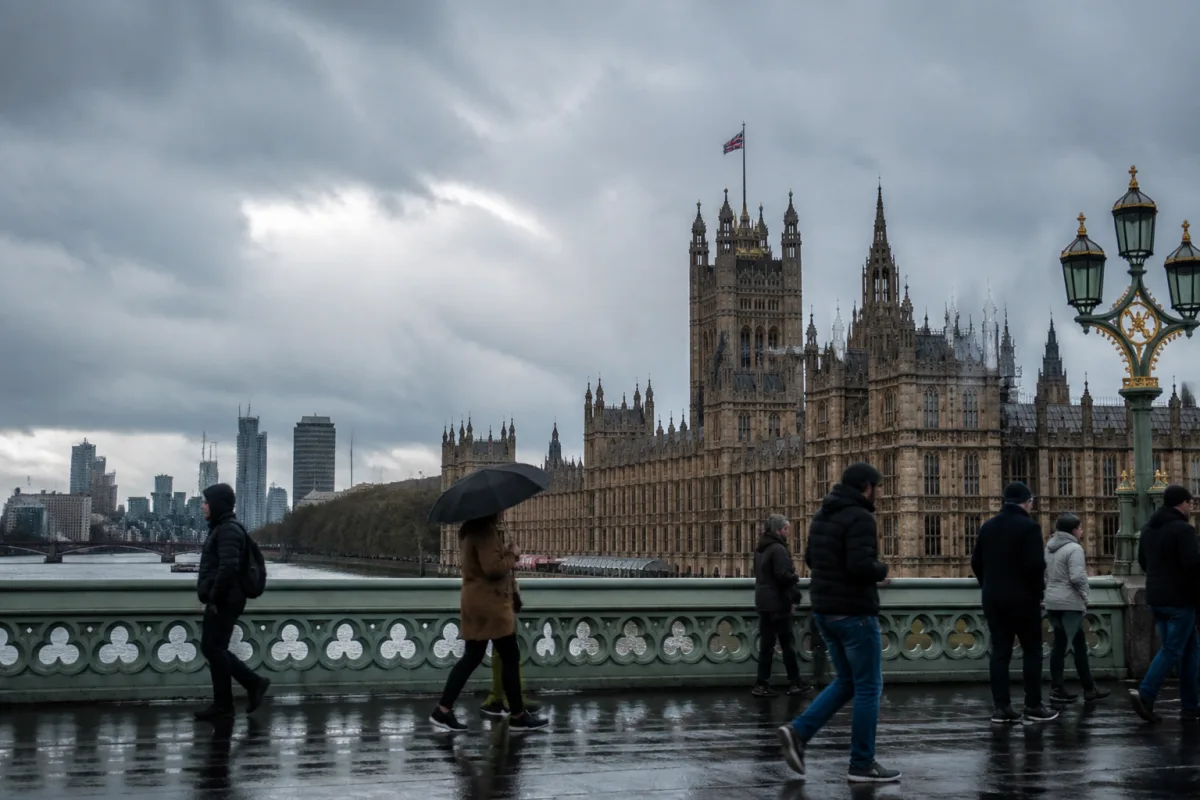
If a fee waiver was submitted under one route but leave is requested under another, the old date no longer counts — the application date becomes the day the new application is submitted.
HC 584 transitional provisions and what to do if a visa is about to expire
The change to paragraph 34G doesn’t take effect immediately — it applies from 8 October 2026, and the previous rules for determining the application date apply before that date (c39). HC 584 contains transitional provisions specifically for this cut-off: applications validly submitted before 8 October are considered under the old rules up to and including 7 October (c40, c41, c42).
If a fee waiver application or a follow-up application under a route falls around this date, it’s not something to assume will simply resolve itself (c43). The key question is which date will carry legal effect for that specific application (c44).
it’s not something to assume will simply resolve itself
If current leave to remain is due to expire soon and the plan relies on a fee waiver, there’s a specific order of action. First, settle on the route the application will actually be submitted under (c46). The fee waiver itself should name exactly the route the applicant actually intends to use — with no discrepancy (c47).
Once the fee waiver decision is made, the 10-working-day period starts running, and it shouldn’t be underestimated (c48). If circumstances change and there’s an intention to switch to a different route, it’s necessary to work out in advance, before submitting the new application, how this will affect the application date and Section 3C status (c49, c50).
What to do if a visa is about to expire and the plan relies on a fee waiver
Steps to avoid losing the application date and Section 3C protection.
- Settle on the route the application will be submitted under
- Name exactly that route in the fee waiver, with no discrepancy
- Wait for the fee waiver decision
- Submit the application under the same route10 working days
- Check how changing route would affect the date and Section 3C if plans have changed
The route named in the fee waiver application must match the one under which the leave-to-remain application will actually be submitted — no discrepancy allowed.
Frequently asked questions
What happens if a fee waiver decision hasn’t been made yet and leave to remain is about to expire — can the substantive fee-paid application be submitted without waiting for the answer?
Yes: if a decision on the fee waiver hasn’t been made yet but the applicant has already submitted a fee-paid application, the original date can be preserved — provided the new application is under the same route for which the fee exemption was originally requested. Changing route in this situation will not preserve the original date.


Comments
Reader experience is useful, but it is not advice: check the rules on the official site.
No account needed: click Sign in, type any name, and you are done.