
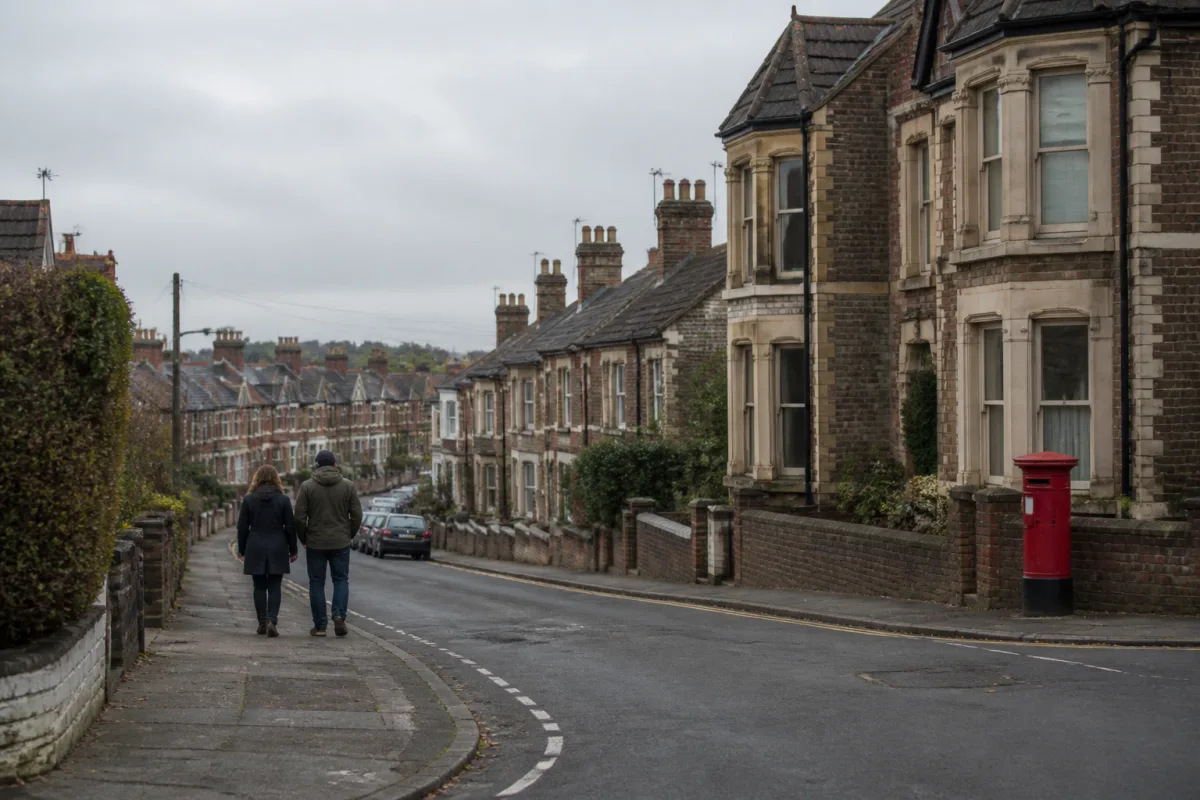

The clock on the road to ILR under a spouse visa starts not on the date you enter the UK on a fiancé visa, but on the date the spouse visa itself is granted — and the fiancé visa is issued for 6 months, during which the marriage must be registered.
In short
- A fiancé visa is granted for 6 months — within this time the marriage must be registered, only then can the spouse visa be applied for.
- The right to work only starts on the date the spouse visa is actually granted, not before — at none of the earlier stages.
- The 5-year clock to ILR under a spouse visa starts from the date the visa is granted; time on the fiancé visa does not count.
- Under the current long residence route, settlement takes around 30 years: 20 years plus four 2.5-year periods.
- Since January 2024, student dependants are permitted only on programmes at PhD level and above.
Fiancé visa: validity and registering the marriage
- A fiancé visa is issued for an initial period of 6 months — this is the period the applicant enters the UK on.
- Within these 6 months after entry, the marriage must be officially registered — this is the sole obligation of the visa holder at this stage.
- Only after the marriage is registered can the spouse visa application be submitted — it cannot be filed earlier, before registration.
From fiancé visa to spouse visa
The required sequence of steps after entering the UK.
- Entry on fiancé visa6 months
- Marriage registrationThe sole obligation at this stage
- Spouse visa application filedOnly after the marriage is registered
A fiancé visa is granted for 6 months — within this time the marriage must be registered. Only after that can the spouse visa application be filed, not before.
Can you work on a fiancé visa or while the spouse visa is pending
The right to work on the path to a spouse visa is strict: according to the available information, it does not appear in stages and is absent right up until the spouse visa is granted:
- On a fiancé visa, working is not allowed. This status only grants the legal right to be in the UK and to register the marriage, not the right to take employment.
- After the marriage is registered, but before the spouse visa application is submitted, working is still prohibited.
- While the spouse visa application is under consideration — including the moment it is accepted for processing — working is not allowed.
- After the application is approved, right up until the visa is actually issued, the right to work still does not apply.
On a fiancé visa, working is not allowed. This status only grants the legal right to be in the UK and to register the marriage, not the right to take employment.
All of the applicant’s legal rights, including the right to work, begin only on the date the spouse visa is actually granted. That date becomes the reference point — not the date of entry on the fiancé visa.
The right to work does not appear in stages: not on the fiancé visa, not after the marriage is registered, not while the application is pending, and not even once it is approved. Only from the date the spouse visa is actually granted.
What date starts the ILR clock under a spouse visa
The 5-year route to ILR (indefinite leave to remain) starts counting from the date the spouse visa is granted, not from the date of entry into the country on the fiancé visa. Time spent on the fiancé visa before the marriage is registered and the spouse visa is applied for does not count toward this period.
The same spouse visa grant date also starts the validity period of the leave to remain itself (tenure) and the full set of legal rights tied to that status, including the right to work. Until the visa is granted, the applicant is in the country legally, but without the rights that come only with the spouse visa.
So for calculating the route to ILR, only one reference point matters — the day the spouse visa is granted.
The 5-year route to ILR is counted from the date the spouse visa is granted, not from the date of entry on the fiancé visa. Time spent on the fiancé visa does not count.
The salary threshold being discussed for ILR: what is known
The income threshold mentioned in discussions of future ILR rules is estimated at just over £50,000, but the exact figure has not been officially confirmed and may change. This is an announcement, not a settled rule: there are no official final requirements at this point, and until they are published, any calculations remain a guess about how income will be assessed.
When assessing income, what matters is not only base salary but also regular payments such as an annual bonus. One worked example: with a base salary of £50,000 and an annual bonus of £4,000, total taxable income comes to £54,000, because the bonus counts toward the total. This calculation illustrates the principle of how income is counted, but drawing a conclusion from it about exceeding the discussed threshold would be premature — the threshold has not yet been fixed.
NHS and public benefits: who qualifies for free treatment
Healthcare is not classed as a public benefit — these are separate categories of support. So a person applying for refugee status or undergoing treatment does not “access benefits” in the sense that term is used when discussing immigration status: access to treatment is regulated separately from access to welfare payments.
The right to free NHS treatment is not granted by the visa type itself, but by payment of the Immigration Health Surcharge (IHS) — a specific healthcare fee the applicant pays when applying for a visa (Student, Skilled Worker, and a number of other categories). Separately, independent of the IHS, holders of refugee status are exempt from charges, along with certain other categories — for example, detainees, armed forces pensioners, and victims of human trafficking.
For those in the UK without a visa, with an expired visa (overstaying), or without legal status, the situation is different: when they seek routine NHS treatment they are not turned away, but they are invoiced — billed for the services provided. Emergency care and a number of other services remain free regardless of status; it is specifically routine treatment that becomes chargeable.

Free treatment comes from paying the Immigration Health Surcharge when applying for the visa, not simply from holding a visa. Those in the country without status pay for routine treatment; emergency care is always free.
The child route and restrictions on students with dependants
The 7-year child route is likely not to stay in its current form — this is an assumption based on how the rules for a similar category, student dependants, have already been changed. In the past, almost every student brought dependants with them, and those without any of their own used agents who registered such people as dependants on paper, with no genuine relationship behind it. Abuse of the scheme became widespread, which led to restrictions in two stages. First, students’ right to bring dependants was closed off from January 2024. Then, also from January 2024, a second stage was introduced: dependants are now permitted only for those enrolling on higher-level programmes — research degrees, PhDs. If a student is not on such a programme, dependants cannot be brought.
Dependants are now permitted only for those enrolling on higher-level programmes — research degrees, PhDs.
A similar story is unfolding with the 7-year child route: under this route people brought over two children at once left behind in their home country, then went on to have further children once in Britain — including in cases where there had previously been an official diagnosis of infertility. Because of the scale of this abuse, a possible outcome is raising the period from 7 to 10 years or introducing other restrictions.
How the wait for ILR has changed over the past two decades
The rules of the route to ILR have changed several times over the past twenty years, and each time in the direction of a longer wait.
| Period | Time before applying | What happened after applying |
|---|---|---|
| ~2002–2007 | 5 years (for work permit holders) | Indefinite ILR granted immediately |
| ~2007–2008 (irregular status) | 7 years | Indefinite ILR granted immediately |
| ~2007–2008 | 10 years | Indefinite ILR granted immediately |
| ~2012–2014 | 14 years | Indefinite ILR granted immediately |
| Current long residence route | 20 years | Status granted not indefinitely but in 2.5-year periods |
Status granted not indefinitely but in 2.5-year periods
Under the current long residence route, the application is submitted after 20 years in the country, but instead of immediate ILR, the person is granted status for 2.5 years at a time. There are technically four such periods, meaning another 10 years on top — around 30 years in total before settlement. For comparison: in the early 2000s a work permit holder received indefinite ILR after just 5 years, with no intermediate extensions.
This trend is not an exception but a recurring pattern: immigration rules get revised under every government and in every era, and the current tightening is not the first — and, judging by the history of the issue, not likely to be the last.
How the wait for ILR grew over 20 years
Each rule change lengthened the path to indefinite status.
- ~2002–2007, work permit5 yearsIndefinite ILR granted immediately
- ~2007–2008, irregular status7 yearsIndefinite ILR granted immediately
- ~2007–200810 yearsIndefinite ILR granted immediately
- ~2012–201414 yearsIndefinite ILR granted immediately
- Current long residence route20 years + 4×2.5 yearsAround 30 years to settlement
Under the current long residence route, settlement takes around 30 years instead of the formal 20: status is granted in four consecutive 2.5-year periods.
How the wait for ILR has changed over the past two decades
| Period | Time before applying | What happened after applying |
|---|---|---|
| ~2002–2007 (work permit) | 5 years | Indefinite ILR granted immediately |
| ~2007–2008 (irregular status) | 7 years | Indefinite ILR granted immediately |
| ~2007–2008 | 10 years | Indefinite ILR granted immediately |
| ~2012–2014 | 14 years | Indefinite ILR granted immediately |
| Current long residence route | 20 years | Status in 2.5-year periods, around 30 years total |
Figures cover the time before applying for ILR and the conditions status was granted under.
Frequently asked questions
Can you apply for a spouse visa before the marriage is registered if the fiancé visa is about to expire?
No, you cannot apply for a spouse visa before the marriage is registered — this is set out directly in the route’s conditions: registering the marriage is a mandatory step that must come before the application. If the six-month fiancé visa period is running out and the marriage is not yet registered, that is a separate situation requiring a solution before the visa expires.


Comments
Reader experience is useful, but it is not advice: check the rules on the official site.
No account needed: click Sign in, type any name, and you are done.