
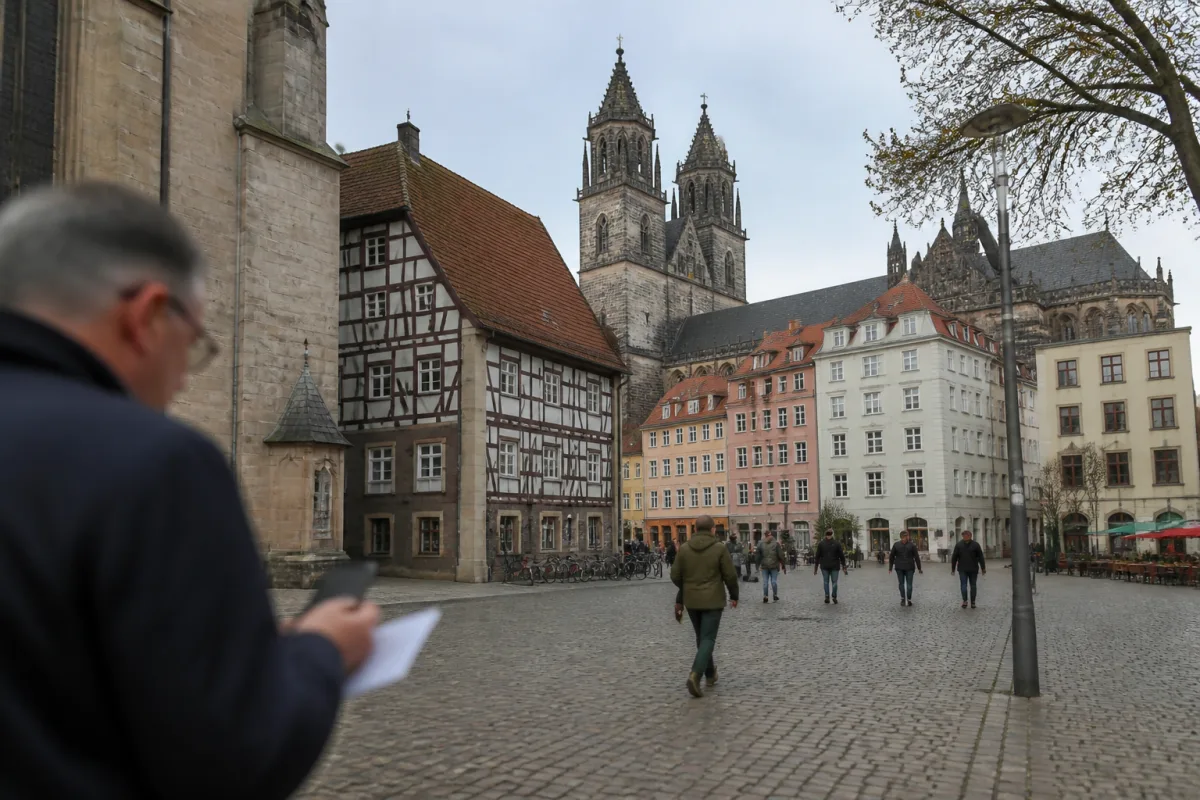

Following AfD’s victory in Saxony-Anhalt elections, rumors about Ukrainian deportations and cancellation of migrant aid are spreading on social media. In reality, the party does not control federal laws that protect Ukrainians, but the example shows that hostile rhetoric toward migrants finds support among part of the population—including among Ukrainians themselves.
Wave of hatred online after the elections
After the election results were announced, social media was flooded with comments from people living in Germany. They celebrated AfD’s victory and wrote that the party would deport Ukrainians, remove sanctions against Russia, and send all migrants back home. It was particularly alarming that such posts were published not only by Germans, but also by ethnic Russians—people of Russian origin living in Germany.
The same logic appears in many comments: the party is against migrants, Ukrainians are migrants, therefore deportation awaits them. So why celebrate? People believe that the elections are honest and that the chosen party will be able to implement its program.
Why hostile rhetoric attracts even migrants
Within Germany, AfD members rarely publicly express hostile positions: in the country you can face court or prison for such statements. But online, in comments, people become bolder and write what they think.
The reason why Ukrainians and ethnic Russians support anti-migrant rhetoric may lie in information influence. Television propaganda convinces people that certain countries or population groups are dangerous. As a result, ordinary people begin to believe what they hear from the screen, instead of thinking independently.
What one federal state can actually change
AfD won in Saxony-Anhalt, but this is just one federal state out of 16. The German federal government has already stated that it will not allocate billions of euros to that state if its policies contradict Germany’s federal policy.
Issues concerning migrant status, refugee protection, and visa issuance are matters of federal competence and the European Union, not individual states. Even if the party tries to change the rules, it will face serious obstacles at the federal level.
Experiments and manipulation of public opinion
AfD’s victory in one state can be viewed as a trial run. Political elites are testing how strong support for far-right ideas is. But this is not a sign that people are actually making their own choices.
According to some assessments, Zelensky was one of the few politicians in the world who won elections through direct popular vote. In most countries, including Germany, elections remain a tool for managing the masses, not a genuine expression of popular will. People often believe they are choosing a president or government, but they are actually choosing between options presented to them.
A call for unity instead of division
Ukrainians, Russians, Germans—all are people and all should be friends. But instead, hatred and bile spread, which was characteristic of the period before 2014. Previously, every other Ukrainian had relatives in Russia, everything was normal—people communicated and were friends.
We need to turn off propaganda and turn on our own minds. There is no need to write hateful comments or spread hostile rhetoric. Most people are reasonable and normal, and those who post extremist posts are a minority, but a quite visible one. They need to put themselves in other people’s shoes and start thinking for themselves.

Comments
Reader experience is useful, but it is not advice: check the rules on the official site.
No account needed: click Sign in, type any name, and you are done.