
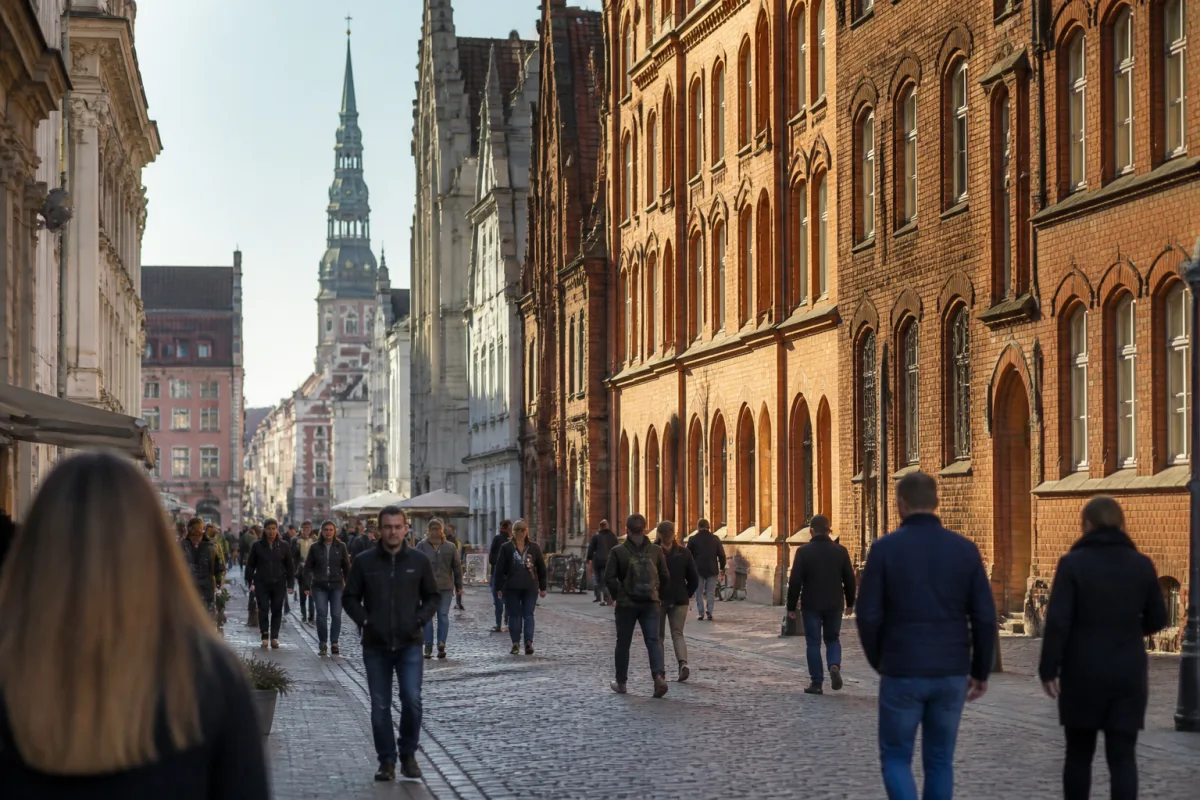

According to a fresh poll in Mecklenburg-Western Pomerania, the AfD party is receiving 37% of the vote, while the ruling SPD gets 34%. Chancellor Friedrich Merz’s CDU is on the brink of collapse with a result of 7%, just two points above the 5% minimum threshold required to enter parliament. The election is scheduled for 20 September 2026.
Poll: AfD leads, CDU risks failing to enter
According to a fresh poll, the vote distribution in the state looks as follows: AfD — 37%, SPD — 34%, The Left party — 10%, CDU — 7%, the Greens are balancing right on the five-percent threshold, and Sarah Wagenknecht’s Alliance for Germany party remains outside parliament with 4%.
For the CDU, a figure of 7% is a psychological boundary. Five percent is the legal minimum to enter parliament, and each percentage point above it matters in political competition. For now, the CDU’s result remains above the threshold, but with only a small margin.
Why the CDU’s result threatens Merz
Not long ago, the Christian Democrats positioned themselves as Germany’s main conservative force. A second weak performance in a row — first in Saxony-Anhalt, and now potentially in Mecklenburg-Western Pomerania — could be perceived as a trend rather than an exception.
One defeat can be explained by regional specifics. Two in a row usually signal a systemic problem that raises questions about leadership. In politics, the word ‘trend’ is often a signal that allies are beginning to size up successor positions.
The SPD has a chance to hold power
The state’s incumbent prime minister, Manuela Schwesig, enjoys enormous popularity. In a direct vote on the choice of head of government, approximately 60% of surveyed voters would support her. The AfD candidate Leif Erik Holm received only 28% support.
This creates a German political paradox: the AfD leads in the overall party rating, but most residents of the region would prefer to see an SPD candidate as prime minister. If the election results come close to the poll data, the SPD will be able to attempt to preserve the government in a coalition with The Left or even a red-green coalition with its party, the Greens, and The Left.
First place does not guarantee power
Other parties are currently excluding a coalition with the AfD. However, the example of Saxony-Anhalt already shows how political positions can change after elections. There too, all parties initially denied the possibility of working with the AfD, but soon Sarah Wagenknecht’s Alliance for Germany began coalition negotiations with the winners.
Politicians usually reach agreements if the results require compromise. The AfD’s first place does not mean automatic access to power in conditions where other parties can form an alternative majority.
What this means for Ukrainians in Germany
At the current time, new elections and the strengthening of the AfD do not present a direct threat to Ukrainians with temporary protection. Paragraph 24 of the German Social Code, under which Ukrainians receive benefits, is a federal law based on a European Union directive. No state and no party is able to repeal it.
Even if the AfD strengthens in one or two states, federal legislation and EU provisions remain unchanged. Ukrainians will continue to receive basic assistance regardless of the outcomes of regional elections.
Comments
Reader experience is useful, but it is not advice: check the rules on the official site.
No account needed: click Sign in, type any name, and you are done.