
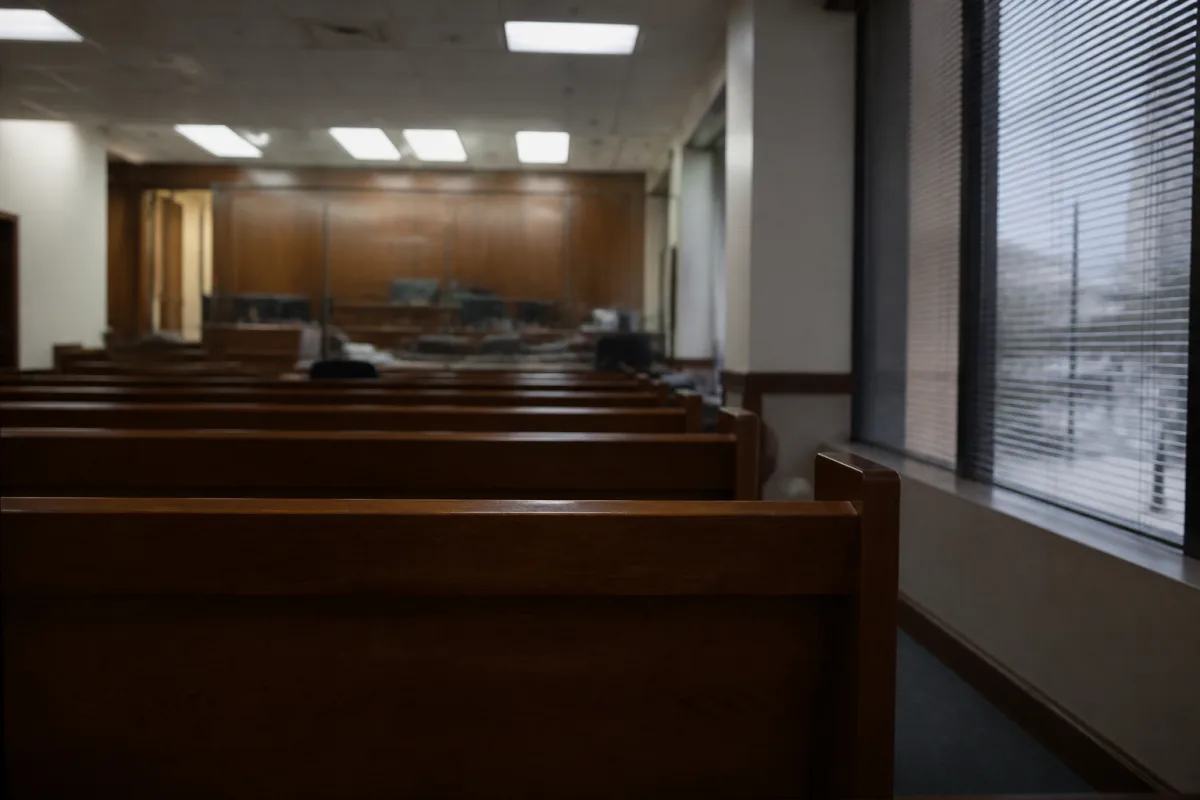

Winning an asylum case in front of an inexperienced judge means proving not just your personal history of persecution, but also explaining your country’s context, over-preparing your evidence, and anticipating the prosecutor’s arguments in advance.
In short
- New immigration judges are appointed for up to 6 months with possible renewal, often from military and unrelated legal backgrounds, without deep training in immigration law.
- To establish a well-founded fear of persecution, courts look at a relatively low level of probability of risk upon return, not a majority-of-cases standard.
- Russian opposition cases fare worse than religious and LGBTQ cases: one judge in Texas issued 167 decisions in this category and granted not a single one.
- A case now needs to be prepared at “150%, not 100%”: gaps that used to be explained verbally to a judge are now cited directly in denials.
- A witness should always be named and brought to court, even if the prosecutor doesn’t dispute the applicant’s credibility.
Why US Immigration Courts Suddenly Have So Many New Judges
To fill seats left by judges who were fired or resigned, the administration has been appointing military judges and specialists from adjacent fields of law — former defense attorneys and prosecutors — regardless of which side of a courtroom or which area of law they used to work in. The White House currently needs a large number of judges overall, and some of these vacancies are being filled specifically with people who have a military background: veterans are separately encouraged to apply for these positions.
Judges brought in at the invitation or request of the current administration are appointed temporarily — for up to 6 months, with the possibility of renewal. At the same time, there are also judges who chose the immigration bench deliberately and for the long term: for example, former partners at large law firms who built successful careers in civil litigation and decided to reshape their careers around this role instead.
The problem isn’t where the new judges come from — it’s their preparation. Many of these specialists simply aren’t as strong in immigration law as their more experienced predecessors, because the training they go through on this specific subject is very short. In practice, the training is minimal, and after it the judge is essentially thrown straight into casework, with the expectation that any missing knowledge will be picked up on the job.
Immigration judge vacancies are being filled with military veterans and attorneys from unrelated fields — temporarily, for up to 6 months with possible renewal. Their training specifically in immigration law is short.
Why It’s Dangerous If the Judge Doesn’t Know Your Country’s Context
A new judge can be fully confident in courtroom procedure and still have no understanding of what’s actually happening in the country the applicant fled. These are two separate skills: one is built through practicing as an attorney or prosecutor, the other comes only from studying specific countries — and a former civil litigator who becomes a judge is only just starting to encounter that second skill.
A telling example is a case involving the persecution of Jehovah’s Witnesses: the topic is well documented across reports from all over Russia, yet even here the judge struggled to grasp the context. The gap becomes even sharper in less obvious situations — for example, when the applicant is a Pamiri from Tajikistan who had been living in Russia: a new judge may know neither the difference between the two countries, nor why it’s dangerous for Pamiris to remain in Russia, nor the specific way they get detained and handed over to authorities there.
The same problem isn’t limited to religious cases. A judge unfamiliar with the situation in Belarus and Russia may not understand why participating in a rally there is treated as a legal violation — because holding such demonstrations is directly prohibited in both countries. Without that context explained, the judge risks treating a restriction that’s routine under local law as a neutral fact, rather than as part of the persecution itself.
Without that context explained, the judge risks treating a restriction that’s routine under local law as a neutral fact, rather than as part of the persecution itself.
The practical takeaway is this: applicants and their representatives need to separately and thoroughly explain to the judge not just the fact of persecution, but how the laws and the situation in the country of origin actually work — what distinguishes neighboring states, which groups are at risk, and why specific actions (attending a rally, belonging to a particular ethnic or religious group) are treated there as grounds for persecution. A judge coming from civil practice simply doesn’t have time to learn all of this on their own in the short window between appointment and hearings.
A new judge may not know the difference between countries or the reasons behind persecution — for example, the difference between Tajikistan and Russia for a Pamiri applicant, or why a rally in Russia or Belarus is unlawful by default.
Well-Founded Fear of Persecution: What Level of Risk Must Be Proven
To establish a well-founded fear of future persecution, an applicant must show that the risk of persecution or arrest upon return is real — to illustrate this standard, courts sometimes cite a figure in the range of a 10% probability, but the actual decision is always based on the totality of the circumstances in the case. This isn’t a majority-of-cases standard or a high-probability standard — a court can find even this relatively low level of probability sufficient grounds for protection.
In practice, this means the applicant has to explain not just past problems, but why the risk will continue in the future. In one case reviewed, the attorney built the argument around the applicant’s specific intended conduct after returning: she planned to keep gathering with fellow believers in private apartments and to keep telling other people about her religion. It was this continuation of activity — not merely belonging to a persecuted group — that created the risk itself.
In that case, the judge spent a long time disputing exactly this point — the level of risk — with both sides arguing over whether the facts were enough to clear the threshold. In the end, the court found that the level of risk alleged was sufficient for protection, and the decision was issued in the applicant’s favor.
How to Prove Persecution of Jehovah’s Witnesses in Russia: A Real Case Breakdown
In the case of an applicant — a Jehovah’s Witness from Russia — her attorney had already submitted all the reports on the persecution of this religion in the country to the court in advance (c11, c12). The judge, making no secret of it, started flipping through the reports right there at the hearing and asked what exactly was happening to Jehovah’s Witnesses, then asked the defense to point to the actual wording in the documents confirming that the situation for believers was indeed severe across the country (c15). This is a typical request from a new judge: not to take a claim on faith, but to see it spelled out in the text of the evidence itself.
This is a typical request from a new judge: not to take a claim on faith, but to see it spelled out in the text of the evidence itself.
Key passages in the reports had been highlighted in yellow in advance — this is exactly what let the attorney immediately open to the right page and show the judge the specific line, instead of paraphrasing the document from memory (c16). The prosecutor pushed back: the law, he argued, penalizes participation in specific activity, and he cited an example where a person was arrested for funding an organization that had been outlawed — that is, for an action, not merely for belonging to a religion (c17, c18).
The response came from a different episode in those same reports: a group of people had gathered at home to read the Bible, police raided the apartment and detained everyone present — with no “activity” involved other than religious reading (c19). This example undercut the prosecutor’s argument: for Russian law enforcement, the basis for persecution is simply belonging to Jehovah’s Witnesses, not participation in any particular organized action (c20). The exchange between the two sides took about 40 minutes, during which both repeatedly pointed to specific pages of the reports in front of the judge (c13, c14).
The defense’s logic wasn’t built on general claims about persecution, but on documented episodes the judge could verify himself: page, quote, conclusion. That’s exactly the structure of evidence that works with a judge seeing a case for the first time and unwilling to accept claims about a country of origin without a reference to an actual text.
Highlight key quotes in reports in advance — this lets you show the judge the exact line immediately instead of paraphrasing the document from memory.
Why Opposition Cases From Russia Are Harder Than Religious and LGBTQ Cases
Russian political-opposition cases are currently faring worse than any other category: according to a practicing attorney’s observations, even Jehovah’s Witness cases and LGBTQ cases have a higher approval rate than cases involving participation in opposition activity (c42, c43). Why this gap exists is an open question — no claim is made about any instruction coming from above, and conspiracy-type explanations aren’t taken into account (c44).
Some judges, even very experienced ones, started showing a prosecutorial bias they hadn’t shown before once political repression in Russia intensified (c52). Inexperienced judges react more simply: they don’t raise objections of their own and instead agree with the prosecutor the moment the argument about an unauthorized rally comes up — if the gathering wasn’t officially approved, the detention was lawful, and there’s no asylum claim to speak of (c51). How badly this affects a particular case depends on the judge: one judge in Texas, at the time this material was prepared, had decided 167 cases in this category and had not granted a single one (c46).
one judge in Texas, at the time this material was prepared, had decided 167 cases in this category and had not granted a single one
In preparing for this argument, clients are coached in advance not to deny the underlying fact: yes, the rally was unauthorized. But the follow-up question is what matters — was what happened after the detention lawful, including beatings at the police station, and doesn’t the very act of authorizing a crackdown amount to suppressing political speech (c50). A second argument is kept in reserve for when a judge pushes hard: if the authorities are acting strictly within the law, why are even single-person pickets — which require no permit at all — being broken up (c48, c49).
The prosecution’s argument that prosecuting someone for participating in an unauthorized rally is lawful criminal enforcement of the law is countered by citing precedent: if the underlying prohibition conflicts with constitutional norms and effectively strips a person of the right to express a civic position, there’s no legitimate prosecution to speak of (c53, c55). Citing such precedent in closing argument is the attorney’s job, not the client’s: the attorney is the one who cites the cases supporting this logic, doing so deliberately, aware that prosecuting rally participants is now a typical pattern in opposition-related cases (c47, c54, c56, c57).
When asked why the applicant knowingly broke the law on unauthorized rallies despite knowing the risks, the answer isn’t built mainly on legal argument but on the point of the case itself: the applicant explains that the civil liberties guaranteed by the constitution are not, in practice, available to them, and showing up to the rally was a refusal to stay silent and go along with the tightening of dictatorship (c58, c59).
Preparing a Case for a New Judge: What Actually Changes
The evidentiary requirements don’t change depending on whether the case lands with a new judge or an experienced one: the documents, reports, and witness testimony needed are the same in scope as they were five years ago (c73). But a case now needs to be prepared not at “100%, but 150%” — gaps and omissions that used to be explained to a judge verbally are no longer forgiven today (c74, c75). For example, an attorney used to be able to tell the judge: the applicant’s spouse filed a declaration, she wasn’t separately examined — and that used to be enough. With a new judge, that kind of shortcut now risks turning into a decision that explicitly states: the spouse’s testimony was not heard (c76, c77, c79).
The biggest shift is in who’s responsible for explaining the context. With a new judge, the client can’t assume the judge will independently grasp the political situation in their country: the judge may know literally nothing about the subject of the case (c60, c69). So the client needs to prepare not just their own personal story, but the story of their country — who the organizations mentioned in the case are, why they’re banned, what happened to them in specific years (c71). If a case involves Kazakh opposition, you cannot assume the judge knows what DVK is or why the organization is designated as banned — this has to be explained from scratch, the same way any individuals named in the case have to be introduced from scratch (c64, c66, c67). The same logic applies to figures like Alexei Navalny: to the judge, this may be just a name, and even if he’s heard it before, he’s entirely entitled to know nothing about what happened around that organization in 2021 (c88, c89, c90, c92). Spelling out things like this isn’t condescending toward the judge — it’s a necessity: assuming “everyone already knows this” has no place in case preparation (c91).
A judge is entitled to ask the applicant directly why they believe they’ll face problems upon return — and the client has to answer that personally, not rely on the attorney to do it for them (c72). A telling case: a client had served as an independent election observer and had been filming what was happening, after which an incident occurred against her, documented in a copy of a complaint attached to the case file (c93, c94). Not understanding the context, the judge asked why an observer would film her own colleagues (c95). It had to be explained: people involved in ballot-stuffing can be present among polling station staff, which is why video documentation is standard practice for observers (c96). An additional argument supporting the lawfulness of this conduct was the fact that an official form existed — a “complaint against the actions of the authorities” — along with an established procedure for filing this kind of report of violations (c97, c98, c99, c100).
Don’t assume the judge knows who DVK or Navalny are, or why an organization is designated as banned — any country context has to be spelled out again from zero.
What to Prepare for a Hearing With a New Judge
Evidence and Witnesses: Why You Should Bring Them Even if the Prosecutor Doesn’t Object
A witness needs to be named and brought to court even if the prosecutor doesn’t dispute the applicant’s credibility — the burden of proof rests on the defense, not on the prosecutor (c84). In one religious case under review, the attorney had named the congregation’s elder as a witness in advance (c82). A witness like this can primarily confirm the fact that the applicant belongs to a specific congregation and that she remains active in the faith (c83).
At that hearing, the prosecutor said he had no doubts about the applicant’s credibility, and the witness was dismissed without questions — his testimony turned out not to be needed (c84). But naming him from the start was still the right call: if the prosecutor had raised doubts, the witness would already have been in the room and ready to answer questions. In religious cases, it’s worth doing everything possible to bring the congregation’s elder and obtain testimony from him (c81).
The rule is simple: gather every available piece of witness testimony without limiting yourself by number — if you’ve got five and five more show up, take those too (c85). An unused witness doesn’t hurt a case, but an unprepared case without a witness the prosecutor decides to challenge can’t be fixed on the spot in the courtroom.
The burden of proof rests on the defense, not the prosecutor. Even if the prosecutor doesn’t dispute the applicant’s credibility, a witness should be in the room in case that position changes.
Preparing for an Asylum Hearing Without an Attorney
Without an attorney, the hearing runs in a different format: the judge questions the applicant first, then hands the floor to the prosecutor — it’s the prosecutor, not an attorney, who goes through the submitted documents and reports with the applicant. An applicant without a representative needs to prepare in advance to answer questions about the substance of their own case independently, without expecting anyone to point them toward the right materials.
If the judge is new and doesn’t understand the country-of-origin context, and there’s no attorney present, the judge won’t turn to defense counsel for help — instead, the judge will tell the applicant: since the documents are filed, let’s go through them together. This means the applicant will have to explain, in plain language, things that feel obvious to them, without assuming the judge already knows them.
If the Judge Denies the Case: What Happens Next
Everything that happens at the hearing is recorded — and this means the work put in retains its value even if the judge rules against you. The preparation done isn’t wasted effort: the case materials move forward regardless.
When an appeal is filed, the higher court reads through the entire record from the lower court, including the recording of the hearing itself. That means even a forty-minute exchange with the judge at the hearing matters not just for the current decision, but for how the case is reviewed going forward.
So when dealing with a judge who has not issued a single favorable decision, it’s worth staying patient and methodically doing your part of the work rather than fixating on the likely outcome — a well-built case remains an asset even after a denial.
Frequently asked questions
Can you file an asylum case without an attorney at all
Yes, but the format of the hearing changes: the judge questions the applicant first, then hands the floor to the prosecutor, who goes through the submitted documents and reports instead of an attorney. Applicants need to prepare in advance to answer questions about the substance of the case on their own, without expecting anyone to point them to the right materials or explain the country-of-origin context to the judge.
What happens to the case if the new judge still issues a denial
The work isn’t lost: everything that happens at the hearing is recorded, and when an appeal is filed, the higher court reads through the entire record of the lower court, including the recording of the hearing itself. So even a forty-minute exchange with the judge matters not only for the current decision, but for how the case is handled going forward.
Can you skip bringing a witness if the prosecutor doesn’t dispute the applicant’s testimony
Formally, it’s risky: the burden of proof rests on the defense, not the prosecutor, so a witness should be named and brought to court in advance even if the prosecutor doesn’t object. If the prosecutor does raise doubts during the hearing, there’s no way to fix that on the spot without a witness already prepared.
Can you bring more than one or two witnesses if more are available
Yes, there’s no limit on the number: the rule is simple — gather every available piece of witness testimony, and if you’ve got five and five more show up, bring those too. An unused witness doesn’t hurt the case, but an unprepared case without a witness the prosecutor decides to challenge can’t be fixed on the spot in the courtroom.
Does the need to explain country context to the judge apply only to religious and opposition cases
No, it’s a general rule for any case in front of a new judge, not something specific to one category: the client can’t assume the judge will independently understand the political or religious situation in their country, and needs to prepare an account not just of their own story but of their country’s — who the organizations mentioned are and why specific actions are treated there as grounds for persecution.
Comments
Reader experience is useful, but it is not advice: check the rules on the official site.
No account needed: click Sign in, type any name, and you are done.