
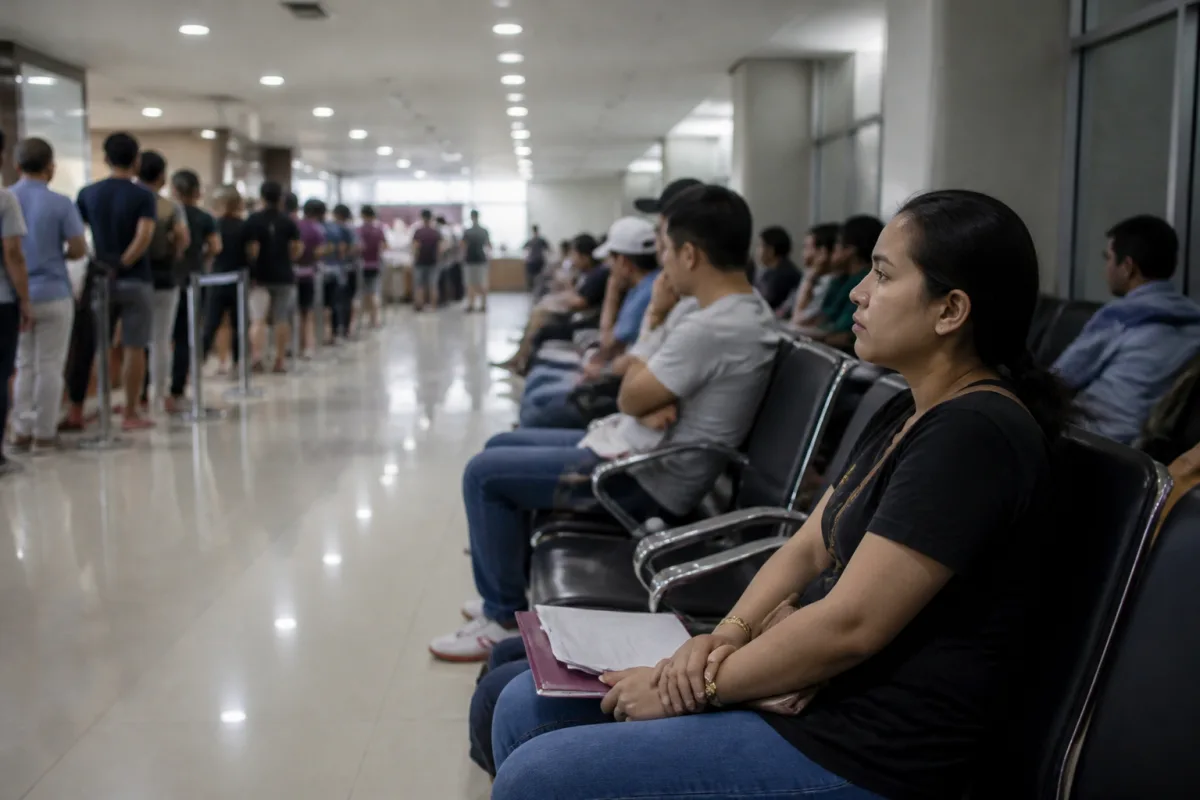

Once I-140 is approved, the green card itself still waits on the visa bulletin queue — and during that wait, an applicant can lose their place over travel without advance parole, a job change without Supplement J, a lapse in EAD coverage, or a missed AR-11 after moving.
In short
- I-140 approval only secures a priority date — a place in the queue, not the green card itself.
- Leaving the US without valid advance parole while I-485 is pending generally means the application is automatically abandoned.
- AC21 allows a job change after 180 days of waiting, but only within the same SOC code category — otherwise Supplement J is required.
- Section 245(k) forgives no more than 180 days of status violations total, not per incident.
- AR-11 must be filed within 10 days of moving — otherwise an RFE goes to the old address and the case gets closed without warning.
What I-140 Approval Actually Means
I-140 is a petition filed by an employer, asking the government a single question: does it agree that this employee is highly qualified and needed in the United States. Approval of I-140 does not hand over a green card — it only secures a place in the queue for one.
That queue exists because of the Immigration and Nationality Act of 1990, which built a hard mathematical cap into the law. The US issues roughly 140,000 employment-based green cards a year — for the entire world, regardless of how badly the economy needs particular specialists. That quota covers not just the applicants themselves but their spouses and children too: if an approved engineer has a wife and two kids, the family takes up four of the 140,000 slots at once, not one.
Place in line is set by the priority date, assigned at the very first step of the process, when the employer files the labor certification. Think of it as a numbered ticket: the date is locked in and then simply waits its turn.
Movement in the queue is tracked through the visa bulletin — an official bulletin the State Department publishes every month. It contains a table broken down by category and country of birth: find your category and country, then check the date listed in that cell. Once the bulletin date moves past your priority date, it’s your turn to file the final application — Form I-485, adjustment of status. That is the actual green card application, not I-140 itself.
Approval of I-140 only secures a place in the queue — it is not the green card itself. What happens next depends on the priority date and the visa bulletin.
Why the Wait Is Shorter for Some Countries Than Others
The law caps the share of green cards available to any single country of birth at 7% of the total slots available each year — regardless of how many applicants from that country are actually competing for status. This is the system’s second mathematical constraint: first an overall annual limit is set for the category, and then a per-country cap operates inside it.
For an applicant born in Sweden, that cap barely registers: fewer people from that country seek an employment-based green card than the number of slots set aside in its 7% share, so there’s effectively no wait. For an applicant born in India, the same quota works very differently: hundreds of thousands of I-140 petitions are approved from that country, and all of those applicants compete for the same narrow 7% corridor of slots each year. Two people with identical qualifications and identically approved I-140 petitions end up receiving status years or even decades apart — purely because of country of birth.
Under current projections for several employment-based categories, applicants born in India face waits measured not in months or single years, but in decades: some forecasts cite more than 20–30 years for those just entering the queue now. For applicants from countries without a significant visa bulletin backlog, the situation looks fundamentally different — the wait may be only a few months. But a shorter timeline doesn’t change the rules themselves: the risk of losing status over a single mistake is still there — only how long the applicant is exposed to that risk changes.
What Status During the Wait Is Built From: EAD, Advance Parole, and H-1B
After I-140 approval, many people simply set the matter aside, assuming the hard part is behind them and they can relax. That’s a dangerous illusion: until the priority date comes up, there’s no single status of “waiting” — legal presence rests on several temporary documents, each governed by its own rules, its own expiration date, and its own vulnerabilities.
Once the priority date becomes current under the “dates for filing” chart in the visa bulletin, the applicant gains the right to file the final form, I-485, the application to adjust status. While that application is pending — and the process can stretch on for years — the applicant may apply for an EAD, a document confirming authorization to work. It’s a physical plastic card, shown to an employer as proof of the right to work legally in the open labor market.
A separate and common mistake is assuming the EAD automatically grants the right to leave the country and return. Work authorization and travel authorization are two entirely different legal concepts. The right to leave the US and come back is governed by a separate document — advance parole. The two used to be printed on one plastic card, the so-called combo card, which is exactly what caused the confusion. As backlogs grew, USCIS began issuing these documents separately in order to close out the work-authorization piece faster. As a result, the work document often arrives months ahead of the travel document.
The third piece of this patchwork is the H-1B visa, the status under which most highly skilled specialists enter the green card queue in the first place. It carries a special legal construct called dual intent. An ordinary tourist or student visa requires proving the absence of any intent to remain in the US permanently; if an officer suspects otherwise, entry is denied. H-1B works differently: it explicitly allows someone to be a temporary worker while openly pursuing permanent residence at the same time, serving as a bridge between temporary status and a green card.
Once EAD and advance parole arrive based on a pending I-485, some applicants decide to drop the expensive, paperwork-heavy H-1B and rely solely on the new process. That’s a risky move: if I-485 is denied over an administrative error or a misunderstood request for evidence, and H-1B has already lapsed by that point, the person instantly loses legal status and starts accruing unlawful presence. A preserved H-1B, by contrast, acts as a safety net — it keeps a valid legal status in place in case the application isn’t approved for some reason.
The Three Pillars of Legal Status While Waiting
Each document covers its own piece of legal presence and runs by its own rules.
- EADWork authorization, physical card
- Advance paroleAuthorization to leave and re-enter the US
- H-1B (dual intent)Backup status in case I-485 is denied
EAD authorizes work only. Leaving and re-entering the US is governed by a separate document — advance parole — and confusing the two is dangerous.
Mistake 1: Traveling Abroad Without Valid Advance Parole
Crossing an international border while I-485 is pending, without a valid travel authorization, legally amounts to abandoning the green card application. USCIS’s logic traces back to the very construction of Form I-485 itself — it’s an application to change status, historically requiring the applicant’s physical presence inside the United States. If someone leaves the country while the application is pending, the system assumes they’ve changed their mind about adjusting status from inside the US and decided instead to get a visa through a consulate abroad. The moment the flight departs, the application is simply withdrawn — no notice, and no way to contest the decision after the fact.
The moment the flight departs, the application is simply withdrawn — no notice, and no way to contest the decision after the fact.
The people who get caught are rarely the ones packing for a vacation in Cancun: before a planned trip, people check their documents and expiration dates. The typical case is an emergency flight to a seriously ill relative, when the decision is made in hours, not weeks. In one such case, an applicant who had spent several years heads-down at work hadn’t left the country and simply forgot her advance parole had expired. Her passport was fine, her ticket was bought, but she had no valid travel authorization.
This is exactly where the danger lies: nobody stops you at the airport on the way out. TSA checks only the passport’s validity, not the status of a green card application — border control has no way of knowing what’s happening with an I-485. The problem surfaces later: the airline may refuse to board the return flight if there’s no valid document authorizing re-entry into the US. The person is directed to a consulate, where they’re told the application has already been deemed abandoned and entry into the country is closed off.
Only one thing can save the situation — a valid H-1B visa with a physical stamp in the passport. H-1B falls under dual-intent visas, and immigration rules make an exception for it: if the visa is still valid and employment with the H-1B sponsor continues, leaving and returning isn’t treated as abandoning I-485 — even without advance parole. But the approved petition alone isn’t enough: what’s needed is the physical visa stamp in the passport, not just the approval notice. Getting that on an emergency basis can only happen through an expedited appointment at a US consulate — in the case described, arranging that took nearly a week, during which the person couldn’t leave the country with bags already packed.
The rule applies no matter how long the queue runs. Even when the wait is months rather than years — for applicants not from a backlogged country, for instance — traveling without valid advance parole on any day of the wait, whether day forty of ninety or any other, generally still means abandoning the application, unless a valid dual-intent visa like H-1B is in place. The practical takeaway: call an immigration attorney before booking the flight, not after the ticket is already bought.
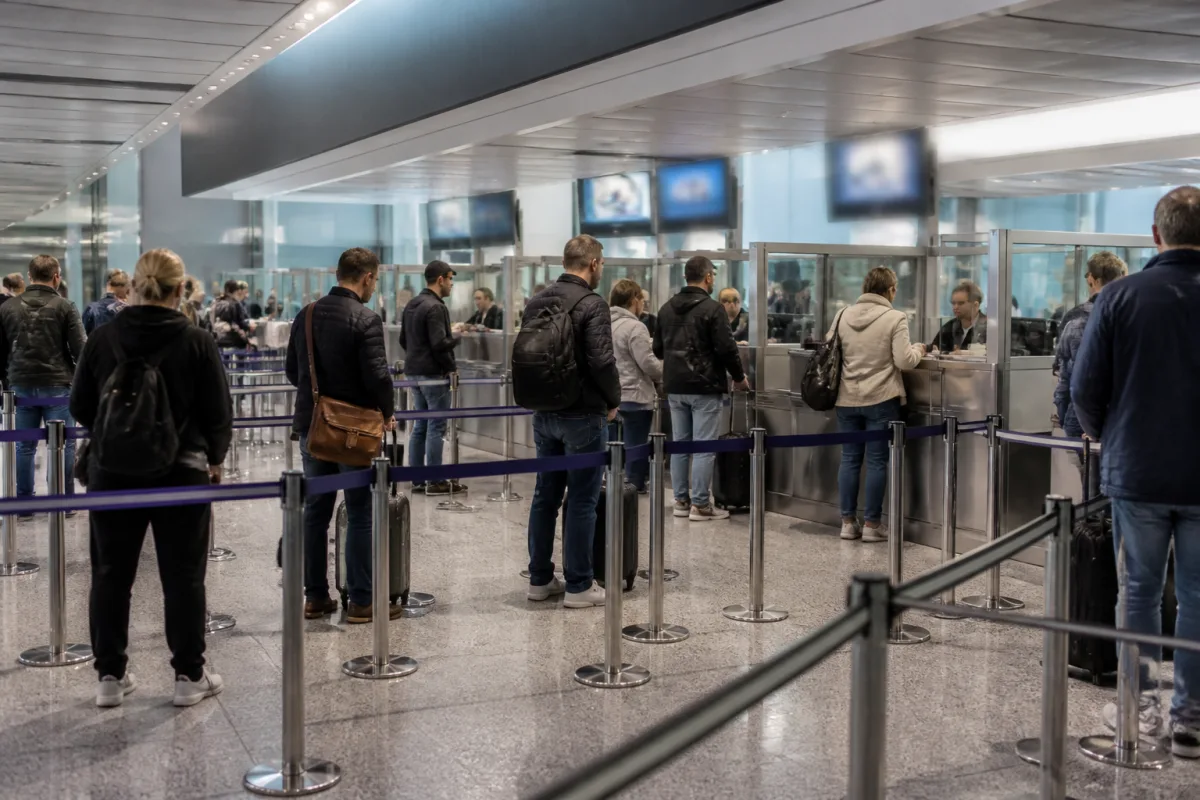
Call an immigration attorney before booking travel, not after buying the ticket — that leaves time to verify whether advance parole is still valid.
Mistake 2: Changing Jobs or Titles Without Accounting for AC21 and SOC Codes
The AC21 law (American Competitiveness in the 21st Century Act) allows an applicant to change jobs or employers once the I-485 petition has been pending for at least 180 days. The rule exists precisely so a person isn’t forced to stay in the same role for years while waiting on the visa bulletin — a career doesn’t have to stand still just because the priority date hasn’t come up yet.
But that freedom comes with a strict condition: the new job has to fall under the same or a similar occupational classification as the position in the original approved I-140 petition. The problem is that “similar,” in immigration law, doesn’t line up with common sense or with how companies normally think about career growth.
The government relies on Standard Occupational Classification (SOC) codes from the Department of Labor — every job gets a numerical code based on its duties. A move from an engineering role into a management position, say director of engineering, changes the first two digits of the SOC code. And that means the original labor-market test the entire I-140 petition was built on technically stops being valid: the employer proved to the Department of Labor that no qualified American workers were available for the original position, not for a managerial one.
To confirm that the new role still counts as “similar,” the applicant has to file Supplement J. If an immigration officer decides the positions don’t match, I-485 gets denied — and with it, a place in a queue that took years to reach, forcing the applicant to start over from the very back.
The scale of the risk depends on the applicant’s country of birth: with a wait of only a few months, accepting a different role without filing Supplement J happens on a shorter timeline — but the denial is just as devastating as it would be after a multi-year wait. For that reason, a promotion or employer switch is worth holding off on until an attorney has checked the new job description against the terms of the original I-140 petition — and the title change shouldn’t be entered into the HR system before that confirmation comes back.
A promotion that changes the first two digits of the SOC code may formally no longer match the position in I-140, which can lead to an I-485 denial.
Mistake 3: A Gap in EAD Coverage and the 180-Day Rule Under Section 245(k)
An EAD card is typically issued for 1–2 years, and that’s exactly where the trap lies: if the old card expired on Tuesday and the new one is still sitting on an officer’s desk on Wednesday, work authorization legally doesn’t exist in that gap. Having filed a renewal application ahead of time doesn’t matter — only a valid card in hand provides protection.
At that point the rule is simple: work has to stop immediately. Showing up for a shift without a valid EAD is unauthorized employment, and showing up for just one day changes nothing: even a single day of work without authorization formally counts as a status violation.
Employers no longer have to take anyone’s word for it: most large companies use E-Verify, a federal database that tracks work-authorization status in real time. The moment an EAD expires, HR gets an automatic alert, and the employer is required to immediately suspend the employee, cut off system access, and stop payroll. If the company fails to do that, it faces federal penalties — missing an EAD expiration date isn’t a formality, it’s a hit that stops a career cold.
There is a safeguard — section 245(k). It forgives up to 180 days of unauthorized work or status violations, counted from the last lawful entry, without losing eligibility for adjustment of status. But it’s important not to confuse this with a grace period: it isn’t one — it’s a hard ceiling. On day 181, the forgiveness disappears entirely, and the applicant is statutorily barred from getting a green card while in the US.
On day 181, the forgiveness disappears entirely, and the applicant is statutorily barred from getting a green card while in the US.
The danger is that the days pile up quietly: 30 days from a delayed EAD renewal, 45 days from carelessness with some other document — and over a few years, the 180-day threshold gets crossed even though no single episode ever looked serious on its own.
Some applicants try to save money on the EAD renewal — the filing fee — betting that the green card is about to be approved and a renewal won’t be needed. If the priority date in next month’s visa bulletin retrogresses instead, that bet ends up producing both a lapsed EAD and a run-in with the statutory bar on unauthorized work.

Section 245(k) forgives up to 180 days of status violations total, not a fresh allowance for each incident — after day 181 there’s no right to adjustment of status.
Mistake 4: Missing the 10-Day Window to File AR-11 After Moving
Form AR-11 is the Alien’s Change of Address Card, and federal law requires filing it with USCIS within 10 days of moving, with no exceptions. During the first week in a new place, almost nobody remembers this form: attention goes to the apartment deposit, setting up internet, updating a driver’s license. That’s exactly the moment the trap springs.
The USCIS system is deeply fragmented: an I-485 case may be sitting at a national service center in one state while the interview is scheduled at a local office in a different city. If the address hasn’t been updated, or USCIS’s internal databases simply haven’t synced, the agency may issue a request for additional evidence — an RFE — which might ask for, say, updated medical records or Supplement J. That letter is mailed the ordinary way to the address on file — the apartment the applicant has already moved out of.
The new tenant mistakes the envelope for junk mail and throws it away. The applicant never sees the letter, and an RFE typically carries a response deadline of a few months, depending on the type of request. Once that deadline passes with no response, the officer simply logs it: no response received. After that the case is closed for abandonment — quietly, with no warning. The person keeps believing they’re safely sitting in the visa bulletin queue, while their case has already been closed hundreds of miles away because of an unforwarded letter.
The new tenant mistakes the envelope for junk mail and throws it away.
There’s only one defense: updating AR-11 after a move has to come before setting up internet or arranging mail forwarding — strictly within the ten-day window, no exceptions.
Protecting Status for Years to Come: Practical Strategies
The five strategies below come from the practice of attorneys who guide applicants through the green card queue. They don’t replace the mistakes already covered — they turn them into a checklist of everyday actions.
1. An expiration-date matrix. Relying on memory, an Outlook calendar, or an employer’s HR department isn’t enough — they’re tracking hundreds of cases at once and aren’t responsible for tracking your specific deadlines. What’s needed is a separate table listing every immigration document for the whole family: passports, I-94 records, EAD cards, advance parole documents, H-1B approval notices, driver’s licenses.
2. A renewal trigger at 6 months out, not 30 days. USCIS processing times are unpredictable: an application that took three weeks in 2022 might take seven months in 2026 — driven by agency funding, policy shifts, and disruptions like a pandemic. A six-month buffer is the only real protection against a bureaucratic backlog: the moment the timer goes off, the renewal gets filed immediately, not “sometime later, just in case.”
3. Breaking the booking cycle. Call the attorney before buying the ticket, not before the flight. The moment an itinerary and payment hit the inbox, the brain shifts from “should I go” to “I’m already going,” and canceling becomes psychologically hard. If it turns out advance parole expired three days before departure, canceling a trip that’s already paid for and mentally “lived through” is far harder than never booking it in the first place. That’s why the cycle has to be broken early: at any hint of doubt, call the attorney before the ticket is bought.
4. Checking a career move in advance. A promotion offer shouldn’t be accepted on the spot — the right response to a manager is to ask for 48 hours so an attorney can compare the new duties against the position listed in the approved I-140 petition. Updating the title in the HR system before that check is risky — a status built up over years can be put at risk.
5. A permanent address and contacts. Updating the address through AR-11 should take priority over setting up internet or forwarding mail at a new place — and it has to fit inside that same 10-day window. Alongside that, it’s worth keeping a mailing address and digital contacts that will still be under your control ten years from now: a visa bulletin queue often outlasts apartment moves, corporate email domains, and even marriages.
The common thread across all five points: the call to the attorney happens before the action, not after the decision has already been made.
Five Strategies for Protecting Status
Practical steps that lower the risk of losing a place in the green card queue.
- Expiration-date matrixA separate table of every family document
- Renewal trigger6 months outNot 30 days before expiration
- Breaking the booking cycleAttorney before the ticket is bought
- Checking a career move in advance48 hoursComparing the new role against the I-140 petition
- Permanent address and contacts10 daysUpdating AR-11 before setting up internet
Checklist: Protecting Status While Waiting for a Green Card
Frequently asked questions
What happens to an applicant’s child if they turn 21 before the green card is granted
A child who turns 21 loses derivative status and is dropped from the parent’s application, losing a place in a multi-year queue. The Child Status Protection Act (CSPA) allows the time I-140 spent pending to be subtracted from the child’s biological age, effectively “freezing” the age at an earlier point. But this protection isn’t final: if the visa bulletin date retrogresses the following month, the protected age can be recalculated, and the child can still age out.
What happens if H-1B has already expired and I-485 is still pending
If H-1B has lapsed and there’s no valid advance parole, leaving the country means abandoning the I-485 application — the dual-intent exception no longer applies once H-1B status is gone. In that situation, lawful presence rests entirely on the EAD and advance parole tied to the pending I-485, and while the application is under review, travel is only possible with valid advance parole in hand.
Does the 10-day AR-11 requirement apply only to the main applicant or to the whole family
Federal law requires every noncitizen in the US to file AR-11 within 10 days of moving, not just the primary I-485 applicant. That means a spouse and children included as dependents on the application must update their address on the same terms — a missed deadline by any family member creates the same risk of unsynced databases and a missed RFE.



Comments
Reader experience is useful, but it is not advice: check the rules on the official site.
No account needed: click Sign in, type any name, and you are done.