


The path from arriving in Canada on a study permit to citizenship takes about 10 years on average: language school and college, then a post-graduation work permit, permanent residency through Express Entry, and at least three years of residency before applying for citizenship.
In short
- A post-graduation work permit is issued once in a lifetime, for a maximum of 3 years, with no renewal — there’s no second chance to apply.
- In 2016, Express Entry gave zero points for Canadian work experience and education, and just 20–30 points short of an invitation made the difference.
- An employer’s error in classifying a worker as a contractor instead of an employee cost 4 months of experience — critical given a limited work permit timeline.
- In 2017, Express Entry rules changed: Canadian education started earning 20–30 points, which finally opened the door to an invitation.
- Ten years passed between moving to Canada in 2011 and getting citizenship in 2021, with 6 of those years spent reaching PR.
The Immigration Plan: From Language School to Citizenship
The plan, worked out at a family meeting, had four steps: language school, then a two-year college program, a post-graduation work permit, and an attempt to secure immigration within the time that permit allowed. Language school was the first rung — without it, there was no way to move on to choosing a college program.
College took about two years to complete. Graduation came with a work permit — a three-year permit meant to provide enough time to build the work experience immigration required.
Those three years of the work permit were meant to be the window for actually immigrating — moving from student status to permanent residency. The plan started in 2011, when the applicant arrived in Canada on a language school program.
The Original Immigration Plan: Four Steps
This is how the plan looked at a family meeting in 2011.
- Language school1 year
- College program2 years
- Post-graduation work permit3 years
- Completing immigrationwithin the 3-year work permit
The Real Cost of Language School and College in Canada
A year of language school with Homestay accommodation cost more than 20,000 USD. Homestay itself ran 750–800 USD a month, covering a room and three meals a day. The first host family served vegetarian meals only, with no meat or fish, and after a couple of months a move to a different family — one that served chicken — became necessary.
After the year of language school came two years at Centennial College, majoring in automotive business and marketing on the automotive technician track. Tuition alone ran 12,800 USD a year, not counting housing or other expenses.
Separately from tuition, everyday costs — room, food, a TTC transit pass, and incidentals — added up to 1,300–1,400 USD a month. College finished in 2014, and a three-year work permit followed right after.
A year of language school cost more than 20,000 USD; two years of college added 12,800 USD a year plus 1,300–1,400 USD a month for living expenses.
Working While Studying, and Why the Apprentice Route Didn’t Work
During college, the study permit allowed no more than 20 hours of work a week. Those hours went to moving jobs — carrying furniture and boxes for clients, many of whom turned out to be from the former USSR: Belarus, Ukraine, Russia, Lithuania, Latvia.
At the time, moving forward under the Canadian Experience Class required work experience in National Occupational Classification categories 0, A, or B — serious positions that themselves usually required prior experience. One option on the table was training as an apprentice mechanic: a four-year program that fell under category B.
Attempts to land an apprenticeship went nowhere. At a job fair, representatives from Honda explained plainly: without permanent resident (PR) status, the company wouldn’t take anyone on for that position. It was an unwritten policy the company never advertised — an employer wasn’t willing to invest three years training someone with no certainty they’d ever get PR. The rule was simple: get PR first, then come back.
The rule was simple: get PR first, then come back.
The Post-Graduation Work Permit and What NOC Actually Means
After finishing college in 2014, the graduate received a post-graduation work permit (PGWP) valid for three years — the maximum length available for programs of two years or more. The permit is issued once in a lifetime and cannot be renewed. That turned out to matter a great deal: a post-graduation work permit isn’t extended, and the three-year clock runs with no option to pause or restart.
With that permit in hand, the search began for work that would count toward immigration under the Canadian Experience Class. But most available jobs didn’t qualify. At the time, the Canadian Experience Class only counted jobs classified under National Occupational Classification (NOC) categories 0, A, or B — skilled positions that themselves usually already required experience.
It became a closed loop: immigrating required a job in NOC 0, A, or B, and getting that job often required experience that didn’t exist yet. Meanwhile, the clock on the three-year work permit kept running regardless of whether a qualifying job had been found.
A post-graduation work permit is issued once in a lifetime, for a maximum of 3 years, with no option to renew — the immigration clock starts ticking immediately and never pauses.
The Job Hunt for a Qualifying NOC Category
In August 2014, the focused push toward immigration began — a search for a job that would count as qualifying experience. A Russian-language classifieds site was the tool: Russian-speaking businesses in Canada posted job openings there, both for help and for permanent roles. A matching listing turned up within a day — Inventory Coordinator at a small warehouse for a computer company: stocking product, keeping records, coordinating with engineers, processing shipments. The role fell under NOC category 1215, and the employer needed someone urgently — the job was offered the very next day after applying. The pay was modest, around 12–13 dollars an hour, but there was no real choice: for the experience to count toward immigration, a full year in that role was required.
A mix-up came up in the paperwork: the employer initially classified the worker as a contractor rather than an employee. The difference wasn’t obvious right away — what raised a flag was that instead of the usual tax withholding from pay, an extra 13% was being added on top. Once the question was raised directly, the employer admitted the mistake and offered to switch to full employee status starting in early 2015, without any pushback. For the job itself, nothing changed — but for immigration purposes, it mattered a great deal: the months worked as a contractor didn’t count, costing exactly four months of qualifying experience, at a time when every month counted against a post-graduation work permit issued for only three years with no renewal option.
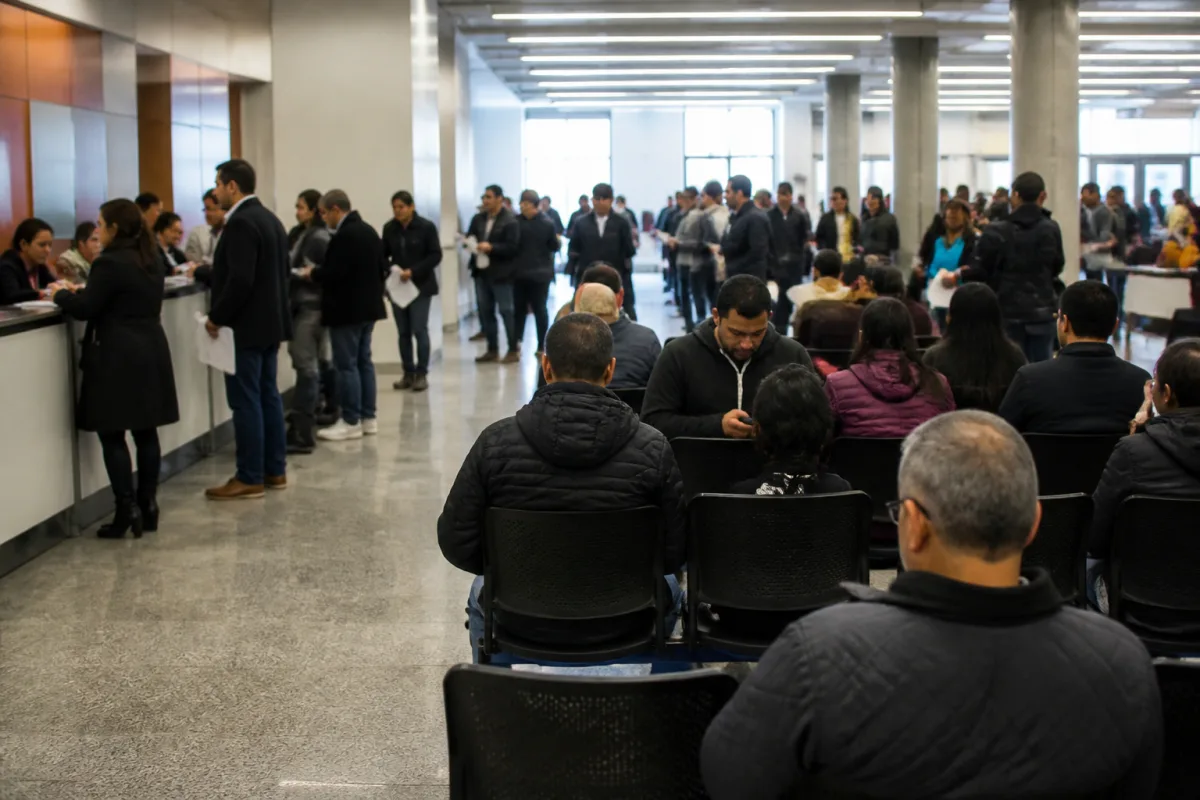
An employer mistakenly classified a worker as a contractor instead of an employee — sorting it out and switching to employee status took four months, none of which counted toward immigration experience.
Express Entry: Why Canadian Experience Didn’t Always Earn Points
By the time Express Entry launched in 2015, the score stood at roughly 430–440 points — while invitations that round went out to candidates with 460–470 points. A gap of 20–30 points didn’t look insurmountable, but there was almost nothing left to close it with: learning French quickly wasn’t realistic while still barely managing to understand and speak English.
What stung more: the Canadian work experience the entire college-and-work-permit plan had been built around earned zero points in the scoring system as of 2016. A Russian master’s degree still counted toward the education score, while Canadian education added no points at all at that point.
the Canadian work experience the entire college-and-work-permit plan had been built around earned zero points in the scoring system as of 2016
The only levers left were a second year of work experience and a higher English test score. The CELPIP test was retaken, with a result around 7 (roughly 98 on another scale) — enough not to drag the score down. But reaching the needed total still required another full year of work experience, and only a few months remained on the work permit.
Express Entry Points for Canadian Education
The scoring rules changed between 2016 and 2017.
- Points for Canadian education
A Second Job, a Layoff, and the 2017 Express Entry Rule Change
In March 2016, management visited the workplace, and by early April every employee had been laid off — the branch was closing. Seven to eight months remained before the second year of Canadian experience needed for immigration would be complete. The job search took two weeks: prior experience managing a warehouse (about a year and a half) helped land a Shipping Lead position at Maple Leaf Foods in Brampton, at a poultry plant.
The starting wage at the new job was around 16 dollars an hour, and reaching the full rate of 24–25 dollars required three years on the job — even though the shift lead supervised 5–6 employees with 10–20 years of seniority who were already earning close to 24 dollars an hour. The gap came down to the company’s internal union pay scale, which classified newcomers as inexperienced regardless of prior work history elsewhere. The goal was simply to hold on for eight months to complete the second year of experience, not to fight the pay structure.
In 2017, Express Entry rules changed: 20–30 points were added for Canadian education — previously worth nothing at all. The completed second year of Canadian work experience added further points too. In January 2017, in one of the first draws of the year, an invitation arrived to apply for permanent residency — with one month given to upload the application package and pay the fee. The documents were already prepared by then and were submitted within days of a final check.
In 2017, Express Entry started awarding 20–30 points for Canadian education for the first time — combined with a completed second year of experience, that closed the points gap and triggered the invitation to apply for PR.
Landing Permanent Residency: Crossing the Border to Complete PR
In June 2017, the approval letter arrived: the application had been selected, and all that remained was uploading documents online and paying the fee. Finalizing PR required leaving Canada and coming back in — only that border crossing would officially activate the status.
The attempt fell at the end of a work week: the evening shift ended at 11 p.m. on a Friday, and right after, the applicant drove straight to the US border at the Rainbow Bridge near Niagara. On arrival, it turned out the officer who processed this kind of crossing wouldn’t be back until 8 a.m. Monday — the alternative was driving to Kingston or Sarnia, where officers were available at other hours. Kingston was the choice: by 6 a.m. the applicant had reached the city and approached the crossing from the American side, expecting to be turned back with the necessary stamp.
The US border officer suspected a repeat crossing attempt within 12 hours and sent the vehicle for a secondary inspection with a dog. Entry was formally denied — for lack of a US visa, which the applicant didn’t have. That denial was exactly what was needed: with the US entry-refusal paperwork in hand, the applicant returned to Canada, where the permanent resident confirmation document was issued right away. Getting home to Toronto took more than a full day without sleep.
with the US entry-refusal paperwork in hand, the applicant returned to Canada, where the permanent resident confirmation document was issued right away
Six years passed between arriving in Canada and getting PR — the status was finally confirmed in the summer of 2017.

From PR to Citizenship: How Long You Have to Live in Canada
Applying for citizenship required at least 2 years of physical presence out of the 3 years following PR. Time spent in Canada before becoming a permanent resident didn’t count toward that total — only time already spent with PR status in hand qualified. The citizenship application was filed in October 2019, with a typical processing time for that period of 7–8 months expected.
Instead, processing stretched to two years — the application landed right in the middle of the COVID-19 pandemic, which stalled the process. Citizenship was finally granted in September–October 2021. The citizenship test had been taken before the delay began, and the oath ceremony itself was held virtually, with no in-person appearance required.
Ten years passed between moving to Canada in 2011 and getting citizenship in 2021. Every citizenship case is different, though: the timeline can run shorter or longer depending on what status a person enters the country with in the first place.
Frequently asked questions
What happens to the remaining work permit time if someone changes jobs or gets laid off
The three-year post-graduation work permit clock keeps running regardless of whether the person is currently employed. A layoff or job change doesn’t extend or pause the permit’s validity, and it doesn’t restore lost qualifying experience — time runs out on the calendar, not based on months actually worked.
What happens if the needed experience or points aren’t reached before the work permit expires
A post-graduation work permit is issued once in a lifetime and can’t be renewed, so if the required experience or points for an invitation aren’t reached within the three years allowed, legal work status ends along with the permit, and there’s no second attempt under that same permit.
Can Canadian citizenship be obtained faster by living in the country without PR status
No: only time already spent with permanent resident status counts toward the residency requirement for citizenship. Years spent studying or working on a study permit or work permit before getting PR don’t count, no matter how many there were.
If a job doesn’t fall under the right NOC category, can it still count toward immigration
No, only experience in positions that formally fall under the required NOC categories counts. Work outside those categories, even full-time and long-term, doesn’t qualify someone for immigration programs that require that specific level of skill classification.
How does being classified as a contractor instead of an employee affect immigration-qualifying experience
Work as a contractor doesn’t count toward the experience required for immigration, even if the actual duties matched those of an employee. Switching to employee status afterward doesn’t restore the months already worked — they’re lost for immigration purposes.
Is a US visa required to cross the border into the US to complete PR processing in Canada
Technically yes, if actual entry into the US is intended. But an official border crossing needed to finalize PR can also be achieved through a refusal of entry: the formal denial by a US border officer was recorded as the necessary crossing for the Canadian side.
What can be done if the officer who processes PR-related border crossings isn’t available at the chosen crossing point
Another crossing point where an officer is available at a different time can be used instead. In this case, rather than waiting until Monday, a different city with a more convenient officer schedule was chosen.


Comments
Reader experience is useful, but it is not advice: check the rules on the official site.
No account needed: click Sign in, type any name, and you are done.