
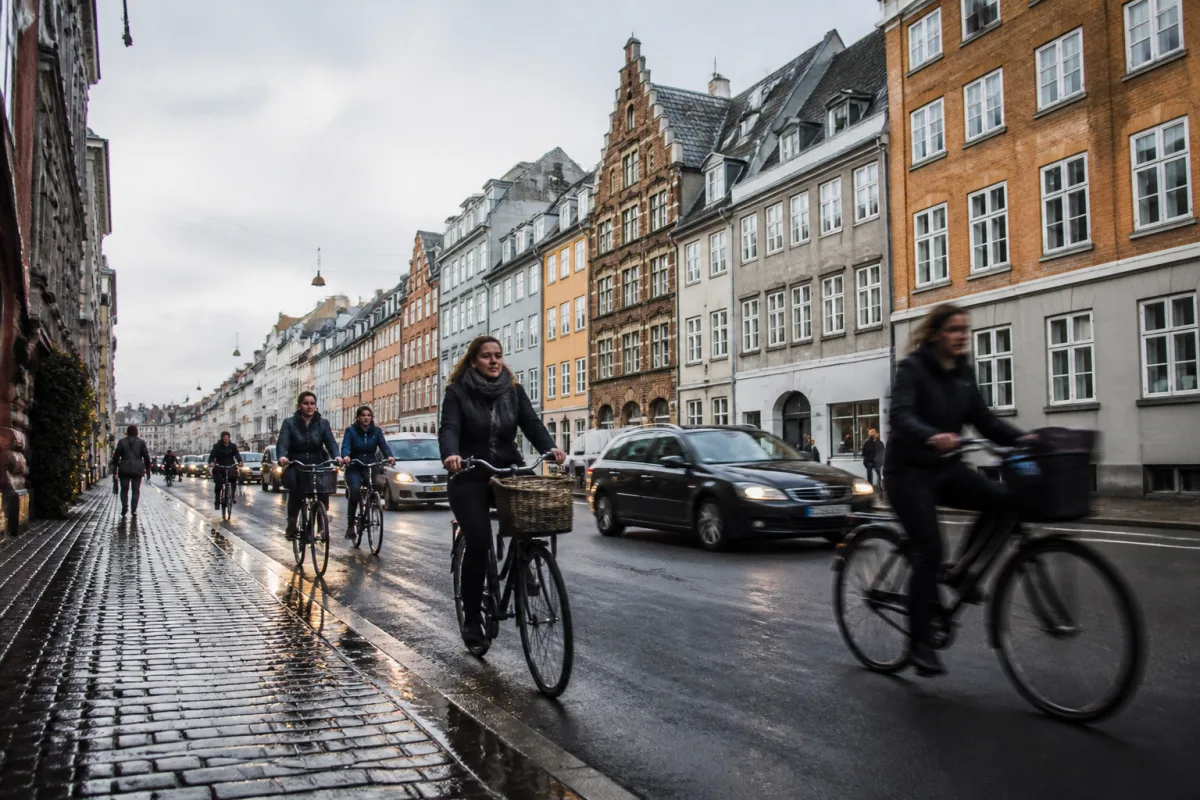

Denmark remains one of the most stable and prosperous countries to move to, but getting a residence permit here requires meeting strict criteria: minimum income, a language test, work experience. The main obstacle, however, awaits at the final stage — the naturalisation process has been suspended for an indefinite period.
Main legalisation routes: work, study and business
The main route to Denmark is a work visa. Under the standard scheme, the salary must be at least 552,000 Danish kroner a year. There is also an additional scheme with a threshold of 446,000 kroner, but it requires the vacancy to have been posted on the official job centre website for at least 2 weeks, provided unemployment in the 3 months before application does not exceed 3.75%.
As of 1 July 2026, a positive list of professions in short supply applies: 164 positions for specialists with higher education and 63 for skilled workers. Employers certified by the Danish Agency for International Recruitment and Integration (CRI) can use an accelerated application procedure.
The Startup Denmark programme is open to entrepreneurs. However, simply registering a company is not enough — the business must undergo an expert assessment and demonstrate innovative potential. The annual cap is strict: a maximum of 75 foreign applicants per year for the whole country.
The third route is study. A student on a state-approved higher education programme may work up to 90 hours a month and full-time in summer. After obtaining an academic degree, some state programmes grant up to 3 years to look for work.
The path to permanent residence: 8 years and numerous conditions
Length of residence alone is not enough to obtain permanent residence in Denmark. The standard period is 8 years of continuous legal residence, provided a valid residence permit basis is maintained throughout.
Beyond duration, a set of conditions must be met: financial self-sufficiency, no certain debts or criminal convictions, passing the Danish language test (level two), and at least 3 years and 6 months of regular employment or self-employment over the last 4 years.
Additionally, at least two of four conditions must be met: passing the Danish level three test, having 4 years of regular employment over the last 4.2 years, meeting active citizenship requirements (confirmed participation in civic and democratic life), or proving income above a set threshold.
An accelerated route, meeting all basic and all four additional requirements, allows permanent residence after just 4 years, but demands a higher level of language, employment, integration and income.
For citizens of the EU, EEA and certain family members, a simplified regime applies: the right of permanent residence arises after 5 years of actual and continuous residence under EU rules, without needing to pass language tests or prove 3 years of employment.
Naturalisation through parliament: how it works and why it has stopped
Denmark has an unusual naturalisation procedure: citizenship is granted not by an agency but by parliament. Each applicant’s name is included in a separate act passed by the kingdom’s unicameral parliament.
Standard naturalisation conditions: 9 years of residence in the country, at least 2 years of permanent residence by the time the act is passed, passing the Danish level three test, successfully passing an exam on knowledge of Danish society, culture, history and values, the required work record, and participation in a constitutional ceremony at the municipality.
However, on 6 March 2026, the Ministry of Immigration and Integration suspended processing of most naturalisation applications following the announcement of parliamentary elections. According to the ministry, the process will resume once there is clarity on the new conditions for obtaining citizenship.
As of today, processing has not resumed. More than 14,000 people are waiting in the queue, and another 2,000 have passed all checks but have not received a passport because the bills bearing their names were not adopted. There is no official resumption date, and even a person meeting all requirements cannot be promised an exact year of obtaining citizenship.
Keeping a Russian passport: dual or second citizenship
Denmark has allowed multiple citizenship since 2015. Russian citizenship does not end automatically upon obtaining Danish citizenship, but this is not dual citizenship — it is second citizenship: each country considers the person its own citizen, and in Russia the applicant remains a Russian citizen with all obligations.
There is no general ban on a work, study, family or business residence permit for Russian citizens. However, under current conditions, the route is complicated by additional visa, banking and sanctions checks.
Buying property and long-term planning
Buying property is not grounds for obtaining a residence permit. Moreover, a foreigner without permanent residence or 5 years of residence in the country may need permission from the Danish Ministry of Justice to buy property in Denmark.
Before relocating, it is necessary to assess the entire route: whether it is realistic to accumulate the required work record, meet language and other requirements, and adapt to possible changes in the rules. Residence and permanent residence permits currently continue to operate as usual, but the dynamics of the naturalisation process remain unpredictable.
Comments
Reader experience is useful, but it is not advice: check the rules on the official site.
No account needed: click Sign in, type any name, and you are done.