
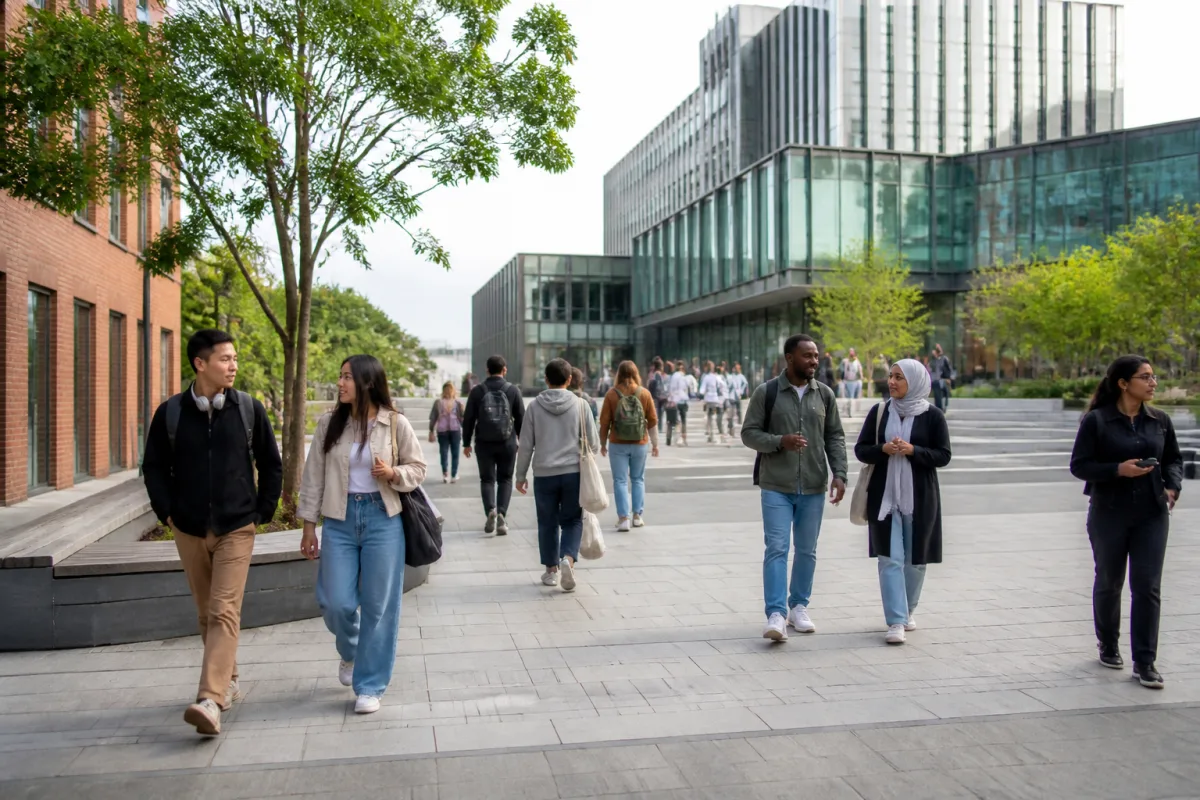

International students can get an affordable or even tuition-free master’s degree taught in English in Austria, Spain, Germany, Italy, Luxembourg, China, and Japan — where fees are limited to a token semester charge or fully covered by a government scholarship.
In short
- In Germany and Luxembourg, a master’s degree costs only a semester fee — from €70 and around €400 respectively.
- Italy’s DSU scholarship provides up to €9,000 in payments, free meals, and dormitory housing — with no grade requirements.
- Japan’s government-funded MEXT scholarship covers flights, accommodation, and living expenses; the KCT scholarship adds $900 a month.
- After graduation, students can stay to look for work for anywhere from 12 months (Austria, Luxembourg) to 2 years (Spain).
- In all seven countries, a significant share of master’s programs are taught in English — the local language isn’t required to apply.
Austria: Fixed Tuition and Clear Deadlines
Tuition for international students at Austrian public universities is fixed at around €752 per semester, or roughly €1,500 a year. On top of that comes a mandatory student union fee, which varies by university. The price doesn’t depend on the language of instruction, and a large share of master’s programs are taught entirely in English — German is not required to apply.
The widest choice of programs is in economics and business, engineering, IT, natural sciences, and environmental studies.
Application deadlines depend on when the program starts:
- Fall intake — the nationwide deadline falls in early September, but individual universities often set earlier internal deadlines for international applicants, sometimes as early as spring;
- Spring intake — the nationwide deadline falls in early February, though it’s worth checking a specific university’s deadlines in advance, since they can start much earlier.
After graduating, a student can extend their residence permit by 12 months to look for a job or start a business. Actually taking up employment after that period requires a separate work permit tied to a job offer matching the graduate’s qualifications.
Application Deadlines in Austria
Internal university deadlines often fall earlier than the nationwide deadline.
- Fall intake — nationwide deadlineearly September
- Fall intake — internal university deadlinesas early as spring
- Spring intake — nationwide deadlineearly February
The nationwide deadline is a reference point, but many universities close applications for international students earlier — in spring for fall intake, well before February for spring intake. Check the specific university’s deadlines in advance.
Spain: Public Universities and 300+ English-Taught Programs
A master’s degree at a public university in Spain can cost less than in Austria, and the choice of program largely depends on the region. The country offers more than 300 master’s programs fully taught in English — in business, tourism, social sciences and humanities, with some options in engineering as well.
Applications for international students open as early as January, the main intake runs in June, and remaining places may continue to be filled through September.
In Andalusia, many programs cost €820 a year — one of the most affordable options among public master’s degrees. The cost of living in the region runs about €650–850 a month, including housing, food, and daily expenses.
After graduation, students in Spain can stay for up to 2 years to look for work or start a business.
In Andalusia, a master’s degree can cost €820 a year, and living costs run €650–850 a month. That makes it one of the most affordable options among public universities in Europe.
Germany: Tuition-Free Public Universities and a Real Admission Case
At Germany’s public universities, tuition is often waived entirely — students pay only a semester contribution, not the full cost of the program. At some universities, that fee starts from €70 per semester. The strongest offerings are in engineering, IT, natural sciences, and economics, with many programs linked to international companies and research centers. German is not required to apply: there are plenty of master’s programs taught in English.
A real-world example: an applicant received an offer from the University of Applied Sciences in Dortmund for a project management program taught entirely in English. The semester fee for the program was €300–350 — and that was the entire cost of tuition.
Applications for programs starting in the fall semester are accepted from April to July.
After graduation, students can stay in Germany for up to 18 months to look for work. That matters: around 97% of young people with a higher education degree are employed — one of the best rates in Europe.
around 97% of young people with a higher education degree are employed — one of the best rates in Europe
Italy: The DSU Scholarship and Sapienza University
The DSU scholarship waives tuition entirely and adds cash payments of up to €9,000, plus free meals and a place in a dormitory. Perfect grades aren’t required: the main criterion for awarding it, including at the master’s level, is the family’s financial situation. Programs can be studied entirely in English — Italy offers a wide range of options, with strong fields in architecture, design, engineering, management, and social sciences.
Perfect grades aren’t required: the main criterion for awarding it, including at the master’s level, is the family’s financial situation
Applications open early: many universities accept the first applications as early as October, with the main rounds running from January to April.
One notable case is admission to Sapienza University in Rome, ranked first among the country’s multidisciplinary universities. An applicant received an offer for a master’s program in economics at one of the largest and oldest universities in Europe, located in the heart of Rome. When choosing Italy, it’s worth considering the university and the DSU scholarship together: one without the other doesn’t give the full picture of costs.
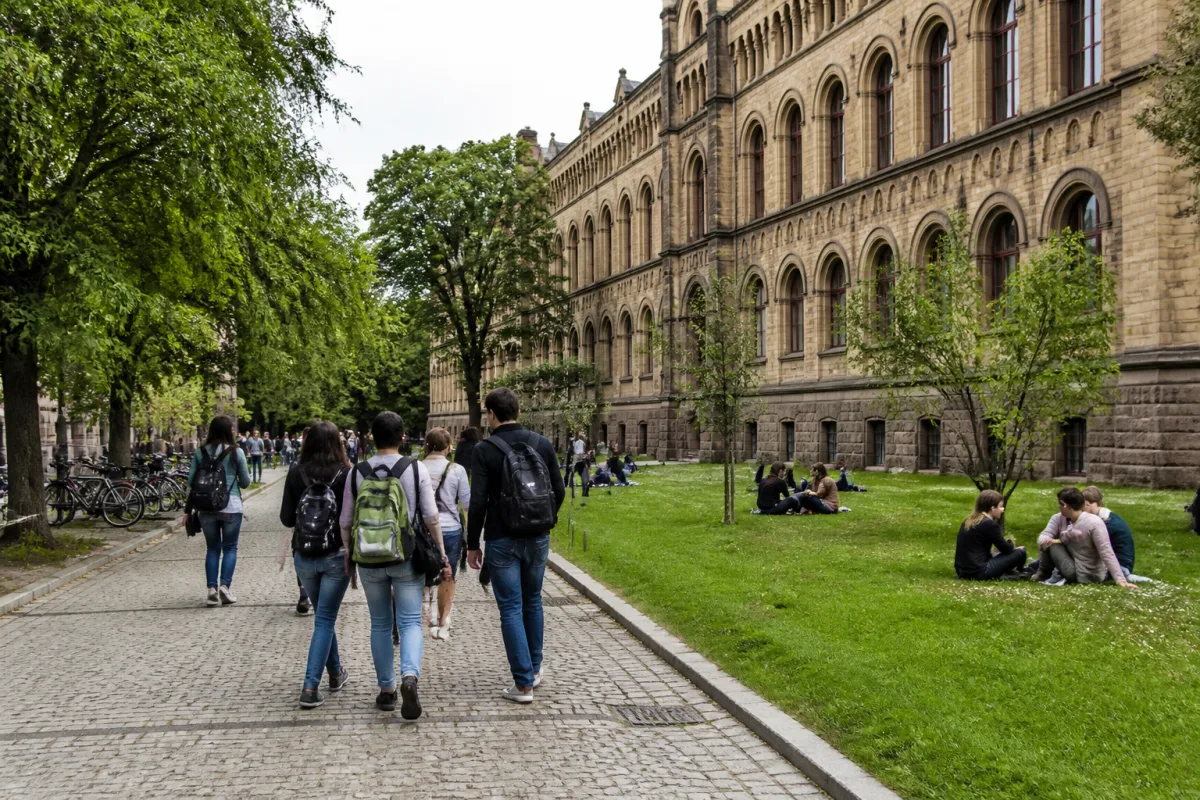
DSU covers tuition, meals, and housing, plus up to €9,000 in payments — but the award depends on family financial status, not grades. Evaluate the university and the scholarship as a package.
Luxembourg: A Small Country with Programs in English
Tuition in Luxembourg costs around €400 per semester — about €800 a year — and this price applies at both public and some private universities. The small country is home to European institutions, major banks, and offices of corporations like Amazon and Microsoft, so a master’s in finance, law, economics, or technology here is directly tied to future career prospects. Plenty of master’s programs are available in English, so knowledge of the local language isn’t required to apply.
For programs starting in the fall, it’s worth preparing documents early: the main application period for international applicants falls in February–March. After graduation, Luxembourg allows students to stay in the country to look for work — here it’s important to choose a program that leads directly into the right professional field.

China: A Fully Funded Government Scholarship
China’s government scholarship, under full funding, covers tuition, accommodation, and health insurance, plus a monthly stipend. For master’s students, that stipend is around €400 a month. Worth starting the search with programs in artificial intelligence, IT, economics, and logistics — these fields pair especially well with this scholarship.
Chinese isn’t always required to apply: major universities offer a wide choice of programs taught entirely in English, especially in economics, management, social sciences, and technology.
One telling case is admission to a master’s program in logistics at Beijing Jiaotong University. The applicant was planning an international career in business and management, and her previous education was linked to the new field of study. A motivation letter showed how the choice of program connected to her career goals — the result was three offers at once, with admission backed by China’s fully funded government scholarship.
the result was three offers at once, with admission backed by China’s fully funded government scholarship
For programs starting in the fall, applications are accepted in September–October, with the main application period running through February–March.
China’s Government Scholarship: What’s Included
Full funding covers core expenses and provides a monthly stipend.
- Monthly stipend for master’s studentsabout €400
- Tuitioncoveredfull funding
- Accommodationcoveredfull funding
- Health insurancecoveredfull funding
Connecting prior education, career goals, and the chosen program in a motivation letter helped secure three offers at once, along with a fully funded Chinese government scholarship.
Japan: The MEXT Scholarship, Covering Flights and Living Costs
Japan’s government-funded MEXT scholarship covers not just tuition but also airfare, accommodation, and living expenses — a rare combination for a master’s degree abroad. A separate program, the KCT scholarship, fully waives tuition, provides a monthly stipend of $900, and also covers the flight to Japan.
Japanese isn’t required to apply: universities offer master’s programs taught entirely in English, in both technical and social science fields. Worth looking into programs in engineering, IT, robotics, as well as economics and social sciences.
Applicants need to prepare well in advance. For programs starting in the fall, applications open in September–October, with the main deadlines falling in December–February.
After graduation, students can stay in Japan for up to a year to look for work — here, a master’s degree becomes not just a way to get an education but a first step toward a career in the country.
Master’s Abroad: Cost, Language, and Post-Graduation Options
Table scrolls sideways
| Country | Austria | Spain | Germany | Italy | Luxembourg | China |
|---|---|---|---|---|---|---|
| Tuition cost | from €820/year (Andalusia) | from €70/semester (fee) | free with DSU scholarship | €400/semester (≈€800/year) | covered by scholarship | |
| English-taught programs | yes, no German required | 300+ programs | yes, no German required | yes | yes, no local language required | yes, at many universities |
| Strong fields | economics, engineering, IT, environmental studies | business, tourism, humanities | engineering, IT, economics | architecture, design, management | finance, law, technology | AI, IT, economics, logistics |
| Post-graduation job-search stay | 12 months | up to 2 years | up to 18 months | — | possibility to stay | — |
Frequently asked questions
Can you apply to several countries from this list at the same time?
Yes, there’s no direct restriction: deadlines across countries partly don’t overlap — for example, Spain opens applications in January, Germany accepts documents from April to July, and applications to China and Japan are submitted in the fall. That makes it possible to apply in parallel, as long as you keep up with translating and preparing a separate document package for each university.
Can Italy’s DSU scholarship be combined with other scholarships or grants?
The material doesn’t address this directly, but it notes that DSU is awarded based on a family’s financial situation rather than grades — meaning the selection criterion isn’t tied to other forms of support. When choosing Italy, it’s worth evaluating the university and the DSU scholarship as a single package, since it’s what determines the real cost of tuition.
What happens if you don’t find a job within the post-graduation job-search period?
None of the countries covered give a direct answer to this: the material only describes the fact of the residence permit extension for job searching or starting a business — from 12 months in Austria to 2 years in Spain — without addressing what happens once that period ends without employment.
Can you apply for a master’s in China or Japan without a related bachelor’s degree?
The notable case of admission to a logistics program at Beijing Jiaotong University shows that prior education was successfully connected to the new field through a motivation letter that justified the choice of program with career goals. This suggests that a mismatch in fields doesn’t by itself rule out admission, as long as the transition is explained in the application.
What should you do if a specific university’s deadline falls earlier than the nationwide deadline?
This exact situation is directly described for Austria: the nationwide deadline for fall intake is early September, but individual universities set earlier internal deadlines for international applicants, sometimes as early as spring. So it’s better to go by the specific university’s deadline rather than the nationwide one, checking it in advance.
Does Italy’s DSU scholarship guarantee dormitory housing, or is it awarded competitively?
The material states that DSU includes free meals and dormitory housing as part of its support package, alongside the tuition waiver and cash payments of up to €9,000. The question of competitive allocation of spots within the scholarship itself isn’t addressed separately.
Can you receive the MEXT scholarship while studying on an English-taught program in Japan?
No direct link between the MEXT scholarship and the language of instruction is mentioned, but the material notes that Japanese isn’t required to apply and that universities offer many programs taught entirely in English, in both technical and social science fields. This doesn’t rule out combining it with scholarship support.


Comments
Reader experience is useful, but it is not advice: check the rules on the official site.
No account needed: click Sign in, type any name, and you are done.