
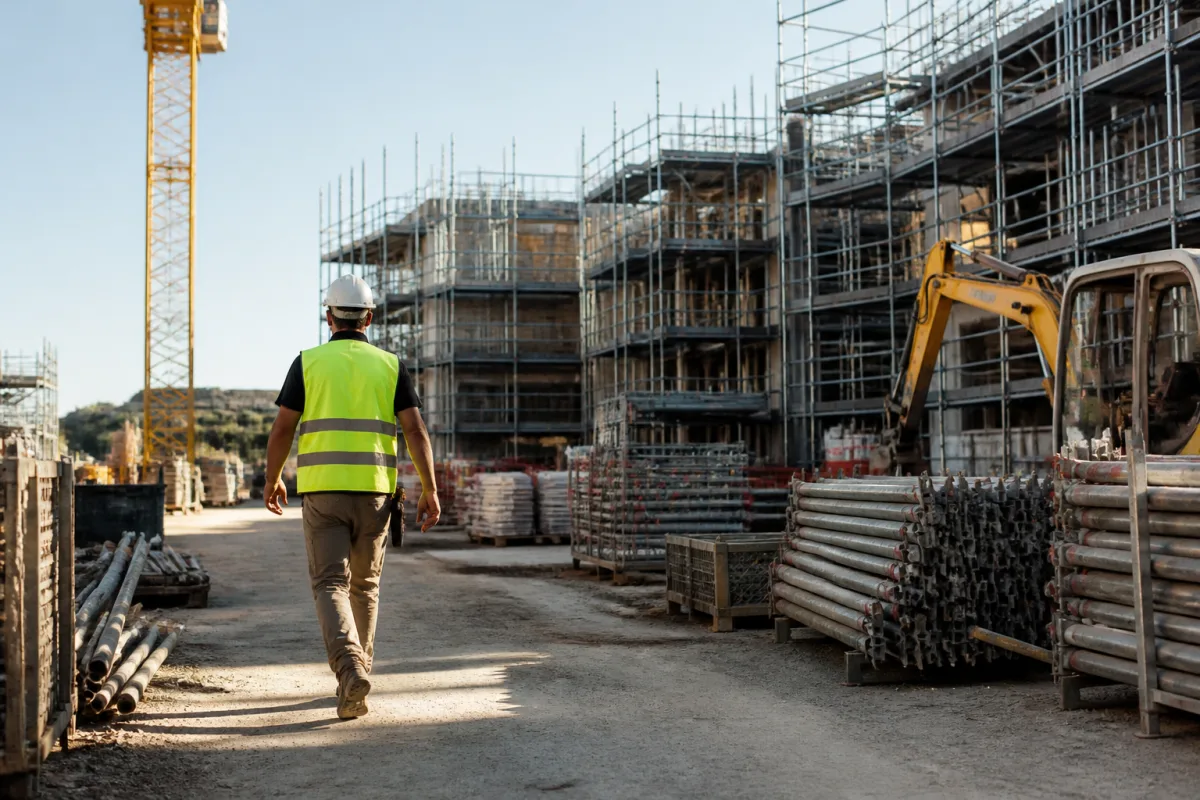

Right now Australia has strong demand for skilled trades — roofers, carpenters, window installers — along with aged care and disability support workers, and the occupation you choose often determines your actual chances of visa sponsorship.
In short
- Roofers in Australia can earn around 200,000–250,000 US dollars a year without holding permanent residency.
- Window and door installers earn more than window manufacturers, but they need working English and client negotiation skills.
- Demand for construction trades could drop sharply within a year or two if migration intake shrinks.
- Visa sponsorship is realistically achievable in aged care and childcare, but extremely difficult for truck drivers.
- Truck driver families often use a split strategy: the husband earns money driving while the wife gets a visa through an occupation with a migration pathway.
Construction trades: roofers, carpenters, window installers
A roofer in Australia is estimated to earn somewhere around 200,000 to 250,000 US dollars a year, and permanent residency isn’t a prerequisite for that income — figures like this are mentioned even for students doing the work. The job calls for real trade skills: working safely at height, using fall protection gear, handling tools properly, and making sound risk judgments — this is about one- or two-storey houses, not high-rises.
The second big category of openings is carpenters and joiners: laying flooring, assembling furniture, fitting doors and windows. There’s a lot of this work around, and employers are actively looking for new hands and willing to train anyone who’s honest and ready to work.
Separately, there’s demand for people making UPVC windows — cutting profile, assembling frames, quality control. This is factory-floor work, and it should be kept distinct from installation: window and door installers sometimes earn more than the people who make the windows, but the bar for installers is also higher.
window and door installers sometimes earn more than the people who make the windows, but the bar for installers is also higher
An installer has to be ready for unpredictable situations and direct dealings with clients — sometimes tense ones. In practice it’s a mix of a trade and negotiation skills: you need to be able to talk things through and have working English. In practice, specialists who installed windows back in Russia often handle this work just as well as locals do — Russian standards for window insulation, thermal performance, soundproofing and waterproofing are strict.
Manufacturing UPVC windows and installing them are two different jobs with different pay. Installers earn more, but they also need negotiation skills for dealing with clients and working English.
Why Australia’s labour market keeps shifting
The migration and labour market picture in Australia changes a great deal, and construction trades are a clear example. There have been periods when construction slowed down so much that building tradespeople weren’t needed in the market at all.
Right now the situation is the opposite: demand for construction trades is high. But this works both ways — the construction sector is propped up by the inflow of new residents who need somewhere to live. If migration intake drops sharply, there will be nobody to build all those houses for, and the industry will slow down again. Current estimates suggest such a slowdown could happen within a year or two — precisely because of shrinking migration numbers.
Current estimates suggest such a slowdown could happen within a year or two — precisely because of shrinking migration numbers
That means today’s list of in-demand construction trades shouldn’t be treated as fixed: demand for the same occupations could shift noticeably within a couple of years.
The construction sector relies on migration inflow. If migration numbers drop, housebuilding will slow down again — and the list of in-demand trades will change.
Aged care, disability support and childcare work
Aged care, disability support and childcare work is another area with steady demand: there are plenty of employers in this field, ranging from businesses run by people from migrant communities to local companies.
Duties depend on the specific client. In simpler cases it’s household-style assistance, but some clients require direct physical contact: workers are trained to help someone into a chair, operate hoists, and drive a vehicle fitted out for transporting people with limited mobility.
It’s precisely because of this physical side that women have historically done better in this field, although men also work with the most demanding clients — those who need direct physical contact. For cases like that you need a vehicle with a mini-lift and a full set of equipment that lets you handle even a difficult client. Workers with that kind of setup are hired more readily.
There’s also a pay gap: by observation, men in this field tend to earn more on average and can afford top-tier equipment from the start. Numerically, men are a small share of aged care workers, but visa sponsorship is genuinely achievable here — unlike, say, truck driving.

Care workers who have a vehicle with a mini-lift and a full set of equipment for clients with limited mobility get hired more readily — and are paid more.
Truck drivers and their sponsorship chances
Sponsorship for truck drivers — long-haul drivers, heavy plant and machinery operators — is, by observed experience, extremely hard to get. Staying in Australia specifically through this occupation is very difficult, even though the work itself is in demand and plenty of drivers make a steady income from it.
Sponsorship for truck drivers — long-haul drivers, heavy plant and machinery operators — is, by observed experience, extremely hard to get
Because of this restriction, truck drivers’ families often build their immigration strategy differently: while the husband works the truck, the wife gets a visa and works in an occupation that offers a migration pathway. The husband’s income effectively subsidises the whole process — the visa, the training, the paperwork for the wife.
At the same time, a truck driver’s wages shouldn’t be confused with the earnings of someone who owns their own rig. A good new tractor unit for hauling bulk materials — concrete or cement, for instance — costs a very serious amount of money, an unrealistic sum for most drivers, and banks are reluctant to finance that kind of equipment. So counting on buying your own rig as a shortcut to fund immigration doesn’t add up.

Buying your own tractor unit to speed up immigration isn’t a workable plan: a good rig is very expensive, and banks are reluctant to finance that kind of equipment.
Other occupations with solid immigration chances
Besides construction, care work and truck driving, a few other fields also offer a real shot at immigration:
- engineering occupations — including surveyors and field engineers;
- pharmacists — another occupation where immigration can work out;
- managers with strong English;
- agribusiness specialists — not general labourers, but all-round farm workers capable of managing people.
It’s exactly this combination of hands-on skills and the ability to run a team that makes an agribusiness specialist attractive for sponsorship.
Visa sponsorship chances by occupation
Table scrolls sideways
| Occupation | Roofers / carpenters / window installers | Aged care and childcare | Truck drivers |
|---|---|---|---|
| Demand for work | High right now, but tied to migration inflow | Steady | High |
| Sponsorship chances | Needed, but it’s a priority occupation | Realistically achievable | Extremely difficult |
| Earnings | 200,000–250,000 USD/year for roofers | Men earn more on average, can afford better equipment | Steady, but not without owning your own rig |
This comparison is based on observations described in the article, not official statistics.
Frequently asked questions
What will happen to demand for construction trades over the next couple of years?
Current estimates suggest demand could drop within a year or two because of shrinking migration numbers: the construction sector is propped up by the inflow of new residents who need somewhere to live. So today’s list of in-demand construction trades shouldn’t be treated as permanent — the picture could change noticeably within a couple of years.
Can you immigrate to Australia by buying your own truck for hauling freight?
No, that’s not a realistic strategy: a new tractor unit for hauling bulk materials costs a very large sum, banks are reluctant to finance that kind of equipment, and an owner-operator’s earnings shouldn’t be confused with a hired driver’s wages. Counting on buying your own rig as a quick way to fund immigration doesn’t add up.
What’s the difference between manufacturing UPVC windows and installing them in terms of pay and requirements?
Manufacturing windows is factory-floor work: cutting profile, assembling frames, quality control. Installation demands more: an installer has to be able to deal with clients, sometimes in tense situations, and needs working English, which is why installers sometimes earn more, but the bar for them is also higher.
Why have women historically outnumbered men in care work?
Because of the physical side of the job — helping a client into a chair, operating hoists, driving specially fitted vehicles — women have historically done better in this field. Men also work with the most demanding clients, those who need direct physical contact, but they make up a small share of the workforce in this field.
Does an aged care worker need their own vehicle with equipment?
For working with the most demanding clients — those who need direct physical contact — you need a vehicle with a mini-lift and a full set of equipment. Workers with that kind of setup are hired more readily, and this is directly tied to higher earnings in that part of the field.



Comments
Reader experience is useful, but it is not advice: check the rules on the official site.
No account needed: click Sign in, type any name, and you are done.