
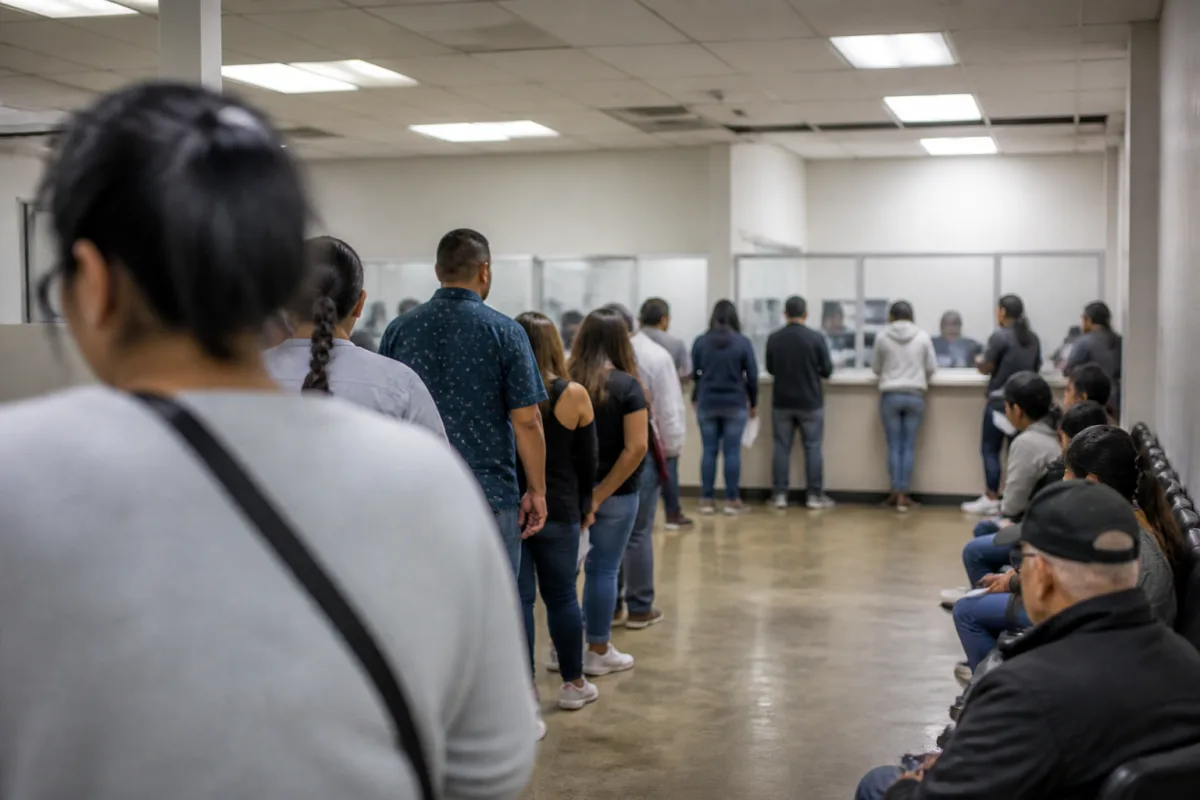

After submitting form I-131 for re-parole, USCIS first sends a Receipt Notice (form I-797C) — confirmation that the application has been accepted for review. Online submission is confirmed immediately, while paper submission is confirmed within three to four weeks. USCIS does not specify a fixed timeline for reviewing the re-parole itself: it depends on the urgency of the request and the expiration date of the current parole.
Receipt Notice and What to Do If Your Package Is Returned
Receipt Notice only confirms that the application was received — not that everything is in order with the documents. If the paper package is missing a signature, a page is missing, or a document has errors, USCIS does not take the money but returns the entire package by mail.
If you receive an envelope with your documents back instead of a receipt, don’t panic — find the specific error, correct it, and resubmit the package. Keep the tracking number of the letter: if no confirmation arrives within a month or so, this number becomes your main proof that the package reached USCIS.
What Happens If Your Current Parole Expires Before a Decision
If the initial parole expires while your application is still under review, it will still be reviewed — the application won’t be “closed.” However, the parole itself and the work permit for that period will not be automatically extended.
Biometrics: When Needed and How to Reschedule
If you need to provide fingerprints and a photo, USCIS will notify you in writing — with the date, time, and address of the specific center. This usually happens within a month after the application is accepted for review. If you already provided biometric data earlier, for example during your first parole application, USCIS may reuse it — in that case, you won’t receive a new appointment notice at all.
You can reschedule your appointment through your USCIS online account, but not later than twelve hours before the scheduled time and only for good reason. Online rescheduling won’t work if the appointment has already been rescheduled twice or if the time has already passed — then you’ll need to call USCIS, which can take months. If you simply don’t show up and don’t reschedule, USCIS may consider your application abandoned and deny it.
Request for Evidence and EAD Payment
If an officer lacks documents or evidence, a Request for Evidence (RFE) is sent — a request for additional proof. This is not a denial: the officer wants to approve your application but needs something more in your file. The letter will specify what to submit and the deadline — if you don’t respond in time, your application may be rejected.
There’s a separate issue regarding payment. Even if your application was submitted with a fee waiver, you will have to pay separately for the permit itself. Starting January 2026, the amount is $1020, and it cannot be reduced or waived under form I-912. USCIS will send a notice of readiness to approve your application upon payment and will give you a deadline — if you don’t pay in time, you will be denied.
Four Mistakes While Waiting
A submitted re-parole application doesn’t guarantee anything on its own: it doesn’t make your stay legal and doesn’t give you the right to work. Only an approved new parole term has that force — until the decision arrives, you are legally in the same status as before filing.
The second mistake is submitting a separate form I-765 for a new work permit before re-parole approval. Form I-131 already has a built-in EAD request, so you typically don’t need to file a separate I-765: if you submit it early, USCIS may reject the application and won’t refund your fees.
The third is failing to update your address after moving. You have ten days from the date of move to notify USCIS through your online account or form AR-11; if you miss this deadline, an important letter, including the decision notice, will be sent to your old address.
The fourth is passively waiting instead of regularly checking your status yourself, especially when your current parole is about to expire: USCIS doesn’t always notify in time. The easiest way to check your status is through your USCIS online account, where you can see case status, messages, and case history. If you filed your application by paper with a fee waiver and don’t have an online account, you can use the “Check Your Case Status” feature on the USCIS website by entering your receipt number from the Receipt Notice.



Comments
Reader experience is useful, but it is not advice: check the rules on the official site.
No account needed: click Sign in, type any name, and you are done.