


USCIS is expanding the criteria for assessing naturalization applicants’ good faith: now the applicant’s financial conduct, fulfillment of sponsor obligations, and receipt of public benefits are being examined. The November 4 memo does not mean automatic denial, but it does call for a deeper investigation of each case. The changes also affect those who have already filed Form N-400 but have not yet had their interview or ceremony.
Three Areas of Financial Review
The November 4 memo adds three areas USCIS will use to assess an applicant’s good moral character:
- support of dependents: the applicant abandoned minor children and fails to provide financial support, even when there is no court order for child support, or when there is an order but the applicant willfully refuses to comply; as well as a dependent’s receipt of means-tested public benefits;
- fulfillment of sponsor obligations;
- obtaining public benefits through fraud or deception, or deliberately avoiding self-sufficiency.
Receiving benefits by itself does not automatically disqualify someone from naturalization. What matters is how the benefits were obtained.
Dependents and Child Support
The policy does not mean that every parent who experienced financial hardship or fell behind on child support will automatically be denied citizenship. The memo explicitly states that there is no automatic denial and that each case will be reviewed individually.
However, given the practice of the past year, USCIS appears more likely to draw a negative inference about a case and ask the applicant to provide evidence of how the situation was remedied.
Sponsor Obligations: I-864, I-134, and I-134A
If the applicant has ever served as a sponsor, the review covers the forms they signed: Affidavit of Support I-864 as a primary or joint sponsor, I-864A as a household member, as well as I-134 and I-134A. Officers are instructed to check whether the individuals the applicant sponsored requested public benefits. If they did, this will be treated as a failure to meet a financial obligation.
The obligations under these forms are set out in Form I-864 and at the end of Form I-134. Form I-864 is a legally enforceable contract between the sponsor and the U.S. government, so benefits received by the sponsored person can be recovered from the sponsor. No such mechanism exists for I-134 and I-134A, but these are apparently the forms USCIS will use to scrutinize people who arrived under Biden-era parole programs. Many of them were eligible for benefits and received them, since they were advised to seek assistance after arrival. As a result, a sponsor could be denied naturalization if their sponsored individuals received benefits, since they may be blamed for failing to provide housing and other necessary support.
Benefits Fraud and Self-Sufficiency
Receiving benefits does not disqualify someone from naturalization, but obtaining them through deception is another matter. The memo gives examples:
- providing false income information to a government agency to obtain a benefit;
- misrepresenting the number of household members;
- receiving a benefit while not eligible for it;
- avoiding work in order to keep benefit eligibility;
- failing to inform a government agency that someone signed an affidavit of support;
- failing to report a change in benefit eligibility, such as a change in household composition, income, or a move, while continuing to submit outdated information;
- using multiple identities or identity documents to obtain benefits.
Separately, USCIS will check whether the applicant deliberately altered their financial situation, for example by stopping work or significantly cutting their hours, in order to stay below a certain income threshold without a legitimate personal or medical reason. Even if the applicant is technically eligible for a benefit, the overall picture is assessed: why the benefit was received, efforts toward financial independence, evidence of correction, such as stopping benefit receipt at the first opportunity, contributions to the community, and other indicators of good moral character.
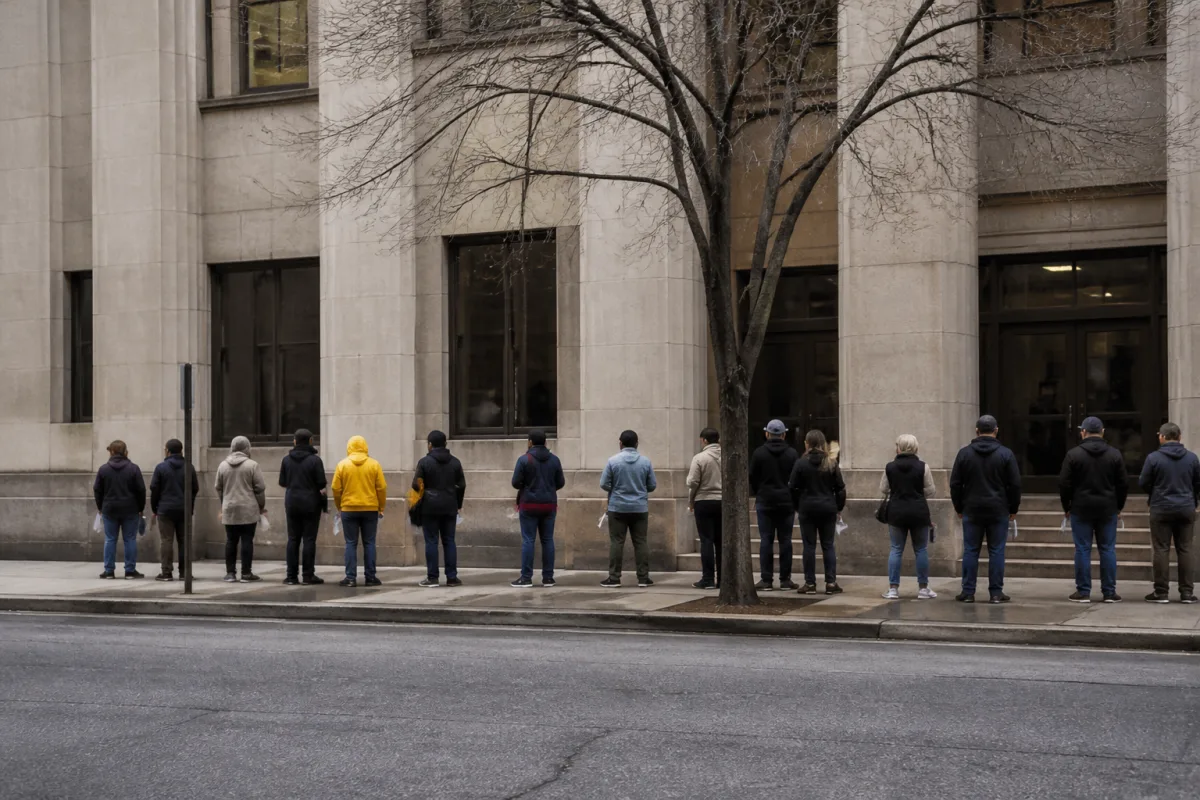
What Happens to Applications Already Filed
The policy also affects those who have already filed Form N-400 but have not yet had their interview or ceremony. USCIS has applied its rules retroactively before. The agency has stated it will revise Form N-400 to add questions about financial history, support of dependents, and receipt of public benefits. These questions will likely also be asked at the interview.
Processing of N-400 applications is expected to slow down, since additional checks will be required: in addition to the applicant’s history and checks against FBI, IRS, and Social Security databases, officers will also need to examine anyone the applicant has ever sponsored, and the benefits those individuals received.
Even without an updated form and guidance, some offices may start asking these questions right away. Others will wait for official instructions from USCIS headquarters. It remains unclear how this will play out in practice. Federal lawsuits aiming to block the policy are expected, but that remains a matter for the future.



Comments
Reader experience is useful, but it is not advice: check the rules on the official site.
No account needed: click Sign in, type any name, and you are done.