
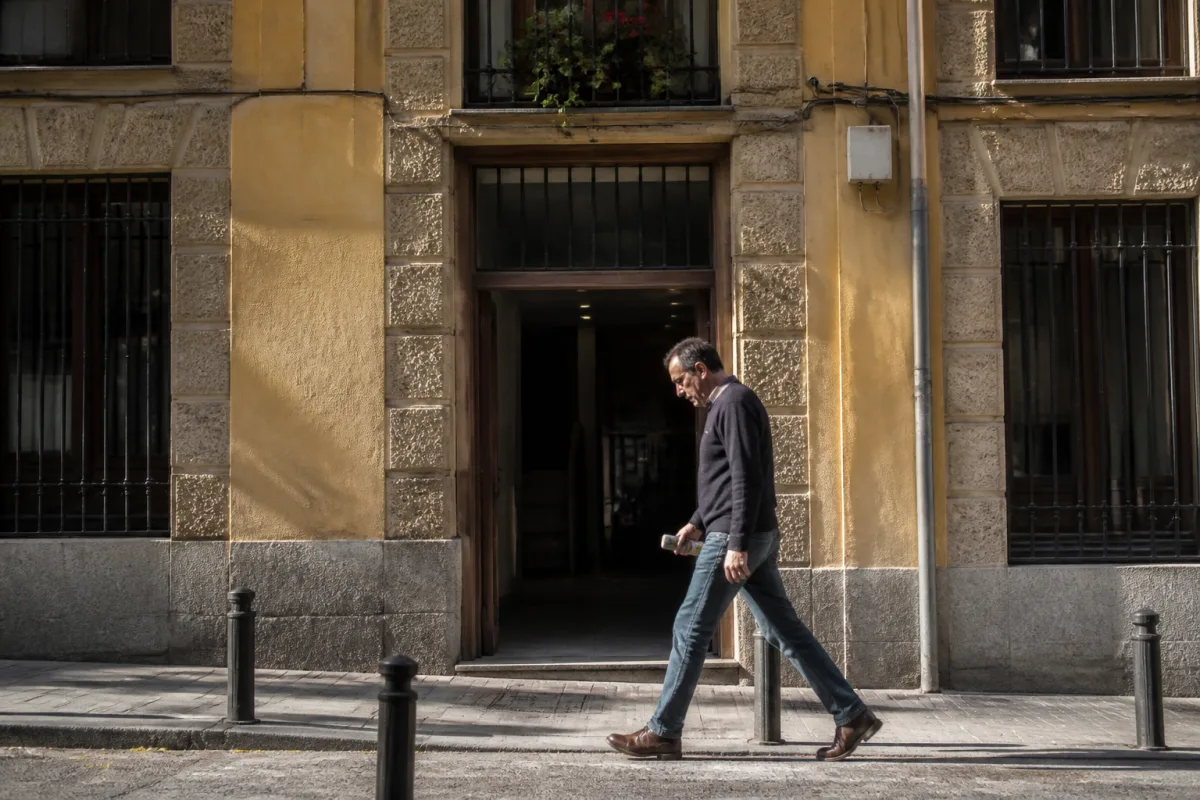

The padrón municipal is a mandatory local registration tied to your actual place of residence in Spain — without it, there is no school enrollment, no healthcare, and no path to a residence permit, and that sheer indispensability is exactly what turned it into a black-market commodity.
In short
- The padrón is the sole legal proof of residence in Spain: without it, there’s no school enrollment, no health card, and no doctor’s appointments.
- Fake registration guarantees nothing: an owner can quietly deregister a tenant through the town hall in as little as three months, with no notice given.
- Residency-based legalization requires 2–3 years of unbroken registration history — a broken history only surfaces when the inspector reviews the residence permit application.
- A full package of fraudulent documents, according to Spain’s Interior Ministry, costs €5,000–10,000 and carries criminal liability.
- Three barriers — bots in the booking queue, landlords’ fear of okupas, and municipalities demanding a property deed — make legal registration practically unreachable.
What the Padrón Is and Why You Can’t Live in Spain Without It
The padrón municipal isn’t a product of modern bureaucracy — its roots trace back to royal decrees of the 10th century, when the Spanish crown tried to count its subjects in order to collect taxes and conscript soldiers. Under Franco’s dictatorship in the mid-20th century, this counting function acquired a second purpose: policing the movement of people between regions.
After the 1978 Constitution and the 1985 Law on Local Government, the meaning of the registration shifted. Lawmakers established a rule that obligates every town hall (ayuntamiento) to register any person at their actual place of residence, even if that person has no documents and even if they live in informal housing. The person’s legal status is not the town hall’s concern — it simply records the fact of their presence.
Other European countries have comparable mechanisms — Germany’s Anmeldung, France’s justificatif de domicile — but there they remain a technical formality. In Spain, the padrón became the sole legal proof that a person is actually in the country. Without it, you cannot enroll a child in school, get a health card, or see a doctor.
In Spain, the padrón is the sole legal proof that you’re actually in the country: without it, you can’t enroll a child in school, get a health card, or see a doctor.
Case Study: 84 People Registered in a 430-Square-Foot Apartment
In an ordinary two-bedroom apartment in Madrid measuring about 40 square meters, media reports say roughly 84 people were officially registered as residents — nationals of Venezuela, Colombia, Morocco, and countries of the former Soviet Union. That works out to about 1.5 square meters per person — barely enough space to take turns standing.
Police uncovered the scheme while auditing the padrón municipal registry and traced it to the owner, a retiree who wasn’t renting out housing but selling the registration itself. According to the same investigation, he was earning around €2,000 a month by selling a document called the certificado de empadronamiento — paperwork that confirms an address, not actual residence there. Not one of the 84 people registered at that address actually lived in it.
he was earning around €2,000 a month by selling a document called the certificado de empadronamiento
Why a Black Market for Registration Emerged in Spain
The law obliges town halls to register everyone who actually lives at an address, but in practice officials sabotage their own duty, and appointment slots in the online booking system get snapped up by bots within seconds. Getting a slot manually is nearly impossible — by the time a person opens the booking form, nothing is left.
Landlords add a second obstacle: the very word ‘register’ triggers fear of okupas — a situation where a registered tenant gains grounds to contest eviction. So landlords refuse to add real tenants to the padrón, even when those tenants live in the apartment legally and pay rent on time.
Municipalities themselves built the third barrier. Some of them have stopped accepting registration applications from anyone who can’t produce a property deed or a notarized lease — and a landlord will typically not issue such a lease to a migrant without a padrón to begin with. As a result, proving residence to the state turns out to be impossible without documents that the state itself demands.
These three factors — official sabotage, bots, and landlords’ refusal — create a shortage of legal registration in a system where the law guarantees it to everyone.
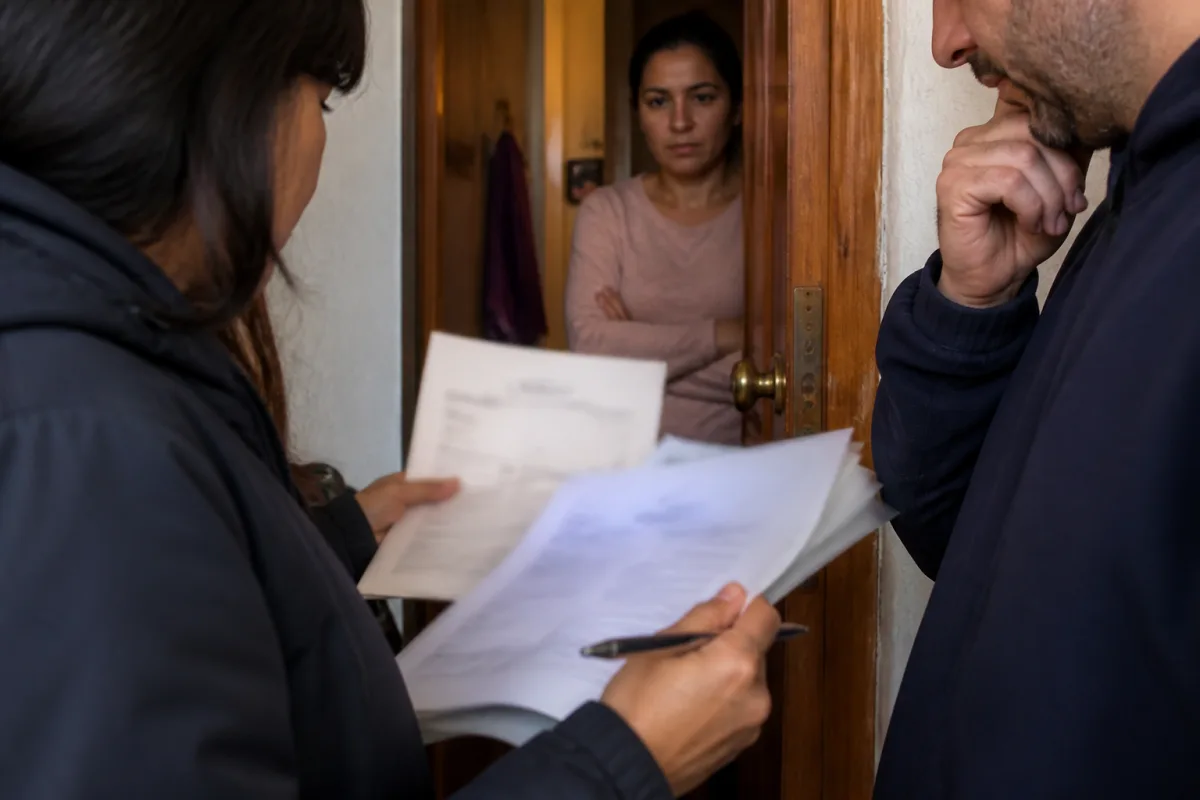
Bots snap up booking slots, landlords fear okupa-style occupation claims, and municipalities demand a property deed or notarized lease — proving residence without the very documents the state requires becomes impossible.
How Much Fake Registration Costs on the Black Market
By some estimates, people pay between €500 and €1,500 just to be added to the registry of someone else’s home — while official investigations by Spain’s Ministry of the Interior document that a full package of fraudulent paperwork (padrón, school enrollment certificates, bank statements) runs €5,000–10,000.
A scheme uncovered in Alicante province shows how that money moves through the chain. A real estate agency sought out elderly Spaniards with rundown housing, or owners who permanently lived elsewhere, and paid them €100 for every document they signed. According to that same investigation, migrants themselves were charged €600–1,200 per person — even though official Interior Ministry press releases on other uncovered cases cite €5,000–10,000 for a full package of fraudulent documents. The difference is the middleman’s profit. One inspected house had neither a proper roof nor running water, yet several dozen people were officially registered as living there.
In Barcelona, brokers went further: they rented a commercial unit disguised as a warehouse, installed a couple of bunk beds, and through the town hall’s online portal — using stolen or forged digital certificates — registered hundreds of people at that single address.
A separate scheme trades in the mere chance to file an application. Free slots in the town hall’s online booking queue are bought up by bots and resold to the same migrants for €80–150 — meaning a person pays not for housing, but simply for a place in a line that is legally supposed to be free.
It’s worth understanding: buying a fake registration isn’t a technical shortcut — it’s participation in a fraud scheme that, according to Interior Ministry investigations, often comes bundled with forgery of other documents (school certificates, bank statements) and carries criminal liability.
The cost of a document package varies widely by region and scheme: the middleman profits from the gap between what a migrant pays and what the property owner is paid.
Why the Padrón Matters for a Residence Permit — and What Happens If It’s Cancelled
The padrón starts the clock on residency-based legalization: proving to the state, after 2–3 years, that you’ve actually lived in the country doesn’t require a plane ticket or supermarket receipts — it requires an unbroken registration history. That continuous history is exactly what the fake-registration scheme depends on, and exactly what ends up destroying it.
Here’s how the scheme works: brokers use bots to buy up free booking slots, and a property owner adds dozens of people to the registry for a fee. But after collecting payment from fifty-odd tenants, the owner goes to the town hall three months later and files to have himself deregistered — citing, for instance, a move to parts unknown. The town hall cancels the registration quietly, without notifying anyone on it.
The person then goes on living in Spain for another two years, unaware of any of this, and eventually files residence permit paperwork. The inspector checks the record and delivers the news: the registration history was broken a year and a half ago, and the clock has to start over. A purchased registration provides no protection — it only conceals the moment when the clock reset. What’s more, registration in the padrón creates no housing rights whatsoever by law and has nothing to do with disputes over ownership or tenancy: the law places responsibility for listing a false address on the citizen, not on the town hall.
The inspector checks the record and delivers the news: the registration history was broken a year and a half ago, and the clock has to start over
An owner can file to deregister three months after selling a spot on the padrón — the town hall cancels it quietly, and the person only learns their history was broken when they apply for residency.
Three Ways Spain’s Registration System Could Evolve
How the padrón situation develops from here fits into three scenarios.
- Bureaucratic gridlock. The state keeps ignoring the problem, black-market prices keep climbing, and thousands of people fall out of the legal system because of sudden, retroactive deregistrations.
- Full digitization paired with tighter control. The padrón moves onto a single national database with biometric verification; anyone registering more than three unrelated people at their address automatically triggers a police visit.
- Splitting the concept of registration. Registration for statistics and healthcare purposes gets separated from registration that confers housing rights — this is the only one of the three scenarios that removes the actual cause of the black market.
The third option requires Spanish lawmakers to acknowledge that the current system itself drives criminalization and black-market activity. As long as the law is physically impossible to comply with honestly, the state isn’t stopping the violations — it’s simply setting a market price on them.
the state isn’t stopping the violations — it’s simply setting a market price on them
How Spain’s Registration System Could Change
One of three scenarios for the padrón system’s future removes the actual cause of the black market.
- Function of registration
- Incentive for the black market
Frequently asked questions
What if a landlord refuses to register you, but you have no other way to prove residence?
By law, the town hall is required to register any person at their actual place of residence regardless of the landlord’s consent or paperwork. In practice, though, municipalities often demand a property deed or notarized lease that a landlord won’t issue to a migrant, which makes filing directly nearly impossible. It’s precisely this gap between the town hall’s legal duty and its own document requirements that fuels demand for broker schemes.
What if your registration history was already broken by a cancelled padrón?
When you apply for a residence permit, the inspector notes the gap and requires you to restart the count from the date of your new, continuous registration. A previously purchased registration provides no protection and doesn’t restore the time that’s passed, since it never confirmed real residence in the first place. The only practical way forward is to secure a new, legitimate registration and build up a fresh continuous period before filing.



Comments
Reader experience is useful, but it is not advice: check the rules on the official site.
No account needed: click Sign in, type any name, and you are done.