
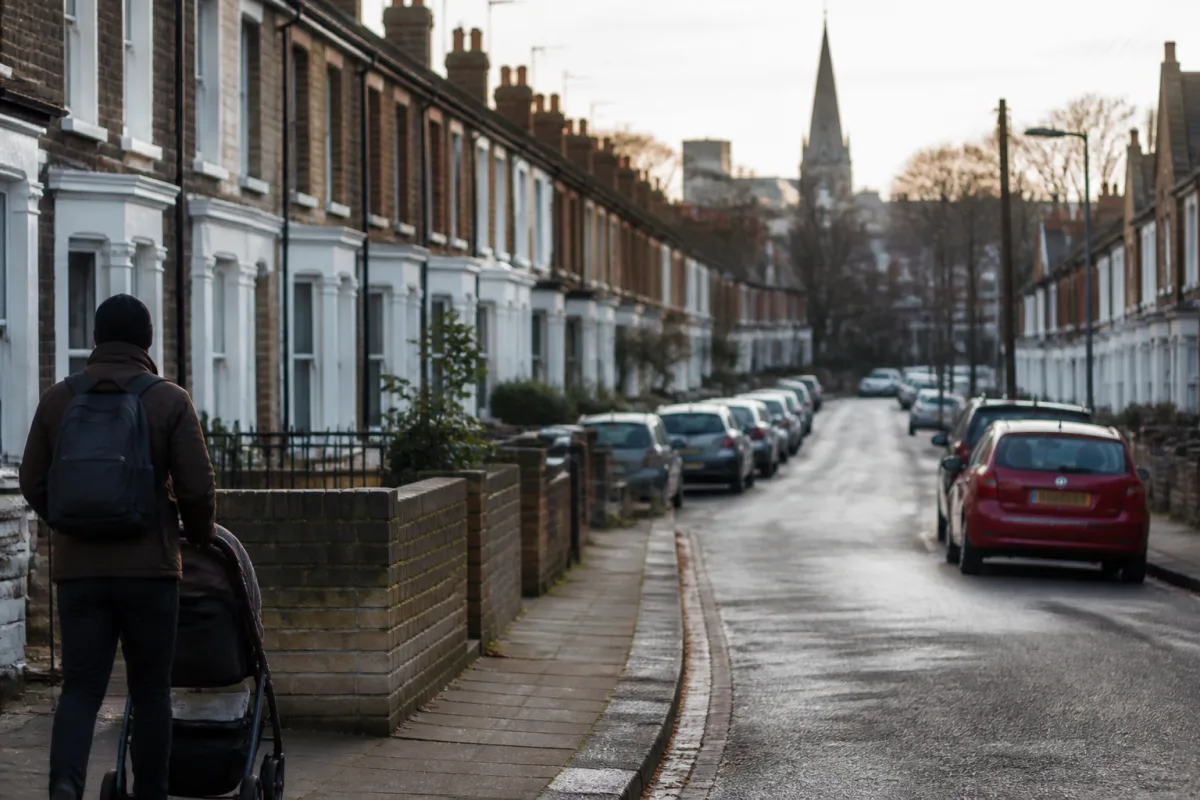

Since 2 March 2026, asylum claims lodged after that date receive temporary status for 30 months instead of the former permanent route to settlement, while claims lodged earlier continue to be decided under the old rules.
In short
- The date a claim was filed, not the date it’s decided, determines which set of asylum rules applies.
- Claims filed before 2 March 2026 grant refugee status for 5 years and a path to citizenship in 6 years total.
- Claims filed after 2 March 2026 receive temporary status for 30 months, with a route to settlement stretching to 20 years.
- Renewal must be applied for 28 days before the visa expires — there’s no automatic renewal.
- The decision process now combines biometrics, screening, and the substantive interview into a single merged interview.
Two Rulebooks: Claims Before and After the 2026 Cutoff
Asylum claims lodged before 2 March 2026 are decided under one set of rules, and claims lodged after that date fall under another. The difference isn’t a technicality: which category a claim falls into shapes the applicant’s entire path forward — from the length of the first grant of status to the point at which they can apply for citizenship.
The new rules are already in force, not set to take effect later. The switch to the new system is tied to the date a claim was lodged, not the date a decision is made: claims filed before 2 March 2026 continue to be assessed under the previous system even if the decision itself comes later. It’s worth knowing in advance which of the two categories applies to a given case — that’s what determines whether the applicant gets refugee status for five years outright, or temporary status for 30 months with renewal to follow.
that’s what determines whether the applicant gets refugee status for five years outright, or temporary status for 30 months with renewal to follow
The key factor isn’t the decision date but the date the claim was filed. Before 2 March 2026, the old system applies; after it, the new one does — even if the decision itself comes later.
The Old Route: 5 Years to Settlement, Then 1 More Year to Citizenship
For claims lodged before 2 March 2026, refugee status carries the right to settlement after five years. Once settlement is granted, the applicant must wait one more year before applying for citizenship. That’s six years in total from being recognised as a refugee to submitting a citizenship application.
Once the citizenship application is approved, the applicant can apply for a British passport. This holds as long as the applicant meets the other requirements — no breaches of the law, and a pass on the “good character” and suitability checks. If problems arise during those years — a criminal case, for instance, or questions over character — the right to citizenship on this timeline isn’t guaranteed.
The six-year route to citizenship works only if there are no issues with the law or character. A criminal case or questions over “good character” can disrupt the timeline.
Old vs. new UK asylum rules
| Factor | Before 2 March 2026 | After 2 March 2026 |
|---|---|---|
| Type of status | Permanent refugee status | Temporary status |
| Length of status | 5 years to settlement | 30 months (2.5 years) |
| Route to permanent settlement | 5 years | up to 20 years |
| Route to citizenship | 6 years total | depends on the switch to settlement |
| Exception | — | unaccompanied minors — 5 years |
Figures reflect the text of this article; an alternative 10-year route is available in certain cases.
The New 30-Month Status: Temporary, Not Permanent Protection
Applicants who lodge an asylum claim after 2 March 2026 receive not permanent refugee status but a temporary one — granted for 30 months (2.5 years). This rule applies to anyone over 18 who lodges an initial asylum claim after the cutoff date; adults claiming as part of a family unit fall under the same arrangement.
The key difference from the previous model lies in the nature of the status itself. The Home Office has explicitly framed it as a temporary form of protection rather than a permanent one: after 30 months, the status doesn’t renew automatically and doesn’t convert on its own into a basis for settlement. Under the new rules, the route to settlement for these applicants stretches out to 20 years — unless the applicant switches to an alternative route, such as a work or study visa. Once that period ends, the applicant has to apply for a case review — in other words, temporary status doesn’t guarantee continued stay in the country without a further procedure.
after 30 months, the status doesn’t renew automatically and doesn’t convert on its own into a basis for settlement
These rules are already in effect: they apply to all asylum decisions made after the 2 March 2026 cutoff.

Renewing Status After 30 Months: What the Home Office Checks
-
Apply for renewal 28 days before the visa expires. Current refugee status is granted for 30 months (2.5 years), and applicants need to contact the Home Office not once the visa has expired, but in advance — 28 days before the expiry date.
-
Wait for the case review. The Home Office examines the application and decides whether to grant further renewal of status — there’s no provision for automatic renewal once the 30 months run out.
-
Pass an assessment against two criteria. The decision rests on two points.
- The first is whether conditions in the country of origin have changed since the applicant first lodged the asylum claim and described the circumstances that made them fear return. The Home Office checks whether the situation remains the same or has become less dangerous.
- The second criterion concerns the current state of that same fear — whether it still holds for the applicant at the time of renewal.
If the Home Office concludes that return remains unsafe, renewal is granted. These rules are already in effect: they apply to claims lodged after the 2 March 2026 cutoff. The renewal procedure for refugee status is comparable to the mechanism used for the family route visa: there, too, a 2.5-year visa is issued, followed by a renewal application as long as the grounds still hold.
Renewing refugee status after 30 months
Three steps the Home Office checks before renewing temporary status
- Submit a renewal application28 days before the visa expires
- Wait for the case reviewno automatic renewal
- Pass an assessment against two criteriawhether conditions in the country have changed and whether the fear still holds
The renewal application must be submitted 28 days before the 30-month visa expires — there’s no automatic renewal.
Renewing temporary refugee status: what to do
Fast Track Asylum and the Merged Interview: How the Decision Process Changed
Asylum claims lodged after 2 March 2026 are processed by the Home Office under a procedure officially called Fast Track Asylum, which uses what’s known internally as a merged interview.
Before that date, the process consisted of several separate stages. First, the applicant received an ARC (Application Registration Card), issued at the point the asylum claim is lodged. At the same stage, biometric data and fingerprints were taken, and the applicant was asked only basic details: name, address, nationality, and the gist of the problem driving the claim for protection. A detailed account was left for the next stage — the substantive interview — with a further interview sometimes added later if new evidence came in.
The merged interview folds all of these steps into a single registration appointment. Biometrics, fingerprints, initial screening, and the substantive interview, where the applicant presents their evidence, now take place within one appointment, without being spread across separate dates and separate call-ins.

Exceptions and Alternative Routes: Unaccompanied Children and the 10-Year Path
The new 30-month rules don’t apply to unaccompanied minors. If an applicant is under 18 and claims independently — because their parents have died or aren’t present — the previous route still applies to them: a visa granted for 5 years, not 30 months. This arrangement reflects the position at the time of the Home Secretary’s statement and is temporary in nature — final rules for this group are still being worked out. This exception covers only children claiming alone; if a family claims as a unit, or if an adult over 18 claims, the general 30-month period applies regardless of whether minors are part of that family.
final rules for this group are still being worked out
Beyond the 30-month status, a 10-year route also exists for refugees — mirroring the family route visa, where the same 10-year option is already used in exceptional circumstances. Renewal on this route has to be applied for every 2.5 years after the status is granted: the applicant demonstrates that circumstances haven’t changed — that their country remains unsafe — and the Home Office reviews the case on that basis.
Route to settlement for refugees: before and after the cutoff
How the wait for permanent status changed depending on the filing date
- Time to permanent settlement
The 5-year route remains only for unaccompanied minors claiming alone. If a family or an adult claims, the general 30-month period applies.
Frequently asked questions
What happens if an applicant already has 30-month temporary status but doesn’t apply for renewal in time?
The material doesn’t directly address missing the 28-day window for renewal — there’s no automatic renewal of status in any case, so applicants need to contact the Home Office in advance, before the visa expires, rather than after the fact.
Can someone switch from temporary refugee status to a work or study visa instead of waiting 20 years for settlement?
Yes — under the new rules, an applicant can switch to an alternative route, such as a work or study visa, instead of waiting 20 years on refugee status for the right to settle.
How does the 10-year route for refugees differ from the 30-month route in terms of how often renewal is required?
On the 10-year route, renewal has to be applied for every 2.5 years, with the applicant showing that conditions in their country of origin haven’t changed, whereas on the 30-month route each renewal cycle is shorter — exactly 30 months.
Does a family with minor children need to apply under the 5-year route if the children aren’t accompanying the adults?
No — the exception for the 5-year route applies only to unaccompanied children claiming independently. If a family claims as a unit, the general 30-month period applies regardless of whether minors are part of that family.
Does the Home Office check anything besides conditions in the country of origin when renewing status?
Yes — the decision rests on two criteria: whether conditions in the country of origin have changed since the claim was filed, and whether the applicant’s own fear of return still holds at the time of renewal — both points need to confirm the danger persists.

Comments
Reader experience is useful, but it is not advice: check the rules on the official site.
No account needed: click Sign in, type any name, and you are done.