
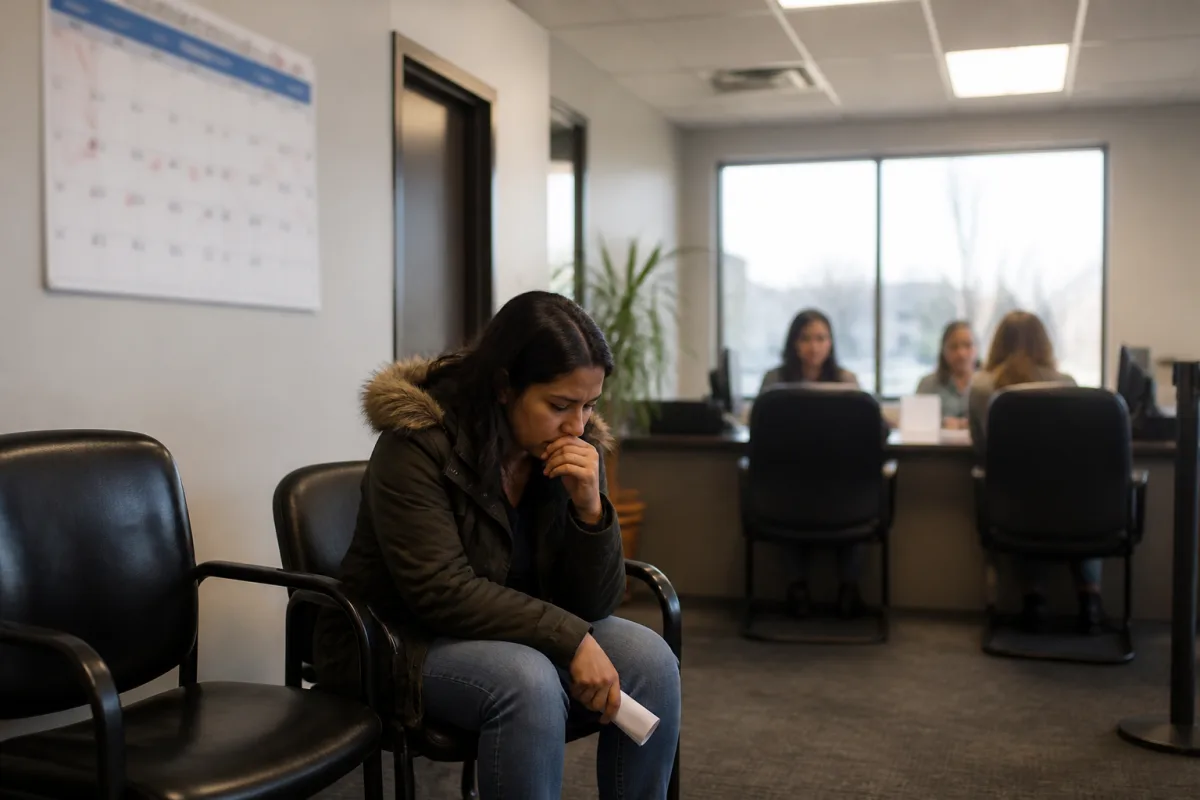

Apply for a US nonimmigrant visa — tourist, work, or student — as early as possible: since September 2025, interviews can only be scheduled in your country of citizenship or residence, and the validity period your future visa will carry is already visible in the State Department’s reciprocity schedule.
In short
- Since September 2025, interviews are only available in the country of citizenship or residence — applying in a third country is no longer possible.
- A 221(g) status (temporary refusal, administrative processing) is a common outcome, not a rare exception.
- Visa validity depends on citizenship under the State Department’s reciprocity schedule, not on the type of trip.
- For H-1B, L-1, O-1, and R-1, an interview can’t be booked until USCIS approves the underlying petition.
- For F, M, and J visas, the interview must be booked strictly within the visa’s validity window before the program start date listed on the I-20 or DS-2019.
The new rule: interviews only in your country of citizenship or residence
Since September 2025, a new restriction applies: applicants for nonimmigrant visas can only schedule an interview in their country of citizenship or permanent residence. It used to be possible to apply at any convenient consulate — for example, while traveling through a third country — but that option is gone now. The restriction has created a backlog: applicants report that the wait from submitting the application to the actual interview often stretches to several months, and in some cases longer.
This changes the approach to preparing for any nonimmigrant visa — tourist, work, or student. There’s only one shot at getting an interview before a planned trip, and if the date slips because of a delay, a vacation, the start of school, or a new job can all be at risk. That means applications now need to start noticeably earlier than before this rule took effect.
There’s only one shot at getting an interview before a planned trip, and if the date slips because of a delay, a vacation, the start of school, or a new job can all be at risk.
Since September 2025, nonimmigrant visa interviews are only available in the applicant’s country of citizenship or permanent residence — applying at a consulate ‘along the way’ in a third country is no longer an option.
Why delays are the norm, not the exception
Any visa application has historically been prone to delays — that’s not a glitch in the system, it’s how the system normally runs. During review, a consulate may request additional documents or clarifications, and a computer issue on the consulate’s end can result in an officer placing the application under a temporary refusal status — the so-called 221(g), or administrative processing.
A 221(g) status is a common outcome, not a rare one. The first step is to check the State Department’s website for current interview wait times at the specific consulate and visa type. But that estimate doesn’t always reflect reality: the chart isn’t updated often and can be noticeably outdated or inaccurate.
So it’s best treated as a reference point, not a guarantee. If the posted wait times show the interview won’t happen in time for a planned trip, job, or school start, it’s possible to request an expedited appointment — an official option for applicants at risk of missing their deadline. That risk of delay is the main argument for starting document preparation as early as possible, rather than closer to the planned travel date.
If the State Department’s posted wait times show the interview won’t happen in time, it’s possible to officially request an expedited appointment.
What the visa reciprocity schedule is and why to check it in advance
The US State Department maintains a separate resource — the visa reciprocity schedule — that shows how long a visa will be valid for, depending on the applicant’s citizenship. This isn’t a formality: visa validity periods can differ enormously between nationalities. A citizen of one country might get only a three-month tourist visa, while a citizen of another gets one valid for a year or even ten years — the difference comes from bilateral agreements between the US and that specific country, not from the type of trip.
It helps to think of a visa as a ticket that allows entry into the US for a specific purpose — and that ticket can only be used before the visa itself expires, regardless of how long the passport it’s stamped in remains valid. That’s where the reciprocity schedule becomes practically useful: an interview should be scheduled with an eye on how long the visa will remain valid after approval.
If a trip isn’t planned for another 6 months, but the reciprocity schedule shows the applicant only qualifies for a 3-month visa, there’s no point scheduling the interview right now — the visa will have already expired by the time of the trip. The reciprocity schedule is worth checking before booking an interview, so that the visa’s validity period covers the planned US travel date.
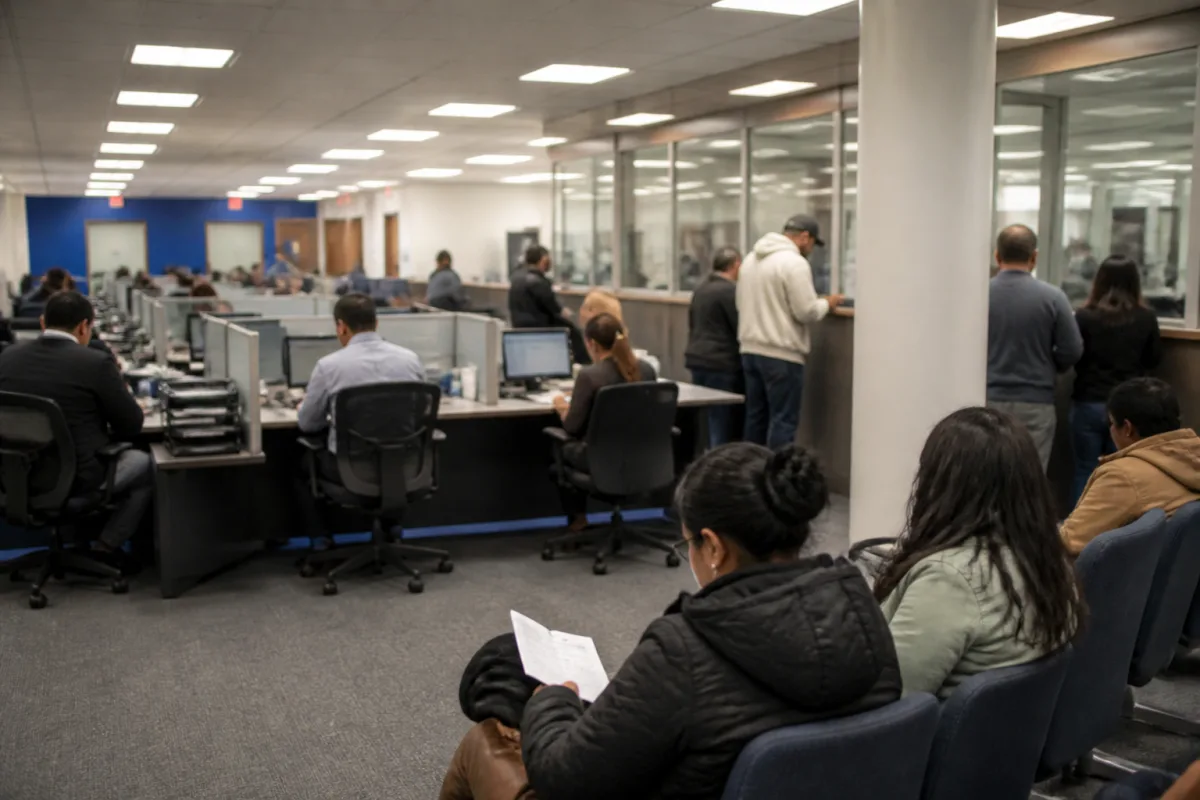
Visa validity depends on citizenship, not trip type. If the visa is only valid for 3 months but the trip is six months away, booking the interview now is pointless — the visa will have already expired.
B1/B2: when to start applying for a tourist visa
The B1/B2 visa covers trips to the US for vacation, visiting friends or relatives, attending business meetings and contract negotiations, and medical treatment. Most tourists apply for this visitor visa category.
The general rule is to start the process as early as possible, so the interview happens well before the date you need to be in the US. Before scheduling an interview, an applicant goes through several steps, and none of them happen instantly. After the interview, several more steps still have to happen before the visa is printed and placed in the passport — and only then can the document be returned.
A common mistake is assuming two weeks before a trip is enough. If a US event is only two weeks away, there usually isn’t enough time to get through all the steps before and after the interview: preparing documents, scheduling the interview, the interview itself, and the subsequent visa printing together take noticeably longer than that.
H-1B, L-1, O-1, R-1: when to apply for a work visa after petition approval
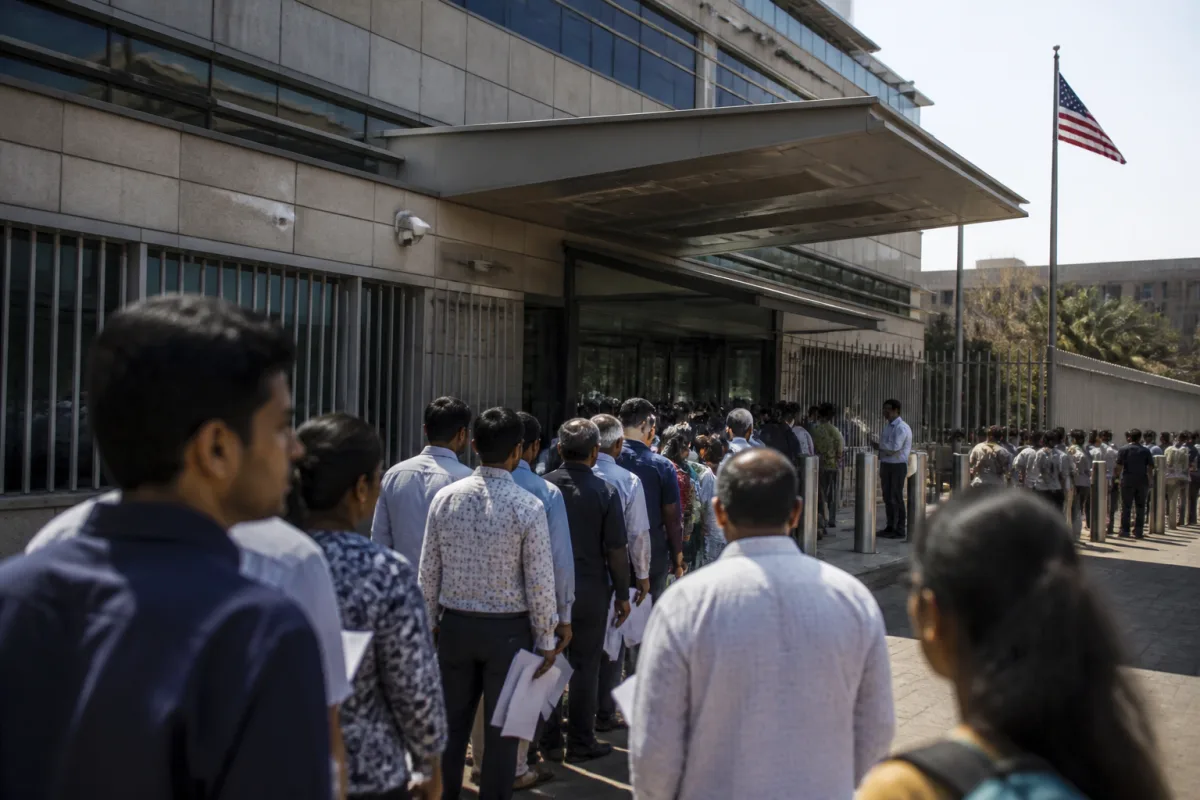
Petition-based visas include H-1B, L-1 (intracompany transfer), O-1 (for applicants with extraordinary ability in a specific field), and R-1 (for religious workers) — all of them are meant for working in the US, unlike the tourist B1/B2.
This group of visas works differently: there’s a step before the interview that tourists don’t have. The first step is filing a petition with US Citizenship and Immigration Services (USCIS). An interview can’t be scheduled until that petition is approved — that’s a requirement, not a formality.
Once the petition is approved, the online DS-160 form should be completed right away, followed immediately by booking the earliest available interview slot. There’s no reason to wait: delays happen at almost every stage of the process, and the sooner the interview booking starts after petition approval, the more buffer there is in case of schedule shifts.
Throughout the process, it’s worth staying in touch with the employer and regularly updating them on the application’s status. Employers usually understand how the visa process works and know that delays are common. The worst-case scenario is a call or email the day before the start date saying the visa still hasn’t come through; keeping the employer informed lowers the chance of ending up in that situation.
The worst-case scenario is a call or email the day before the start date saying the visa still hasn’t come through
Path to a work visa after petition approval
Main steps for H-1B, L-1, O-1, and R-1 after filing a petition with USCIS.
- File a petition with USCIS
- Petition approvalrequired before booking
- Complete the DS-160 formright after approval
- Book the earliest interview slotwithout delay
- Keep the employer updated on statusat every stage
B1/B2 vs. petition-based work visas: where the process starts
| Criterion | B1/B2 (tourist) | H-1B, L-1, O-1, R-1 (work) |
|---|---|---|
| Purpose of travel | Vacation, visiting family, business meetings, medical treatment | Working in the US |
| First step | Preparing documents and booking an interview | Filing a petition with USCIS |
| When an interview can be booked | As soon as documents are ready | Only after USCIS approves the petition |
| What happens after the interview | Visa is printed and placed in the passport | Visa is printed and placed in the passport |
Data drawn from the sections on B1/B2 and petition-based work visas.
F, M, J: when to book an interview for a student or exchange visa
F, M, and J visas are for foreign students and exchange program participants — covering study, postdoctoral research, academic fellowships, and teaching. The process doesn’t start with visa paperwork; it starts with admission: an applicant must first secure a place at a school or be accepted into a recognized exchange program. After admission, the school or sponsoring organization issues a formal document — Form I-20 (for F and M) or Form DS-2019 (for J) — confirming that the applicant has been accepted by an organization authorized to host foreign students or exchange participants.
Only with that document in hand can the visa process begin: complete the online DS-160 form, and immediately after submitting it, book an interview at the consulate in the applicant’s country of citizenship or permanent residence.
There’s a strict timing window here. Before booking, check the State Department’s reciprocity schedule — look up the country and see how long that specific visa type will remain valid. If the visa is only issued for 3 months, the interview needs to be scheduled within 3 months of the program start date listed on the I-20 or DS-2019. The logic cuts both ways: an interview too early means the visa will expire before the actual departure date arrives, making it unusable by then. An interview too late carries a risk of refusal: if the consular officer isn’t convinced the applicant can physically get to the US before the program starts, that alone can be grounds for denial.
What makes this harder is that in many countries, interview slots on short notice simply aren’t available — the wait can stretch to months. In that situation, a student effectively gets only one shot at an interview before classes or the exchange program begins. A refusal here doesn’t just mean reapplying — it means pushing back the program start date, with the loss of a semester or the entire planned trip.
A refusal here doesn’t just mean reapplying — it means pushing back the program start date, with the loss of a semester or the entire planned trip.
Path to a student or exchange visa
Sequence of steps for F, M, and J visas from admission to interview.
- Admission to a school or exchange program
- Receive Form I-20 (F, M) or DS-2019 (J)issued by the school or sponsor
- Complete the DS-160 form
- Book an interview in the country of citizenshipright after submitting DS-160
- Check the reciprocity schedule before bookingvisa validity must cover the program start date
The interview must fall strictly within the visa’s validity period under the reciprocity schedule, counted back from the program start date: too early and the visa expires; too late and there’s a risk of refusal over insufficient travel time.
Before booking a student or exchange visa interview
Frequently asked questions
Can I apply for a US nonimmigrant visa if I’m not a citizen of the country I’m applying in, but just live there?
Yes, the rule allows booking an interview either in the country of citizenship or in the applicant’s country of permanent residence. Both are equally valid options — what matters is that the consulate can confirm actual permanent residence, not just a temporary stay such as a tourist visit.
Can a US visa be extended if the trip gets delayed and the visa’s validity period runs out?
A visa works like a ticket that’s only valid until its own expiration date, regardless of the passport, and it can’t be reused once it expires. If a trip gets pushed past the visa’s validity period, the entire visa process has to be repeated, including booking a new interview.
What should I do if USCIS approved my work visa petition, but the interview is scheduled after my start date?
In that situation, it’s best to immediately and consistently keep the employer informed about the application’s status — delays at the booking and waiting stage are common, and an employer familiar with the visa process may be able to adjust the start date. There’s no way to speed up the interview on your own outside of official options like requesting an expedited appointment.
Comments
Reader experience is useful, but it is not advice: check the rules on the official site.
No account needed: click Sign in, type any name, and you are done.