
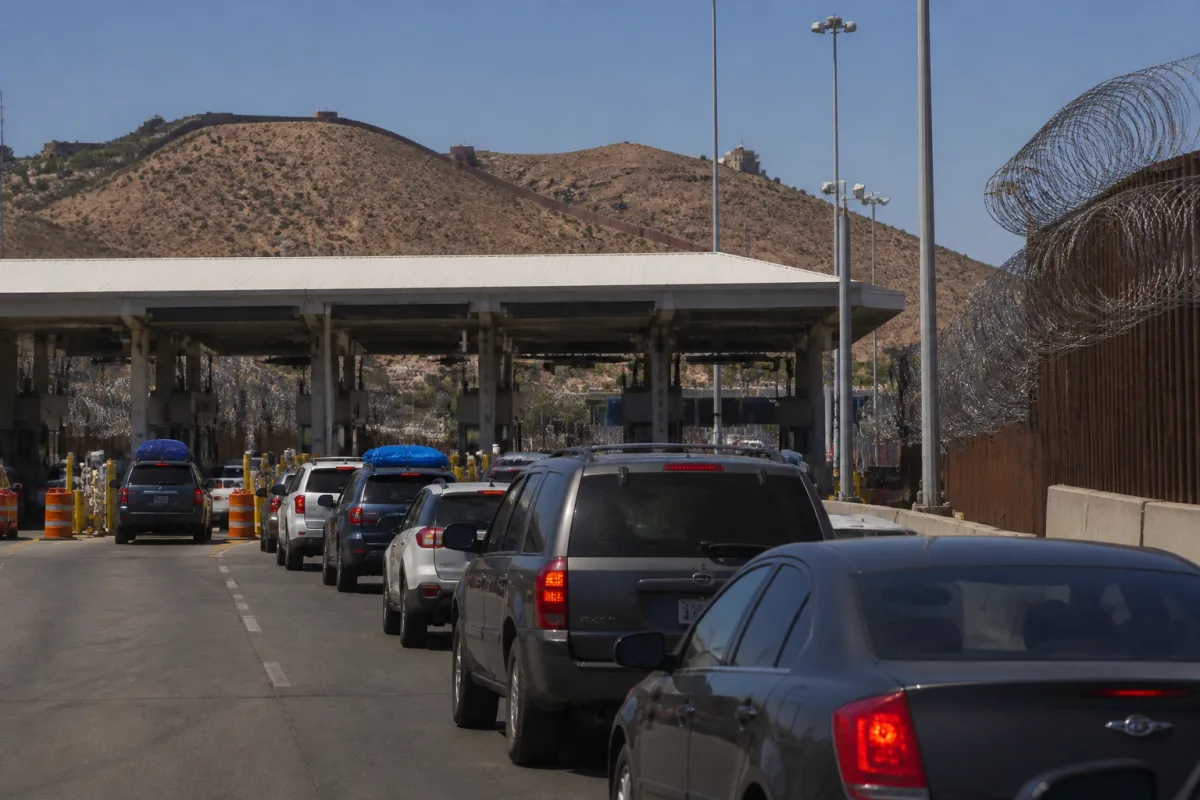

Since the Matter of Delcarmen-Lara decision, leaving the U.S. on advance parole while unlawful presence has accrued now counts as a full departure from the country — and it can trigger the 3- or 10-year reentry bar.
In short
- Since August 13, 2026, traveling on advance parole with accrued unlawful presence is treated as an ordinary departure and triggers the 3- or 10-year bar.
- The full cost of advance parole can reach roughly $1,630 because of the new $1,000 fee introduced on October 15, 2025.
- 180+ days of unlawful presence trigger a 3-year bar, 365+ days trigger a 10-year bar, and filing to change status does not stop those days from accruing.
- Once the bar is triggered, the case moves to a consulate: the waiver takes 2–3 years to review, plus another 2–3 years of consular processing — up to 6 years in total.
- Adjusting status directly from lawful presence (for example, from F-1 through marriage) does not trigger the 10-year bar even if the person leaves the country.
Matter of Delcarmen-Lara: Why Advance Parole Travel Is No Longer Safe
The decision in Matter of Delcarmen-Lara, issued by the Board of Immigration Appeals (BIA) on August 13, 2026, changed how travel on advance parole is treated: such a trip is now treated as a full departure from the United States. The decision is recent and could still be appealed, and whether it applies to trips taken before that date has not been officially clarified — so when planning, it makes sense to go by the practice in effect at the time of filing, not at the time of a past trip.
Before this decision, a different logic applied: travel under advance parole was not considered a departure from the country, and an applicant could spend years in the U.S. with unlawful presence, travel abroad on advance parole, and return without triggering the 3- or 10-year bar — and once a green card was granted, the earlier unlawful presence no longer mattered.
After Matter of Delcarmen-Lara, that workaround closed. If an applicant has accrued unlawful presence at the time of departure, the advance parole trip itself is now treated as a departure that triggers the reentry bar. Previously, what protected applicants was that a departure under parole wasn’t considered a ‘departure’ for bar purposes; now the distinction between traveling ‘with advance permission’ and an ordinary departure has disappeared for bar purposes.
the distinction between traveling ‘with advance permission’ and an ordinary departure has disappeared for bar purposes
After Matter of Delcarmen-Lara, advance parole travel with unlawful presence on the books is treated as a departure and triggers the 3- or 10-year bar — just like an ordinary departure.
How Much It Costs to File for Advance Parole and a Work Permit
| Filing | Government fee |
|---|---|
| Work permit (EAD) | $260 |
| Advance parole | $630 |
Starting October 15, 2025, a separate $1,000 fee for parole itself is added on top of the Form I-131 fee — so the full cost of advance parole can run to roughly $1,630. The exact amount depends on the applicant’s category and filing method (paper or online), so it’s worth checking the current fee on Form G-1055 on the USCIS website before filing.
Filing for an EAD carries almost no downside: the approval odds in the final weeks are high, and the applicant risks little by filing this document. Advance parole is different — beyond the fee itself, approval may not arrive in time, and even once granted, actually using the travel permission can trigger the reentry bar.
Filing for a work permit (EAD) carries almost no downside — approval odds are high, unlike advance parole, where actually using the travel permission can trigger the bar.
The 3- or 10-Year Bar: Unlawful Presence Thresholds
The amount of unlawful presence determines which bar a departure triggers — 3 years or 10 years. More than 180 days of unlawful presence at the time of departure triggers a 3-year reentry bar. More than 365 days triggers a 10-year bar.
The same thresholds apply to an applicant awaiting a green card: if a year of unlawful presence has accrued while waiting, departure triggers the 10-year bar. If it’s 180 days or more, it’s the 3-year bar.
Filing an application to adjust status does not, by itself, stop the accrual of unlawful presence days — this is a common misconception. As a general rule, days keep accruing until approval or a change of status, with rare exceptions (for example, the period a bona fide asylum application is pending). Days already accrued are certainly not erased by filing. This is a separate requirement, unrelated to the other conditions of a status change — whether under the applicant’s direct subcategory or under a preference category.
The 10-year bar in particular is what most often causes serious trouble for those who have accrued unlawful presence: a Customs and Border Protection officer at the border will deny entry specifically on that basis, even if the adjustment of status application has already been approved.
a Customs and Border Protection officer at the border will deny entry specifically on that basis, even if the adjustment of status application has already been approved
| Days of unlawful presence | Length of bar upon departure |
|---|---|
| 180+ days | 3 years |
| 365+ days | 10 years |
Unlawful presence thresholds and length of the bar
The number of days of unlawful presence at departure determines how long the reentry bar lasts.
- 3-year bar180+ days
- 10-year bar365+ days
Filing an application to adjust status does not stop unlawful presence from accruing — days keep counting until approval or a status change, with rare exceptions.
What Happens After the Bar Is Triggered: Consular Processing and Years of Waiting
Once a departure has triggered the bar, the I-130 case moves from USCIS to a consulate — the petition goes through the National Visa Center, and the applicant then goes through full consular processing outside the U.S. If the consulate confirms at that stage that the 10- or 3-year bar applies, the applicant must separately file a petition for a waiver of the bar — the so-called unlawful presence waiver — and it has to be filed while the applicant is already abroad.
This waiver petition can take 2–3 years to process. On top of that comes the time for consular processing itself — another 2–3 years. All together, a person can end up stuck outside the U.S. for up to 6 years, based on current processing times: that’s not a fixed number but a ceiling made up of two sequential procedures, each running independently of the other.
a person can end up stuck outside the U.S. for up to 6 years
How long consular processing can take after the bar is triggered
Once the bar is confirmed, the waiver petition and consular processing run one after the other.
- Waiver petition review2–3 years
- Consular processing2–3 years
- Total, upper limitup to 6 yearsnot a fixed number, but an upper ceiling
If the Applicant Adjusted Status From Lawful Presence: Departure Without a Bar
The bar is not triggered if the applicant had zero days of unlawful presence at the time of filing and at the time of departure. A real-world example: a student on an F-1 visa remained in the U.S. lawfully the entire time, with no lapse in status. Her F-1 status expired, but by that point she had already married a U.S. citizen and filed an application to adjust status based on a bona fide marriage — the transition happened directly from lawful status, with no gap of unlawful presence.
In this kind of situation, even leaving and returning to the U.S. does not trigger the 10-year bar: that bar is imposed specifically for accrued unlawful presence, which simply doesn’t exist in this scenario.
But the absence of a bar does not mean automatic permission to enter. A border officer still has discretionary authority to deny entry — the decision depends on the specific circumstances, and there’s no guarantee of reentry. If entry is denied, the pending adjustment of status application will most likely be transferred to a consulate abroad — instead of finishing the process inside the U.S., the applicant would face full consular processing.
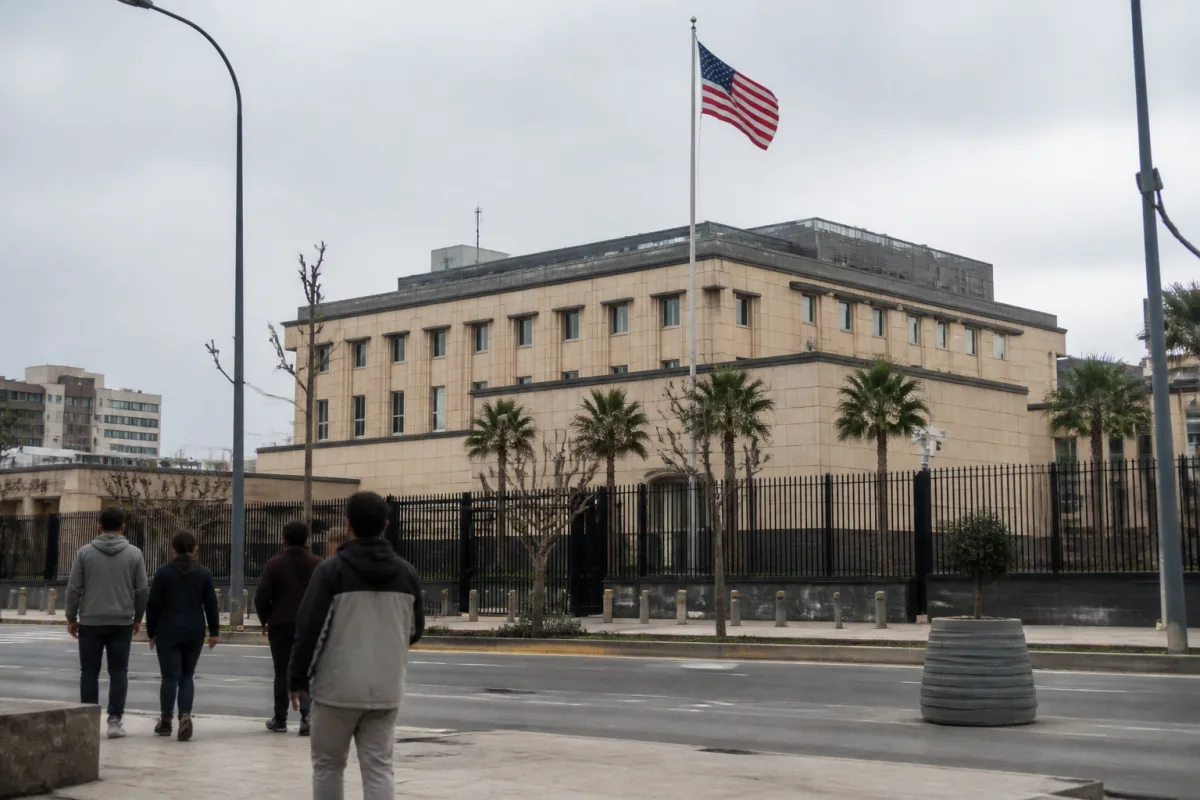
Even without accrued unlawful presence, a border officer can still deny entry at their own discretion, and there’s no guarantee of reentry.
Departure with accrued unlawful presence vs. without it
| Criterion | Had accrued unlawful presence | Adjusted from lawful status |
|---|---|---|
| Triggers 3/10-year bar | Yes, on departure | No |
| Risk of entry denial by a border officer | Yes, discretionary | Yes, discretionary |
| Consequence if entry is denied | Bar applies, a waiver is needed | Case is transferred to a consulate abroad |
Based on the cases described in this article: a person with accrued unlawful presence, and a student who adjusted status from F-1 through marriage without any break in lawful status.
Emergency Parole: An Expedited Process for Urgent Cases
Emergency parole is an expedited travel-permission process filed when a relative abroad’s health suddenly deteriorates and there isn’t time to wait for a regular advance parole to process. The request is made through an InfoPass appointment on the USCIS website: in the drop-down menu of services, the applicant selects the option for granting conditional travel permission (parole), after which a USCIS officer contacts the applicant within 3–4 business days with next steps.
The fee for emergency parole is $630 — paid separately, even if a regular advance parole application has already been filed: USCIS treats it as an independent, separate request. An in-person appointment at a USCIS office is usually available within two weeks, though in some cases the entire process has been handled by phone without a visit.
What to bring to the appointment:
- a document proving the relationship to the ill relative (for example, an original birth certificate);
- a medical statement about the serious health condition — ideally on official letterhead, signed by a physician, in original form (copies aren’t always accepted);
- proof of fee payment, personal photographs, a passport, and a completed Form I-131.
With some luck, the travel permission can be granted right at the InfoPass appointment. But a denial is also possible — if USCIS isn’t satisfied that all requirements have been fully met.
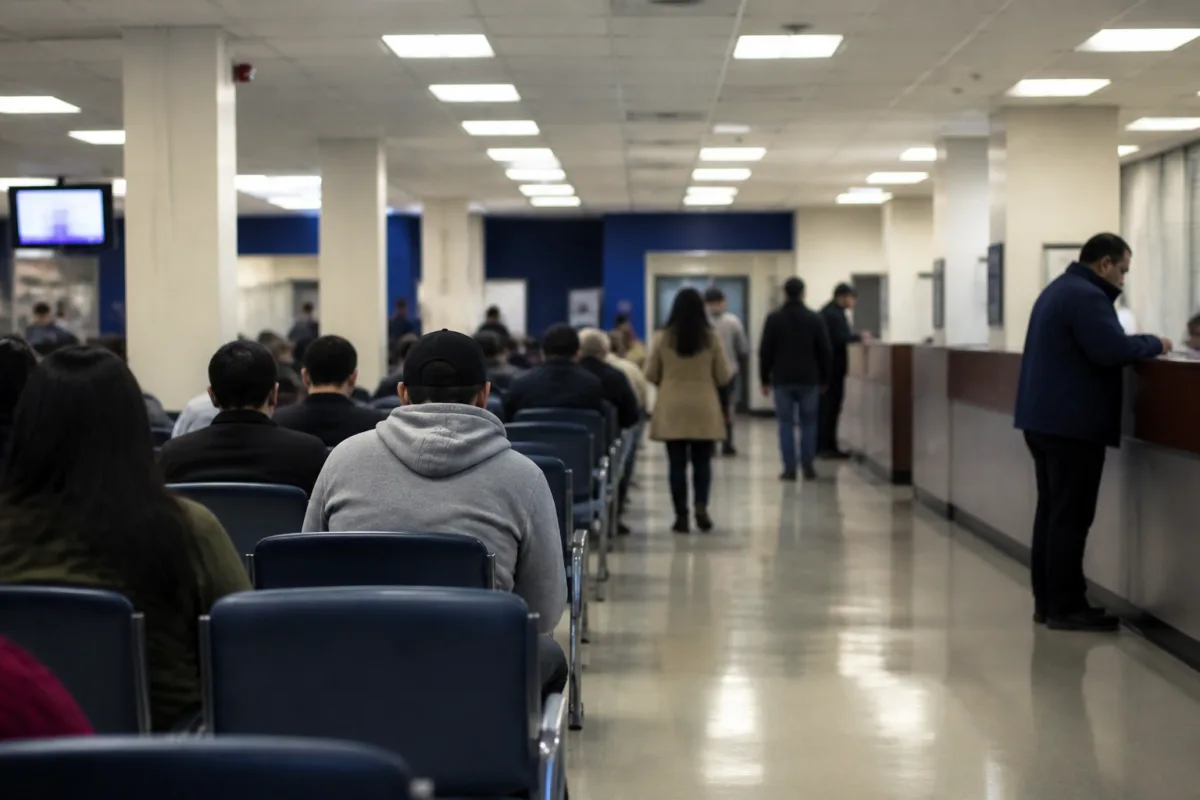
For an emergency parole InfoPass appointment, bring an original document proving the relationship, a medical statement on letterhead signed by a physician, proof of fee payment, photos, a passport, and Form I-131.
What to bring to an InfoPass appointment for emergency parole
Even With Approved Emergency Parole, Entry Can Still Be Denied
Even with approved emergency parole, a border officer at the point of entry to the U.S. retains discretionary authority to deny entry — the decision depends on the officer’s judgment, not on the fact that the application was approved. Approved parole does not guarantee reentry.
If entry is denied, it affects the status adjustment process: the case will likely have to be transferred for processing to a consulate abroad instead of continuing inside the U.S. That said, in the case discussed here, the 3- or 10-year bar does not get triggered even if entry is denied — because the applicant never had a period of unlawful presence: the transition went directly from lawful status into the adjustment process, with no unlawful presence accrued at any stage.
Frequently asked questions
Does the Matter of Delcarmen-Lara decision apply to trips already taken before August 13, 2026?
This question has not been officially clarified yet. When planning, it’s best to go by the practice in effect at the time of filing rather than the date of a trip already taken, since the decision is recent and could still be appealed.
Can the Matter of Delcarmen-Lara decision be appealed?
The decision was issued by the Board of Immigration Appeals (BIA) on August 13, 2026, and can formally be appealed. The outcome of any such appeal is not known at this point, so it makes sense to rely on the practice in effect at the time of filing.
What happens if an applicant never files for advance parole and simply waits for the green card inside the U.S.?
If the applicant doesn’t leave the country, the 3- or 10-year bar is not triggered — it only applies at the moment of departure. But unlawful presence keeps accruing if it’s already present, and waiting for a decision on the status change does not stop that count on its own.
Can emergency parole be filed if a regular advance parole application has already been approved but not yet used?
Yes, USCIS treats emergency parole as an independent, separate request regardless of the status of a regular advance parole application. The $630 fee for it is paid separately, even if a regular advance parole application has already been filed.



Comments
Reader experience is useful, but it is not advice: check the rules on the official site.
No account needed: click Sign in, type any name, and you are done.