


If the ANEF platform throws an error and won’t let you submit your residency permit application, French law provides an alternative filing route — through an in-person appointment, mail, or the prefecture’s email — but you can only use it after documenting that every standard option, including a visit to a help center, has failed.
In short
- An alternative residency-permit filing route in France is available under CESEDA Article R431-2, Decree No. 2023-191, and the order of August 1, 2023.
- A help-center visit is mandatory before the alternative route — without a convocation proving the platform failed, you can’t move forward.
- The law provides three alternative filing methods, but in practice only the in-person prefecture appointment actually works.
- If documents are sent by mail, a screenshot of the ANEF error must be included, or the package will be rejected.
- If the prefecture stays silent, a lawyer’s formal request — followed by the administrative procedures platform — almost always leads to an appointment invitation.
When the Alternative Filing Method Applies for a French Residency Permit
ANEF problems usually fall into one of three situations. First: a foreign national holds a D visa and must file through the ANEF platform, but the system throws an error and won’t let the application proceed. Second: the applicant is in France on an APS (a temporary document that usually runs for six months and is renewed every six months), the prefecture invites them to switch to a long-term residency permit, but their ANEF account either doesn’t work or has no matching category. Third: the applicant needs to renew an existing residency permit (talent passport, visitor, student, and so on), but the account simply offers no option to do so. A separate version of the same problem is switching from a one-year D visa to a talent passport family permit: every category is listed in the account except the one needed.
Three legal provisions cover these cases: Article R431-2 of the CESEDA code, Decree No. 2023-191 of March 22, 2023, and the order of August 1, 2023 (Article 4). Article R431-2 of CESEDA establishes that applications for residency permits on a list set by the immigration minister’s order must be filed through the electronic system. That list is Annex 9 to the CESEDA code. It covers all talent passport categories, visitor, student, private and family life (including family reunification), and in some cases subsidiary protection or refugee status. For exactly these categories, filing defaults to ANEF — so any platform failure automatically puts the applicant into one of the three situations described above.
ANEF problems arise when filing on a D visa, when switching from an APS to a long-term residency permit, or when renewing an existing permit — in all three cases, the system either throws an error or doesn’t offer the needed category.
Help Centers: A Mandatory Step Before the Alternative Filing Route
A visit to a help center is mandatory for anyone who cannot file through ANEF on their own — this is set out in a dedicated CESEDA provision introduced in 2023–2024 after widespread system failures. The centers exist for anyone unfamiliar with digital tools, lacking the right equipment, or facing any difficulty filing through ANEF — regardless of age or income: staff at the center submit the application on the applicant’s behalf.
If the applicant has a computer and experience, but the application won’t go through because of a system error or a missing category in ANEF, a visit to the help center is still required: that’s where it gets recorded that the failure was caused by the platform itself, not the applicant. This isn’t a formality — without that record, you cannot move on to the alternative filing route.
This isn’t a formality — without that record, you cannot move on to the alternative filing route.
Appointments at the center are booked through the same system used for filing or collecting a residency permit. The Paris prefecture’s website, for example, lists addresses for three such centers. During the appointment, staff confirm that they, too, cannot submit the documents through ANEF — and that refusal needs to be documented.
Proof of the visit is the convocation — an invitation letter with the date and time of the appointment. Every paper from every visit to the center, even if there were several, should be kept: these are what later confirm the applicant met the mandatory condition before moving to the alternative filing route.
An optional but useful additional piece of evidence is a reply from the Centre de contact citoyen (CCC), the citizen service center on the ANTS platform. You can write to them directly, and the CCC can confirm in writing that filing through ANTS isn’t possible. This confirmation isn’t required, but it strengthens the applicant’s position as a supporting argument.
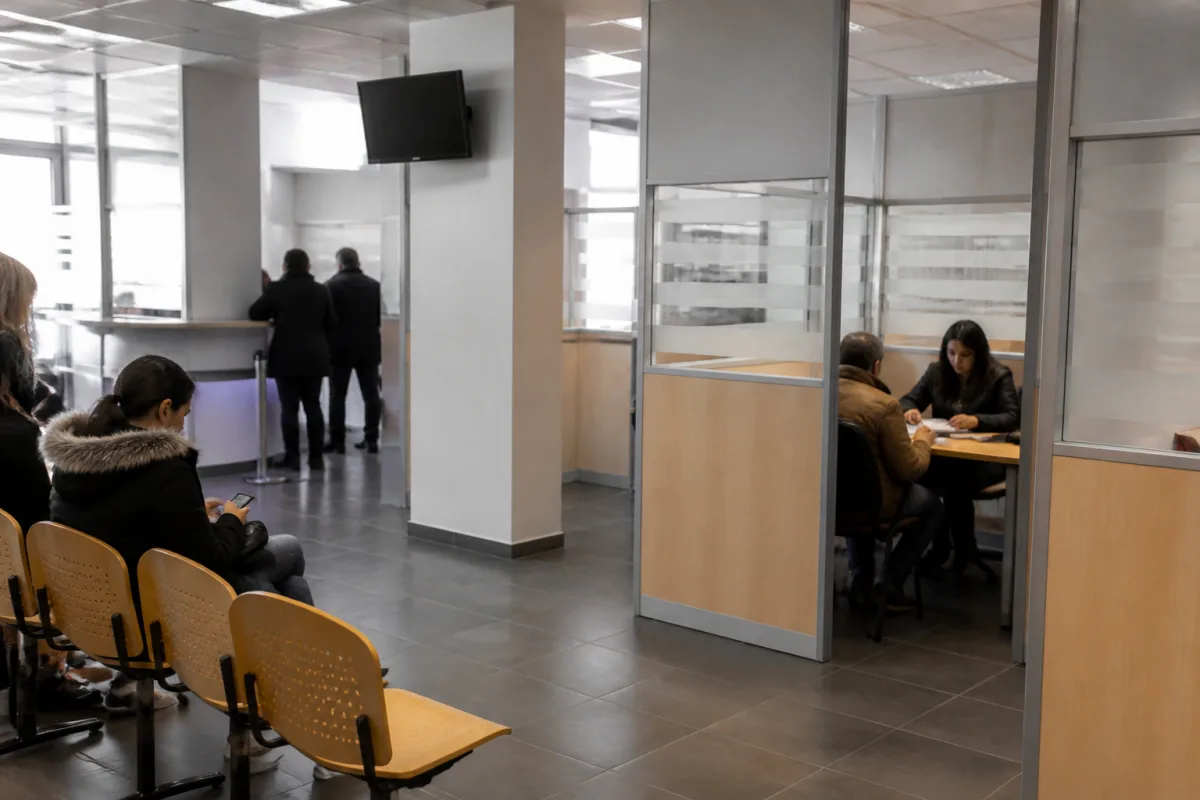
A help-center visit is mandatory for everyone, even if the problem isn’t the applicant’s computer but a platform failure: that’s where the failure itself gets recorded, and without it the alternative filing route isn’t available.
Keep every piece of paper from help-center appointments — these are what later prove you met the mandatory condition before moving to the alternative filing route.
What to Keep After a Help-Center Visit
How the Prefecture Is Required to Allow Filing When ANEF Fails
The right to an alternative filing method rests on several provisions at once, not just one. Decree No. 191 of March 22, 2023 explicitly provides for an alternative way to file a residency permit application — provided the person has taken every required step, including seeking help, but is objectively unable to use the electronic system because of how it functions. The order of August 1, 2023 adds to these rules: its Article 4 requires at least two ways to book a help-center appointment, one of which must not be digital — this guarantees access to the alternative route even for those who can’t use online booking.
Formally, the procedure works like this: the prefecture must establish that filing is technically impossible and must itself offer the alternative route. The application is submitted to the prefecture or sub-prefecture covering the applicant’s place of residence, where an individual in-person appointment is arranged. The law requires the prefecture to allow filing through one of three channels: by mail, through a dedicated email address, or as an in-person appointment at the counter.
In practice, only one of these three options actually works. The alternative mechanism (solution de substitution) is not a right to a consultation — it is specifically an in-person appointment that lets you register your application. Prefectures rarely agree to accept documents by mail, and often lose them — a mailed package later shows up as never received. If this route is chosen anyway, the file must include a screenshot of the ANEF technical error: without it, the package gets rejected, even if the category is one that’s normally required to go through the online system. For that reason, it’s worth insisting on an in-person appointment rather than mailing documents.
In practice, only one of these three options actually works.

Of the three legal filing methods, the one that actually works is the in-person counter appointment. Prefectures often lose mailed documents, and without a screenshot of the ANEF error, the package gets rejected.
If the Prefecture Doesn’t Respond: A Lawyer’s Request and Administrative Court
When the prefecture goes silent and standard outreach gets no result, you need to proceed step by step — and document every step.
-
Record every attempt to make contact. Submit a message through the contact form on the prefecture’s website — nearly every prefecture has one — and save proof of submission. Send a registered letter and keep the dated receipt for both sending and delivery. Write and call ANEF, and save every reply ANEF sends by email. If a service center exists in the region, contact that too. Collect every screenshot, receipt, and letter in one folder.
-
Contact a lawyer. If the prefecture still hasn’t responded after all of the above attempts, going to a lawyer is the clear next required step.
-
Obtain a lawyer’s formal request. The lawyer receives the folder of evidence showing every attempt at contact and drafts a formal request to the prefecture. The request cites the decree, the order, and the relevant CESEDA article, along with a timeline of every attempt made to reach the prefecture.
-
Wait for an appointment invitation. In most cases, the prefecture responds appropriately after a lawyer’s request and sends an email invitation with the date and time of the appointment, along with a list of documents to bring — depending on the applicant’s specific situation.
-
File through the administrative court platform. If the prefecture doesn’t respond even to the lawyer, one last mechanism remains — the application is filed through a dedicated platform for administrative procedures, available to lawyers: essentially, this is a filing with the administrative court. The court contacts the prefecture directly, and according to lawyers’ experience, this almost always results in an appointment invitation — provided the applicant’s documents are in order and the real problem is the broken system, not the application itself.
If the prefecture doesn’t respond even to the lawyer, one last mechanism remains — the application is filed through a dedicated platform for administrative procedures
What to Do If the Prefecture Goes Silent
Five sequential steps, from the first contact attempts to filing with the administrative court.
- Record every attempt to make contactWebsite form, registered letter, correspondence with ANEF — all in one folder
- Contact a lawyerIf the prefecture still hasn’t responded
- Obtain a lawyer’s formal requestCiting the decree, the order, and the relevant CESEDA article
- Wait for an appointment invitationA letter with date, time, and list of documents
- File through the administrative court platformLast resort, if even the lawyer gets no response
If the prefecture doesn’t even reply to a lawyer’s request, the application can be filed through the administrative procedures platform — effectively a filing with the administrative court.
Frequently asked questions
How long does the whole process take — from the ANEF failure to receiving a prefecture invitation through a lawyer’s request?
The exact timeline depends on which stage the prefecture responds at: sometimes a help-center visit and an in-person appointment are enough, sometimes the full path is needed, up to a lawyer’s request and filing through the administrative court platform. There are no set timeframes for each stage — the sequence of steps is what matters: recording attempts, contacting a lawyer, the lawyer’s request, then the court.
Can you go straight to a lawyer, skipping the help center and the prefecture’s website contact form?
No — a help-center visit is a mandatory step for anyone who can’t file through ANEF, and that’s where it gets recorded that the failure was caused by the platform, not the applicant. Without that record, and without evidence of contact attempts through the contact form and registered mail, a lawyer’s request won’t be backed by the documents it needs.
What if the prefecture offers to accept documents by mail instead of an in-person appointment?
That option is provided for by law, but in practice prefectures rarely accept documents by mail and often lose the mailed package. If there’s no other choice, the file must include a screenshot of the ANEF technical error — without it, the package gets rejected, even if the category is normally required to file online. It’s better to insist on an in-person appointment instead.
Is there a fee for a help-center visit or for getting confirmation from the CCC?
There’s no indication that either of these involves a fee: both are described as access to assistance for those who can’t file through ANEF on their own, not as a paid service.
What happens if documents submitted at the help center or by mail get lost?
This is exactly why every piece of paper from center visits — convocations, documented refusals — needs to be kept, and why a dated proof of sending and delivery must be obtained for any mailed submission. These documents serve as evidence that the applicant did their part of the procedure, even if the package later shows up as never received.
Does the prefecture’s obligation to allow alternative filing apply to every category of residency permit?
It applies to the categories listed in Annex 9 to the CESEDA code — talent passport, visitor, student, private and family life, and in some cases subsidiary protection or refugee status. These are exactly the categories that default to filing through ANEF, and they’re the ones covered by the right to an alternative route when the platform fails.



Comments
Reader experience is useful, but it is not advice: check the rules on the official site.
No account needed: click Sign in, type any name, and you are done.