
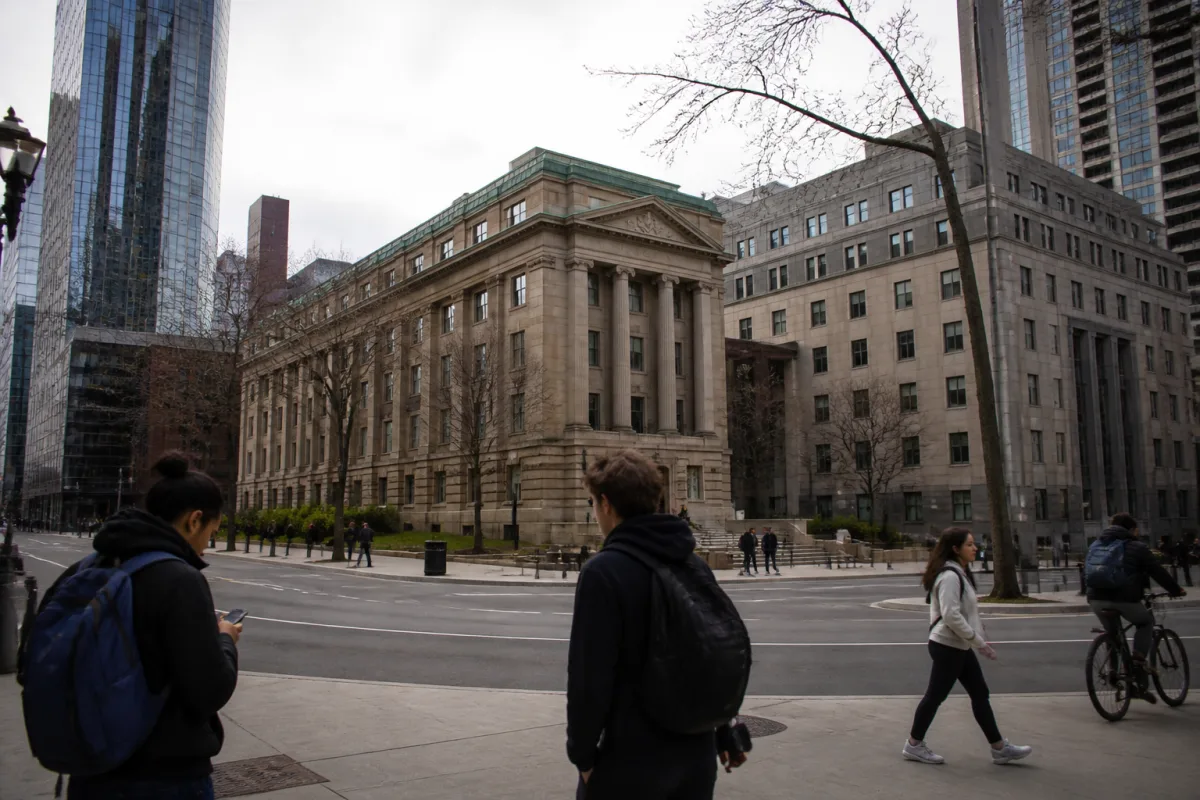

In 2027, Canada is experiencing a serious crisis in international education. Student visa rejections have reached 74%, the country is reducing the intake of foreigners year after year, and students who received visas are not being issued work permits despite promises from schools and consultants.
Student Visa and Tourist Visa Rejections
Canada is rejecting student visa applications at an unprecedented rate. Tourist visa rejections stand at 70%, while student visa rejections are 74%. This means that out of every ten applicants, seven go home empty-handed.
Canadian authorities claim in official statements that the country remains attractive to students and that their numbers are growing. However, there is no data to support these claims. In reality, the number of international students has declined by 97% over the past two years.
The Admission Trap and Visa Limitations
Canada has set a cap on the number of students it will accept. In 2024, approximately 350,000 students were planned to be admitted. In 2025, this figure was reduced to 300,000. For 2026, a cap of 150,000 students has been set. For 2027, the limit will be even lower.
The process has become a trap: universities continue to admit students, but this does not guarantee a visa will be issued. Even if a student has received an acceptance letter, their visa can be rejected due to quota exhaustion. The Provincial Attestation Letter (PAL) system requires special provincial confirmation that is practically impossible to obtain.
This means students lose money spent on preparation, time invested in studies, and trust in the system. According to foreigners caught in this situation, they sold family property and spent their parents’ life savings to study in Canada.
Work Permits and Broken Promises
Schools and consultants in India promised students work permits. After acceptance to a Canadian institution, students were supposed to receive permission to work. This did not happen.
When students filed complaints and began protesting in the streets, they pointed out that families had sold land, spent their life savings, but they were not being given work permits as promised. In response, the Canadian administration insisted that an international student whose visa has expired and who does not have permanent residency must return home.
The Path to Permanent Residency Is Closed
Even for students who received work permits, the path to permanent residency (PR) is becoming increasingly impassable. Canada has stopped conducting selection draws (draws) for a number of programs.
For master’s graduates, there once existed a pathway to PR. Over the past eighteen months, this pathway has not been used once. Only very limited opportunities remain for those who want to stay in the country.
Taking Pride in Reduction, Not Development
The Canadian administration positions the reduction in international student intake as a political victory. Officials declare: we have reduced the number of students by two-thirds, temporary workers by half, and foreigners overall—we have everything under control.
This contrasts sharply with previous years, when the government promoted Canada as a welcoming country where foreigners were celebrated, granted PR, and given opportunities. The current administration is taking the opposite course.
How the Country Hides the Numbers
Canadian representatives do not disclose the real situation publicly. When they do discuss it, they do so only in local Canadian media that reaches residents of the country.
The international community is not receiving honest information about students not receiving visas, work permits, and that there are practically no prospects for PR. Meanwhile, international students who have been studying in Canada over the past three to four years create the appearance of a steady influx. In reality, very few new students are arriving today.



Comments
Reader experience is useful, but it is not advice: check the rules on the official site.
No account needed: click Sign in, type any name, and you are done.