


For descendants of Canadians born outside Canada, the key question is whether the ancestor was a Canadian citizen on the child’s date of birth. If the child was born before the ancestor’s naturalization, the chain doesn’t work, even if the family always considered the ancestor Canadian. This must be verified against dated documents, not family memory.
Who the substantial connection test applies to
The substantial connection test applies only to part of the cases. If a Canadian parent was born outside Canada, and the child was born abroad after December 15, 2025, IRCC counts 1,095 days of the parent’s presence in Canada. A child born before December 15, 2025, is not subject to this test.
The test applies only to a child born outside Canada after December 15, 2025, whose Canadian parent was also born or adopted outside Canada. In this case, the parent must prove 195 days of presence in Canada before the child’s birth. That’s three years, and IRCC counts them separately.
The naturalization date
If an ancestor was not born in Canada but became a citizen through naturalization, they can pass on citizenship just as a Canadian by birth would. What changes is the timing. The key question is: was the ancestor a Canadian citizen on the day their child was born?
If the child was born after naturalization, the chain works. If the child was born earlier, the parent did not yet have citizenship at that point, and there was nothing to pass on. The same ancestor can give different answers depending on the dates.
Cases involving older generations are more confusing, because the rules in past decades treated children differently when parents were naturalized. Such cases are reviewed individually. In one described case, the family was certain that a great-great-grandfather was Canadian, but his naturalization happened two years after his daughter’s birth, and this exact comparison determined which route the case could take. A document showing the naturalization date is needed, not a family tradition about it.
Discrepancies in names and documents
IRCC cross-checks documents simultaneously. Different spellings of a name in certificates (for example, the same woman recorded differently in two documents) can delay a Bill C3 case. A discrepancy by itself does not mean refusal. What matters is whether it can be shown that the documents refer to the same person.
For that, a document is needed that links the versions: a marriage certificate, a name-change record, a census record, or another document. All spelling variants should be placed alongside the documents that connect them, with a brief explanation of the difference. Discrepancies aren’t hidden — they’re documented.
If an affidavit is needed to fix this, starting in August 2026 the form requires certification by a commissioner of oaths, and it cannot be given by a family member. An officer’s attitude toward a discrepancy can differ from case to case, so it’s wiser to explain the gap before it’s questioned.
Adoption in the chain
Adoption does not automatically break the chain, but the mechanism differs from blood relation, and dates matter a great deal. The answer depends on two facts: when the adoption took place and whether the adoptive parent was born in Canada, as well as on documents: court orders and adoption records.
Cases where the applicant themselves was adopted are considered separately from cases where ancestors were adopted. A single date can change the answer, so each situation should be examined separately.
Processing times
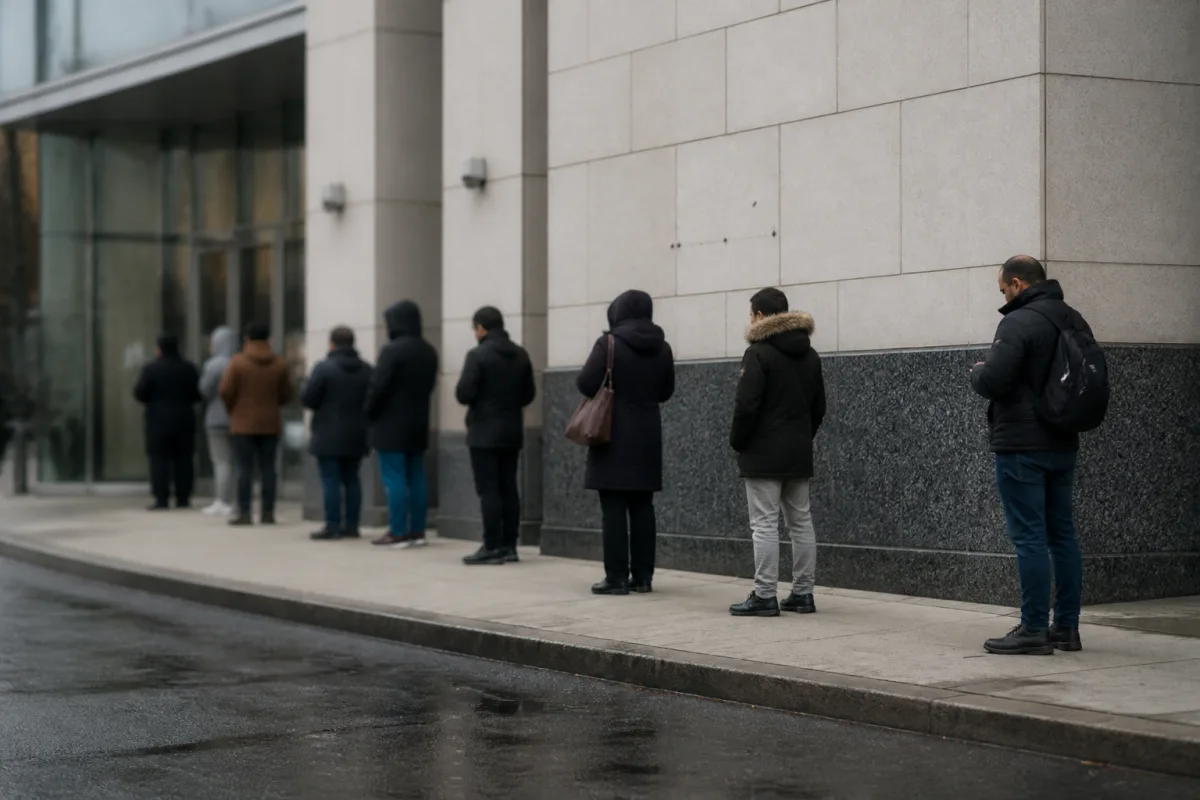
The current processing time is 34 months. This is an average figure, not a countdown for a specific application, and it changes. After receiving the acknowledgement of receipt, applicants can check their processing time through IRCC’s tool.
Expedited processing is available for certain cases and takes a few weeks instead of years. If a package is incomplete, IRCC returns it, and time is lost. Sometimes a procedural fairness letter arrives near the end of processing, requesting missing documents. The request itself may be routine, but documents from archives can take a long time to obtain, so it’s worth preparing in advance.
There is only one Bill C3 submission, so checking dates, names, and documents before sending saves months of waiting.



Comments
Reader experience is useful, but it is not advice: check the rules on the official site.
No account needed: click Sign in, type any name, and you are done.