

Since December 15, 2025, under Bill C-3, most people born outside Canada to a Canadian parent of any generation are already Canadian citizens by law and need to apply not for citizenship, but for proof of a status they already hold.
In short
- Bill C-3, effective December 15, 2025, removed the first-generation limit — citizenship can now pass through a grandparent, great-grandparent, or even earlier ancestors.
- For people born after December 15, 2025, citizenship passes on only if the Canadian parent lived in the country for at least 1,095 days before the child’s birth.
- What’s needed is not a citizenship application but proof of citizenship — confirmation of a status that already exists by law.
- The real processing time is 33 months as of September 2026, not the 5 months IRCC originally quoted.
- Multi-generational applications require a chain of birth certificates for every ancestor in the direct line, back to the Canadian.
What Bill C-3 changed as of December 15, 2025
Before December 15, 2025, Canadian citizenship by descent was generally limited to the first generation born outside the country. Example: if a parent was born in Canada and the child was born in the US, the child would typically become a Canadian citizen. But if only a grandparent was Canadian while both the parent and the child were born abroad, the so-called first-generation limit cut the chain of citizenship off — it didn’t extend past a Canadian grandparent.
it didn’t extend past a Canadian grandparent
Bill C-3 removed this limit in most such situations for people born before December 15, 2025, although the final outcome depends on each family’s specific circumstances. Now, if a Canadian parent, grandparent, great-grandparent — or even an earlier Canadian ancestor — exists in someone’s direct line, that person may already be a Canadian citizen, but the actual conclusion depends on the specific family history and is confirmed only when an application is filed. Available data suggests this group — people born before December 15, 2025 — makes up the majority of those currently applying.
For children born on or after December 15, 2025, as well as certain special cases — such as birth to some categories of foreign diplomats or through adoption — different rules apply.
Bill C-3 removed the first-generation limit for people born before December 15, 2025: if a Canadian existed anywhere in the direct family line, that person may already be a Canadian citizen — but it depends on the specific family history.
Rules for people born after December 15, 2025
For children born on or after December 15, 2025, the rule differs from the one applied to the first generation born abroad before that date. If the Canadian parent was themselves born or adopted outside Canada, they must have spent at least 1,095 days in the country — roughly 3 years (it’s worth double-checking the exact wording of this condition against the current text of the law at the time of applying).
The key condition: this period must be completed in full before the child’s birth, not after. Only if this requirement is met can the parent pass citizenship by descent on to their newborn child.
In practice, this means that an application on behalf of a child born after December 15, 2025 should only be filed after confirming whether the Canadian parent met the 1,095-day presence requirement before the birth — otherwise citizenship cannot be transmitted through that line.
If the Canadian parent was themselves born abroad, they must have lived in Canada for at least 1,095 days BEFORE the child’s birth — otherwise citizenship cannot be passed on.
Proof of citizenship, not a citizenship application: what’s the difference
Someone who meets the conditions for citizenship by descent does not apply for Canadian citizenship — under the law, they are already a citizen. Instead, they apply for proof of citizenship — a document confirming a status that already exists, also known as the Canadian citizenship certificate.
The nature of a proof of citizenship application is different from a standard citizenship application: the government isn’t deciding whether to grant status — it’s verifying the applicant’s family history and issuing an official certificate confirming what is already true under the law.
the government isn’t deciding whether to grant status — it’s verifying the applicant’s family history and issuing an official certificate confirming what is already true under the law
When filling out the form on the website, it’s important to select proof of citizenship — an application for a citizenship certificate — rather than grant of citizenship — an application to become a citizen. These are different procedures: the latter is for people becoming citizens for the first time, not for confirming a status already held by descent.
On the IRCC website, select proof of citizenship, not grant of citizenship — these are different procedures for different situations.
Who counts as a direct line of descent
A direct line of descent includes only biological parents, grandparents, and great-grandparents — the chain of ancestors through which citizenship by descent is transmitted.
- Included: biological parent, grandparent, great-grandparent — and further back along the family line.
- Not included: spouse, siblings, aunts and uncles, cousins.
- The Canadian citizen in this chain does not need to be alive at the time eligibility is assessed — what matters is the fact of the relationship, not their current status.
- Adoption is treated as a separate case: the process of obtaining citizenship through adoption differs from the biological-descent route.
If a Canadian citizen appears anywhere in the direct ancestral line — even a great-grandparent who is no longer alive — this is grounds for checking eligibility for citizenship by descent.
What documents are needed: the chain of birth certificates
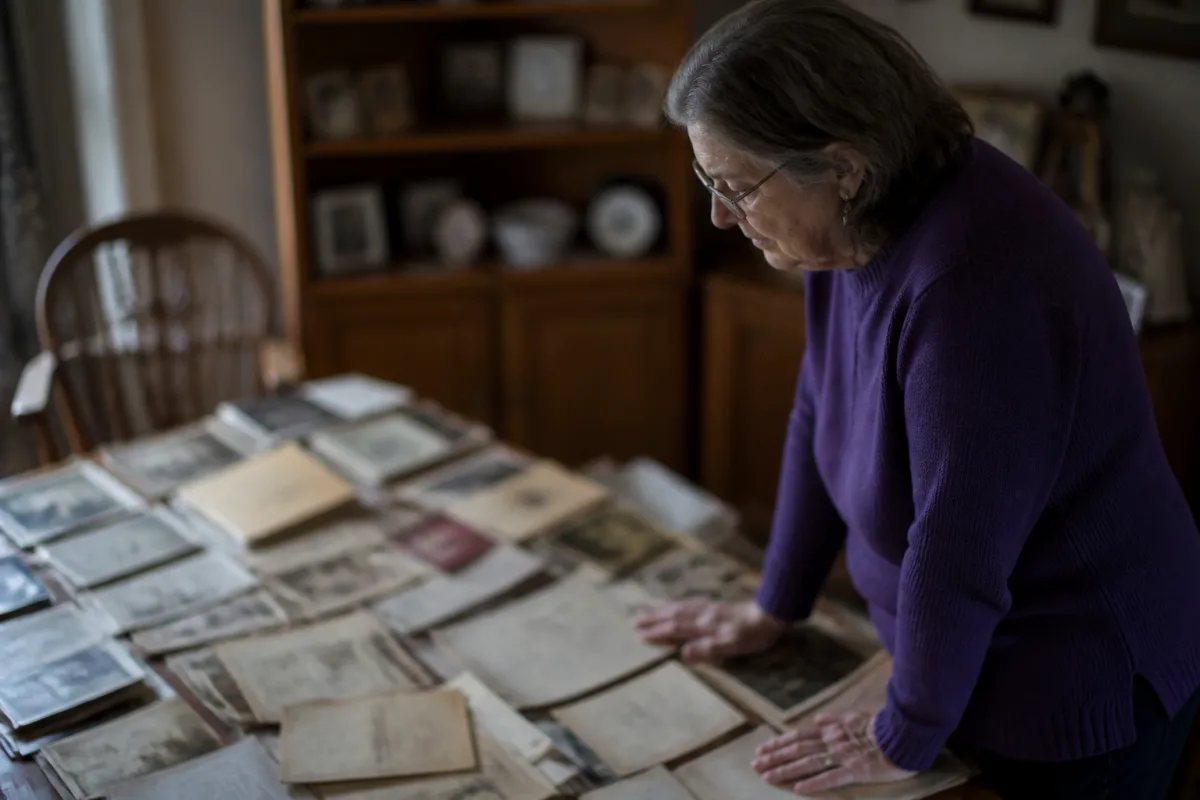
The family connection to the Canadian ancestor is proven by a chain of birth certificates — a separate one for each generation. If the Canadian connection runs through a great-grandparent, you’ll need that person’s birth certificate (confirming Canadian citizenship or birth in Canada), then the grandparent’s, then the parent’s, and finally your own — building a documentary chain from the applicant back to the Canadian ancestor.
The further back the generation, the more work is involved: if the connection is through a grandparent, gathering records is usually straightforward, but reaching back to great-grandparents often means requesting certificates from several different bodies. Archival records are typically requested from provincial governments, provincial vital statistics agencies, or historical archives.
Multi-generational applications require significantly more documentation than first- or second-generation ones — and this is what makes them the most labor-intensive part of the entire proof of citizenship process.
What documents to gather for proof of citizenship
Cost and real processing times
A proof of citizenship application costs 75 Canadian dollars (CAD) — a modest amount by Canadian immigration standards. But the low cost doesn’t mean a quick process: processing times have grown more than sixfold since the law took effect.
processing times have grown more than sixfold since the law took effect
| Period | Processing time |
|---|---|
| December 2025 (IRCC forecast) | about 5 months |
| September 2026 (current data) | 33 months |
As of September 2026, about 136,000 people are in the queue awaiting a decision — this is the reason behind the longer wait: the law sharply expanded the pool of people eligible for citizenship by descent, and IRCC hasn’t kept pace with the resulting surge of applications. Adding in the time needed to assemble the chain of birth certificates, the whole process — from starting document collection to receiving the certificate — can stretch to nearly 3 years.
If the result is needed for moving to, studying in, or working in Canada, it’s worth planning for a 33-month wait after filing, not the 5 months IRCC originally quoted.
How long the decision actually takes
Processing time has grown several times over since the law took effect
- December 2025 (IRCC forecast)about 5 months
- September 2026 (current data)33 monthsbacklog of about 136,000 people
IRCC initially forecast about 5 months, but as of September 2026 the actual processing time is 33 months due to a backlog of 136,000 applications.
How to pre-check your eligibility for citizenship
Determining eligibility for citizenship by descent can be tricky when the ancestral chain goes back several generations. For a preliminary assessment, there’s a free online tool for Canadian citizenship by descent: it asks questions about the applicant’s place of birth, Canadian ancestors, and how citizenship might have passed down the family line, then produces an estimate of the likelihood that the person is already a citizen.
This assessment has no legal weight. Only IRCC can officially establish citizenship — and only after a formal proof of citizenship application is filed. The self-check tool simply helps determine whether it’s worth going through the process at all, and provides basic information on how citizenship by descent works before you start assembling the chain of birth certificates and filing paperwork.
Frequently asked questions
What if there are several Canadian relatives across different generations in the direct line — who should the application be based on?
To confirm eligibility, it’s enough to prove a connection to at least one Canadian ancestor in the direct line — a parent, grandparent, or great-grandparent. If there are several Canadian ancestors, applicants typically choose the one whose chain of birth certificates is easiest to document, since each generation requires its own certificate.
What happens if the Canadian parent hadn’t accumulated 1,095 days of presence in Canada before the child’s birth after December 15, 2025?
If the 1,095-day presence requirement before the child’s birth isn’t met, citizenship by descent is not transmitted through that line — the child doesn’t automatically become a Canadian citizen through that parent. It’s worth confirming this condition is met before applying, otherwise the process will be in vain.
Can a proof of citizenship application be filed on behalf of someone else, such as an elderly relative or a child?
The source material doesn’t address this directly, but the logic of proof of citizenship — confirming a status that already exists based on documents — doesn’t rule out filing on behalf of another family member, provided the chain of birth certificates proving their connection to the Canadian ancestor has been assembled.
Does an adopted child of a Canadian parent need separate confirmation of citizenship?
Adoption is treated as a separate case: the process of obtaining citizenship through adoption differs from the biological-descent route, and the direct line of descent referenced in most of these rules is built specifically on biological relationships.

Comments
Reader experience is useful, but it is not advice: check the rules on the official site.
No account needed: click Sign in, type any name, and you are done.