
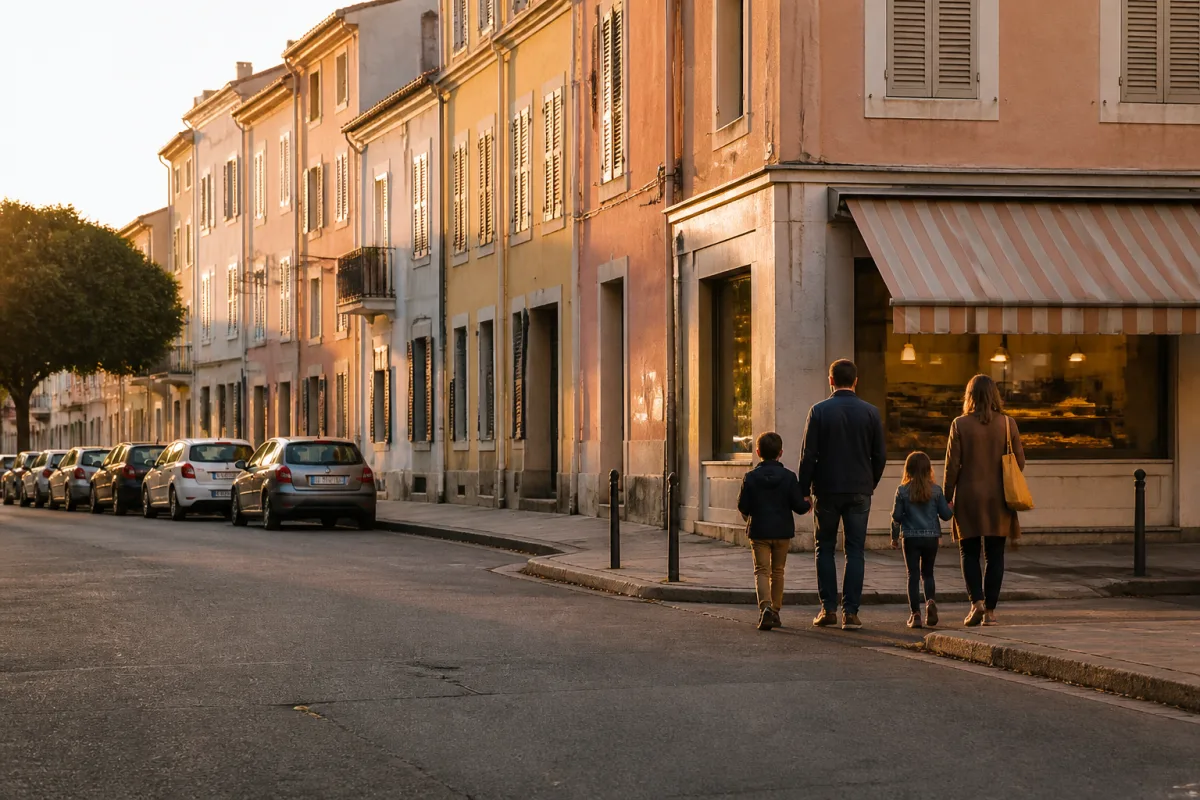

The first year after moving to France isn’t just about getting a residence permit — it’s a separate quest involving apartment hunting, kids adapting to school, bank accounts, and taxes, one you’ll have to go through again even if you’ve already relocated to other countries before.
In short
- A residence permit through setting up an ordinary, non-innovative company is more reliable than the startup visa, but it requires freezing €30,000 for several months.
- Paperwork takes up to six months, after which you first get a temporary one-year status, not a 4-year card right away.
- Finding housing is the hardest stage: it takes about a month, and a long-term lease can be up to twice as cheap as a seasonal one.
- Opening a French bank account without a full residence permit is nearly impossible — neobanks like Revolut and Lydia help in the meantime.
- The South of France, especially the Riviera, remains the only region where housing prices haven’t risen, and most people there speak English.
Getting a French Residence Permit: What to Expect at the Start
Getting your first residence permit in France is a process full of unpredictable turns — a kind of quest where new nuances keep surfacing along the way. No one can guarantee everything will go strictly on schedule and without surprises: too many parties are involved in the procedure — the consulate, the Ministry of Economy, the prefecture. Each of these bodies works by its own logic, loosely connected to the others.
Each of these bodies works by its own logic, loosely connected to the others.
At the same time, the French immigration system remains one of the most open toward foreigners who want to legally move and work in France. This is especially true for entrepreneurs who declare they’ll create jobs: getting a startup visa for an innovative project, or, separately from that, a residence permit through setting up an ordinary company with no innovation requirement, is easier than in many other countries.
The most reliable and proven way to relocate right now is the residence permit through setting up a company. Its main difficulty is coming up with €30,000, which also has to be frozen for several months — not everyone has that kind of sum. But once that’s sorted, the rest of the procedure is predictable, even though the long-term resident card isn’t issued right away: first you get a temporary one-year status, and only once conditions are met does a card valid for up to 4 years follow — and in practice, this route often turns out more predictable than getting innovative-project status for the startup visa.
The company-creation residence permit suits people without an innovative project — and by most accounts, that’s the overwhelming majority of entrepreneurs. France is one of the few countries that accepts non-innovative entrepreneurs — people in construction, interior or clothing design, restaurants, hotels, marketing, logistics, online and offline education, and other classic service and production fields. Right now, approvals through this route noticeably outnumber rejections, though it’s unclear how long this openness will last.
Processing all the paperwork can take up to six months. This isn’t the easiest stage of the journey, but, based on the experience of people who’ve gone through it, it can actually turn out to be the most predictable compared to what comes next — once you have legal status, the next, far more surprise-filled stage of life in France begins.
The Path to a Residence Permit Through Starting a Company
Processing paperwork takes up to six months, and the resident card isn’t issued right away.
- Paperwork processingup to 6 months
- Temporary status1 yearissued first
- Resident cardup to 4 yearsonce conditions are met
The most reliable way to relocate is a residence permit through setting up an ordinary, non-innovative company. You need to freeze €30,000 for several months, but the odds of approval are better than with the startup visa.
Renting an Apartment in France: Why It’s the Hardest Part
The hardest stage after getting your paperwork sorted is finding an apartment. A rental address isn’t just needed for everyday life — it’s also one of the conditions for switching from a temporary document (the récépissé) to resident status, the card that, once conditions are met, can be issued for up to 4 years, but not right away: first comes a temporary one-year status. Some prefectures accept a printout from RNBNB (the registry for Airbnb-style rentals) as proof, but far from all of them do, so it’s not something to count on in advance.
The search itself takes about a month — nearly no one escapes that period of frustration and endless viewings. The first year is always more expensive, too: without friends, contacts, or acquaintances who pass along word of apartments becoming available or connect you directly to a landlord, you end up competing on equal footing with a large pool of other foreigners.
Another complication: housing in France is mostly managed by agencies, and they prefer tenants who have a work contract in France. Everyone else — whether American, British, Russian, or Ukrainian — falls into the risk category, and that risk comes with higher rent: suitable listings end up costing several times more. On top of the rent itself come agency fees and deposits.
A separate category of intermediaries offers, for a hefty fee, to find housing entirely on the applicant’s behalf, but in practice this doesn’t work: you still end up viewing places yourself.
A separate category of intermediaries offers, for a hefty fee, to find housing entirely on the applicant’s behalf, but in practice this doesn’t work: you still end up viewing places yourself.
A working scheme that lowers the risk: first settle in for a month through Airbnb, then rent a seasonal place for a set period, and only after that move to a long-term lease. This sequence exists because landlords and agencies are reluctant to sign long-term leases right away — because of the so-called “squatter” phenomenon, where a tenant stops paying and refuses to move out. This isn’t unique to French law — Spanish law has the same quirk, though few people know about it.
Because of this risk, owners often start with a seasonal contract of 6 months, which doesn’t allow the tenant to stay on once it expires if they’ve stopped paying or want to leave early. That kind of seasonal housing costs more. The best terms come with long-term leases that renew automatically: the price difference between seasonal and long-term options for similar apartments can sometimes be as much as double.
Stages of Finding Housing After the Move
A safe settling-in sequence lowers the risk of landlords turning you down.
- Apartment searchabout a month
- Settling in via Airbnb1 monthfirst step
- Seasonal housing6 monthsintermediate stage, pricier than long-term
- Long-term leasewith automatic renewalthe best-value option
To lower the risk, start with a month through Airbnb, then take a seasonal rental, and only after that move to a long-term lease with automatic renewal — it can be as much as half the price of a seasonal one.
How to Rent an Apartment Safely After Moving
Seasonal Lease vs. Long-Term Lease
| Criterion | Seasonal lease | Long-term lease |
|---|---|---|
| Term | usually 6 months | with automatic renewal |
| Price | more expensive | cheaper, sometimes by half |
| Right to stay after the term ends | no | yes, renews automatically |
| Landlords’ willingness to sign right away | more willing | reluctant, due to “squatter” risk |
Housing Prices by Region: Where to Look for a Better Deal
Rental price growth hasn’t hit every region equally: some cities have become astronomically expensive, while one region has avoided the price hikes entirely. The South of France is the only area where housing prices didn’t rise — simply because there was nowhere left to rise: the market was already at its limit.
That doesn’t mean a good deal is out of reach altogether. Based on the experience of people who’ve relocated, a genuinely good find — not just the first apartment you stumble on — usually turns up somewhere between six months and a year after moving, once you already have a feel for the neighborhood and the local market.
Kids, School, and Adapting Without Speaking French
The most common scenario is a child moving to France without speaking any French at all. The school adaptation system for migrant children in Western European countries is built exactly for this case: dedicated methods, specialized education staff, and specially trained teachers who spend the entire first year focused purely on immersing the child in the language.
Waiting for a child to learn the language before moving is a poor strategy — language is only picked up inside a language environment; there’s no other method that actually works. The sooner a child ends up in that environment, the faster and easier the adjustment goes — along with the language, they absorb the country’s everyday and school mentality.
Stress in the first few weeks is almost unavoidable: a new school, unfamiliar speech, an unfamiliar routine. But that’s exactly the period the adaptation system is designed for — it’s built to support the child rather than leave them alone with the language barrier. In practice, kids placed in this kind of environment adjust noticeably faster than adults do.
Do You Need a Car in France After Moving?
Driving your own car into France for the move is a decision worth skipping, even if you’ve done it that way before. In practice, cars with Russian, Ukrainian, Kazakh, and Uzbek plates usually aren’t stopped at the border, but sooner or later you’ll still need to swap the plates for European ones and clear the car through customs — and that costs money. For a first and only vehicle brought in during a move, discounted customs terms apply that simplify the process, but an added complication is the uncertainty over which border crossings currently allow cars through — planning that kind of entry in advance can be tricky.
The alternative is buying a car once you’re already in France. The purchase itself takes about 15 minutes: everything after that is nearly automatic, and the vehicle’s paperwork arrives by mail to the new owner.
Why Bother With a Car at All After Moving
A big car often becomes a burden in France: streets are narrow, parking is scarce, and gas is expensive. A typical scenario is trading a large SUV for a compact city car because of parking trouble and tight roads.
Logistics in French cities are usually set up so that school, shops, and other everyday places end up within a 15-minute walk. The exception is a trip to a cheaper supermarket for better deals, which can be about 20 minutes away. In practice, many people eventually switch to a bike or scooter and drop the car altogether: public transport — commuter and intercity trains — runs conveniently, and plane tickets are cheap, so there’s not much reason to drive yourself anywhere except for the occasional grocery run, a ski trip to the mountains, or a hop to a neighboring country — a drive to Italy, for instance, takes about 50 minutes.
If a car does end up being necessary, plan on something compact: there’s simply no room in Europe for the large cars that are standard by American measures. Gas is expensive too and isn’t getting cheaper, so over time it’s worth considering an electric car — electricity works out cheaper than fuel.
Driving a car into France isn’t worth it: sooner or later you’ll have to swap the plates and clear customs, and planning the border crossing in advance can be difficult.
First-Year Costs: Groceries, Local Know-How, and Overpaying
The first six months in a new place will likely mean overpaying for food. French groceries cost more than Spanish ones, though, by the account of people who’ve relocated, they’re also better quality. In the first year, shopping usually happens at whatever random — often pricier — stores are around, simply because you don’t know the others yet. A telling example: one family that moved to France only shopped at Carrefour at first, spending €100–200 on a week’s groceries, gradually shifting toward pricier seafood and higher-quality food along the way.
About six months in, through acquaintances, it turned out there was a Leclerc nearby — a store with the same range but cheaper prices. Later they found another one, a bit farther out, where the freshest products sold for the same prices. Prices dropped, quality went up — but only once the family had already settled in, not in the first few months.
Impressions of the chosen city change by about 90% over the first year. Before settling in Antibes near Nice, the family lived in four different cities: a spot that looked comfortable at first would turn out to have a summer tourist rush, or unexpected everyday quirks that hadn’t been factored into the choice.
Every time you move to a new city, you have to rebuild the local know-how from scratch — shops, services, the routes you rely on. That means the overpaying and daily discoveries don’t just happen once on first arrival in France — they repeat every time you move to another city: it takes about a year each time to figure everything out again.
Banks, Packages, and Integrating Through Daycare or School
Opening a French bank account runs into a closed loop: most phone carriers and utility providers require an account number specifically at a French bank, and opening one without a full residence permit is nearly impossible. While the residence permit is being processed — which can drag on — you end up hooking up phone and internet service through a foreign account, a Belgian one, say, or through Wise: inconvenient, but workable.
Before getting a residence permit, the choice of banks in France is very limited. After getting it, the options widen, but major banks — Société Générale in particular — tend to keep their distance from clients holding Russian passports, even if they have a European residence permit. France’s central bank has issued guidance requiring at least one bank to open an account in that situation.
For the interim, neobanks come to the rescue: Revolut, which has obtained a French banking license, the local Lydia, and Nickel — the last of which takes any foreigner but is awkward to use. Lydia is currently considered the more convenient option, along with Wise and similar services. Overall, thanks to fintech’s growth in France, opening an account has become noticeably easier than it was a few years ago.
Everyday processes come with their own quirks. A premium-tier bank card sent by courier is often not handed over at your door but announced by text message or notice listing the address of the nearest pickup point — and that point can turn out to be an ordinary butcher’s shop or tobacco stand hooked up to the courier network as a parcel pickup location. Collecting the package or card requires a special code and a passport.
Real integration into the local community doesn’t start until a child enters daycare or school — that’s when parents get pulled into the parent circle. By an unwritten rule at European schools, parents take turns attending classmates’ birthday parties — around 30 invitations a year. Through these visits, a new resident gets to know the neighborhood fast: most other parents have lived there for over a year and share tried-and-tested contacts — a good hairdresser, plumber, electrician. Before that point, you’re pretty much flying blind. This pattern plays out the same way across different Western European countries, but prior experience of living in one country barely helps when moving to another — you go through the adjustment from scratch every time.
Without a French residence permit, opening a local account is nearly impossible, and without an account, phone and utility providers won’t activate service. Neobanks — Revolut, Lydia, Wise — help bridge the gap.
France’s Regions: Where to Go and Where English Gets You By
France is a big country, and the French differ noticeably from region to region: the south, the Riviera, Paris, and the north are practically different worlds, each with its own people and pace of life.
Paris is considered the most uncomfortable and unfriendly city in the country: a metropolis that weighs on you with its density and pace, where constant pressure to earn money easily wears on people’s nerves. The opposite of Paris is the sunny south of France, especially the Riviera: that’s the part of the country most often described as the most pleasant to live in.
English proficiency is spread unevenly by region. In Paris, Lyon, and across the south — especially on the Riviera — most locals speak English, and official business gets handled in it. In the south, in Nice and Cannes in particular, weak French barely creates any everyday problems: about the only time you’ll need French is to order a croissant at a café or exchange a few words with a delivery driver — everything else runs in English.
The level of English at any given office depends on its location and the size of the city. At a small phone carrier branch with five staff, three of them might not speak English at all; in a big city it’s the opposite — four out of five speak English fluently, and the fifth is sometimes just shy about it. There’s also a real difference between carriers: Orange has English-language support, while Free barely has any, and service runs in French only. If one branch of a carrier doesn’t have an English-speaking staff member, it’s worth trying another branch of the same company on a nearby street — there are usually several branches, and an English speaker is typically found at one of them.
Taxes in France: The ‘Tax Hell’ Myth
The myth of France as a “tax hell” — the reason some people avoid moving there — doesn’t hold up in practice: by the account of people who’ve relocated, the country looks more balanced on taxes than, say, Spain. Yes, the system is complex and rates across Europe are generally high — but a progressive scale on personal income applies everywhere, and everywhere it can be optimized.
Progression works on a step basis: each rate applies not to the whole income but only to the portion that exceeds the previous threshold. Based on calculations run on specific examples at a given income level, the real income tax rate in France turned out to be well below the theoretical top bracket of 40% — but the final percentage depends heavily on income amount and family composition, and there’s no universal number here. The gap between the theoretical 40% and the lower rates in practice comes down to exactly that step-based principle: the high rate only “eats” the amount above the threshold, not the entire income.
That leads to a practical tip for anyone running a business: don’t rush to convert all business profit into personal income. There’s no need to hurry — doing so sends the tax burden sharply higher. It’s smarter to live modestly and reinvest the money into the business so that the business itself ends up funding the family and its projects — there’s a fine line here, and every case calls for its own calculation.
When consulting tax advisors, be ready for opinions to diverge: three to five specialists will give you three to five different answers. What they usually agree on is one thing — a disclaimer of liability and guarantees: an advisor will calculate the rates and explain the general logic but won’t take it upon themselves to actually lower your tax burden. The reason is that in Europe, accountants and tax advisors effectively act as an extension of the tax system, and that system itself isn’t built as a punitive body but more as a supportive one.
At the same time, the burden is spread unevenly: the tax system puts the main weight on the very wealthy, funding social programs off their contribution, while treating everyone else fairly moderately. That leads to a practical, everyday piece of advice too — don’t flaunt excess wealth (expensive cars and the like), so as not to draw unnecessary attention from neighbors and, as a result, from tax authorities.
don’t flaunt excess wealth (expensive cars and the like), so as not to draw unnecessary attention from neighbors and, as a result, from tax authorities
For comparison: in the US it’s generally easier to build a business, but the moment a company gets big, the tax authorities show up and demand their share toward funding the system overall — same logic, just triggered at a different scale.
Frequently asked questions
Can you move to France without the €30,000 needed to set up a company?
Not through the company-creation residence permit — that sum is stated as a required condition that has to be frozen for several months. The alternative for entrepreneurs without that kind of capital is the startup visa for an innovative project, but it’s described as less predictable in terms of timeline and conditions than the company route.
What happens if you can’t get a long-term lease within your first year?
Nothing critical: based on the experience of people who’ve relocated, the first year almost always comes with overpaying and less favorable terms — that’s the norm, not the exception. The shift to a genuinely good long-term deal with a solid price usually happens only six months to a year after the move, once you already understand the neighborhood and the market.
Can you rent in France without a work contract?
Technically, yes, but agencies primarily favor candidates with a work contract in France, and treat everyone else — including foreigners without one — as higher risk. For that group, renting ends up noticeably more expensive: suitable listings can cost several times more than the usual price.
Can you sign a long-term lease straight away, skipping seasonal housing?
In theory, yes, but in practice landlords and agencies are reluctant to do that right away — because of the so-called “squatter” risk, where a tenant stops paying and won’t move out. So a seasonal contract of a few months is usually offered first, with the move to a long-term lease at a better price coming only after that.
Should you buy a car right after moving, or wait?
There’s no need to rush: logistics in French cities are usually set up so school and shops end up within a 15-minute walk, and public transport plus cheap flights cover the occasional trip. The decision to buy usually comes later, once it’s clear how much a car is actually needed in that particular city.
Can you use a foreign bank account while waiting for your residence permit?
Yes, that’s a workable option for the transition period: while the residence permit is being processed, phone and internet get hooked up through a foreign account — a Belgian one, for example, or through services like Wise. Once the residence permit comes through, the choice of banks widens, though certain major banks may keep restrictions for holders of specific passports.
Can you save on taxes by not converting all business profit into personal income?
Yes, that’s described as a workable practice: don’t convert all business profit into personal income right away — reinvest it instead, so the business itself ends up funding the family. There’s no need to rush the payout, or the tax burden on personal income rises sharply — the exact line calls for a separate calculation tailored to the specific situation.
Should you show off wealth after moving to France?
It’s smarter to avoid it: the country’s tax system is built so the heaviest burden falls on the very wealthy, and flaunting excess wealth — expensive cars and the like — draws unnecessary attention from neighbors and, as a result, from tax authorities.

Comments
Reader experience is useful, but it is not advice: check the rules on the official site.
No account needed: click Sign in, type any name, and you are done.