
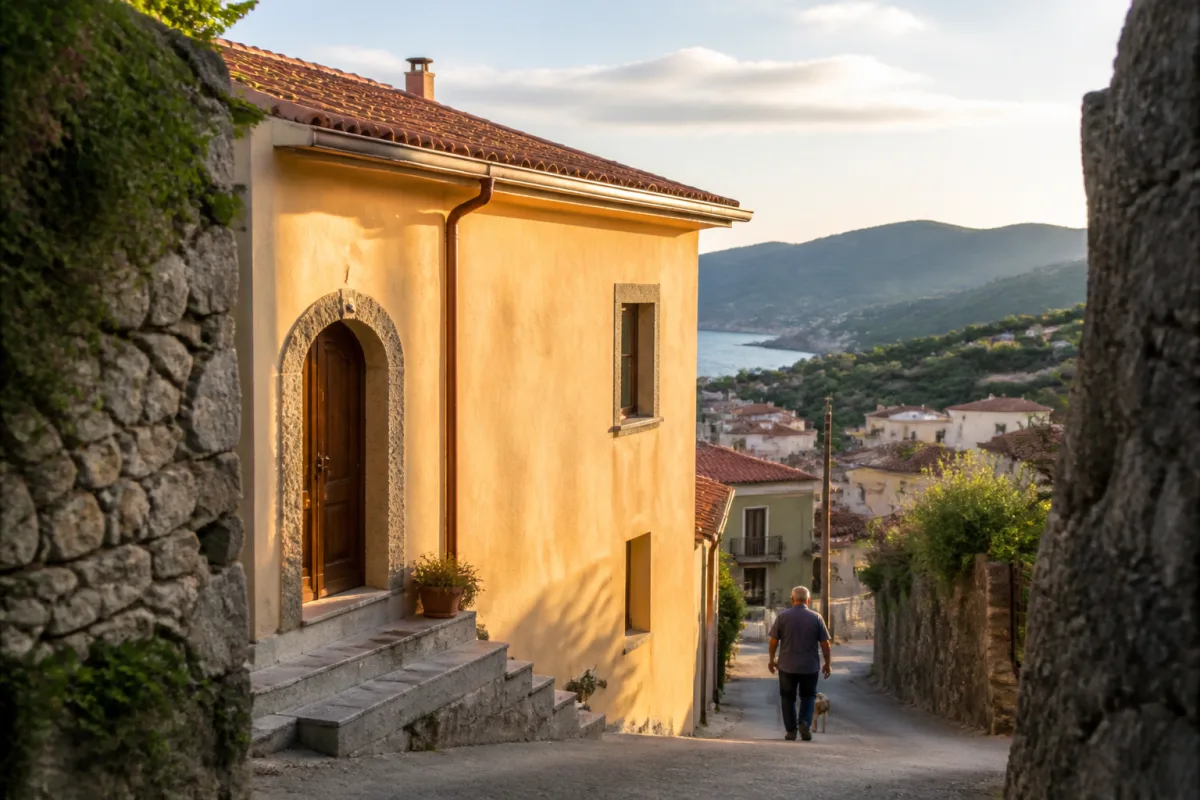
You can get a free home in Calabria by applying to the regional Ripopola Calabria program, under which municipalities hand over empty houses, the region pays for the full renovation, and winners of the selection process live in the home rent-free for 10 years without owning it.
In short
- The region covers only the capital renovation of the house; the resident pays for furniture and utilities
- Applicants must have lived outside Calabria for at least 3 years — moving within the region doesn’t qualify
- A free house doesn’t grant immigration rights: no special visa is issued for the program
- Residency must be maintained for the full 10-year term, and the house can’t be rented to tourists or third parties
- Applications close on December 18, 2026, and moving in realistically won’t happen before 2028
What the Ripopola Calabria program actually is
The Ripopola Calabria program (“repopulate Calabria”) is already up and running: regional authorities have officially announced it, and the catalog of available properties is published online. The idea splits the cost in two: municipalities hand over empty houses to new residents, while the region pays for the capital renovation of those houses.
The program exists because of poverty and depopulation in Calabria — the southernmost region of mainland Italy, bordered by the Tyrrhenian and Ionian seas. By various estimates, a significant share of the region’s residents live at risk of poverty or social exclusion, one of the worst rates not just in Italy but across the EU. Young people leave in large numbers, small villages empty out, and demand for housing disappears along with the residents: many houses have stood abandoned for years.
That is the exact problem regional authorities are trying to solve through Ripopola Calabria: attract new permanent residents to dying towns by offering them a home restored at public expense.
What houses are available: example municipalities
In the first phase, the catalog lists 50 houses and apartments spread across several municipalities in Calabria. The properties vary in size, from small apartments of around 50 m² to spacious family homes of up to 140 m², including two-story buildings in historic centers. For each property’s reconstruction, the region allocates a set budget per square meter of living space, capped at a maximum amount per property — the exact limits are worth checking in the program’s current documentation. The money doesn’t go to the future resident but to the municipality, which funds the renovation, and the future resident receives a home that’s already restored. The official program website has photos of the properties, floor plans, and renderings of the future interiors.
According to unofficial figures, around 26 municipalities take part in the program. As an example, it’s worth comparing the two largest by population and one more for contrast.
Taranovstejlo (province of Cosenza)
Population, based on available data, is around 4,300 people. The catalog includes an 80 m² house on Via Fosso, in the historic part of town. Cosenza, with its major shops, hospital, schools, and university, is roughly 36 km away, based on available data, or about 30–35 minutes by car. There’s a bus connection, but public transport takes considerably longer and depends on the schedule.
Dipignano
A mountain town at an elevation of around 720 m, based on available data, with a population of about 4,000. The catalog includes apartments in a historic building on Via Roma, including a spacious 130 m² unit. Cosenza is only about 12 km away from here, based on available data, roughly 18 minutes by car, plus there’s a bus line.
Alessandria del Carretto — for contrast
Here, based on available data, around 360 people live, and the elevation exceeds 1,000 m — this is a mountain village, not a suburb of a major city.
The gap between these municipalities makes one thing clear: don’t pick a home based on photos alone. Before applying for a specific property, it’s worth researching the town itself — distance to the hospital, school, and shops, road quality, and internet access.
Before applying, research the town itself: distance to the hospital, school, and shops, road quality, and internet access — neighboring municipalities can differ enormously.
Calabrian municipalities in the program catalog
Table scrolls sideways
| Metric | Taranovstejlo | Dipignano | Alessandria del Carretto |
|---|---|---|---|
| Population | around 4,300 people | around 4,000 people | around 360 people |
| Elevation | — | around 720 m | over 1,000 m |
| Distance to Cosenza | around 36 km | around 12 km | — |
| Drive time to Cosenza | 30–35 minutes | around 18 minutes | — |
| Example property | 80 m² house on Via Fosso | apartments on Via Roma, up to 130 m² | — |
Figures are based on publicly available sources and may be subject to revision.
Who can apply
Applicants must be at least 18 years old and have lived outside Calabria for at least 3 years. That covers, for example, someone living in Milan, Turin, Rome, or any other region of Italy.
The program isn’t for people who already live in Calabria: moving from one village to another within the region at the program’s expense isn’t allowed — it’s designed for people returning to or moving into the region from outside it.
Italian citizenship isn’t required. Applications are open to:
- Italian citizens, including those living abroad;
- citizens of other EU countries;
- citizens of non-EU countries who already have a legal basis to reside in Italy.
There’s a key limit here: getting a free house does not grant any immigration rights. If someone lives outside the EU and has no legal basis for an Italian residence permit, the program itself doesn’t solve that — authorities don’t issue a special visa for it. The goal is to bring back people who already live in Italy or elsewhere in the EU, not to attract new immigrants.
getting a free house does not grant any immigration rights
Another condition: applicants must not have previously received state housing subsidies.
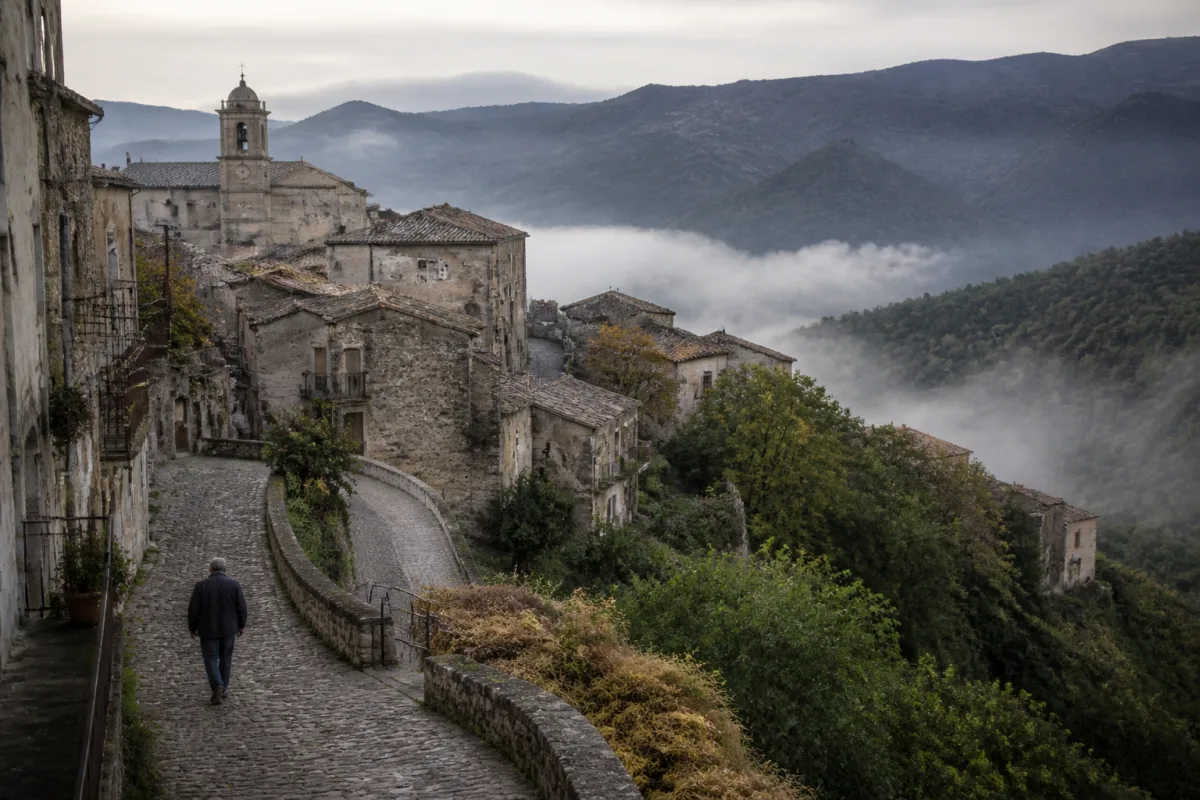
The program doesn’t grant the right to move to Italy for people outside the EU who have no legal basis for an Italian residence permit. No special visa is issued for it.
How the applicant ranking works
All applicants go through a competitive selection process: each property gets its own separate ranking, built on a point system of bonus criteria.
Priority goes to:
- families with children, including young couples and single parents;
- people with disabilities;
- remote workers, entrepreneurs, and freelance professionals;
- former Calabria residents choosing to return home.
The scoring logic follows the region’s actual goal: not just filling houses, but bringing in people who will work, raise children, and support the local economy. That’s why a family with children where the parents work remotely can outrank a single applicant with no extra qualifying points.
Even a high ranking doesn’t guarantee automatically getting the keys to a house.
Even a high ranking doesn’t guarantee automatically getting the keys to a house
What costs and obligations fall on the resident
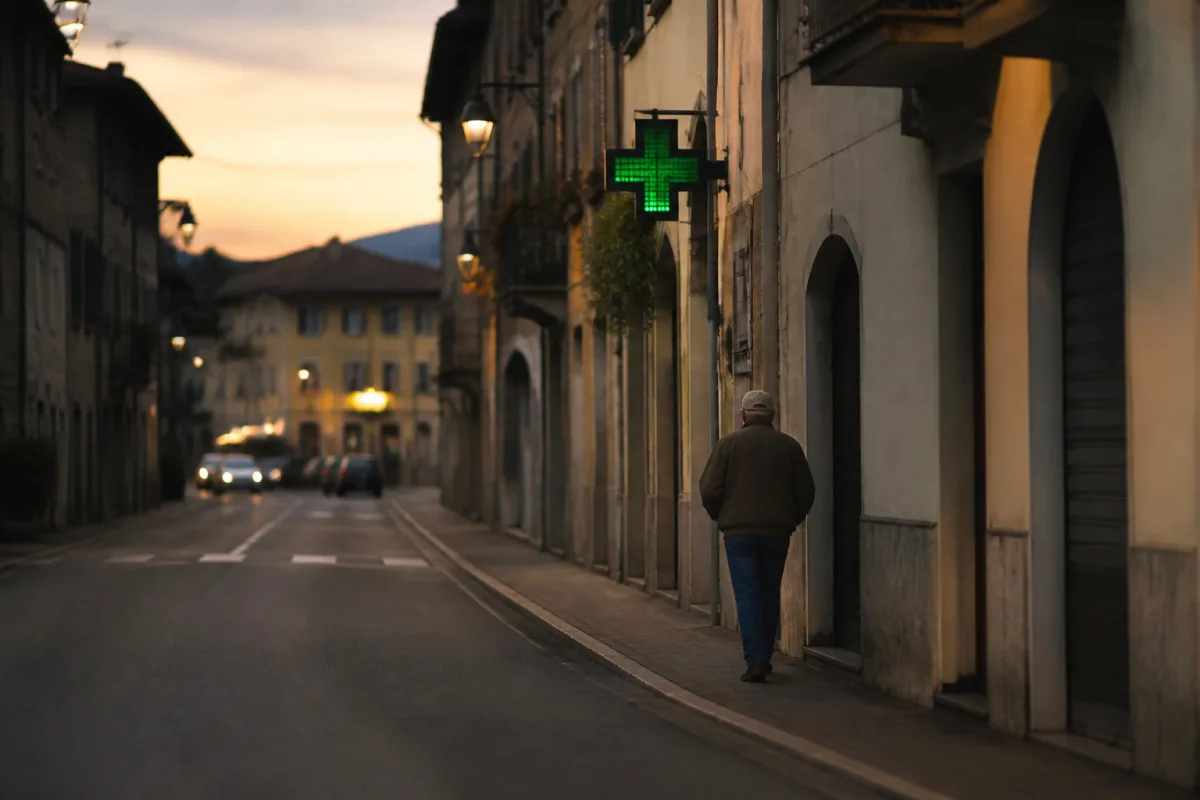
The state pays for the capital renovation of the house, but the resident buys their own furniture, appliances, and personal belongings. Utility bills also fall on the resident: electricity, water, heating, internet, and routine upkeep costs.
There are also obligations that can’t be broken. The house can’t be rented out to tourists, sublet to third parties, or run as a guesthouse — it’s for permanent residence only. The resident is required to register legal residency there and maintain it for the entire 10-year term.
What happens after those 10 years is still unclear. The program allows for the possibility of extending the agreement or offering a discounted buyout of the property, but there’s no guarantee of this — counting on automatically owning the house after ten years isn’t realistic.
The region covers only the capital renovation of the house. The resident takes on furniture, appliances, utilities, and upkeep, and must maintain legal residency there for the full 10 years.
How to apply and when you can actually move in
- Open the official program website and go to the property catalog — all available listings are there with photos, size, floor plans, and addresses.
- Pick up to three houses in order of preference — one application can list no more than three properties.
- Log in using the Italian digital identity system SPID, the electronic ID card CIE, or the European eIDAS system.
- Fill out the application: list your family composition and the details that earn bonus points in the ranking.
- Meet the deadline — applications are accepted until December 18, 2026, 5:00 PM Italian time; it’s worth double-checking the exact deadline on the official program website before applying, just in case.
- Wait for the results — once applications close, a committee reviews them and publishes the outcome of the selection process.
Applications can be filed independently, with no intermediaries — the website has an English version.
Winning the selection doesn’t mean moving in right away: the houses need renovation, and no one moves in until that’s done. After agreements with municipalities are signed, the region has, based on available data, up to 18 months for reconstruction. From that, one can estimate that the keys likely won’t be handed over before 2028, assuming the renovation work stays on that schedule.
the keys likely won’t be handed over before 2028
How to apply for Ripopola Calabria
Six steps from picking a house to the selection results.
- Open the program website and property catalog
- Pick up to three houses in order of preference
- Log in via SPID, CIE, or eIDAS
- Fill out the application: family details and ranking points
- Submit before the deadlineDecember 18, 2026, 5:00 PM
- Wait for the selection results
How to apply for Ripopola Calabria
Who the program fits — and who it doesn’t
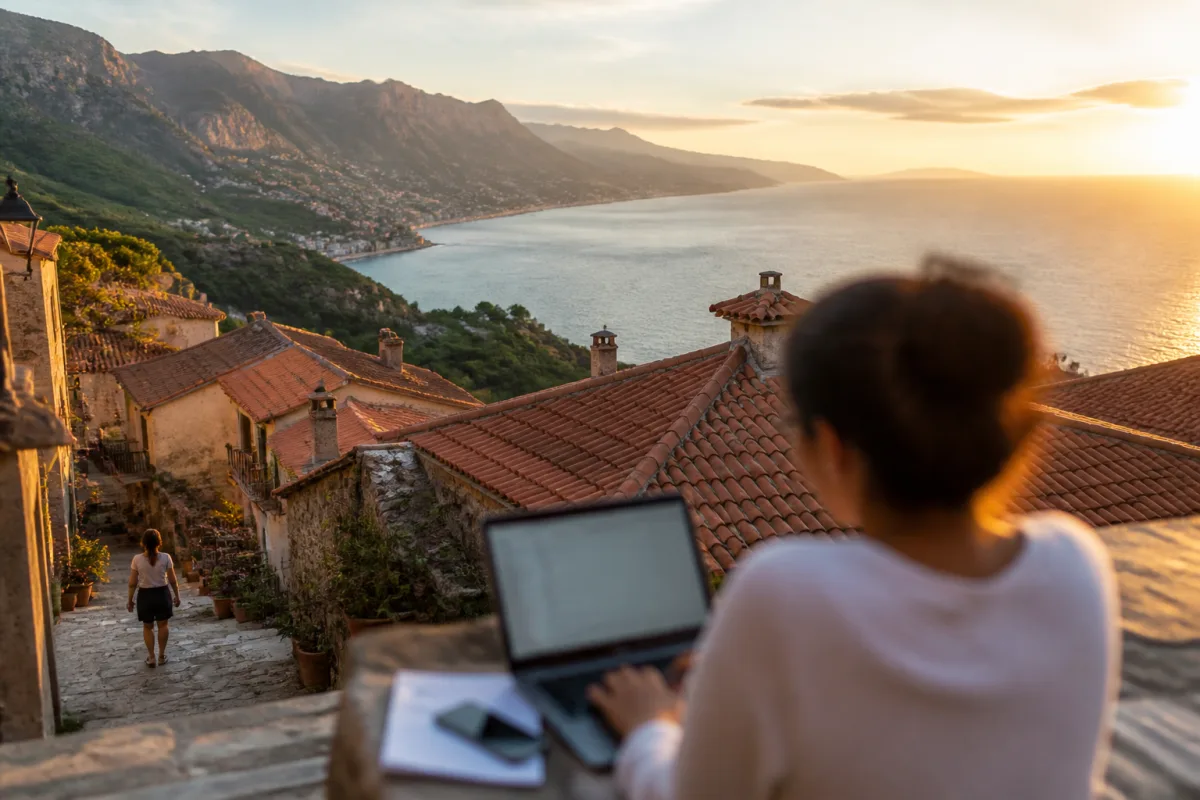
The program suits people who already have a stable income not tied to a specific city. Think of a remote worker earning 2,000–3,000 euros a month who doesn’t need to live in a big city, a retiree with a steady pension looking for a quiet life in southern Italy, or a family that’s long planned a move to a small town and is ready to change their usual way of life. For applicants like these, 10 years of rent-free living is real savings.
But without a job, a stable income, and a car, there’s not much to count on: treating a free house as the solution to every other problem is a risky bet. Village romanticism wears off fast without a reliable car, decent internet, and steady income — without a car, getting to work or the shops in the next town over just isn’t realistic.
The region isn’t launching this program out of generosity: Calabrian authorities are trying to bring people back to towns that locals have been leaving en masse — mainly because of a lack of economic opportunity, not because they’re tired of mountains and sea.
The program is fundamentally different from Italy’s famous one-euro houses: there, the buyer typically spends tens of thousands of euros on restoration themselves, while under Ripopola Calabria the state pays for the renovation, and the resident only has to furnish a finished home.
A free house doesn’t solve the lack of a job or stable income. Without a car and internet, village life can quickly turn into isolation.
Frequently asked questions
What happens if an applicant already lives in Calabria but wants to move to another village in the region?
The program doesn’t apply to that case: it’s designed for people returning to or moving into the region from outside it, not for moving from one Calabrian village to another at public expense.
Can you apply without Italian citizenship if you hold a residence permit in another EU country?
Yes, citizens of other EU countries can apply, as can citizens of non-EU countries who already have a legal basis to reside in Italy. Italian citizenship itself isn’t required to take part.
Can one application cover several people from the same family?
One application is filed, but it includes the family composition and the details that earn bonus points in the ranking — so the family takes part as a single application rather than each adult applying separately.
What happens if the house renovation still isn’t finished by 2028?
The region has up to 18 months for reconstruction after agreements with municipalities are signed, which suggests a move-in no earlier than 2028, but that’s an estimate, not a guaranteed date — if the work runs late, the move-in date shifts along with the renovation schedule.
What happens to a resident who loses their job or income during the 10-year term?
There’s no direct answer for that case: what’s known is that the resident must maintain registered residency in the house for the entire 10-year term, and eligibility conditions are checked at the application stage, not afterward.
Comments
Reader experience is useful, but it is not advice: check the rules on the official site.
No account needed: click Sign in, type any name, and you are done.