
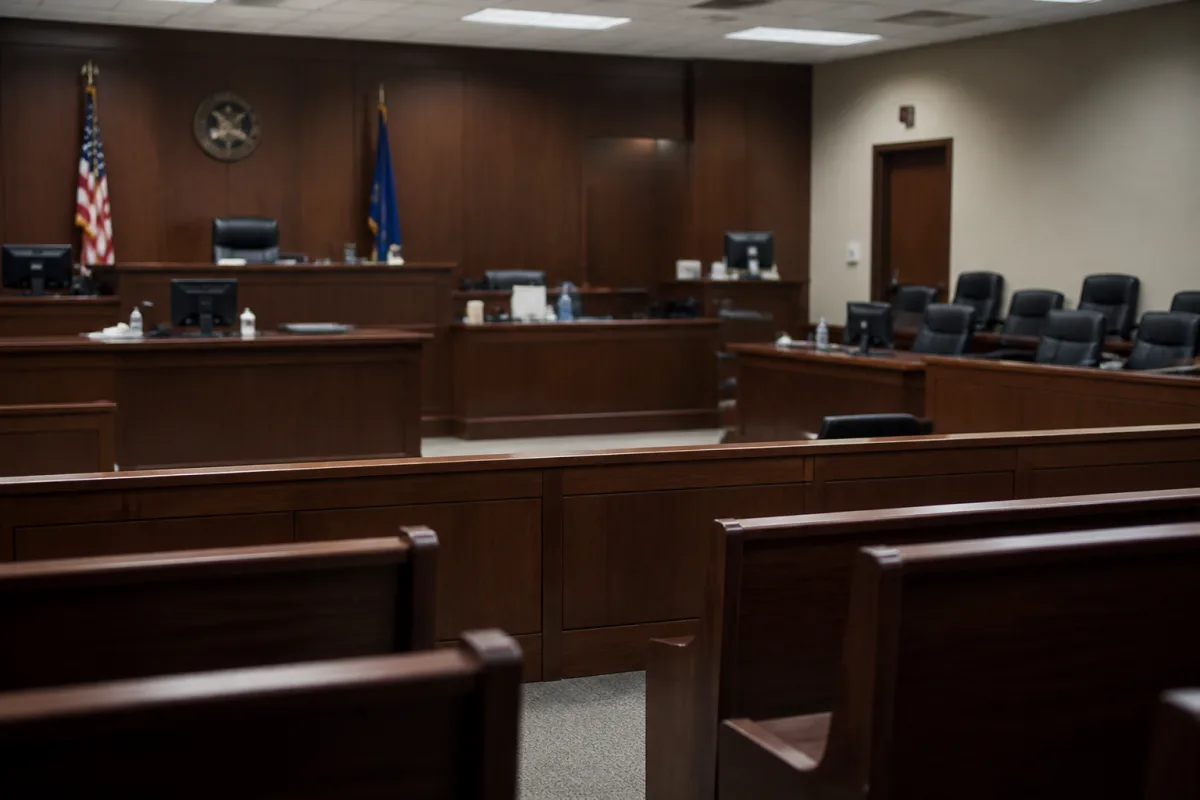

A master calendar hearing is the first procedural session in U.S. immigration court, where the judge reviews the case and the respondent addresses the allegations in the NTA — not their asylum story.
In short
- At a master calendar hearing you can’t tell your story — you can only respond to the NTA allegations and state the forms of relief you’re seeking.
- For the master calendar hearing, filing Form I-589 with at least a basic account of the persecution is enough; the full document package is only due 30 days before the individual hearing.
- A blank Form I-589 gives the prosecution grounds for a motion to pretermit — a request to close the case before the final hearing.
- A new precedent bars scheduling a hearing sooner than 10 days after the NTA is served, but case law on it hasn’t developed yet.
- Showing up to a master calendar hearing without a lawyer is no longer safe: the judge and prosecutor are entitled to close the case at that very hearing.
What happens at a master calendar hearing: allegations and your response
When a person is served with an NTA (Notice to Appear), the top portion of the form lists the allegations against them. These typically include identity and citizenship information, the date of entry into the country, the date by which the person was authorized to stay, and a statement that the person remained past that date. Below the allegations, the NTA cites the section of law under which the government intends to remove the person, and at the bottom there’s a line for signing acknowledgment of receipt.
At a master calendar hearing, you cannot tell the judge your story or give testimony — this is a common question, but the answer is no: the only thing that happens at this hearing is responding to the allegations in the NTA. Courts typically schedule dozens of people on a single day, and hearings run one after another.
The judge asks a series of questions in sequence:
- whether the person admits the allegations — as a rule, people admit them unless there’s an error;
- whether the person concedes the removability charge — the section of law under which removal is sought — this can technically be contested, but in practice respondents usually concede it, since the removal charge itself is rarely disputed;
- whether the person wants to designate a country of removal — an asylum seeker cannot name their own country, so the answer here is always no, after which the prosecution designates the country the person came from as the country of removal;
- what the person’s primary language is;
- what forms of relief the person intends to apply for.
What gets decided at a master calendar hearing
The judge asks the respondent a series of questions in sequence — and nothing else happens at this hearing.
- Admitting the allegations in the NTA
- Conceding the removability charge
- Designating a country of removalan asylum seeker cannot name their own country
- Stating your primary language
- Naming the forms of relief sought
In person or online: how the hearing runs
The format of a master calendar hearing — in person or online — is set by the judge, not chosen by the respondent. In some courts, Miami among them, in-person appearance is required across the board. You can check your format by looking up your A-number online, which will show either “in person” or “internet.” If neither is listed, the only option is to call the court directly.
If a person doesn’t have a lawyer, they need to appear in person — that’s the case for most respondents. But even with a lawyer, in-person attendance is often still required, even when the lawyer themselves appears remotely: it’s possible for the migrant to show up in the courtroom while their attorney joins by video. A lawyer can request virtual appearance for themselves or the client, but judges often deny these requests and require in-person attendance. Skipping a master calendar hearing isn’t an option — a no-show is never treated as an alternative.
As for family members: minor children enrolled in school are generally excused from attending — a judge can explicitly allow them to be left out of future hearings. Anyone who has turned 18 must be present. The recommendation is to bring the whole family to court when possible, especially for online hearings, since it makes confirming the family’s composition easier.
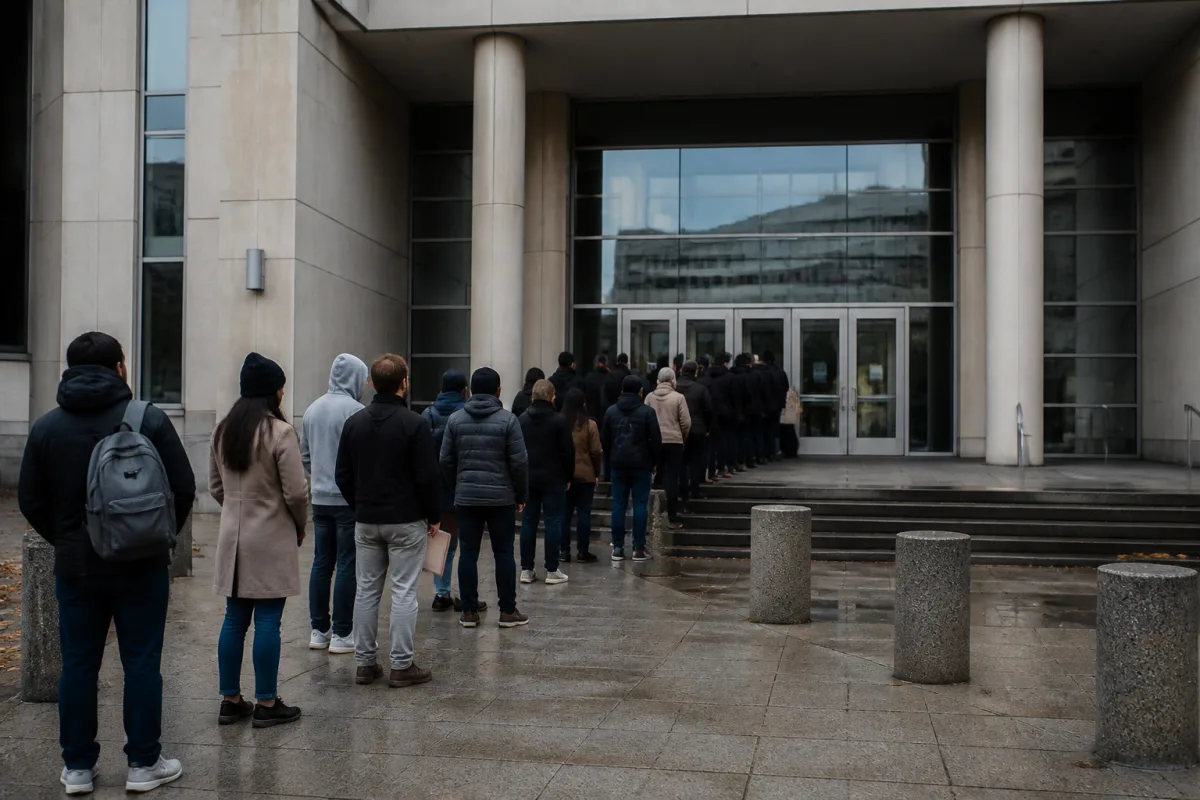
In courts where in-person appearance is mandatory for everyone, as in Miami, lines form outside before hearings begin — by observation, waits can run up to several hours. Some people arrive as early as 5 a.m. instead of the scheduled 7 a.m. just to get in line sooner. But there’s no real advantage to arriving early: priority in the calling order goes to those who have a lawyer, not to those who arrived first. New York and New Jersey don’t have street lines like this — waiting happens inside the building, though seating sometimes runs short and people end up standing in the hallway.
there’s no real advantage to arriving early: priority in the calling order goes to those who have a lawyer, not to those who arrived first
Waiting can also drag on for remote participants: lawyers sometimes stay on the line for an hour and a half to two hours before a case is called. If the delay stretches on and people start calling the judge’s clerk, the answer is usually the same — keep waiting, since the hearing won’t be canceled.
Check your participation format (in person or online) by A-number ahead of time. If it isn’t listed, call the court directly — don’t guess.
Do you need to bring your own interpreter
You don’t need to bring your own interpreter to a master calendar hearing — the court provides one. This is a key difference from USCIS, where the applicant must bring their own interpreter to an interview.
If the respondent has a lawyer, the court raises the interpreter question with the lawyer directly: either the lawyer waives the interpreter for that particular hearing, or takes on the responsibility of explaining what’s happening to the client directly. The decision to waive interpretation belongs to the lawyer, not to the respondent or the judge.
The reason for this practice is the sheer volume of a single session: dozens of people are present in the courtroom at once, and simultaneous interpretation of every technical detail for everyone would grind the calendar to a halt. So lawyers typically waive the interpreter themselves and explain what happened to the client after the hearing.
What documents you need before the master calendar hearing
The full case file — evidence and the witness list — must be filed with the court 30 days before the individual (merits) hearing, not before the master calendar hearing. The gap between the master and individual hearings exists specifically for this: it’s the window for gathering additional evidence and building out the case.
For the master calendar hearing itself, the minimum requirement is to file Form I-589 with at least a basic account of the persecution claim. If the judge opens the form and doesn’t see any basis for asylum in it, they’re entitled to deny the case without reviewing further evidence — the judge isn’t obligated to dig for the story or read between the lines.
If the judge opens the form and doesn’t see any basis for asylum in it, they’re entitled to deny the case without reviewing further evidence
Form I-589 includes sections on how the applicant was persecuted, which categories of persecution apply, and who the persecutor was. In the past, it was possible to leave the standard form questions unanswered and simply refer to “see attached statement” — now, by the time of the master calendar hearing, the answers need to be written directly into the form itself.
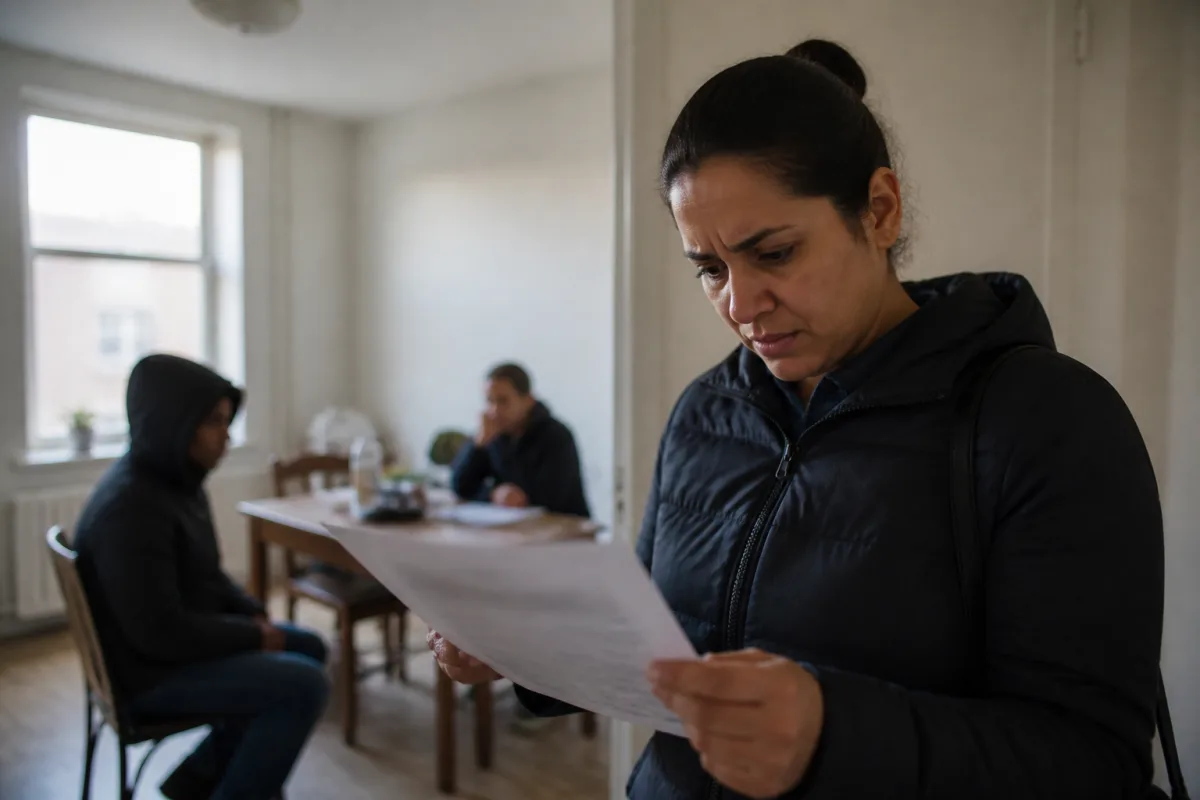
A blank Form I-589 gives the prosecution grounds to file a motion to pretermit — a motion to close the case before the individual hearing: one of the arguments behind such a motion rests on precedent that gives the judge authority to close a case over an unfilled-out form. Judges apply this rule differently: some close the case right away, while others give 30 days to complete the form and set a follow-up master calendar hearing — closing the case only if the form still isn’t updated after those 30 days.
An unfilled-out Form I-589 by the master calendar hearing gives the prosecution grounds to file a motion to pretermit and close the case before the final hearing.
Can you reschedule or move up the master calendar hearing date
Moving the date up is unlikely to work, but rescheduling it later is worth attempting. Courts are reluctant to move these dates: a master calendar hearing is treated as a procedural formality, and the bar for a valid reason is high.
Being out of state doesn’t count as grounds for a reschedule — if the respondent is in another state, the hearing gets converted to an online format instead of being postponed. Calling the court the day before and asking for a reschedule isn’t an option either: any request has to be filed in writing and in advance.
What counts as a valid reason
- medical or psychiatric circumstances — backed by documentation from a doctor or psychiatrist and a formal request to the court;
- pending documents needed for the case — but only if the request for those documents was submitted well in advance, not at the last minute.
There’s a line here too: if a respondent had two years to prepare and only requested documents — from Russia, for example — a month before the hearing, the court won’t accept that as grounds. The “I’m waiting on a document” argument only holds up if it’s clear the respondent requested it early, rather than scrambling right before the hearing.
How individual hearings get rescheduled
A single lawyer can have master calendar hearings running in parallel before different judges — physically moving between courtrooms and coordinating the order with each judge. That doesn’t work for individual hearings: you can’t run two individual hearings at the same time, and if dates conflict, the court sets a new one itself. The judge names a date and asks the lawyer to check their calendar — sometimes the date being discussed is two years out. Meanwhile, the defense side usually asks for a delay of a month, not six months — just enough time to prepare, no more.
A new precedent on minimum notice
A recent precedent now limits how soon courts can schedule this hearing: it cannot take place sooner than 10 days after the document requiring a court appearance is served. How this rule plays out in practice isn’t entirely clear yet — case law on it hasn’t developed.
Minimum notice before the hearing
A new precedent sets a floor on the time between service of the document and the hearing date.
- Time between service of the document and the hearing date
Master calendar hearings are rarely rescheduled, and only on a written request filed in advance with a valid reason — medical grounds or documents requested well ahead of time.
What you need to reschedule a master calendar hearing
What happens if you go to a master calendar hearing without a lawyer
In the past, some respondents used a particular tactic: show up to the master calendar hearing without a lawyer and ask the judge for time to find one. Judges granted anywhere from a month to a year — most often around 3 months, though some got lucky with 6 months or even a full year. In effect, this was a legal delay used to save up money for a lawyer without holding up the filing of the case itself.
A lawyer isn’t required to be present at the master calendar hearing in the first place — they can be hired later, ahead of the individual (merits) hearing. That’s the very feature the old tactic relied on.
Taking that risk today isn’t advisable. A new court precedent emerged a few weeks ago: the only firm rule on timing is that a hearing can’t be scheduled sooner than 10 days after the NTA is served. How this will affect court practice going forward isn’t clear yet — no cases have surfaced so far where a case was closed specifically on the basis of this precedent.
But a different kind of risk is real right now: the prosecutor and judge are formally entitled to close the case right at the master calendar hearing if the respondent shows up without a lawyer — no individual hearing scheduled, no second master calendar hearing. They have this authority even though the outcome is unpredictable: in some cases everything goes fine, in others the case gets closed at that very hearing.
the prosecutor and judge are formally entitled to close the case right at the master calendar hearing if the respondent shows up without a lawyer
Just a couple of years ago, respondents were often advised to attend the master calendar hearing on their own and bring in a lawyer later, once they’d saved up enough money. That’s no longer a safe approach, so it’s better not to rely on it: if it’s possible to hire a lawyer before the master calendar hearing, it’s worth doing so in advance — that way there are no surprises at the hearing.
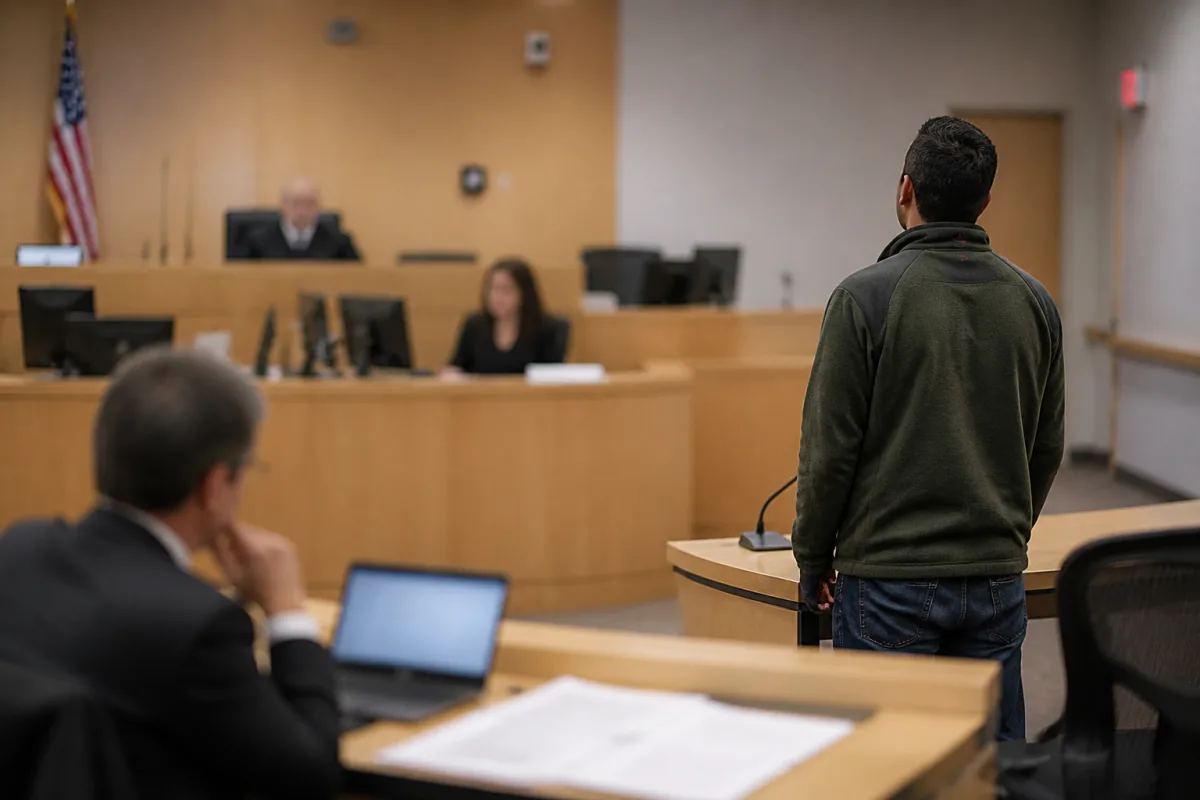
The “go without a lawyer first, hire one later” tactic is no longer safe: the case can be closed right at the master calendar hearing, with no second chance.


Comments
Reader experience is useful, but it is not advice: check the rules on the official site.
No account needed: click Sign in, type any name, and you are done.