
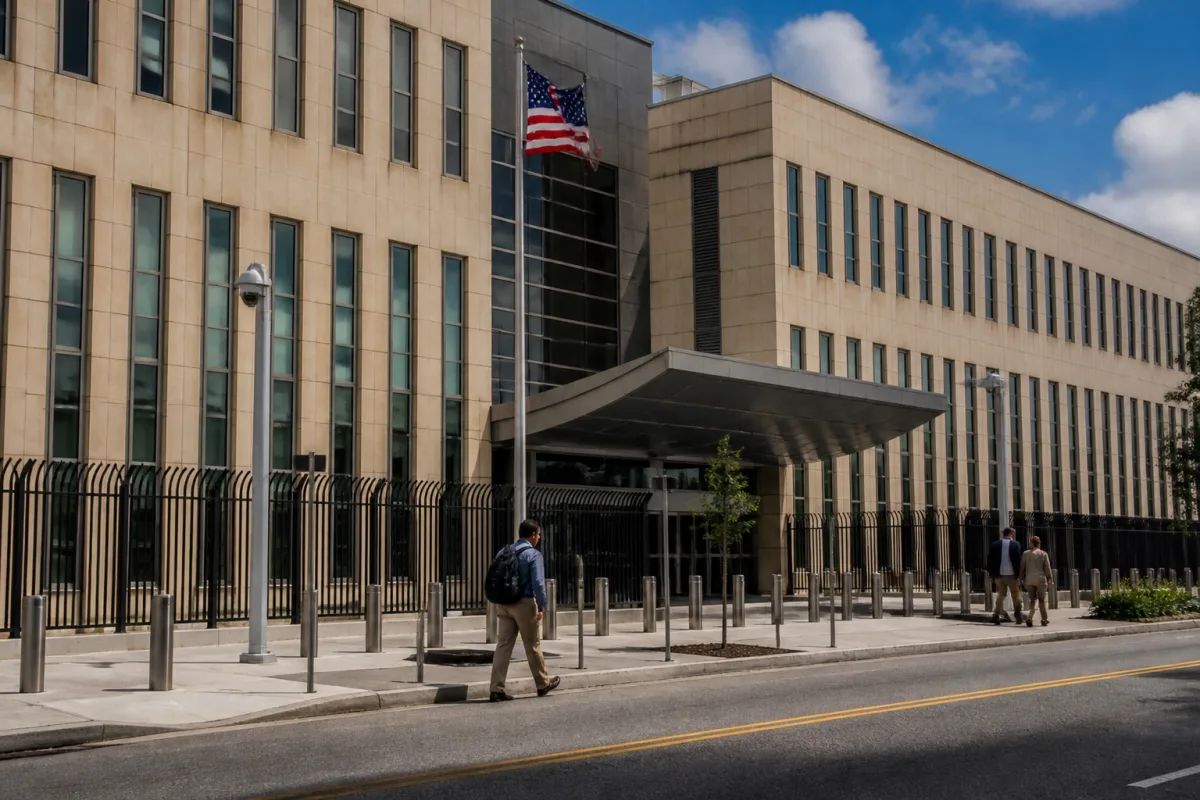

For nationals of the 19 countries under the current entry ban, the only lawful path to a US visa is a National Interest Exception request proving that denying entry would harm US interests — not the applicant’s own.
In short
- The pause for 75 countries was struck down by a court on August 21, 2026, but some consulates still delay visa issuance.
- The Proclamation 10998 ban for 19 countries remains in force regardless of what happens to the pause — it cannot be lifted by that ruling.
- The only lawful way out from under the 19-country ban is a National Interest Exception proving harm to US interests, not to the applicant.
- In the case examined, the NIE was decided within eight weeks, but timelines in other cases may differ.
- If a country is on the pause list (not the ban list), no NIE is needed — a mandamus lawsuit applies if the embassy fails to act.
The Pause for 75 Countries: What It Was and Whether It’s Still in Effect
In January 2026, the US government introduced a pause on visa issuance for nationals of 75 countries. The stated basis was the need for additional vetting of applicants to determine whether they might become a “public charge” — that is, whether they would end up relying on government support after entering the US.
On August 21, 2026, this policy was struck down entirely: in Clinic v. Rubio, a court ruled the pause unconstitutional. The ruling held that an applicant cannot be blocked solely because of the citizenship of a specific country — especially if he or she can demonstrate they would not become a burden on public funds. Formally, the pause for the 75 countries no longer applies, although the government has filed an appeal.
In practice, some consulates keep delaying visa issuance even after the ruling: applicants are told the delay is due to internal procedural reorganization and a backlog of cases, even though under the court’s decision these countries are no longer subject to the pause.
Consulate Still Delaying Your Visa After the Pause Was Struck Down? Here’s What to Do
Some embassies keep delaying visa issuance for nationals of the 75 countries even after the court struck down the pause. Applicants from these countries receive a letter stating the pause is over and the visa will be issued once the consulate “gets organized” and works through its backlog. In practice, this letter does not guarantee a visa within a reasonable time — the delay can drag on indefinitely under the excuse of procedural difficulties.
the delay can drag on indefinitely under the excuse of procedural difficulties
If the visa still hasn’t been issued after such a letter, the next step depends on how much time has passed since receiving it: the longer the wait without a visa, the stronger the grounds for preparing a lawsuit. In that case, the applicable remedy is a writ of mandamus — a court order compelling the embassy to perform a duty it is avoiding. The end of the pause means the applicant is formally entitled to a visa, but actually obtaining it sometimes requires going to court.
A letter confirming the pause has ended does not mean a visa is imminent. A consulate can cite procedural reorganization for as long as it wants.
The longer a visa doesn’t arrive after a letter confirming the pause’s end, the stronger the grounds for preparing a lawsuit — a writ of mandamus compelling the embassy to act.
The Travel Ban Under Proclamation 10998: Who It Covers
Unlike the pause for the 75 countries, the second restriction never went away — the travel ban under Proclamation 10998. It was introduced on national security grounds: officials determined that the listed countries do not adequately vet their own citizens. For part of these countries — 19 out of 39 — entry to the US is closed almost entirely; for the rest, partial restrictions apply that vary by visa category. The list includes, among others, Afghanistan, Iran, Somalia, Syria, Yemen, and Haiti.
The ban covers both categories at once — immigrant visas leading to permanent residence, and nonimmigrant visas, including student and work visas. For the fully banned countries, the restriction touches nearly every category; for the rest, only part of them.
If an applicant’s country appears on both lists — the pause for 75 countries and the ban under Proclamation 10998 — the end of the pause changes almost nothing: the proclamation’s ban keeps applying regardless of what happens to the pause.
The Proclamation 10998 Travel Ban: Who It Covers
For 19 of the 39 listed countries, entry is almost entirely closed; for the rest, restrictions are partial.
- Countries under a full ban19 of 39nearly all visa categories
- Countries under a partial ban20 of 39restrictions on specific visa categories
National Interest Exception: The Only Way Out of the Ban
There is one lawful way out from under the Proclamation 10998 ban — the National Interest Exception (NIE). The Secretary of State states directly in the proclamation that an applicant who meets certain requirements may be granted an exception from the ban. The standard for approval is strict: what must be proven is not hardship to the applicant, but the harm the applicant’s absence would cause to US interests. Letters to a member of Congress and accounts of a family’s personal difficulties have no bearing on this decision — only the impact on the United States is considered.
How this works in practice is illustrated by one case. The petition was flawless: a work visa, a vetted employer, an approved Form I-140, and an applicant with verified credentials. Police certificates and the medical exam were ready by the scheduled interview date. Despite all this, at the interview itself the officer did not ask about the applicant’s project in the US or about his professional accomplishments — there were no questions on the merits at all. He only confirmed identity and citizenship and denied the visa under the proclamation, explaining that the ban was currently in effect and visas were not being issued. The denial was not the end of the case but the starting point for a separate NIE request — and eight weeks later, in this particular case, the consulate issued the visa precisely under this exception, though processing times in other cases may differ.
the officer did not ask about the applicant’s project in the US or about his professional accomplishments — there were no questions on the merits at all
A National Interest Exception is granted not because of hardship to the applicant, but because of the harm the applicant’s absence would cause to US interests.
Rule 1: Name the US Interest in the First Paragraph of the Request
The opening line of the request must show that a specific US outcome will not be achieved unless the applicant enters the country — not that his career or family will suffer. The wording is built around the interests of the receiving side, not the applicant’s personal circumstances: that is exactly what the first of four rules for building an NIE request demands.
In the case examined, the applicant was needed to carry out a federal contract: he held specialized qualifications required specifically in the US, and American workers with the same training were not available on-site. To demonstrate a setback to the US side, the request specified a deadline by which the contract had to be completed and explained how missing it would affect the company and the federal government.
As supporting evidence, the request included the contract itself, the statement of work, and letters of recommendation — these documents showed that the applicant’s absence from the US would affect a specific project, not simply inconvenience him personally.
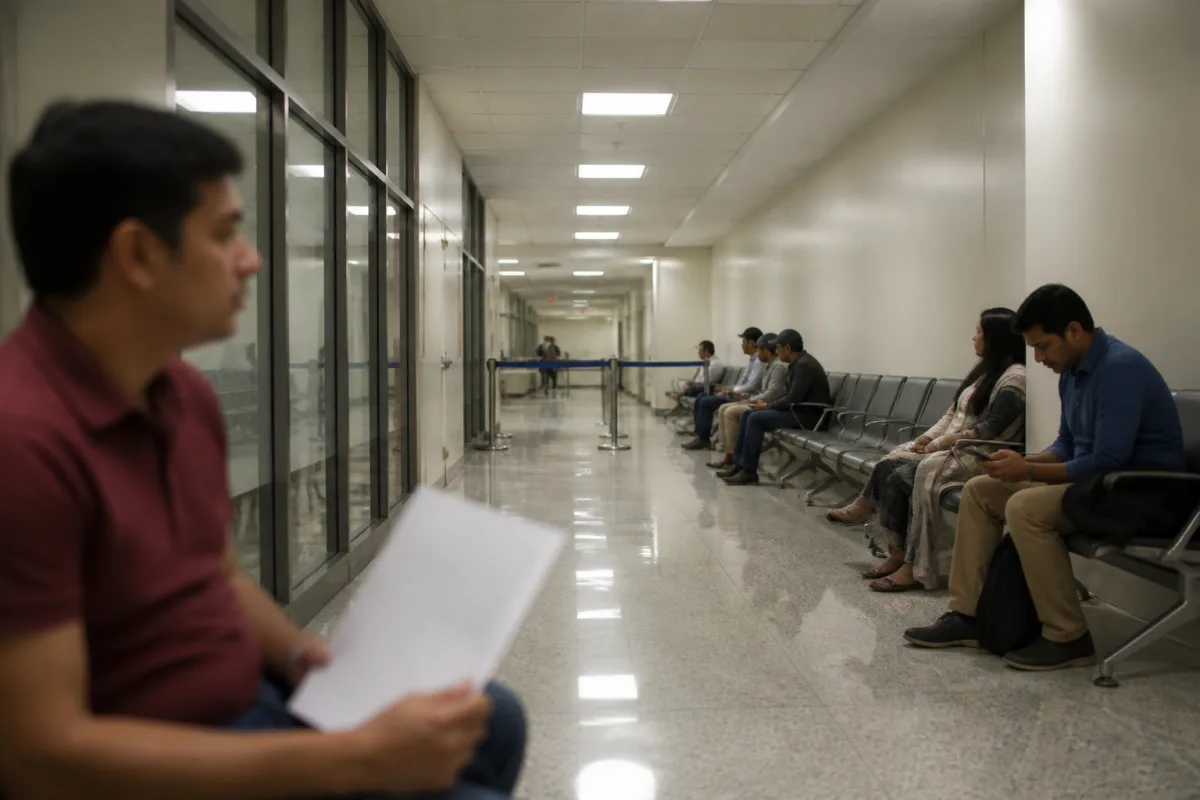
Documents for a National Interest Exception Request
Rule 2: Separate Yourself From Your Country’s Risk Category
The proclamation bans entry at the country level, while the exception evaluates a specific individual — these are two different planes, and the request must clearly separate them. So the second step of the request proves that the applicant personally does not carry the risk for which his country’s entry is closed.
In the case examined, this was shown through the applicant’s history: he had received US visas many times before and had never once overstayed his authorized period. The request additionally pointed to the absence of any criminal record, a spotless travel history, and access to classified information.
An argument about the unfairness of the ban itself was deliberately left out of the request — it does not persuade the officer and simply does not work.
An argument about the unfairness of the ban itself was deliberately left out of the request — it does not persuade the officer and simply does not work
Rules 3 and 4: The Right Channel and a Short, Substantive Request
The third rule is to file the request exactly where it can actually be granted. The exception was submitted through the consular post handling the visa, and at the same time a request was made to refer the case for review by the Secretary of State — both channels were coordinated with each other, as the proclamation requires. Some consulates have their own address or instructions for filing an NIE request — these should be followed to the letter, not treated as a template copied from another case.
The fourth rule is brevity. The main memo ran under four pages, with supporting documents placed in separate attachments. Consular officers and clerical staff read these requests quickly, so the goal is to make the point clear within seconds, not to bury it under case material. Each attachment carried a one-line caption explaining how it connected to the overall argument.
On the merits, the key piece of the request turned out to be a support letter from the American company — with precise dates and a description of what would happen if the applicant could not enter the US. It was supplemented by evidence that the required qualification was unavailable in the labor market and that the contract deadline was tight, a brief biography and resume, and a work completion schedule. Emotional and family circumstances were deliberately kept out of the foreground — officers expect to see a business case, not a personal story.
Four Rules for an NIE Request
The sequence of arguments that built a successful exception request.
- Name the US interest in the first paragraph
- Separate yourself from your country’s risk category
- File through the right channel
- Keep the request short and substantive
How Long the Decision Took and How the Case Ended
After the request was filed, two weeks passed with no response at all from the consulate — no calls, no letters from the applicant’s side during that period. The government then sent the employer a single letter with a follow-up question about the need for the employee; the response to it was simple and short. After that, an approval letter arrived: the exception was granted, and the visa was to be issued.
What followed was a standard procedure: the applicant was asked to appear and leave his passport for the visa stamp to be affixed. The stamp itself carried an annotation noting that entry was being made specifically under a national interest exception.
At the border crossing at the airport, the applicant was sent for secondary inspection — standard practice given that annotation on the visa. Officers checked the information, and entry into the US was granted. This case shows that a national interest exception is a working mechanism, not a formality on paper.

Arguments That Don’t Work and How to Tell If You Need an NIE
Four types of arguments in an exception request are guaranteed not to succeed. An appeal to sympathy — references to the applicant’s emotions and hardship — carries no weight with the embassy. A claim about danger in the home country (“it’s dangerous here, we need to leave”) is not something the consulate considers. A vague, generically worded claim about the national interest will not work either. And separately, the argument “this benefits the economy, the country needs this specialist” needs to be backed by specific details, not left as a general phrase.
Court rulings on other proclamations do not lift the ban for the 19 countries under Proclamation 10998 — it remains in force, and the only way around it is an NIE.
To figure out which path applies, start by checking which list the country falls under: the 75-country pause or the Proclamation 10998 ban. If the applicant’s country is on the pause list, no NIE is required — it’s enough to keep pressing the embassy for a response, and to file a mandamus lawsuit if nothing happens. If the country is among the 19 banned under the proclamation, a National Interest Exception may be exactly what’s needed — but these requests are complex and are evaluated individually, based on each applicant’s circumstances.
Sympathy, danger in the home country, generic references to the national interest, and an unexplained claim of economic benefit — the consulate rejects all four.
Pause for 75 Countries vs. the Proclamation 10998 Ban
| Criterion | Pause (75 countries) | Ban (39 countries) |
|---|---|---|
| Status today | Struck down by the court on August 21, 2026 | In force, unchanged |
| Stated basis | Public charge vetting | National security |
| How to work around it | Press for a response; file mandamus if the embassy does nothing | Only through a National Interest Exception |
| Is an NIE needed | No | Yes |
If a country is on both lists, the end of the pause changes nothing — the proclamation’s ban applies separately.
Frequently asked questions
If my country is on both the 75-country pause list and the 19-country ban list, which one applies to me?
The Proclamation 10998 ban applies — it operates independently of what happens to the pause for the 75 countries. The court’s decision to strike down the pause changes nothing for applicants from countries on both lists at once: entry remains closed on the same terms as before the pause was struck down.
Can I file a National Interest Exception if my country isn’t on the 19-country ban list, only on the pause list?
No, in that case an NIE isn’t needed at all: for countries on the pause list, it’s enough to press the embassy directly for a response, and to file a mandamus lawsuit if it keeps stalling. An NIE is a mechanism specifically for countries on the Proclamation 10998 ban list, not for the pause.


Comments
Reader experience is useful, but it is not advice: check the rules on the official site.
No account needed: click Sign in, type any name, and you are done.