
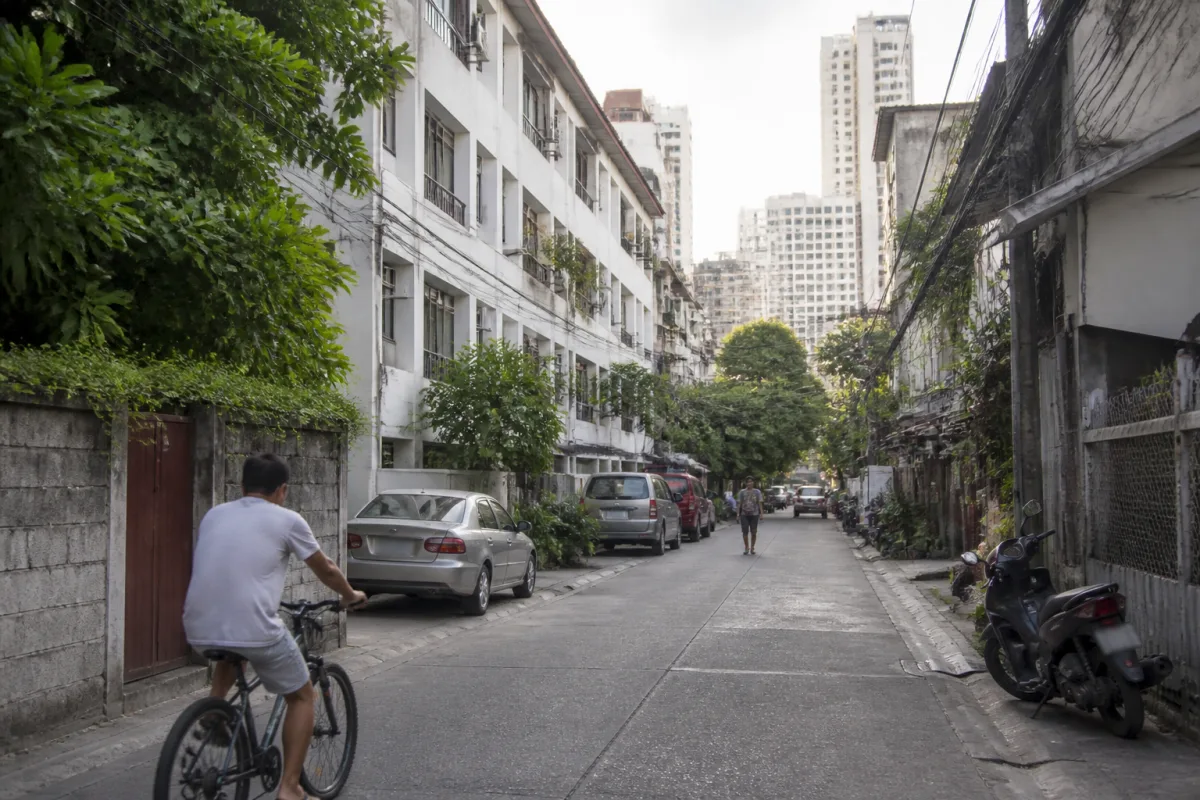

Citizens of Germany, Austria, and Switzerland can live in the Philippines visa-free for up to nearly six months under visitor status, while a rented apartment, tax number, and address registration can be arranged entirely remotely in 7–10 days.
In short
- Setting up housing and a tax number in the Philippines takes 7–10 days and can be done entirely remotely, except for opening a bank account.
- Citizens of Germany, Austria, and Switzerland don’t need a visa: visitor status is granted for 30 days and can be extended to nearly six months in total.
- The ACR card should be obtained after 60 days of stay — only that version of the card is accepted by banks without issues.
- German inheritance and gift tax keeps applying for 5 years after emigration, regardless of the new place of residence.
- Foreign-sourced income, including cryptocurrency, isn’t taxed in the Philippines as long as two conditions on exchanges and wallets are met.
Do you need to be physically present in the Philippines to arrange housing
Being physically present in the Philippines to establish a place of residence isn’t required — the whole process can be handled remotely. Communication with the person handling the process runs through email, WhatsApp, and other channels: they show available housing options and manage everything on the ground.
The process includes renting an apartment in your name with an official lease agreement — you stay in direct contact with the landlord throughout. Documents get arranged in parallel, including a tax number. Picking up mail or getting the keys, if needed, can also be organized without a personal visit.
Subletting the rented apartment through Airbnb is technically possible, but it doesn’t work for establishing an official place of residence. The same goes for long-term subletting: if the unit gets re-rented for an extended period, it stops counting as a permanent residence — which defeats the whole purpose of the process.
The entire process — from renting the apartment to getting the tax number — takes about 7–10 days.
Opening a bank account is part of the same service package, but it can’t be done remotely: that requires an in-person visit to the Philippines. This step can be postponed to whenever is convenient — it doesn’t affect the rest of the housing setup.
How long it takes to set up housing in the Philippines
Renting an apartment and getting a tax number can be done remotely in 7–10 days; the bank account requires an in-person visit.
- Renting housing and arranging documents7–10 days
- Opening a bank accountrequires an in-person visitcan be postponed to a convenient time
Subletting the rented apartment through Airbnb, or long-term subletting, strips the housing of its permanent-residence status — which is the whole point of the process.
What’s included in remote housing setup in the Philippines
Is it true that no visa is needed at all
Citizens of Germany, Austria, and Switzerland don’t need a visa to enter the Philippines — no paper visa, no e-visa, no visa on arrival. Crossing the border automatically grants visitor status for 30 days.
This status can be extended to 60 days by applying in person at the immigration bureau. Further extensions can be done online, without visiting an office. In total, visitor status can be extended to roughly six months beyond the initial 30 days — after that, a different status is required, or the person has to leave the country.
The key condition is not leaving the country during that period. Overstaying the permitted period in the Philippines doesn’t go without consequences: an administrative fine applies for each year of overstay, charged when leaving the country or extending status.
Overstaying the permitted period in the Philippines doesn’t go without consequences: an administrative fine applies for each year of overstay, charged when leaving the country or extending status.
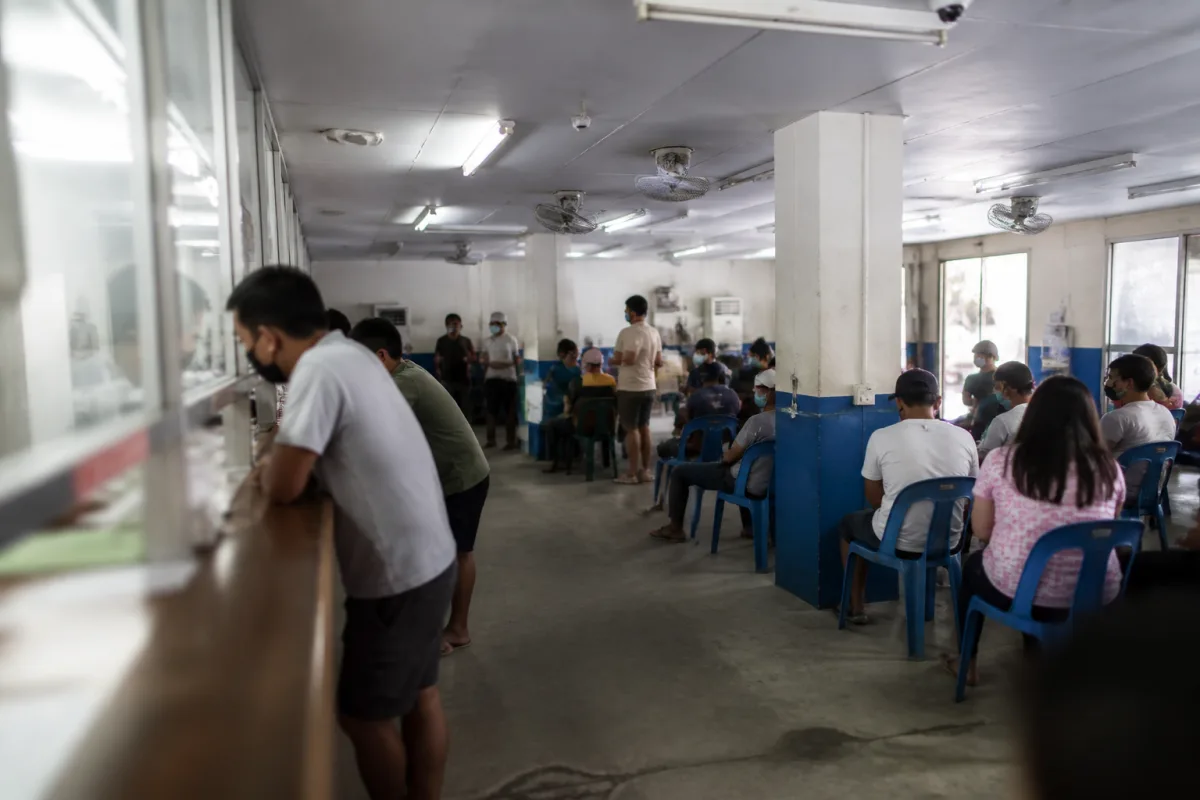
Extending status at the immigration bureau involves queues that can run several hours. In practice, a proxy often handles the queue on the applicant’s behalf, and the service is customarily paid with a token amount — but this is an unofficial practice, and it shouldn’t be counted on as a guaranteed method.
Extending visitor status in the Philippines
Without a visa, you can stay in the country for up to nearly six months beyond the initial 30 days.
- Status on entry30 days
- First extensionup to 60 daysin person at the immigration bureau
- Further extensionsup to nearly six months beyond the 30 daysonline, no office visit needed
What is the ACR card and when is it needed
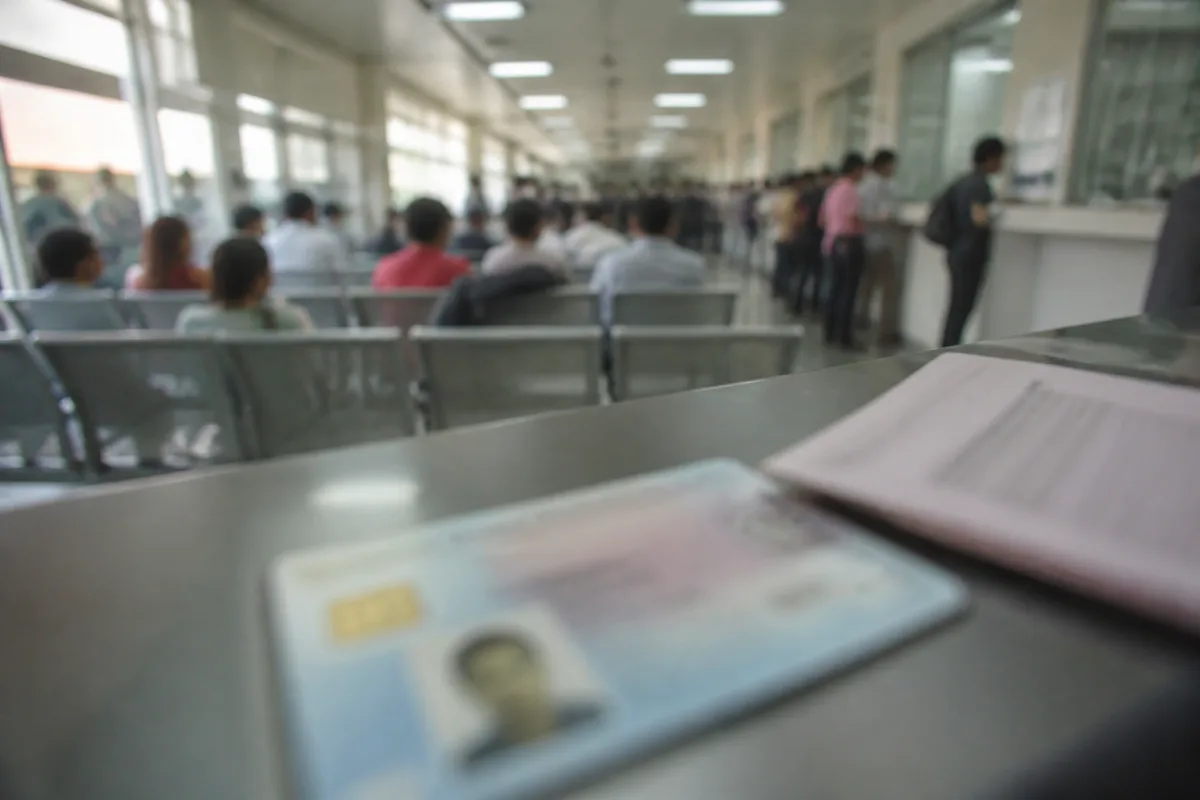
The ACR card (Alien Certificate of Registration) is an identity document for foreigners, a plastic card the size of a driver’s license. It can only be obtained after 60 days of continuous stay in the Philippines — that’s when, at the second extension of visitor status, the card becomes available, and further status extensions can be done online.
Having an ACR card isn’t mandatory. An application can be filed before the 60-day mark — the card will be issued voluntarily, but with a corresponding note on it. Banks often won’t accept such a card when opening an account, whereas a card obtained after the mandatory 60 days doesn’t create this problem.
An ACR card isn’t needed at all if a foreigner holds an SRV visa (Special Resident Retiree’s Visa) — in that case, the Philippines issues a separate SRV ID that replaces the ACR card.
In practice, a Philippine driver’s license often serves as an alternative to the ACR card. Getting one doesn’t require 60 days in the country or passing a driving test — a copy of a valid German, Swiss, or Austrian driver’s license is enough. This license is accepted in many situations where an ID is requested, and it also works for renting a car abroad.
A Philippine driver’s license can be obtained without 60 days in the country and without a driving test — using a copy of a German, Swiss, or Austrian license. In many situations, it substitutes for the ACR card.
Is an ACR card required to open a bank account
Philippine banks insist on an ACR card when opening an account, and without one, most will refuse. This is the general rule, with occasional exceptions — but those shouldn’t be relied on.
Some banks open accounts for foreigners through a special arrangement, without requiring the ACR card. Even in these cases, the underlying requirement stays the same: the applicant must have a confirmed place of residence in the Philippines — the very setup that, in principle, qualifies someone for an ACR card. There are isolated cases of a bank agreeing to open an account using a Philippine driver’s license without an ACR card, but that’s an exception, not a working scheme. At most banks, opening an account without an ACR card simply isn’t possible.
Banks treat the SRV card as an equivalent substitute for the ACR card — with it, opening an account works the same way as with an ACR card. Another option is opening an account through local banking contacts, bypassing an in-person card presentation at a branch.
Without an ACR card, most banks will only open an account as an exception. The real equivalent substitute is the SRV card, not a Philippine driver’s license.
What’s the advantage of opening an account in the Philippines
The Philippines doesn’t participate in automatic exchange of tax information between countries — this offers more privacy than accounts in many other jurisdictions. It doesn’t provide tax benefits: if tax residency remains in Germany, Austria, or Switzerland, income on the account still has to be declared, and in Switzerland the account also counts toward wealth tax calculations. Among foreign currencies, Philippine accounts only offer US dollars — no other currencies are available.
The minimum deposit to open an account at a local branch is relatively modest, and keeping that money in the account isn’t required — it can be spent right after opening.
| Jurisdiction | Minimum deposit |
|---|---|
| Singapore (direct account) | from €150,000 |
| Philippines (local branch of an international bank) | around $30,000–40,000 |
The difference comes down to this: through contacts with international banks in the Philippines, it’s possible to open an account at a bank that’s also present in Singapore — with the Philippine minimum deposit instead of the Singaporean one. Such an account should be treated as a backup channel for holding funds, not a primary one: placing large sums there isn’t advisable.
Is there an estate and gift tax in the Philippines
The Philippines has both an estate tax and a gift tax — both at a 6% rate. The existing double taxation treaties with Germany and Switzerland don’t cover estate and gift taxes, so the Philippine tax isn’t credited against a similar tax back home. It applies to foreigners residing in the country as well, but not to everyone: it only applies to so-called Resident Aliens — foreigners who actually live in the Philippines. Having one apartment isn’t enough for this status: what matters is a person’s overall behavior and status, meaning how actively they’re actually present in the country. The formal 183-day rule isn’t the criterion here — exactly when Resident Alien status kicks in remains largely a matter of interpretation.
For German citizens, a different issue is more pressing. Upon emigration, German inheritance and gift tax keeps applying for another 5 years after leaving — regardless of where the citizen moves to or whether they hold a residence permit there. This tax obligation remains in full force, and it’s worth sorting out before dealing with the Philippine tax.
Upon emigration, German inheritance and gift tax keeps applying for another 5 years after leaving — regardless of where the citizen moves to or whether they hold a residence permit there.
The Philippine portion of the gift tax can be removed a different way — through a Trust. A Trust isn’t a company or a foundation, and nothing needs to be registered: it’s an agreement between two parties for the benefit of a third party or one of the participants. The most common example is a Trust between spouses: if one of them dies, the other automatically becomes the beneficiary. Under German law, such a Trust makes no difference — German inheritance and gift tax still has to be paid. But under Philippine law, it allows fully avoiding the local estate and gift tax, even if the person formally holds Resident Alien status.
For 5 years after leaving Germany, inheritance and gift tax keeps applying regardless of the new place of residence — this needs to be sorted out before dealing with the Philippine tax.
How is cryptocurrency taxed in the Philippines
For Philippine citizens, cryptocurrency is taxed as ordinary income on a progressive scale, with the top rate reaching 35%.
For foreigners who pay taxes in the Philippines, a different rule applies: foreign-sourced income isn’t taxed at all, and that includes crypto. There’s no clear legal definition of what counts as “foreign-sourced” income when it comes to crypto, but according to expert assessment, income keeps its foreign status as long as two conditions are met: not using exchanges registered in the Philippines to trade cryptocurrency, and not keeping crypto wallets on Philippine platforms.
foreign-sourced income isn’t taxed at all, and that includes crypto
As long as these conditions are met, crypto is entirely tax-free for a foreigner — and there’s no need to declare or register it anywhere. Because of this, some crypto platforms accept the Philippines as a country of residence during registration.
Frequently asked questions
What happens if you overstay the permitted period in the Philippines under visitor status
Overstaying doesn’t go without consequences: an administrative fine applies for each year of overstay, charged when leaving the country or extending status. It shouldn’t be assumed that an overstay will go unnoticed.
Can you open an account at a Philippine bank without an ACR card, using only a driver’s license
At most banks, opening an account without an ACR card isn’t possible, and a driver’s license doesn’t solve this problem. There are isolated cases of a bank agreeing to open an account using a Philippine license without an ACR card, but that’s an exception, not a working scheme.



Comments
Reader experience is useful, but it is not advice: check the rules on the official site.
No account needed: click Sign in, type any name, and you are done.