


In September 2026, the number of unjustified refusals in Canadian immigration reached a critical level. Decisions arrive with logical contradictions, errors in applicant data, and no connection to the stated grounds for refusal — even cases have been reviewed where a mother is refused a super visa, citing an expired student visa she never had.
Contradictions in decisions on work codes
IRCC officers acknowledge a match between duties and the NOC code, yet refuse applications, claiming the match is insufficient. At the same time, official documentation contains no thresholds, calculations, or percentages defining a “sufficient” match. In one described case, the applicant had an ambiguous NOC code due to overlap with other lines of work. The officer accepted the explanations and comparative tables but decided that a different code was needed. The applicant received no clear justification for why the submitted code was unsuitable, despite the matching duties. Such decisions are being challenged through reconsideration and judicial review.
Decisions arrive so contradictory that applicants are left wondering whether the officer actually reads the submitted materials, or whether decisions are generated by an automated system without any logic check.
Mother refused a super visa over a phantom student visa
The mother of a Canadian permanent resident applied for a super visa — a status requiring the applicant to remain outside Canada. Her application was refused with the stated reason: your student visa has expired, you remain in Canada, therefore you are violating the conditions of stay.
The problem is that the applicant never held a student visa and had never come to Canada. The Express Entry form does not require disclosing the location of minor children, and no information is collected about relatives outside the country. The IRCC officer refused the super visa citing information that could not have come from the submitted package of documents.
Invalid medical certificates for children, without grounds
In a permanent residence application through Express Entry, the entire family was refused. The stated reason: the four-year-old daughter’s medical certificate was invalid because the daughter is located outside Canada and the certificate was not obtained within the last 12 months.
However, the daughter is in Canada. IRCC did not explain how it determined she was outside the country — the Express Entry form does not request such information about minors. The applicant lost status, as the bridging work permit will be refused. The family now faces reconsideration and judicial review. The applicant’s score was 514–515, and they cleared the draw at a cutoff of 511–512.
The refusal created uncertainty and stress caused by the department’s own error.
Language tests and missing documents
Recently, an applicant was refused at the R10 (initial screening) stage due to the absence of a language test certificate. This document is not listed on IRCC’s online Express Entry checklist, yet its absence resulted in an automatic refusal.
People applying on their own or with help from friends and relatives risk relying on outdated procedures. Requirements that were acceptable 5–6 years ago no longer apply. It is essential to verify the current documents required for each specific application, even if they were previously submitted.
It is important to include every required document, even those that seem minor, since IRCC may reject an application on technical grounds without ever considering its merits.
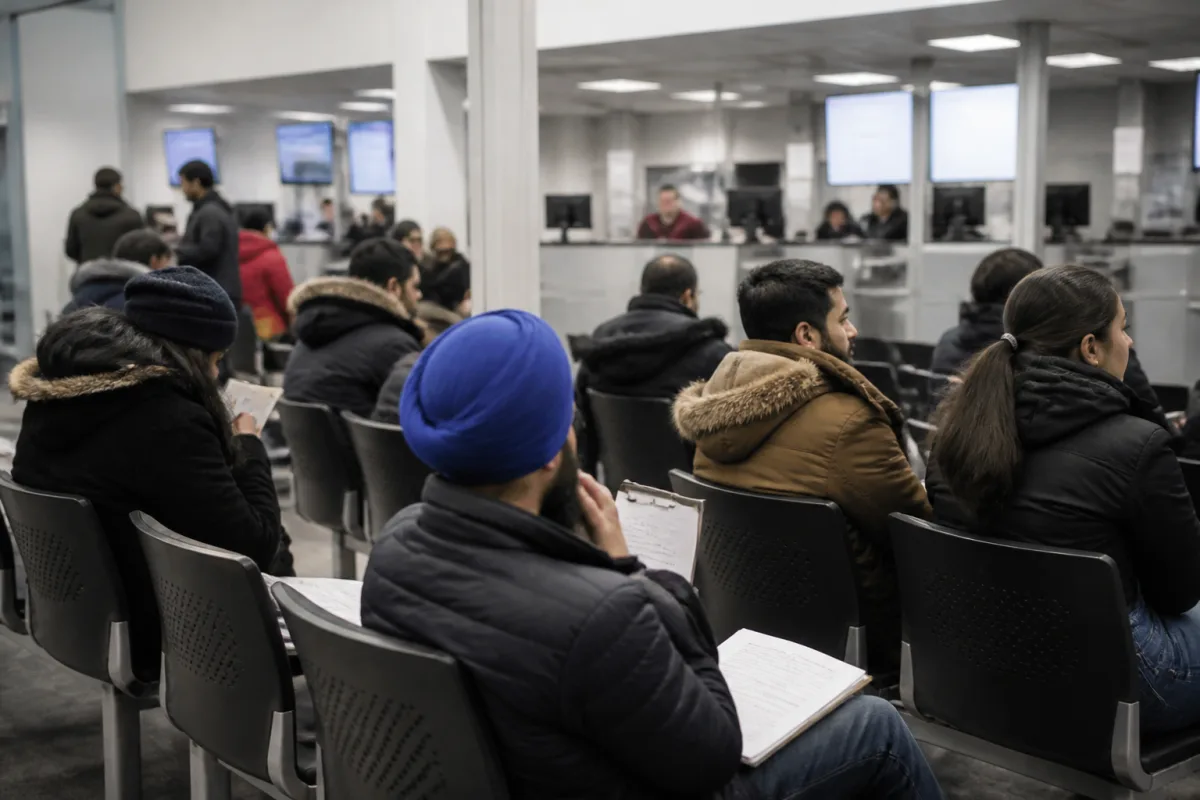
Why document completeness is critical
Given the growing number of refusals, applicants must anticipate every aspect of their case:
— explain anything that requires explanation; — attach documents even if they seem only indirectly related to the application — they add context; — disclose inconsistencies the applicant is aware of; — do not rely on information from previous applications — documents must be attached separately to every new application; — do not expect IRCC to connect information across different submissions.
A passport submitted with a first application must also be attached to a second one. Certificates of education, employment, and financial standing all need to be documented again.
Missing any required document can lead to refusal even before the merits of the application are considered, as happened with the language test.
The logic of refusals raises questions about IRCC
The severity of these refusals and their content cast doubt on the quality of officer training and the structure of the process. Decisions bearing no logical connection to the submitted materials may point to inadequate staff instructions, insufficient training, or a system that is not technically ready.
It remains unclear whether decisions are generated by automated tools without a sense check, or whether officers genuinely do not read the submitted materials before ruling. One thing is clear: applicants cannot rely on a fair review of their case and must prepare for the worst-case scenario by providing documentation that is as complete and clear as possible.



Comments
Reader experience is useful, but it is not advice: check the rules on the official site.
No account needed: click Sign in, type any name, and you are done.