
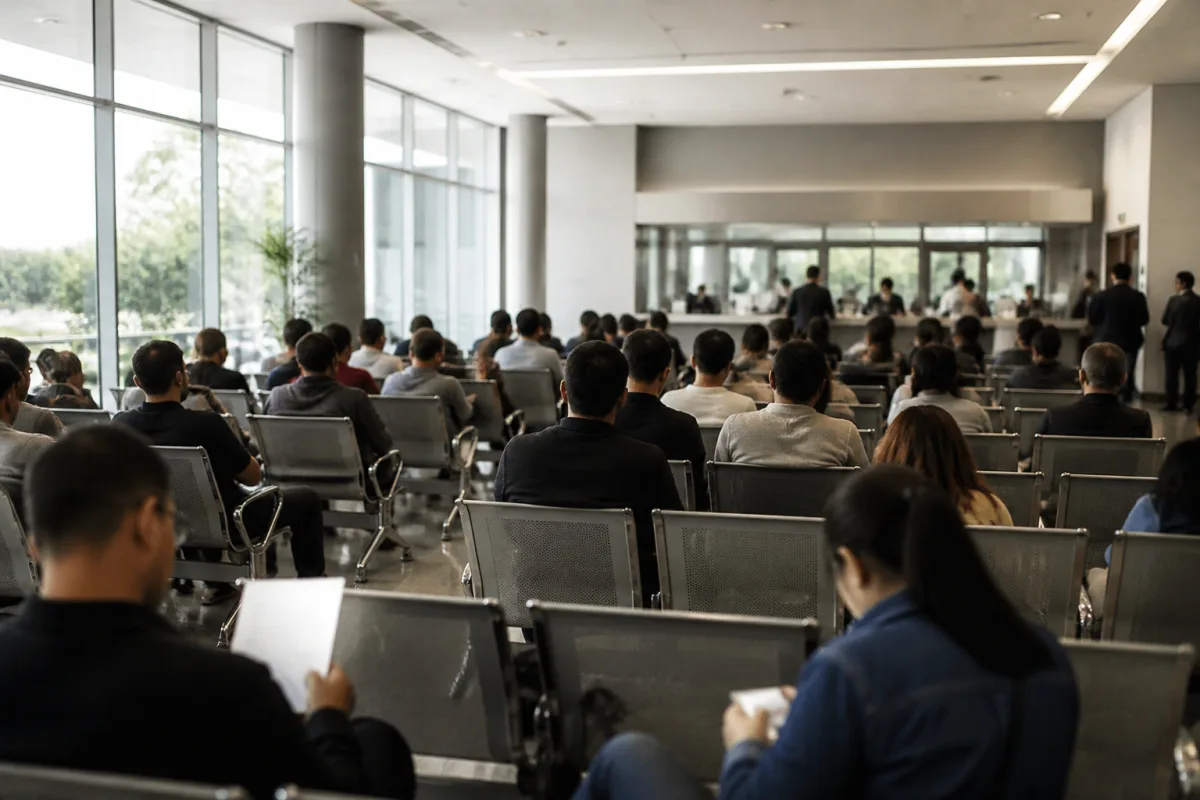

To get a B1/B2 visa, you need to use the officer’s allotted 2 minutes to show concrete commitments in your home country — a job, family, ongoing projects, and plans after your return — not just state an intention to come back.
In short
- The B1/B2 visa interview lasts about 2 minutes, and the officer doesn’t see income or employment records — only the application and live answers.
- War, sanctions, and the political situation in the applicant’s country don’t affect the visa decision — politics only determines the validity period of an already-approved visa.
- Visa validity depends on citizenship: 10 years for Ukraine, Kazakhstan, Armenia, and Georgia, 3 years for Russia, 1 year for Belarus and Uzbekistan.
- Only minor children and a spouse count as family to the consul — other relatives don’t work as a reason to return.
- Information from the application can be checked 20 years later, so documents should be kept and only the truth should be written.
What Is a B1/B2 Visa and How Long Does the Interview Take
“Tourist visa” is the common name for the B1/B2 visa type, as it’s known at the US embassy. This category covers roughly 200 different travel purposes: attending a festival, visiting relatives or friends, retraining and study — a B1/B2 visa allows a short course of study if that is a secondary purpose of the trip, not the main one.
The interview itself takes just 2 minutes. In that time, the officer reviews the applicant’s application and conducts questioning simultaneously — getting the necessary information across in such a narrow window isn’t easy. Ahead of time, the officer only has security-related data: information on relatives, possible violations, wanted status, or terrorism links. They don’t have access to employment or tax records — in the 2 minutes given, they look the applicant in the eye, ask questions, and rely on what’s said.
The interview itself takes just 2 minutes.
The officer doesn’t see employment or income records — only the application and a live answer within a matter of seconds. Anything not said out loud isn’t taken into account.
Do War, Sanctions, and Politics Affect the Visa Decision
The political situation in the applicant’s country does not affect the decision on a B1/B2 visa. War, occupation, and sanctions don’t mean automatic refusal — the consulate reviews the individual applicant, not the political situation in their country.
The only thing politics genuinely affects is the validity period of an already-approved visa. That’s determined by agreements between countries and the level of trust toward a specific state, not decided at any individual interview.
War, sanctions, and occupation are not grounds for refusal — the consul evaluates the individual applicant, not the country. Politics only affects the validity period of an already-approved visa.
How Many Years Is a B1/B2 Visa Issued for by Citizenship
| Citizenship | B1/B2 Visa Validity |
|---|---|
| Ukraine, Kazakhstan, Armenia, Georgia | 10 years |
| Russia | 3 years |
| Belarus, Uzbekistan | 1 year |
The visa validity period is set by the US State Department’s reciprocity tables separately for each country and doesn’t depend on the outcome of a specific interview: once approved, the applicant receives a visa for exactly the term tied to their citizenship. These tables are periodically revised, so current terms should be verified before applying.
B1/B2 Visa Validity by Citizenship
Visa validity is set by US reciprocity tables separately for each country.
- Ukraine10 years
- Kazakhstan10 years
- Armenia10 years
- Georgia10 years
- Russia3 years
- Belarus1 year
- Uzbekistan1 year
The Main Task at the Interview: Prove You’re Not an Immigrant
Walking into the consulate, the applicant must prove they are not an immigrant and don’t intend to stay in the US. It’s obvious to the applicant that they have family, a career, status, and property at home — it’s not obvious to the officer: they see a person who came for a visa, meaning someone who potentially wants to migrate. The task of the interview is to show why the applicant will return, not why they want to travel.
The consul evaluates specific circumstances: where the applicant lives and works, what their family situation is, who stays behind at home, who’s paying for the trip, how long it’s planned for, and what the applicant will do after returning. That last point — plans after returning — plays the decisive role: an ordinary life back home, a job, family, a clear purpose for the trip, and a specific timeframe create a very different picture for the officer than vague answers.
Having a relative in the US doesn’t by itself guarantee either approval or refusal — the consul looks at the whole picture, not just the fact of the relationship. A separate requirement concerns the application itself: the information provided in it can be pulled up and checked 20 years later, so all documents submitted when obtaining the visa should be kept, and the application should contain only the truth — no invented stories.
the information provided in it can be pulled up and checked 20 years later
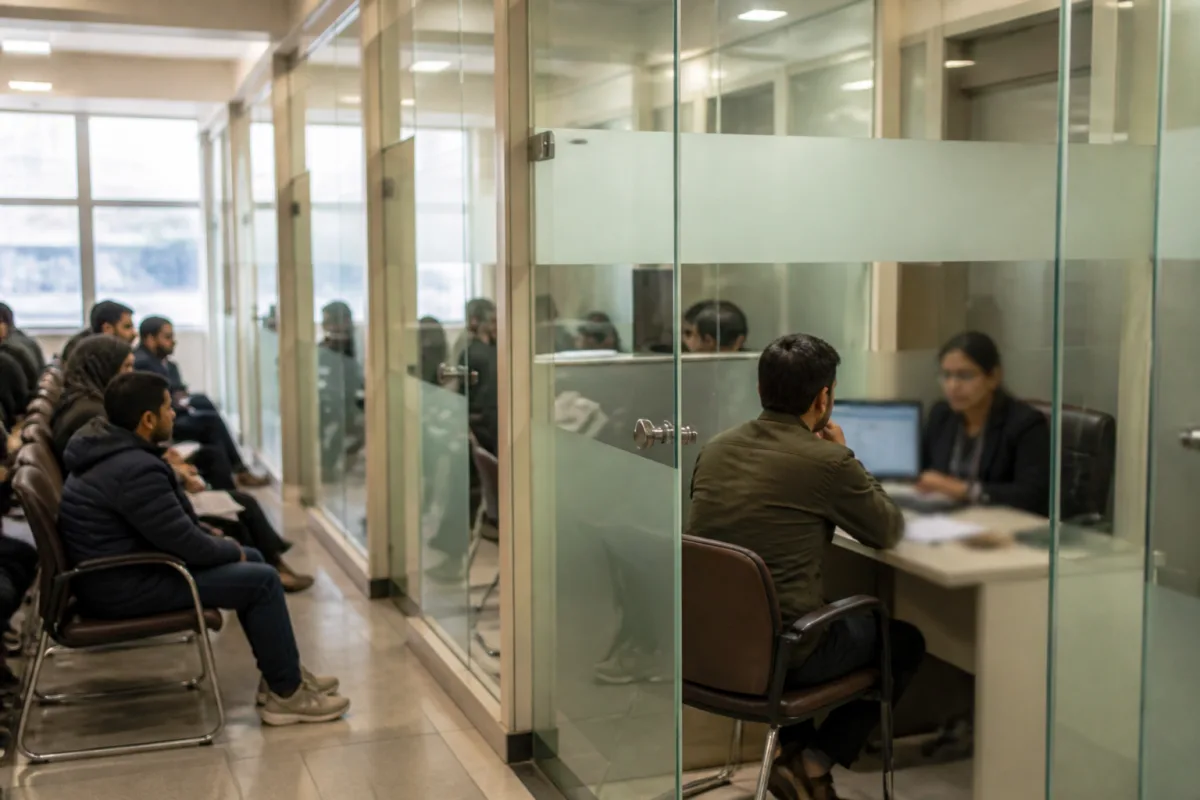
Information from the DS-160 can be pulled up and cross-checked 20 years later. Documents need to be kept, and only truthful information should be entered.
What the Consul Checks During the Interview
The review centers on a few specific questions:
- where the applicant lives, where they work, and what their family situation is;
- who stays home during the trip;
- who’s paying for the trip;
- why the applicant is traveling and for how long;
- what they’ll do after returning.
A convincing picture forms when the officer sees an ordinary life in the home country: steady employment, family, a clear purpose for the trip, a specific timeframe, and a real reason to return. The applicant’s task isn’t to invent a story but to show the real commitments that keep them at home: a child’s school year, a work schedule, contractual obligations, regular classes, or events with a specific date after returning. The consular officer needs to see a temporary trip, not the start of a move.
How to Show Concrete Commitments: A Case from Practice
A telling case: a mother and daughter from Ukraine received 10-year visas to visit a relative in the US — even though that relative was already there under humanitarian parole, meaning the applicants could initially have been viewed as potential immigrants. The approval came not from a story, but from specifics that also happened to be true.
The daughter had the start of a school year she couldn’t miss. The mother had not just a job, but a regular pilates class she taught, backed by a contract confirming it. An additional point was a performance scheduled 2 weeks after returning from the trip — it had a specific date, not a vague “things to do.”
The difference lies exactly there: not “I have a family and a job,” but an exact date, a document, and an event that physically requires the applicant’s presence at home. The consul hears general phrases from every applicant, but a concrete commitment with a date and proof is rare — and that’s what convinces.

Not “I have a family and a job,” but an exact date, a document, and an event requiring presence at home — a class contract, the start of a school year, a performance in 2 weeks.
Who Counts as Family for a US Visa
In US documents and practice, only minor children and a spouse count as family. Parents, grandparents, siblings, aunts, uncles, and nieces or nephews don’t fall under this concept — to a consular officer, they aren’t “immediate family,” so a relative of that kind isn’t on its own considered a reason to return home.
Parents, grandparents, siblings, aunts, uncles, and nieces or nephews don’t fall under this concept
The difference comes down to this: American culture prioritizes the individual and their independence over the extended family — it’s not customary there to constantly care for parents or help with nieces and nephews, so the officer perceives a mention of such relatives differently than the applicant does.
If the only close person in an applicant’s life is not a spouse or child, the obligation toward them needs to be framed not as a fact of kinship but as a specific duty. For example: the applicant cares for their mother, and that is their responsibility requiring their return — this kind of framing explains to the officer why the trip won’t become a way to stay.
Comments
Reader experience is useful, but it is not advice: check the rules on the official site.
No account needed: click Sign in, type any name, and you are done.