


If a Slovak visa keeps getting denied in your home country, one option is the territorial exception program: write to Slovakia’s Ministry of Interior, explain the denial, and apply for residency directly in a third country from the list the ministry provides.
In short
- A territorial exception means appealing directly to Slovakia’s Ministry of Interior when getting a visa in your home country isn’t working out.
- This route took about two years instead of the one year originally planned.
- The wait for a residency decision stretched to 90 days instead of the usual 30.
- Since December 2022, before filing documents you need to book an appointment in advance at the foreign police department through the electronic system.
- Insurance for renewing a residence permit is bought fresh every year, even if the permit itself is issued for a longer term.
What Is a Territorial Exception for a Denied Visa
A territorial exception is a program for people who were denied a visa and cannot apply through the usual channel. The applicant contacts Slovakia’s Ministry of Interior directly and explains the situation — for example, that they were accepted to a university but cannot get a visa in their home country. The ministry reviews the request and provides a list of countries where the applicant can request a residence permit directly, without a visa.
In one documented case, the applicant spent a year studying prep courses remotely and another year stuck at home simply because a visa could not be arranged. Only after applying through the territorial exception route did she manage to get the document and travel to the country.
By her own assessment, the scheme worked, though it was confusing, and at the time it remained the only available alternative for those stuck without a visa. The path itself turned out to be far longer than usual: she had to wait for the ministry’s response, then obtain a tourist visa, fly to a third country, and only there apply for a residence permit — with a roughly 90-day wait for a decision in her case, instead of the standard 30 days for a tourist visa. According to Slovakia’s Ministry of Interior, the official processing time for a national visa application is up to 15 days, and up to 60 days in exceptional cases.
the scheme worked, though it was confusing, and at the time it remained the only available alternative for those stuck without a visa
A territorial exception is a direct appeal to Slovakia’s Ministry of Interior when a regular visa isn’t available. The ministry provides a list of countries where you can apply for residency without a visa.
How to Apply for Residency Through a Territorial Exception: Step-by-Step
-
Write to Slovakia’s Ministry of Interior. The letter should explain the situation: the applicant was accepted to a university but cannot obtain a visa in their home country.
-
Get a list of eligible countries from the ministry. The ministry sends a list of states where you’re allowed to request a residence permit directly, bypassing the standard visa procedure.
-
Wait for the ministry’s response. At this stage the process stops — you cannot move forward without an answer from the ministry.
-
Get a tourist visa and fly to a chosen country from the list. This is an intermediate step: the tourist visa itself isn’t for living there — it’s just to physically get into a country where filing is allowed. Since December 2022, before submitting documents you also need to book an appointment in advance at a foreign police department through the electronic booking system, regardless of which specific office it is.
-
File for residency directly in that country. Only there does the option open up to apply for the residency status that couldn’t be obtained at home.
-
Wait for the residency decision. In the case reviewed, this took around 90 days — noticeably longer than the standard wait for a tourist visa (about 30 days). The legally mandated processing time for a residence permit is shorter, but in practice it can stretch out.
Territorial Exception: From Denial to Residency
Six steps from contacting the Ministry of Interior to obtaining a residence permit in another country.
- Write to Slovakia’s Ministry of Interior
- Receive a list of eligible countries
- Wait for the ministry’s response
- Get a tourist visa and fly to a country from the listsince December 2022 — advance police appointment required
- File for residency directly
- Wait for the residency decisionabout 90 days
The process has six steps and requires waiting for the ministry’s response, obtaining a separate tourist visa, and traveling to a third country — it takes far longer than a standard application.
Territorial Exception: What You Need to Do
One Applicant’s Journey: From Visa Denial to Moving to Nitra
The applicant left Moscow for Slovakia two years ago at age 20 — right after finishing high school. She originally enrolled in a language-prep year, but the visa stalled: the first year she had to study the courses remotely, and a second year she spent waiting for the visa at home, never getting it.
Only after that did she manage to get her documents through with the territorial exception — the whole process took two years total instead of the one year originally planned. By her own account, she only managed to push through such a complicated and drawn-out process because her desire to study in Slovakia was very strong.
she only managed to push through such a complicated and drawn-out process because her desire to study in Slovakia was very strong
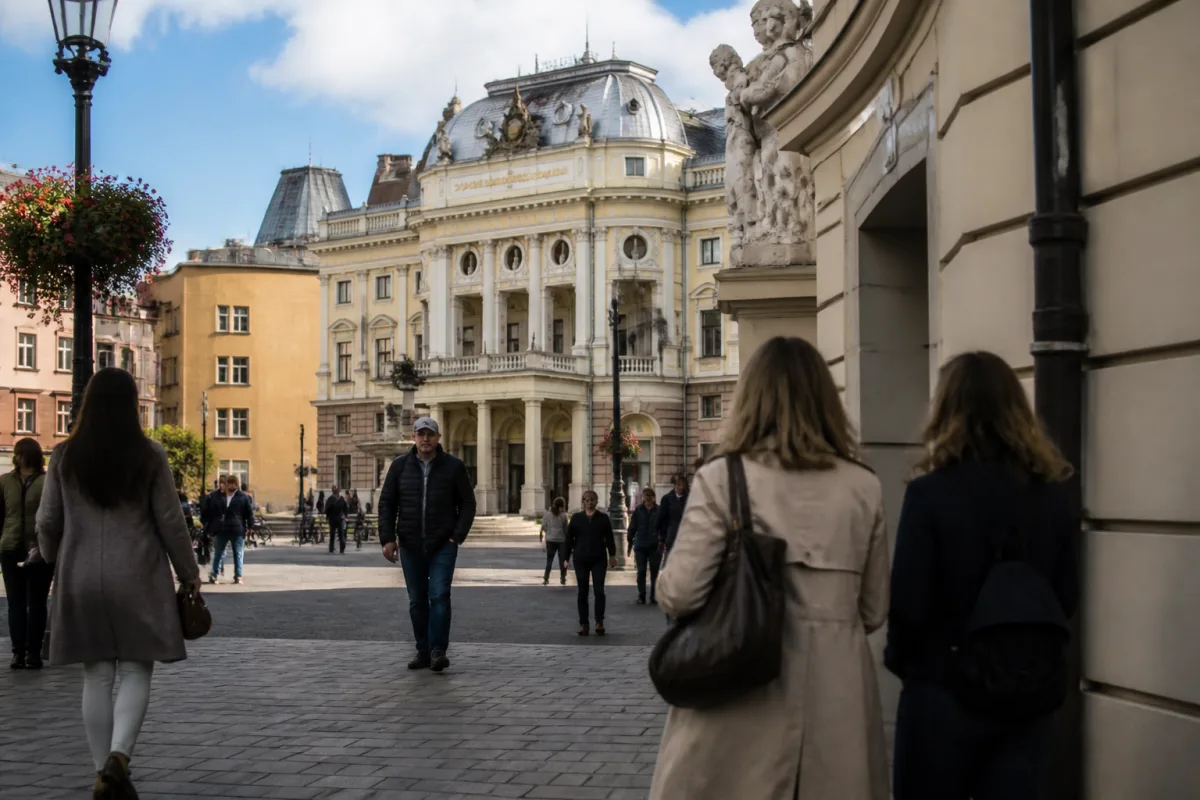
Once the visa finally arrived, things moved fast: the plane tickets were bought within a couple of days. She moved straight to Nitra, without knowing a single person in the city.
A Year of Slovak Online: Can You Really Learn It Remotely
Slovak can genuinely be learned remotely — provided the classes are regular. The language-prep year ran online, five days a week, five hours a day. It was taught by a native speaker from Slovakia who made a point of never speaking Russian — that forced full immersion into the language with no fallback to a native tongue. Looking back, she rates the teacher as very strong and considers the language year well spent.
Classes were varied with game-based platforms, and there was little rote memorization. The atmosphere was comfortable rather than exhausting, which is unusual for a language course. By her own estimate, by the end of the year her Slovak was genuinely good.
After moving to Slovakia, her language level, oddly enough, actually dropped compared to the online-study period. The reason is the intensity of practice: during the language-prep year, five hours of daily classes gave constant high-level exposure, whereas now, even while attending university, that density of practice simply isn’t there.
Renting an Apartment in Nitra: Cost and What to Watch For
In one case, a three-room apartment with fresh renovation across from the university in Nitra was rented by two people for €790 a month — €395 each. The apartment was found and signed for in a single day, at the very first viewing. The rush was due to a shortage of dorm spots: there simply aren’t enough beds for all incoming students, so part of them have to look for rentals right after arriving.
At that price, the deposit was also €790, but on move-out only €100 was returned for the both of them. Getting the rest back required a written message to the landlady pointing out that none of the damage in the apartment was the tenants’ fault.
The damage itself was typical of a not-quite-thorough renovation: the bathroom light kept failing, then the toilet started leaking, and later the bathtub began leaking too. The building was old, and the renovation was only partial — the furniture was updated, but the plumbing and wiring were left as-is, which explains the recurring problems specifically there.
The second place — a 25 m² studio — cost more for less space: €490–495 a month. Here the renovation was fully new, and over a year of living there nothing broke. This apartment was harder to find: with the housing shortage and growing student numbers, the choice was made not by the renter but by the landlady, picking from several applicants. The going market rate at the time for a similar studio was around €500 a month.

Getting your apartment deposit back may require a written message to the landlady — a verbal agreement alone might not be enough.
Insurance and Residence Permit Renewal in Slovakia
- Insurance is mandatory. Without a valid policy, you cannot renew your residence permit.
- Coverage is limited. In the case reviewed, the policy only covered emergencies — with no guarantee the insurer would pay out for an actual incident.
- It’s bought yearly. The policy has to be purchased fresh every year, even if the residence permit itself is issued for a longer period.
- The permit term grows with renewal. The first residence permit was issued for one year; the second time, for two years.
- Seeing a doctor without state insurance is its own ordeal. Getting to a specialist without it is difficult — in the case described, only a personal connection to a doctor through acquaintances made it possible. The alternative is traveling to Bratislava, where an appointment costs even more.
- Appointment cost — around €50, roughly comparable to prices in Russia, maybe a bit higher.
Residence Permit Term on Renewal
The first residence permit was issued for one year; on renewal, the term increased.
- Residence permit validity
A policy is required for renewing your residence permit, but it only covers emergencies — there’s no guarantee it will pay out for an actual incident.
Studying Culture and Tourism Management in Nitra
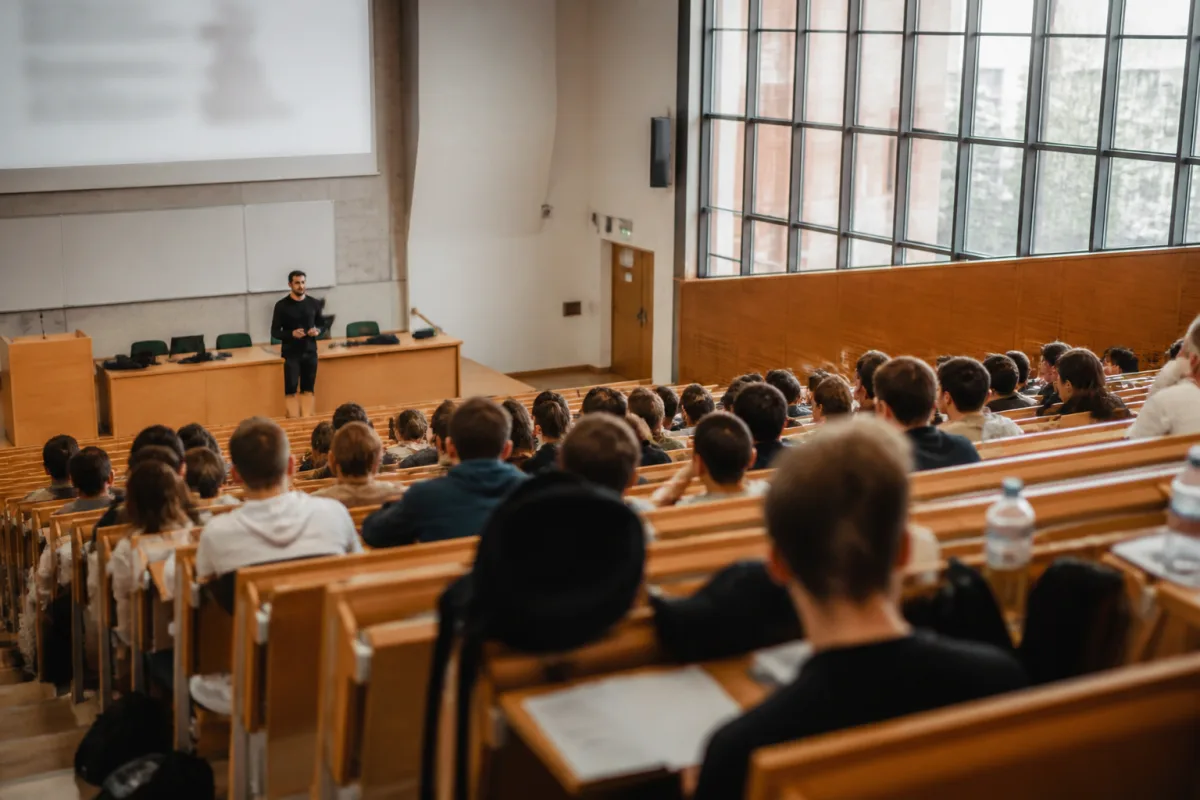
The program runs at Constantine the Philosopher University, in culture management with a tourism and culture track. It’s free, but taught in Slovak.
In the first year, most courses were culture-focused: intro to cultural studies, cultural regions of Slovakia, history of folk culture. The tourism-oriented courses included fundamentals of tourism, the basic functions of tourism, and current trends in tourism culture.
A separate block covered information technology in culture and tourism — a basic course on how a computer works. Cultural geography of Slovakia was considered one of the hardest subjects: it required memorizing every national park in the country. Presentation methods prepared students for defending papers and, eventually, a thesis. The program also included world religions, fundamentals of economics and management, and Slovak for foreigners, which is offered every year and can be retaken.
The study process leans heavily on independent work: fewer classroom hours than back home, and more free time to study the material on your own. That said, exams demand serious preparation — without it, passing them isn’t realistic.
The Erasmus+ Exchange Program for Students in Slovakia
Erasmus+ offers students two types of exchange: study and work, meaning an internship. Not many documents are needed to take part, but the paperwork and logic differ depending on which type you pick.
The study track requires going abroad for at least a semester and taking exams at both universities — the host and the home one. The work track, i.e. the internship, is simpler and allows a shorter stay — for example, two weeks, if the trip falls during the school term and there’s no wish to interrupt classes for long. A six-month stay is also possible under this system, but that length is more common among students on the study track than the work one.
Setting up the exchange happens in two stages:
- Find a host. You need an institute or employer willing to take you on, plus confirmation from them — that document is what your own university needs to process the application.
- Arrange insurance and apply for the stipend. This comes after the university has approved the paperwork — that’s also when the application for payments is submitted.
The stipend is paid per day of stay: the longer the trip, the bigger the final amount. On average the payment is a bit over €100 a day, though the figure can vary by program and by year.

Student Jobs in Nitra and Bratislava
Finding work in Nitra isn’t easy given how many students are competing for the same part-time jobs. A popular job-search site in the country is Profesia.sk, but it barely works in Nitra: replies to applications are rare, even for strong resumes. In practice, jobs in Nitra are more often found through friends or by walking into places in person with a resume in hand.
In one case, the first job was at an ice-cream café — worked there for 3 months. The next stop was a local café, where the job lasted only 3 shifts: working as a server just wasn’t enjoyable. The longest stint — six months — was at a small hotel in Nitra: shifts fit conveniently around classes, and the pay was better than at the other jobs.
working as a server just wasn’t enjoyable
In Bratislava, the picture is different: acquaintances living there found work noticeably faster. For them, the same Profesia.sk site actually worked as intended — listings were current and employers replied to applications. The difference comes down to city size: in Slovakia’s smaller cities there are plenty of students but few open jobs, while the capital has more openings available.
Frequently asked questions
What happens if you don’t renew your insurance on time
It isn’t stated directly, but the connection is clear from the process described: insurance is mandatory for renewing a residence permit, and the policy has to be repurchased every year. If the year runs out and a new policy hasn’t been bought, renewing the residence permit under the conditions in effect at that point won’t be possible.
What to do if there’s no room in the dorms and you need housing fast
In the case described, a solution was found within a single day, at the very first viewing — the apartment was rented on the spot rather than waiting around for other options. The reason for that speed is the general shortage of dorm spots for first-year students, which pushes some of them to be ready to rent right after arrival.
How to get an apartment deposit back if the landlady doesn’t want to pay it out
In the case reviewed, a written message to the landlady pointing out that the damage in the apartment wasn’t the tenants’ fault did the trick. After that message, the rest of the deposit was returned, even though the landlady had initially given back only a small portion of the sum.
Comments
Reader experience is useful, but it is not advice: check the rules on the official site.
No account needed: click Sign in, type any name, and you are done.