
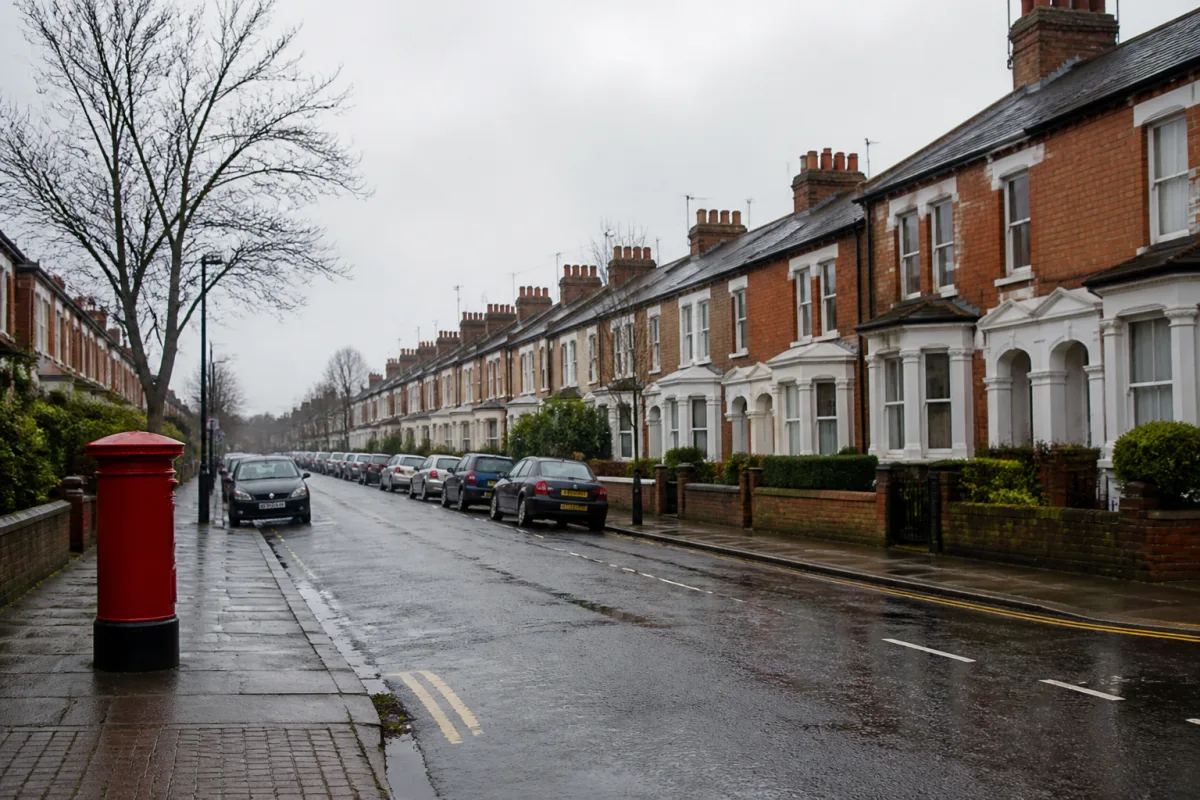

The minimum time to British citizenship is 5 years of continuous residence on a visa that leads to Indefinite Leave to Remain (ILR), while for some visa categories and for family members that period is 6 years.
In short
- The minimum time to a passport is 5 years on a 3-year visa (Global Talent, Innovator Founder) and 6 years on a 5-year or family visa.
- ILR is granted for 10 years, but a passport still requires holding that status for at least one more year, with 9 months’ presence per year.
- Over the whole route to a passport, total time spent outside the country can’t exceed 450 days — roughly a year and a half.
- The Home Office has proposed extending the route to settlement to 10 years for some work visas, but the law hasn’t passed yet.
- No minimum income needs to be proven for the switch to ILR — the amount doesn’t matter.
Why the UK timeline is simpler than in other countries
The UK usually grants a residence permit for the exact period needed to reach settlement and a passport. France, by comparison, may issue a 3-year residence card even though settlement requires 5 years of residence — leaving applicants to renew their status and risk falling short of some condition or losing the right visa category along the way. The UK system doesn’t have that gap between the length of the permit and the route to a passport.
Paperwork at the application stage is minimal: no apostilles or police certificates, which other countries typically require. Applications are processed relatively quickly — the standard service benchmark is up to 6 months, with a paid priority service available for a shorter wait. In Canada, by contrast, just waiting for a decision can take around 2 years, and the full route to a passport — including the residence permit and settlement stages — runs 6–7 years. A 3-week approval is the exception, not the norm.
Another difference: the UK doesn’t require giving up a first citizenship, unlike Spain.
A proposed law: 10 years instead of 5 for some visas
The UK is preparing a rule change that’s been under discussion for about a year and a half: the Home Office has proposed extending the route to settlement — to 10 years instead of the current 5 — for some visa categories. For now this is a proposal, not an enacted law, and the current timeline still stands. Against a broader trend toward immigration tightening seen recently in Portugal, the US, Germany, France, and Spain, this is the UK’s one comparable move.
The change mainly concerns work visas. Global Talent and Innovator visas aren’t affected: IT specialists, people working in arts, culture and science, and innovative entrepreneurs would still reach settlement in 3 years — the proposed extension doesn’t touch them.
The Home Office has only proposed extending the route to settlement to 10 years for some work visas. The law hasn’t passed — the current period is still 5 years.
Time to settlement by visa type: 3 years or 5 years
The time to settlement depends on the type of visa the residence permit was issued under.
| Visa | Time to settlement |
|---|---|
| Global Talent | 3 years |
| Exceptional Talent | 3 years |
| Innovator Founder | 3 years |
| Global Talent, Exceptional Promise (for early-career specialists) | 5 years |
| Skilled Worker Visa | 5 years |
For IT specialists, people in arts, culture and science, and innovative entrepreneurs, the route to settlement takes 3 years — one of the fastest among available visas.
On the 3-year route, you need to live in the country for 3 years while spending at least 183 days per year there — which also makes you a tax resident automatically. Meeting both conditions — 183 days a year and the set time period — throughout the whole period qualifies you to switch to settlement. The 5-year route follows the same rule: 183 days a year for all 5 years.
ILR: what it is and what’s required to get it
Settlement in the UK is called ILR — Indefinite Leave to Remain. Despite the word “indefinite” in the name, the status isn’t granted without expiry — it’s issued for 10 years.
An ILR application takes up to 2 months to process. To prove actual residence in the country, applicants typically put together a package of documents — for example, tenancy agreements or property documents, utility bills, tax returns; the exact list is worth checking against current Home Office requirements.
There’s no minimum threshold on declared income — its amount has no bearing on the switch to settlement. In fact, declaring income on that tax return isn’t required at all, though the return itself still has to be filed.
There’s no minimum threshold on declared income — its amount has no bearing on the switch to settlement.
On top of the document package, switching to ILR also requires proving English language proficiency at the required level and passing the Life in the UK test — on the country’s history and culture. The test isn’t hard, and the result arrives roughly 10 minutes after taking it.
Once all of this is confirmed, ILR status is granted for a 10-year period.

A tax return is required for the switch to ILR, but there’s no need to declare a minimum income on it — the amount doesn’t affect the decision.
What’s needed to switch to ILR
From ILR to a passport: how much longer you need to stay
After getting ILR, you need to hold that status for at least one more year before applying for a passport — and throughout that year you need to be present in the country for at least 9 months. Scammers exploit this timeframe to promise: get your residence permit, and you’ll have a passport in 4 years. In practice that’s impossible: the UK runs strict naturalisation rules, and there’s no legal way around the minimum period of holding ILR before applying for a passport — the only exceptions are certain categories, such as spouses and partners of British citizens.
Scammers exploit this timeframe to promise: get your residence permit, and you’ll have a passport in 4 years.
The final timeline is the sum of the route to settlement plus one year on ILR, with the 9-months-per-year presence requirement applying throughout:
- a visa with a 3-year route to settlement (e.g. Global Talent) → 2 more years at 9 months per year to reach ILR → 1 year on ILR with the same 9-month requirement → 5 years to a passport;
- a visa with a 5-year route to settlement, or a family visa → 1 year on ILR → 6 years to a passport.
Bottom line: 5 years is the minimum for those on a 3-year visa, and 6 years for those whose visa leads to settlement in 5 years, as well as for relatives on a family visa.
One more point worth keeping in mind: naturalisation itself is acquiring citizen status, not a passport. The passport is applied for separately, after naturalisation, which adds further time to the overall timeline.
How many years to a British passport
The final timeline depends on the type of visa the residence permit was issued under.
- Visa with a 3-year route to settlement (e.g. Global Talent)5 years
- Visa with a 5-year route to settlement, or a family visa6 years
ILR is granted for 10 years, but a passport still requires at least one more year on that status, spending at least 9 months a year in the country.
How long you can be away from the country on the way to citizenship
Besides the requirement to be in the UK for at least 9 months in each individual year, there’s a second, cumulative limit covering the entire period up to the passport — 5 or 6 years depending on the visa type. Over that whole span, total time spent outside the country must not exceed 450 days — roughly a year and a half.
Both requirements apply at the same time and independently of each other: meeting the yearly limit doesn’t absorb the cumulative one. You can technically keep to 9 months a year every single year and still breach the 450-day cap, if your absences in individual years ran close to the maximum allowed and piled up over several years in a row.
You can technically keep to 9 months a year every single year and still breach the 450-day cap
Because of this double limit, the route to British citizenship suits people who genuinely plan to live in the country throughout the whole period, not those who just want to keep a formal status.
Two presence rules on the way to a passport
Both limits apply at the same time, independently of each other.
- Presence required in each individual yearat least 9 months
- Total absence allowed over the full period (5–6 years)no more than 450 daysroughly a year and a half
Besides 9 months each year, total time away from the country over the whole route to a passport can’t exceed 450 days — both limits apply at once.
Timelines for family members
Spouses and partners in a civil partnership — the UK accepts unmarried partners too, not just spouses — get settlement regardless of which visa the main applicant holds. Children under 18 get settlement after 5 years, and that period also doesn’t depend on the parent’s visa type. Nearly all family members get a passport after 6 years.
A family member’s visa is initially issued for the same period the main applicant needs to reach settlement: 3 years for visas like Global Talent, 5 years for the rest. Once the main applicant gets ILR, relatives renew their status as dependants of that settlement — this is a new visa, the Family Visa, issued for another 2 years.
Frequently asked questions
What happens if you exceed the 450-day absence limit or fall short of 9 months in a given year — can it be fixed later?
Both requirements — 9 months in each year and a cumulative 450 days of absence over the whole period — are checked at the point of applying for citizenship. If the limit is exceeded, the qualifying residence period is effectively broken, and years that were formally compliant earlier don’t offset the overrun: a new continuous period has to be built up that satisfies both limits at the same time.
Can you apply for ILR and citizenship at the same time to save time?
No: naturalisation is only possible after the applicant has already spent at least a year holding ILR, so applying for citizenship before getting that status and completing the year isn’t possible — these are two sequential steps, not parallel ones.
Do you need to retake the English test and Life in the UK test when applying for a passport after getting ILR?
In the source material this requirement is described specifically as a condition for switching to ILR, not as a repeated step when applying for citizenship afterward — there’s no mention of having to retake it at the passport stage.
What happens if a child turns 18 before the 5-year settlement period is up?
The source material doesn’t address the situation of turning 18 while waiting for status — it only states the general rule that children under 18 get settlement after 5 years regardless of the parent’s visa.
Is it true that a UK passport can be obtained 4 years after getting a residence permit?
No, that’s a scammer’s promise. The minimum legal time to a passport is 5 years for a visa with a 3-year route to settlement and 6 years for a visa with a 5-year route or for family members; there’s no legal way around the minimum period of holding ILR before applying for citizenship.


Comments
Reader experience is useful, but it is not advice: check the rules on the official site.
No account needed: click Sign in, type any name, and you are done.