
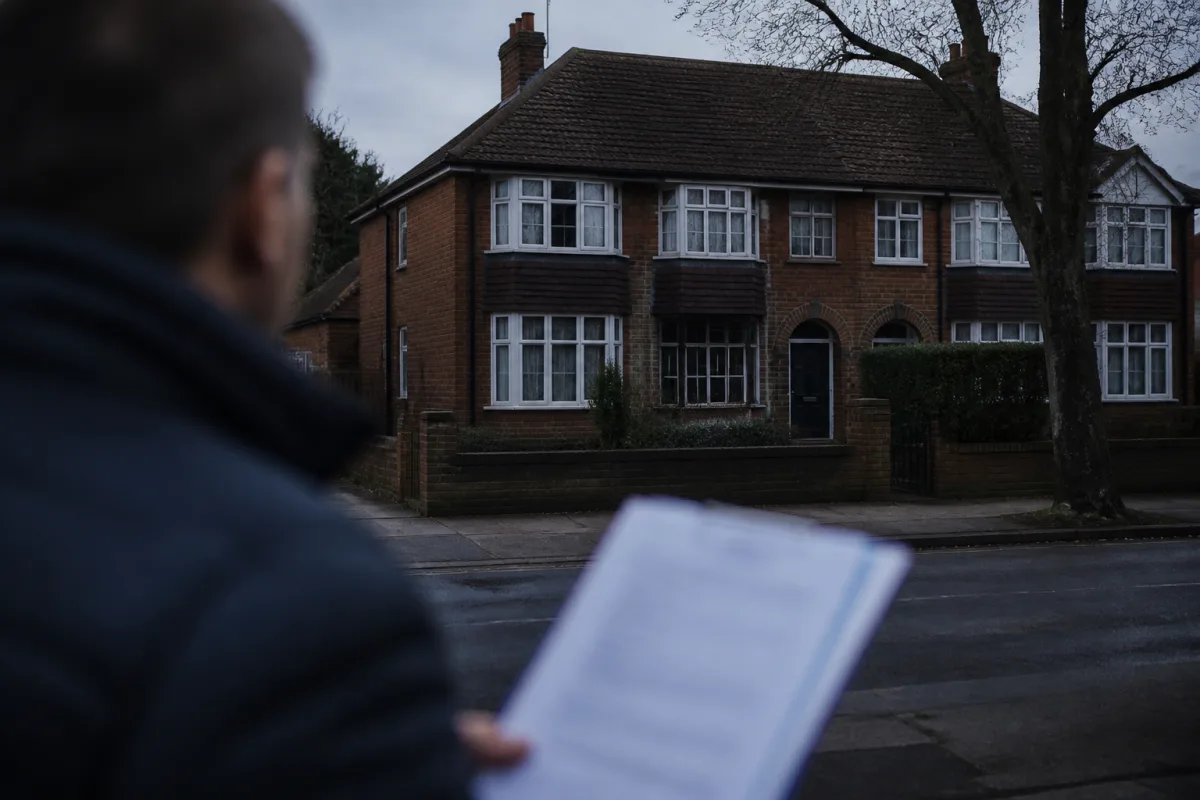

If your gas or electricity goes off in the UK, your supplier is legally required to send an engineer within 3 hours on a weekday or 4 hours on a weekend, and cannot force you onto a prepayment meter without good reason.
In short
- A supplier must send an engineer within 3 hours on weekdays and 4 hours on weekends if gas or electricity goes off through no fault of the customer.
- In May–June 2026, British Gas and OVO were fined £112 million and £10.5 million for breaching customer rights.
- A supplier cannot install a prepayment meter in a home with children under 2, people who are seriously ill, disabled people, or older people.
- When topping up a prepayment smart meter, 30–50% of the amount is automatically deducted toward debt rather than going toward gas or electricity.
- If a supplier isn’t responding to a complaint, customers can go to the Energy Ombudsman for free after complaining directly to the supplier first.
Engineer response time: 3 hours on weekdays, 4 hours on weekends
If gas or electricity goes off through no fault of yours — for example, you can’t top up a prepayment meter and restore supply yourself — your supplier must send an engineer within a maximum of 3 hours on a working day, or a maximum of 4 hours if it happens on a weekend. This isn’t a guideline or a best-effort target: it’s a legal obligation on the energy company. The clock starts the moment you call the emergency line.
The deadline applies regardless of how busy the call centre is or whether the company has spare engineers available — neither is a valid reason to push back your visit. In extreme weather (widespread storm damage, for example), a supplier can qualify for an extended response window, so the standard 3–4 hour rule applies to ordinary outages, not to severe weather events.
Some suppliers require an adult — someone over 18 — to be home during the engineer’s visit. If nobody is in when the engineer arrives, you may be charged for the call-out separately even if the fault stays unresolved, so it’s worth confirming this requirement with your supplier in advance.
Mandatory engineer response time
The clock starts the moment the customer calls the supplier’s emergency line.
- On a working dayup to 3 hours
- On a weekendup to 4 hours
If gas or electricity goes off through no fault of yours, the supplier must send an engineer within 3 hours on weekdays and 4 hours on weekends — this is a legal obligation, not a recommendation.
What to do if the supplier doesn’t show up on time
A telling example: an OVO Energy customer was told the engineer on the way to them wasn’t going to make it — their van had broken down, and there was no replacement. The call centre agent first suggested waiting until the next day, claiming only one technician covered the whole service area. That’s not a valid reason to refuse: the mandatory response window (3 hours on weekdays) applies regardless of staffing levels.
If the first answer on the phone is a refusal or a push to the next day, escalate rather than keep arguing with the agent — insist on speaking to a manager. In this case, the callback from a manager took around an hour and had to be chased. The manager finally called back around 9 pm — nearly three hours after the mandatory deadline had already passed — and confirmed an engineer had been found but would need another two hours to arrive. The engineer turned up around 11 pm, replaced the meter, and gas and heating came back on.
The argument that actually works with a call centre: failing to show up on time is a breach of a legal requirement, not company policy that can be explained away by short staffing or “this doesn’t happen often.”
Failing to show up on time is a breach of a legal requirement, not company policy that can be explained away by short staffing or “this doesn’t happen often.”
Once supply is restored, call the company separately, log a formal complaint, and ask for compensation. There are two separate payments: an automatic compensation payment for the missed deadline itself — roughly £30–£40 — and a separate “goodwill gesture” payment for the stress caused, which every company budgets for independently. In the case above, the first offer was £40 for the delay and £30 for stress — a figure worth treating as an attempt to close the complaint quietly rather than let it go to a formal review, and one you can reject if the stress and circumstances were worse than that. At that point, the complaint gets escalated to the claims review team to reconsider the amount.
If an agent refuses or pushes your visit to the next day, insist on speaking to a manager and point out that missing the deadline is a legal breach. Once supply is back, log a complaint immediately and ask for compensation: around £30–£40 for the missed deadline plus a separate goodwill payment for stress.
What to do if the engineer doesn’t arrive on time
Fines against OVO, British Gas, and ION for breaching customer rights
In June 2026, OVO was fined almost £10.5 million specifically for systematically breaching the rules on restoring gas and electricity supply to customers. Separately, the company had ignored its Priority Services Register — the list of customers with children under five, people over 65, and people with health conditions who are entitled to priority help when supply is cut. In practice, OVO’s register existed only on paper: requests from people on that list were handled the same way as everyone else’s.
British Gas was fined £112 million in fines and compensation that same May. The complaints concerned how the company treated customers who had built up gas and electricity debt: as bills rise, more customers fall into that category, and the company had, in effect, deliberately pressured the most vulnerable among them — people living alone, older people, and people with health conditions.
ION was hit with large fines over a different scheme: when customers switched gas or electricity supplier, the company failed to issue a final bill showing the customer’s credit balance, and simply kept the money instead of refunding it.
UK energy supplier fines in 2026
Amounts suppliers paid for breaching customer rights.
- OVO£10.5 millionfor breaching restoration time deadlines
- British Gas£112 millionfor pressuring debtors and forcing prepayment meters
Priority Services Register: priority help for vulnerable customers
The Priority Services Register is a list suppliers use to flag customers who need priority support if their gas or electricity is cut off. You can qualify on several grounds:
- households with children under 6;
- people over 65;
- people with health conditions, including pregnancy.
The main benefit of being registered: if supply to a household on this list goes off, the supplier is required to respond to them first, ahead of other requests.
In practice, this rule has already been broken: just like the engineer response deadline covered above, OVO’s Priority Services Register existed only on paper — the company treated these requests the same as everyone else’s, regardless of the customer’s registered status.
The ban on forcing customers onto prepayment meters
A supplier is not allowed to install a prepayment meter in a home with children under 2, people who are seriously ill, disabled people, or older people. In that situation, the supplier must consider other options and agree a debt repayment plan the customer can realistically afford.
This is exactly the right that British Gas breached on a large scale. In May 2026, the company paid a record £112 million in fines and compensation over the scandal involving forced prepayment meter installations for customers who had fallen behind on gas and electricity bills. Those hit hardest were, first and foremost, the most vulnerable: people living alone, people with illnesses (including mental health conditions), and single parents with young children.
Rather than working out an alternative to the debt, British Gas sent debt collection firms to customers’ homes — in a number of cases, they reportedly entered properties to install prepayment meters in breach of the rules.
In a number of cases, they reportedly entered properties to install prepayment meters in breach of the rules.
This right is directly tied to the push for smart meters: once a smart meter is installed, it’s technically far easier for a supplier to switch a customer onto prepayment — stop sending a regular bill and start recovering debt through top-ups instead.
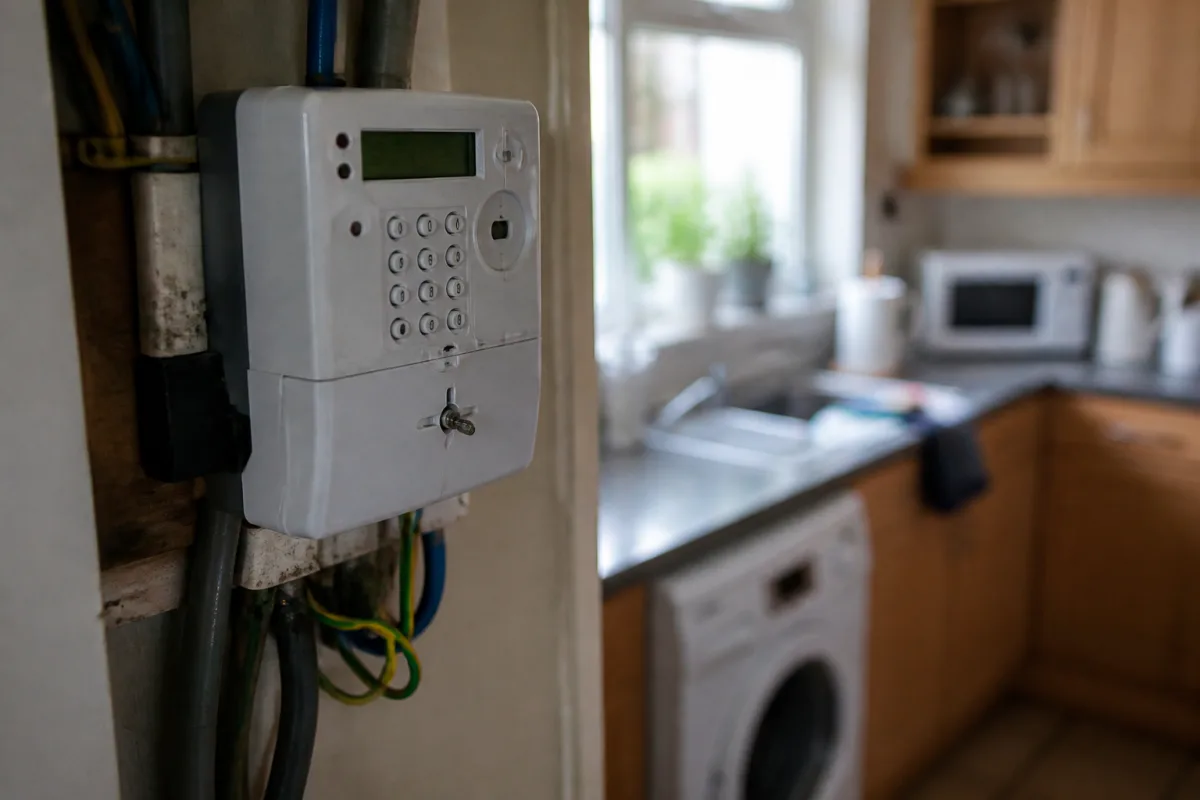
A supplier cannot force a prepayment meter on a home with children under 2, people who are seriously ill, disabled people, or older people — it must first agree a debt repayment plan the household can actually afford.
Why energy suppliers push smart meters so hard
A smart meter lets the supplier change how you pay without sending an engineer or replacing any equipment. If you used to get a bill and pay it by bank transfer, at the post office, at a local shop, or by direct debit, once a smart meter is installed, the supplier can switch you to prepayment remotely — all it takes is a setting change on the meter itself.
Full control over smart meters stays with the supplier: no visit is needed to reconfigure one. Even if a customer doesn’t belong to any vulnerable category, the supplier is legally required to consider other debt repayment options first, before moving them onto a prepayment meter.
The company’s financial interest here is direct: when a customer tops up, say, £10, 30–50% of that is automatically deducted toward the debt rather than going toward gas or electricity. The customer has no way to opt out of this — to keep using gas and electricity, they still have to top up, and a share of every top-up is taken without their input.
The customer has no way to opt out of this — to keep using gas and electricity, they still have to top up, and a share of every top-up is taken without their input.
Once a smart meter is installed, a supplier can switch you to prepayment remotely: 30–50% of every top-up is automatically deducted toward debt rather than paying for gas or electricity.
Signal failure after a meter swap: when gas or power goes off
After a meter is replaced, a signal transmission error to the new device is a fairly common fault — and it can cut off gas or electricity in the home. When customers call to report it, they’re usually told the signal has been sent but there’s been a technical glitch or system error, and it should sort itself out within 24–48 hours.
That explanation doesn’t let the supplier off the hook for sending an engineer. Losing gas or power because of a signal error isn’t the customer’s fault, so the same deadline applies as for any other outage: three hours on weekdays, four hours on weekends. A customer is not required to wait “24–48 hours for the system to sort itself out” — that’s an explanation, not a substitute for the response deadline that’s already in place.

Where to complain if the supplier isn’t responding
If the supplier’s response isn’t good enough, the next step is a complaint to the Energy Ombudsman. This is the consumer protection service that handles disputes specifically with energy suppliers, and making a complaint to it is free.
The Ombudsman only takes up a case after the customer has already complained directly to the supplier and hasn’t received a satisfactory resolution — it’s the next stage, not a replacement for that first complaint. Given how many complaints against energy suppliers have already resulted in multimillion-pound fines, going to the Ombudsman is a workable route to compensation or a fix if the supplier is digging in its heels.
If the supplier isn’t responding to your complaint, contact the Energy Ombudsman for free — but only after you’ve complained directly to the supplier and not received a satisfactory resolution.
Frequently asked questions
What happens if nobody is home when the engineer arrives?
If nobody is in during the engineer’s visit, the customer may be charged separately for the call-out even if the gas or electricity fault stays unresolved. Some suppliers require an adult over 18 to be present during the visit — it’s worth checking the exact requirements with your supplier in advance.
Can I refuse a smart meter installation to avoid the risk of being moved to prepayment?
Yes, you can decline a smart meter installation for exactly this reason: as long as a standard meter is in place, the supplier has no technical way to switch your payment method remotely, without an engineer visit and equipment replacement.


Comments
Reader experience is useful, but it is not advice: check the rules on the official site.
No account needed: click Sign in, type any name, and you are done.