


H-1B holders are increasingly considering leaving the US as the administration moves to eliminate the 60-day grace period after termination and pushes visa costs as high as $13,000 — changes that, combined with labor-market uncertainty, are eroding confidence in staying long-term.
In short
- DHS has proposed eliminating the 60-day grace period after H-1B termination — no final decision yet, the proposal is in public comment.
- In place of the court-struck fee, the administration proposed a new one — $13,000 per H-1B visa — and the final amount could still change.
- The H-1B lottery success rate rose not because odds improved, but because employers are filing fewer sponsorship petitions.
- The O-1 visa doesn’t depend on a lottery and shows about a 94% approval rate in last year’s official statistics.
- The F-1 → O-1 → EB-1 chain can lead to a green card in about 5 years without depending on employer sponsorship.
Ending the 60-day grace period for terminated H-1B workers
The Trump administration has proposed eliminating the up-to-60-day grace period currently available to H-1B workers after termination. The proposal has been filed as a draft rule and is in the public comment stage; no final decision has been made yet. This period is the only window of legal presence in the US after losing a job: within 60 days, a visa holder must find a new sponsoring employer, change status, or leave the country.
If the grace period is removed, termination would instantly mean losing legal status — with no buffer to search for a new position or prepare to leave. For H-1B holders who have lived in the US for years, in some cases up to 15 years, this means having to resolve, within days, what happens to a house that may or may not be sold, a car, and an entire life built in the country.
This measure is seen as the most alarming of all the changes under discussion: it turns any termination from a career setback into a threat of immediate removal. According to the official filing on the federal portal regulations.gov, the proposal is at the Notice of Proposed Rulemaking (NPRM) stage and is undergoing public comment — a final decision has not been made.
it turns any termination from a career setback into a threat of immediate removal
If the grace period is eliminated, termination would instantly mean losing legal status — with no time to search for a job or arrange departure.
H-1B costs climbing: from a scrapped $1,000 fee to a proposed $13,000
The Trump administration is considering a sweeping increase in H-1B visa costs. According to available information, a $1,000 fee was previously introduced for this visa and later struck down by a court, though no precise official confirmation of this history was found at the time of review. In place of the scrapped fee, the administration has proposed a new figure — $13,000. The proposal is still at the draft-rule stage and undergoing public comment; the final amount could change.
For employers, this means a sharp rise in the cost of sponsoring each H-1B employee — a sum comparable to a small company’s entire annual recruiting budget. For applicants, it adds another layer of uncertainty: the fee decision is still pending, and filing plans now have to account for the possibility that the final visa cost could end up several times higher than what was previously discussed.
Alongside the fee increase, the H-1B lottery has shifted to a wage-weighted system: candidates with higher salaries get priority, and the minimum LCA wage threshold required for the visa has been raised.
In place of the court-struck fee, the administration is proposing $13,000 per visa — no final decision yet, but filing plans should account for a possible cost increase.
Homes for sale and departing H-1B families: what’s confirmed, what’s rumor
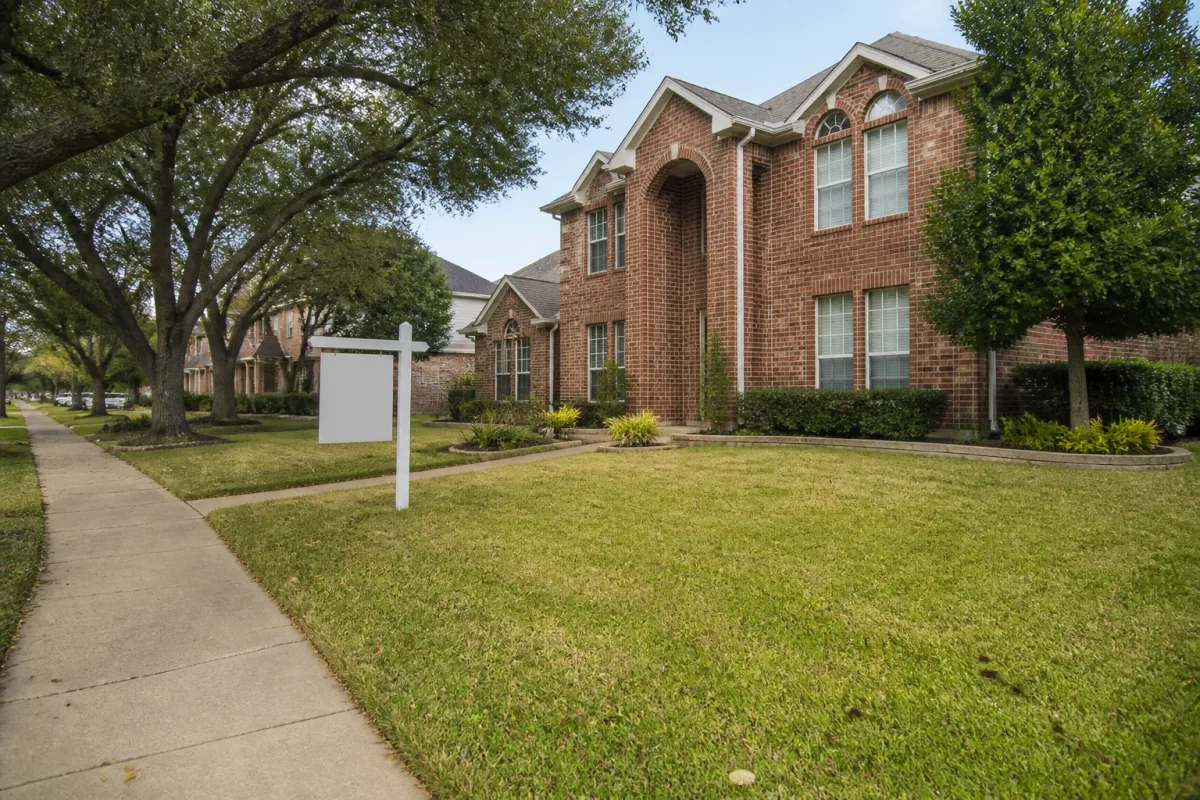
A viral social media post claimed that more than 10 H-1B families left neighborhoods near Dallas — Celina, Mesa, and surrounding suburbs are named. The figure is not officially confirmed: the source itself describes it as social media chatter, not verified statistics.
The post also includes an observation about the Dallas-Fort Worth housing market: according to its author, prices there are falling because H-1B holders, who had been driving up housing demand for the past decade, have stopped buying homes. A harsher scenario is also floated — some owners allegedly walk away into foreclosure, abandoning a house along with an unpaid mortgage rather than selling it.
The reluctance to buy property is explained this way: visa holders don’t see permanence in their US stay and feel like temporary guests for a few years at a time. A similar pattern, according to the same account, has occurred before — during the dot-com bust around 2000 and during the 2008 mortgage crisis.
The status of all this information is rumor, not fact: it is explicitly stated that there is no confirmed news on this yet.
Consulate backlogs and changes to H-4 EAD
Consular interview appointments are currently unavailable, with applicants reporting waits of up to a year. This is a separate bottleneck, not directly tied to fees or the grace period: it affects people whose petitions have already been approved but who must still obtain the visa stamp outside the US.
The H-4 EAD program — the work permit for spouses of H-1B holders — is also going through frequent changes. In the case being discussed, revisions appear so often that families don’t learn about them from the news; they wake up to discover a new change that directly affects their daily life: whether they can work, how they plan their day, let alone longer-term decisions.
they wake up to discover a new change that directly affects their daily life
Both processes — the months-long wait for a visa stamp and the instability around H-4 EAD — feed into the same sense of uncertainty created by rising fees and the proposed end of the grace period.
Why universities and students are losing interest in studying in the US
Companies still need workers, but they’re meeting that need differently: instead of hiring on H-1B, companies are shifting roles to offshore offices and outsourcing positions directly to India. The jobs open up in the same place a visa holder would have worked anyway — just without the visa and without the employee relocating to the US.
This hits universities, which for decades earned billions of dollars in tuition from international students. Some American universities have already gone bankrupt: there’s no money left for faculty salaries, and professors are being laid off. The flow of students choosing to study in the US has dropped to 40-60% of its former level — the rest either choose other countries or delay enrollment.
For those still planning to come, one thing is worth keeping in mind: arriving unprepared and expecting to “find a job once you’re there,” the way it worked just five years ago, is no longer a viable approach. Building a study and career plan around a future H-1B visa as the only route to staying in the country is a risky strategy — employer sponsorship is shrinking, and the lottery remains a lottery.

Why the H-1B lottery’s success rate rose: employers are sponsoring less often
For several years the H-1B lottery success rate was declining, then started climbing in 2024-2026 — and that isn’t a sign the visa situation is improving, it’s the opposite effect at work. The rise happened because employers started filing fewer sponsorship petitions: with the number of available slots unchanged, fewer people entering the lottery means a higher success rate for those who do apply.
The scale of the shift shows up clearly in the ratio of applicants to slots. Where there used to be 3 slots for every 1,000 lottery entries, now the same 3 slots cover just 100 entries. On paper the success rate multiplied, but the reason isn’t that odds improved — it’s that the number of people willing to enter dropped sharply.
Where there used to be 3 slots for every 1,000 lottery entries, now the same 3 slots cover just 100 entries
One reason for employers’ caution is lawsuits over favoring foreign workers over American ones. This year Tesla planned to hire several H-1B positions, and the company was sued over why US citizens weren’t hired for those roles instead. After cases like this, some smaller employers who previously sponsored H-1B workers are choosing not to take the risk and are simply no longer filing sponsorship petitions.
The H-1B lottery success rate rose not because odds improved, but because employers are filing fewer sponsorship petitions due to lawsuits and legal risk.
The O-1 visa as an H-1B alternative: no lottery, no employer required
The O-1 visa doesn’t depend on a lottery — unlike H-1B, where approval is decided by a random draw. It can be obtained without a current job and even without employer sponsorship: an applicant can file on their own behalf if they have the right skills and have built a profile that meets the extraordinary-ability bar. Building such a profile — legitimate and prepared well in advance — takes an average of 6-8 months.
Official statistics confirm a high success rate for this path: last year, out of roughly 31,000 O-1 petitions filed, 29,000 were approved, putting the government-reported success rate at 94%. With careful preparation, the figure can reach as high as 98% — a number one immigration consultant cites based on their own clients’ cases.
In practice, this means moving away from the standard F-1 → H-1B → employer sponsorship chain in favor of a different route: some applicants are now targeting a direct jump from F-1 to O-1, bypassing the lottery and the dependence on a specific employer.
O-1 success rate versus the H-1B lottery
The O-1 isn’t subject to a lottery and shows a high approval rate when the petition is carefully prepared.
- O-1 petitions approved (official statistics)94%29,000 out of 31,000 petitions filed
- Success rate with careful preparationup to 98%per one immigration consultant’s estimate
The O-1 visa doesn’t depend on a lottery and doesn’t require an employer — but building a strong profile takes 6-8 months.
Reaching a green card via O-1 and EB-1 instead of the traditional F-1-H-1B route
The traditional path looked like this: an F-1 student visa, then the H-1B lottery, then a green card sponsored by an employer through the EB-2 or EB-3 category — a route where every stage depends on a company’s decision. Instead, some applicants are building a different chain: F-1 → O-1 → EB-1, where the green card is obtained without any dependence on employer sponsorship.
EB-1 is described as the fast lane to permanent status — a green card can be obtained in about 5 years, sometimes faster. That’s notably shorter than the years-long path through the lottery and employer sponsorship.
Some applicants skip the student visa altogether: after completing a bachelor’s or master’s degree in India, they file directly for O-1 or straight for a green card, bypassing F-1 and H-1B entirely. This doesn’t mean giving up on studying in the US altogether — it means the F-1-H-1B route is no longer the only option for those planning to relocate.
The green card route via O-1 and EB-1
The alternative chain is shorter than the traditional route through H-1B and employer sponsorship.
- Building an O-1 profile6-8 months
- Green card via EB-1about 5 yearssometimes faster
Traditional route versus the alternative path to a green card
| Stage | F-1 → H-1B → EB-2/EB-3 | F-1 → O-1 → EB-1 |
|---|---|---|
| Dependence on employer | Every stage depends on a company’s decision | Green card without dependence on employer sponsorship |
| Lottery | Yes, at the H-1B stage | No |
| Time to green card | Stretched over years | About 5 years, sometimes faster |
| Is an F-1 student visa required | Yes | Can be skipped after a bachelor’s/master’s degree in India |
Based on the article’s discussion of green card paths via O-1 and EB-1.
Frequently asked questions
What should an H-1B holder do if they’re laid off right now, while the grace period is still in effect
Until the rule changes, the current 60-day grace period applies: the visa holder must use that time to find a new sponsoring employer, change status, or leave the country. The proposal to eliminate it is still a draft rule going through public comment, and no final decision has been made.
Who would pay the new $13,000 fee — the employer or the applicant
The proposal under discussion specifically concerns rising costs for the employer sponsoring an H-1B worker — the sum is comparable to a small company’s entire annual recruiting budget. The final amount, and who exactly would bear the cost, hasn’t been finalized yet.
Can someone apply for an O-1 visa if they’ve already been selected in the H-1B lottery
There’s no direct bar to this: the O-1 doesn’t depend on a lottery and doesn’t require a current job or employer sponsorship — the applicant can file on their own behalf with proof of extraordinary achievement. That makes the O-1 a separate, parallel route rather than a replacement for an H-1B process already underway.
What do you need to prepare to file for an O-1 visa on your own
A self-filed O-1 petition requires evidence of extraordinary-ability-level achievement and a finished document laying out that profile — a resume or a polished LinkedIn profile. Building such a profile typically takes 6-8 months.
Does the F-1 → O-1 → EB-1 path work for someone already studying in the US on F-1 who was planning to go through H-1B
Yes, this route is considered specifically as an alternative for people already on F-1 who had planned to go through H-1B next: instead of the lottery and employer sponsorship, it leads to an EB-1 green card without dependence on a specific company, in about 5 years or sometimes faster.
What happens to people who already bought a home near Dallas if demand from H-1B families really is dropping
There’s no confirmed data on this: the viral post about falling prices and some owners walking into foreclosure is explicitly described as a social-media rumor, not verified statistics, so drawing conclusions about the fate of specific homeowners would be premature.



Comments
Reader experience is useful, but it is not advice: check the rules on the official site.
No account needed: click Sign in, type any name, and you are done.