

Since September 10, 2026, a new BIA precedent (Metro VSA) has allowed government attorneys to bring unrelated asylum cases into a hearing and argue for denial if the respondent’s case matches them in facts, phrasing, or recurring patterns.
In short
- The Metro VSA precedent lets government attorneys bring unrelated cases into a hearing to search for matches with the respondent’s case
- In the Indian national’s case, the attorney presented 12 similar cases; for Russian-speaking cases, that number could reach 900
- A match in phrasing, events, or storyline with unrelated cases is enough on its own for a denial — intent doesn’t need to be proven
- Economic harm from a seized or ruined business, without a connection to a protected ground, is generally not recognized as persecution
- What makes a story unique is personal detail about experience and motivation — not the events themselves, like a rally or a detention
What the Metro VSA Precedent Established
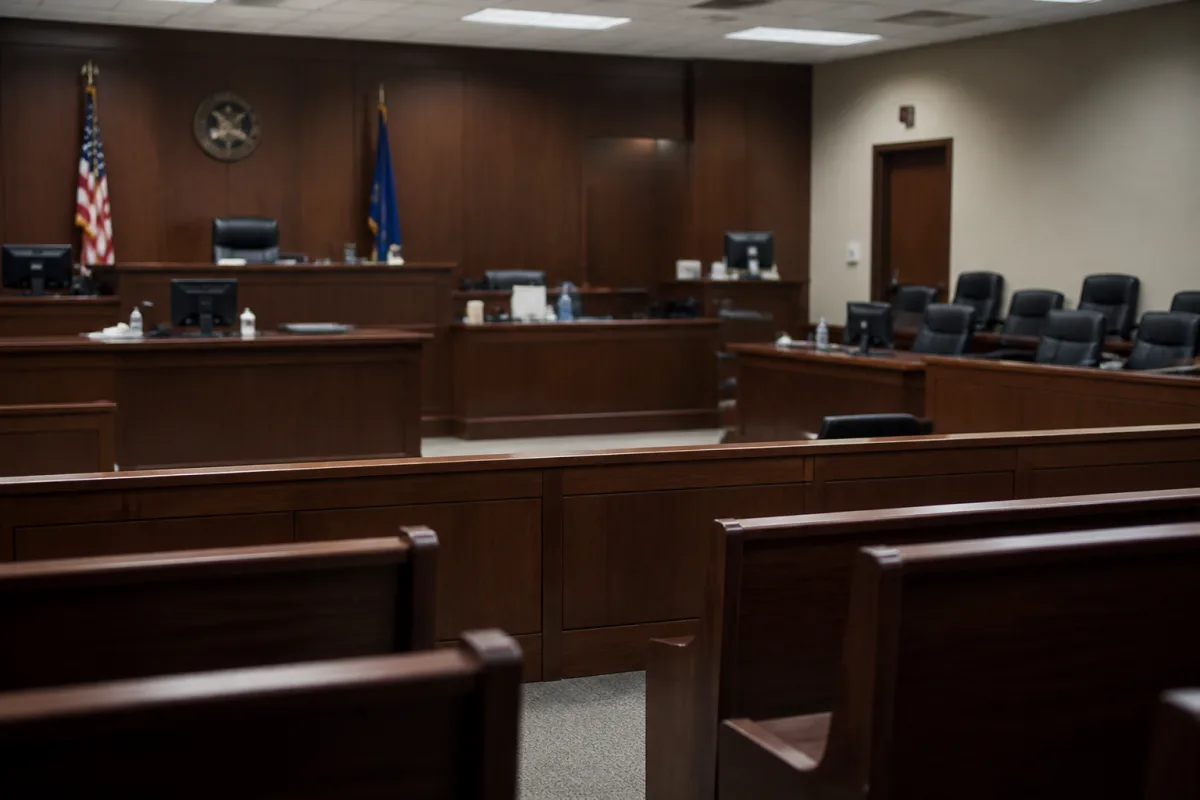
As of September 2026 (at the time this material was prepared), government attorneys gained the right to bring materials from other, unrelated asylum cases into a hearing — as long as personal data in those records stays confidential. This is a direct result of the Metro VSA precedent issued by the Board of Immigration Appeals (BIA).
In practice, this means a government attorney can walk into a hearing with a stack of unrelated case files and point to a specific match: the same event, a similar description of a threat, an identical account of a local officer’s visit. Facts, events, descriptions, and even specific phrases can be pulled from unrelated cases to cast doubt on the facts, dates, and events laid out in the case currently being heard.
If the attorney finds such a match, that match alone becomes grounds to treat the case under review as not credible: the respondent’s credibility is called into question, and on that basis the judge is pushed toward a denial.
If the attorney finds such a match, that match alone becomes grounds to treat the case under review as not credible
How Overlaps Between Cases Undermine a Respondent’s Credibility
The basis for finding a case not credible is a match between the case being heard and the materials the attorney brought from unrelated files. Overlaps are weighed on several levels: individual words, specific phrases, whole passages of text, and even recurring, formulaic events that repeat from case to case.
If such overlaps are found, the judge is entitled to treat the case being heard as not credible — which calls the respondent’s own credibility into question. Formally, that is enough to issue a denial: the attorney does not need to prove the respondent deliberately copied someone else’s story; the mere fact of textual or narrative overlap with other cases is sufficient.
A judge only needs to find a match in words, phrasing, or storyline with an unrelated case to treat a case as not credible. The attorney does not need to prove intentional copying.
The Indian National’s Case Behind the Precedent
The Metro VSA precedent grew out of the case of a respondent from India who was caught using the substance of someone else’s case. He had been sold someone else’s story — or a template story — about circumstances supposedly qualifying him for asylum, with his name simply inserted into the text. At the hearing, he presented this case as his own: he described the events as though they had happened to him, even though he had not actually been part of them.
The case was found not credible precisely because of this mismatch: the facts in the story belonged to someone else, not to events the respondent had actually lived through. The result for him was a denial in court. The practical takeaway from this case: if someone buys a ready-made story and inserts their own name into it, but the described facts never actually happened to them, the court is now more likely than not to issue a denial on that very basis.
How Attorneys Find Matches: From 12 to Hundreds of Cases
At the hearing for the Indian national’s case, the government attorney brought in 12 similar cases at once — something made possible precisely because case texts are now run through software that analyzes wording and looks for repeating patterns and templates. This automated analysis is already operating at full capacity, and the scale of the collection can grow sharply: it’s entirely possible that in a Russian-speaking respondent’s case, the attorney could bring not 12, but 900 similar cases to a hearing.
it’s entirely possible that in a Russian-speaking respondent’s case, the attorney could bring not 12, but 900 similar cases to a hearing
And it isn’t only about textual similarity. Even if the wording in a particular case sounds unusual and unique, the attorney can still argue that the events and facts described mirror what has already appeared in 100, 200, 300, or 500 other adjudicated cases. In other words, unique phrasing doesn’t save a case if the underlying story itself is a recognizable template.
The Typical Post-Soviet Respondent’s Case — Why It’s at Risk
The typical narrative among respondents from the former Soviet Union is built from a set of recurring elements: a person watches a YouTube exposé about government corruption, then starts supporting the opposition — attending a picket or a rally. A detention follows, sometimes involving physical force, a conversation at a police station, a threat of criminal charges, and an arrest lasting up to a day or slightly longer. After release, the pressure continues: a local officer shows up, threatening phone calls follow, or someone waits by the entrance and beats the respondent.
A second common variant: a person travels to the U.S. on an existing tourist visa for a family vacation, and while there, learns that back home law enforcement is looking for them through relatives or calling to ask about their whereabouts. That is the moment the respondent decides returning is unsafe and files for asylum.
A third element that recurs often regardless of the backstory: after arriving in the U.S., the respondent starts transferring money to opposition activists or human rights defenders. This particular step alone can cast doubt on the entire case, since it shows up identically across a very large number of filings.
A separate template narrative belongs to business owners: their business allegedly drew the attention of corrupt law enforcement officials who demand money, try to seize the company, or drive it into bankruptcy. Under U.S. asylum law, purely economic harm — without a proven connection to one of the protected grounds (race, religion, nationality, political opinion, or membership in a particular social group) — is generally not recognized as persecution. So the mere fact that a business was seized or ruined, absent that connection, rarely serves as grounds for approval.
If, after arriving in the U.S., a respondent starts sending money to opposition activists or human rights defenders, this step alone repeats across a large number of filings and can undermine a case’s credibility.
AI-Written Narratives — Another Path to Denial
Some respondents hand off writing their persecution narrative to an AI tool, feeding it only the bare facts of their situation — and the resulting text is easily recognizable by its distinctive style. At consultations, this is obvious right away: the narrative reads not as a personal account but as AI-processed text, even when the respondent insists they wrote it based on their own facts.
The problem is that an AI tool, when fed similar inputs, produces similar phrasing — almost word for word matching the stories of other people who used the same service before or will use it later. The government’s screening system works on the same principle in reverse: the attorney-side software looks for matching phrasing across cases and specifically flags these generated patterns. The end result: a respondent can be denied under the Metro VSA precedent simply because their text was AI-written, not because the underlying story itself is untrue.
A narrative written by AI is recognizable by its distinctive style and nearly matches the wording of other respondents’ texts — and the government’s screening software finds this just as easily.
How to Make a Case Unique and Avoid Denial
What makes a persecution narrative unique is not the events themselves — a rally, a picket, a detention repeat across hundreds of filings — but the descriptive details absent from other cases. If a respondent was attacked and beaten, the account should specify exactly who did the beating, how it unfolded, what the respondent felt in the moment, and what mark it left afterward: internal experiences like these don’t repeat in other people’s cases.
Another source of uniqueness is a personal trigger for taking action. For example, if what pushed someone toward opposition activity wasn’t just a video about corruption seen online, but a case where corruption directly touched a relative or someone the respondent knew personally — that situation is worth describing separately.
Unflattering details work in your favor
Paradoxically, a persecution narrative that reads as too flawless can look more suspicious than one with a few rough edges. If a rough edge can be explained rationally, it shouldn’t be removed: an inconvenient detail, left in the text and framed well, denies the attorney a chance to use it as an argument against granting asylum.
a persecution narrative that reads as too flawless can look more suspicious than one with a few rough edges
A separate requirement concerns timing: at the time of the interview or hearing, the case needs to be current — meaning the events described should extend up to a date close to the interview or hearing itself, not trail off long before the proceeding.
A rough edge in the story that can be explained is better left in: it denies the attorney an argument and makes the case look more credible than a flawless account.
Frequently asked questions
What should I do if my persecution story partially overlaps with someone else’s case, but the events genuinely happened to me
The Metro VSA precedent works through matches in phrasing and narrative elements, not through proof of direct copying. Even if an event actually happened but is described using formulaic phrases that overlap with other cases, a judge is formally entitled to treat that as grounds for doubt. Because of this, real events are worth describing through personal detail and experience rather than generic phrasing — this lowers the risk of a textual match.
Does the Metro VSA precedent apply only to cases from the former Soviet Union, or to all countries
The precedent concerns the asylum adjudication process in general and isn’t limited to a specific nationality: the right to bring in unrelated cases as grounds to doubt credibility applies to any respondent. Post-Soviet respondents end up at risk more often not because of the rule itself, but because their persecution narratives are built from a recurring set of template elements that automated analysis easily recognizes.
What if I already filed an AI-written narrative and can’t rewrite it before the hearing
This question goes beyond what the material covers: it explains why AI-generated text is risky, but doesn’t provide guidance for what to do if the filing has already been submitted.
If a business was seized with no political or religious motive behind it, is there still a chance to qualify for asylum on another ground
Purely economic harm from a seized or ruined business is not, on its own, recognized as persecution under U.S. asylum law — a proven connection to race, religion, nationality, political opinion, or membership in a particular social group is required. If such a connection exists and can be shown in the case, the case is built not on the loss of the business itself, but on that connection.
Comments
Reader experience is useful, but it is not advice: check the rules on the official site.
No account needed: click Sign in, type any name, and you are done.