
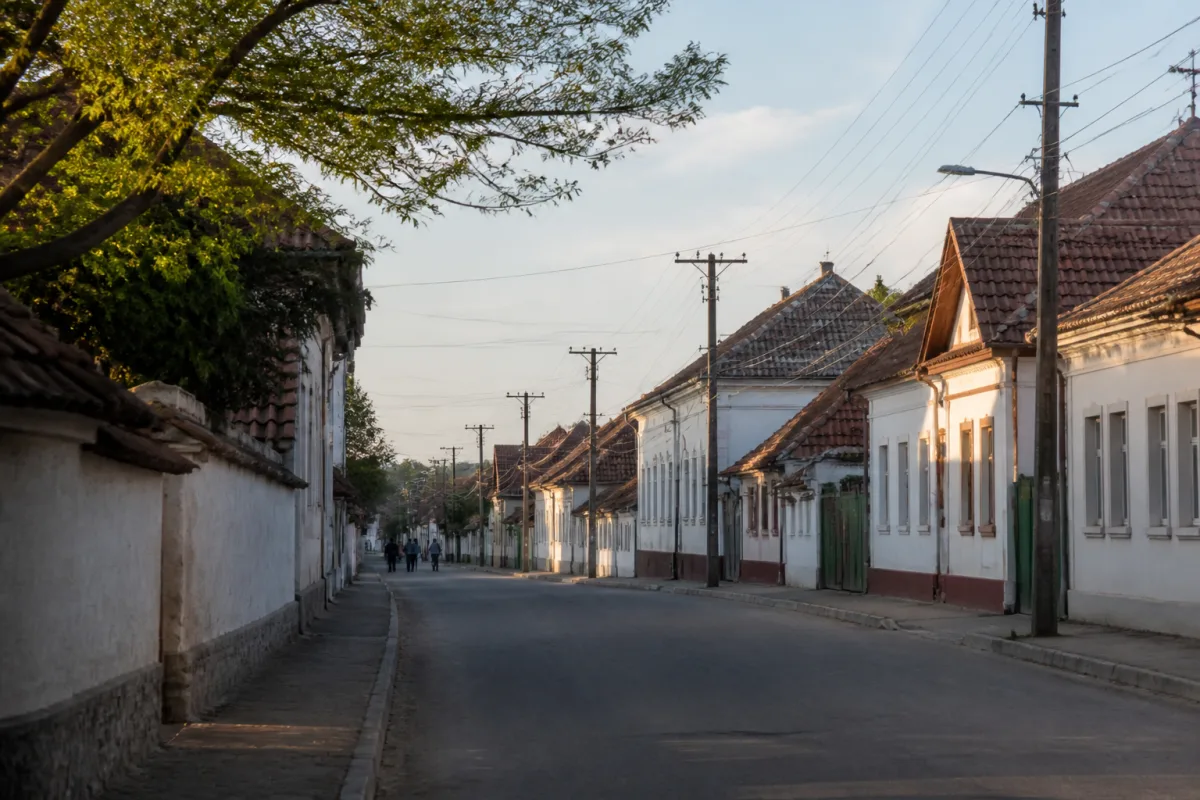

Ukrainians whose ancestors up to the third degree of kinship were of Bulgarian origin may apply for Bulgarian citizenship through a simplified procedure. Article 15 of the Bulgarian citizenship law makes it possible to obtain status without five years of residence in the country; the main condition is documentary confirmation of the family link to a Bulgarian ancestor.
Where Ukrainians’ Bulgarian roots come from
From the late 15th century and over the following centuries, Bulgarians migrated en masse to what is now Ukraine, fleeing wars and persecution in the Balkans under Ottoman rule. A significant share of the settlers took root in Bessarabia, in what is now Odesa region, and later Bulgarian settlements also emerged in the Azov region.
The settlers founded villages, farmed the land, and preserved their language and traditions. State borders, place names and documents changed, but the Bulgarian origin of many families survived across the generations that followed. That is why Ukrainian citizenship and a birthplace in Ukraine do not rule out Bulgarian ancestors.
Where to look for Bulgarian family roots
Most historical Bulgarian settlements are linked to the southern regions of Ukraine. Above all this means Odesa region, especially historical Bessarabia, where Bolhrad and the surrounding villages are among the best-known centres of the Bulgarian community. The second important region is Zaporizhzhia region, where in the second half of the 19th century part of the Bulgarian settlers moved from Bessarabia, forming communities in the districts of Berdiansk and Melitopol.
Historical Bulgarian settlements also existed in what are now Mykolaiv and Kherson regions and in Crimea. However, looking for Bulgarian ancestors only in the south would be a mistake: during the 20th century families moved to other cities, so a person who lives today in Kyiv, Lviv, Dnipro or Kharkiv may also be a descendant of Bulgarian settlers. What matters is not current place of residence but the history of the family’s earlier generations.
Conditions for simplified naturalisation under Article 15
What must be confirmed to obtain Bulgarian citizenship by descent
- Degree of kinshipup to and including the third degreeparents, grandparents, great-grandparents
- Proof of originofficial documentsa statement of origin alone is not enough
- Residence requirementnot applicablethe standard 5 years of permanent residence is waived for this basis
- Review of applicationcompetent authoritieshaving an ancestor does not guarantee automatic citizenship
Signs of Bulgarian origin in family history
Information about Bulgarian origin is sometimes kept within a family for many generations, and sometimes it comes to light by chance — while looking through old birth certificates, family archives or a grandmother’s or grandfather’s papers. One clue may be an entry recording the Bulgarian nationality of an ancestor. Another circumstance is a family’s origin from a locality where a substantial Bulgarian community historically lived. Family stories, old photographs or surnames typical of the Bulgarian population may also point to possible roots.
None of these signs on its own guarantees that citizenship will be granted. A Bulgarian surname is not legal proof of origin, and an ancestor’s birth in Bolhrad does not yet mean that he was an ethnic Bulgarian. Such circumstances may prompt research into family history, but a legal conclusion must rest on proper documents.
Conditions for simplified naturalisation under Article 15
Article 15 of the Bulgarian citizenship law provides a simplified procedure for naturalisation by descent. To rely on this basis, one must confirm a family link to at least one ancestor of Bulgarian origin in the direct ascending line up to and including the third degree of kinship — that is, parents, grandparents, and great-grandparents.
The law requires not merely a claim of Bulgarian origin but its confirmation by official documents. The applicant must also meet other requirements of the legislation that apply to this procedure. The main advantage of the simplified route is that the standard requirement of prior five years of permanent or long-term residence in Bulgaria does not apply to such applicants. However, having a Bulgarian ancestor does not mean automatic acquisition of citizenship: the competent authorities check the application, the documents and the presence of the grounds set by law.
The main difficulty — documentary proof
In practice, the main difficulty lies not in establishing the family history but in documenting it, especially when it concerns ancestors born at the end of the 19th or at the beginning of the 20th century. Over that time territories changed state affiliation, archival institutions were reorganised, and personal data were recorded in different languages, so one ancestor’s first or last name may have several spellings across different documents. Some family papers may have been lost in wars and resettlements.
Sometimes a family knows well about its Bulgarian origin but lacks documents that confirm it. In other cases the necessary information is kept in archival records whose existence the applicant did not even suspect. That is why it is important not only to establish the origin but also to check whether the family link can be documented in line with the requirements of Bulgarian law.

Why Bulgarian citizenship means EU citizenship
Acquiring Bulgarian citizenship also means acquiring citizenship of the European Union, which opens opportunities to live, work, study and do business in other EU states. A Bulgarian citizen can move to another EU country for work or study, using the right of free movement. For families with children this matters for long-term planning of education and residence, because Bulgarian citizenship is not a temporary permit that must be periodically renewed.
The possibility of obtaining citizenship depends on specific legal grounds, and citizenship granted to one family member does not always automatically extend to others. That is why it is worth checking not only the options of the individual applicant but also the prospects of the whole family.

Comments
Reader experience is useful, but it is not advice: check the rules on the official site.
No account needed: click Sign in, type any name, and you are done.