


On November 16, 2026, the federal district court for the District of Massachusetts substantially vacated the DHS rule setting a fixed admission period for F-1 students and J-1 exchange visitors. This means the older duration of status (D/S) system continues to apply — without a calendar departure date tied to the academic or exchange program. You do not need to file for an extension of stay solely because the rule was vacated.
What the court changed
On November 16, 2026, the U.S. District Court for the District of Massachusetts reviewed the case on the merits and vacated the final DHS rule under the Administrative Procedure Act. This ruling differs from the earlier one, issued on September 14, 2026, which only postponed the rule’s effective date while the case was pending.
The rule was published on July 17, 2026, and was set to take effect on September 15, 2026. It replaced duration of status with fixed admission periods tied to the program document, with a four-year limit and a 30-day departure period for F and J nonimmigrants. It also required a separate application to DHS to extend stay beyond the fixed period. These requirements remained a proposal — they never took effect.
Who this affects
This guide applies to F-1 students and J-1 exchange visitors, including those in practical training, their dependents (F-2, J-2), and the families and staff of schools and programs that support them.
ICE has stated that its implementation messages dated August 12 and 24, 2026 are barred by the court and stayed — they should not be relied on or followed. USCIS is currently accepting the August 28, 2024 edition of Form I-539 and the August 21, 2025 edition of Form I-765, not the September 15, 2026 editions.
What D/S on the I-94 means and why it matters
Duration of status (D/S) is a period of stay tied to study, training, or participation in an exchange program, not to a calendar date. For an F-1 student, this is usually the period of a full course of study at a SEVP-certified school or authorized post-completion practical training, provided the student makes normal progress and maintains status. For a J-1 visitor, it is participation in the program described on Form DS-2019, provided the program requirements are met.
An I-94 marked D/S does not give a specific departure date. The program end date on Form I-20 or DS-2019 is not the same as the visa stamp’s expiration date or a fixed date on the I-94. F-2 and J-2 dependents have their own I-94 records, which do not necessarily match the principal’s record — check them separately.
What to do now: status, extensions and travel
If you maintain F-1 status and are making normal progress, you do not need to file with USCIS for an extension of stay solely because the rule was vacated. If your program will not finish by the date on your I-20, contact your DSO (the school official who manages student immigration records) about an allowable extension before the end date — the school handles this through SEVIS.
To extend J-1 status, contact the sponsor’s Responsible Officer — Form I-539 is not used for this; the sponsor issues an updated DS-2019.
An F-1 student who completes a program or authorized practical training generally has 60 days to prepare to depart or take the next step (without the right to work). A J-1 participant has 30 days after completing the program. If an F-1 student is authorized to withdraw early, they have 15 days to depart; without prior DSO authorization this period does not apply and status is lost.
Before travel, check your current I-94, confirm departure documents with your DSO or Responsible Officer, and remember that D/S does not guarantee re-entry — the decision rests with U.S. Customs and Border Protection.
What this means for Ukrainians in F-1 and J-1 status in the US
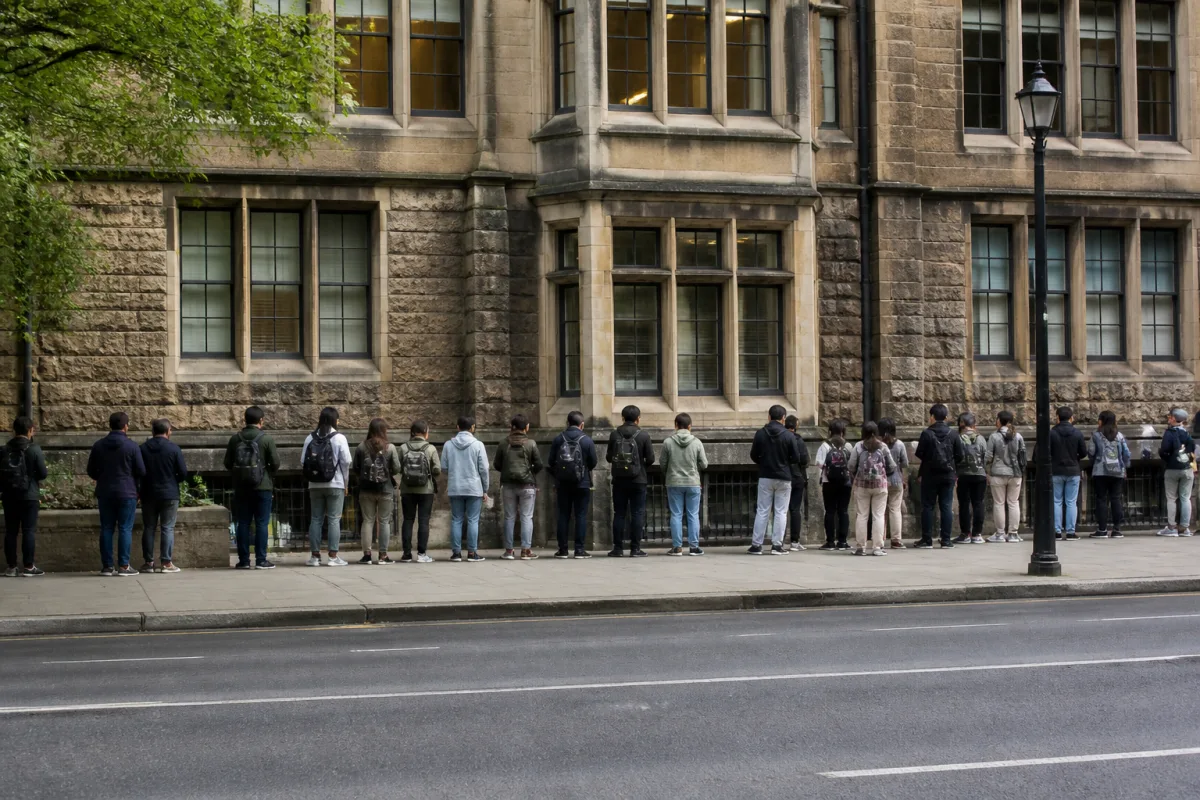
The decision directly affects Ukrainians studying in the US on F-1 or taking part in J-1 exchange programs, including those in OPT or STEM OPT. It does not concern temporary protected status, U4U, or humanitarian parole — these are separate statuses with different rules.
What to do now: check your current I-94 and compare it with the date on your I-20 or DS-2019; do not file any extension applications solely because of the news about the vacated rule; if your program is ending, contact your DSO or Responsible Officer in advance — before the end date, not after; before any trip, confirm that your documents are aligned with your DSO, since D/S does not guarantee re-entry.
The main risk is confusing the rule proposal, which never took effect, with the requirements in force. Some students and exchange visitors may have already started preparing for fixed periods or a 30-day departure under the new rule — there is no need to do this, as the existing 60-day and 30-day periods for F-1 and J-1 respectively still apply. If you suspect a status violation or a denied application, get individual advice from a lawyer, since the consequences of unlawful presence depend on the specific circumstances of your case.
Frequently asked questions
Does the government’s appeal mean the fixed period is back in effect?
No. Filing an appeal does not revive the vacated rule. The government generally has 60 days after a judgment to file an appeal in a civil case, and a stay of the ruling requires a separate request to the court.
Do I need to file for an extension of status because of this court decision?
No, if you maintain F-1 or J-1 status and are making normal progress in your program. You do not need to file an extension of stay solely because the rule was vacated.
What should I do if my I-94 shows a fixed date instead of D/S?
Contact your DSO or the J-1 program’s Responsible Officer to verify the record and get advice before traveling or filing any application related to your status.
Comments
Reader experience is useful, but it is not advice: check the rules on the official site.
No account needed: click Sign in, type any name, and you are done.