


USCIS is increasingly denying N-400 naturalization applications over tax problems — late payment penalties, extensions, and payment plans — from the past 3 to 5 years, treating them as a failure to meet the good moral character requirement.
In short
- A late tax payment penalty within 3-5 years of filing N-400 can become grounds for denial, even though the law doesn’t make it automatic.
- An extension pushes back the deadline to file your return, but not the deadline to pay — the amount owed is still due April 15.
- The good moral character period is 5 years under the general rule and 3 years when filing based on marriage to a US citizen, counted from the filing date.
- A good moral character denial doesn’t trigger removal; a new N-400 can be filed right away once the required period has elapsed, with no extra waiting time.
- A denial can be appealed using Form N-336, which carries a higher fee than the original N-400 filing.
Why USCIS is denying more N-400 applications over taxes
On closed immigration attorney forums, a growing number of N-400 denials tied to applicants’ tax history are being reported. This points to an unofficial USCIS practice: the agency is denying applications when any tax problems surface within the 3-to-5-year period preceding filing. Which period applies depends on the basis for the N-400: applicants filing under the general five-year rule must show good moral character for five years, while applicants filing under the three-year rule — based on marriage to a US citizen — only need to cover three years.
This practice isn’t codified anywhere official, but according to attorneys discussing it on professional forums, it has recently been showing up at a growing number of USCIS field offices. When serious tax problems fall within the review period, the odds of N-400 approval are described as close to zero — and this no longer looks like an isolated office policy but a broader trend.
When serious tax problems fall within the review period, the odds of N-400 approval are described as close to zero
What kind of tax problems trigger a denial: late filing, extensions, payment plans
A common scenario: the applicant misses the April 15 filing deadline, requests an extension, and files the actual return months later. The tax transcript may then show a late payment penalty. USCIS can treat that penalty as a failure to comply with applicable laws — and if it falls within the three- or five-year window relevant to that applicant’s N-400 category, count it as an event undermining good moral character. In practice, a single such penalty can be enough for a denial, even though officially the decision remains at the officer’s discretion rather than being automatic.
The key mistake is assuming that an extension also postpones the duty to pay on time. An extension only applies to filing the return, not to paying the tax owed: the amount due to the government must be paid by April 15 regardless of whether the return itself has been filed. Filing an extended return after the original deadline does not equal fully meeting tax obligations, and USCIS uses that gap as grounds for denial.
The key mistake is assuming that an extension also postpones the duty to pay on time
A payment plan works on the same logic: if the balance isn’t paid in full by the filing date and is instead split into installments, the tax obligation is technically unmet as of that date. Attorneys on closed forums note that simply having a payment plan appears to have become grounds for an N-400 denial on its own — something that wasn’t the case before. USCIS has not published any official confirmation of this policy shift.
Previously, a different rule applied: a payment plan did not block naturalization as long as the applicant kept up with every installment on time. At the N-400 interview, applicants needed to show proof that each payment had been made up to and including the day of the interview — and as long as that condition was met, the payment plan wasn’t treated as an event damaging good moral character. This was precisely the strategy attorneys recommended to clients for years: set up a payment plan, start making payments, and file for naturalization right away.
An extension to file your return does not extend the deadline to pay your tax. The amount owed must be paid by April 15 regardless of when the return itself is filed — otherwise a penalty shows up on the tax transcript, which USCIS may treat as a good moral character violation.
How the good moral character period is calculated for N-400
The good moral character period depends on the basis for filing N-400: the general rule requires showing 5 years of good character, while the three-year rule (filing based on marriage to a US citizen) requires 3 years. Both periods are counted from the date USCIS receives the application, not from the interview date or the decision date.
This means a tax-related event that happened close to the filing date can fall inside the review period even if several years have passed by the time of the decision. For example, if an event USCIS treats as bad character occurred in 2021 and the application is filed in 2026 — but a few months short of the full 5-year mark — that is grounds for denial, even if USCIS doesn’t issue its decision until 2027.
Because of this rule, a denial doesn’t necessarily mean a long wait before refiling: if the required period (say, five years under the general rule) has already passed by the time a new N-400 is filed, with no new violations, the applicant can refile immediately after a denial — the law doesn’t impose a separate waiting period.
Good moral character review period by N-400 filing basis
The period is counted from the filing date, not from the interview or decision
- General basis5 years
- Marriage to a US citizen3 years
The good moral character period is 5 years under the general rule and 3 years when filing based on marriage to a US citizen. The clock runs from the N-400 filing date, not from the interview or the decision.
Other reasons for N-400 denials beyond taxes
One documented case involved an N-400 denied over a traffic violation from 15 years earlier — a simple speeding ticket or running a red light, no DUI, with a fine of around $100. The fine had been paid immediately, and the applicant brought a DMV printout to the interview confirming her driver’s license had remained in good standing the whole time. The officer wasn’t convinced: USCIS cited the absence of a payment record in its own files and denied naturalization — without ever issuing a Request for Evidence (RFE) beforehand.
The officer wasn’t convinced: USCIS cited the absence of a payment record in its own files and denied naturalization
A separate category of cases involves USCIS questioning whether the green card itself was ever lawfully obtained. The grounds for this type of denial rest on the claim that the applicant was never properly admitted as a lawful permanent resident in the first place. In one such case, the trigger was a discrepancy between answers about group affiliation on the DS-160 (nonimmigrant visa application) and on Form I-485 (green card application): although the two forms phrase the question differently and the applicant answered each one correctly, USCIS treated this as a misrepresentation on the green card application. From there, USCIS concluded the applicant was inadmissible for fraud — and because no fraud waiver had been filed alongside the I-485, the green card was deemed to have never been properly approved. USCIS then issued a Notice to Appear in immigration court.
It’s important to distinguish between these two types of denial. A discretionary good-moral-character denial — like the traffic ticket case — does not trigger removal proceedings: the application is simply denied, and the applicant can refile once the required good-character period has been satisfied. A denial alleging unlawful acquisition of a green card, by contrast, is rarer but far more serious, and can end in a Notice to Appear in immigration court.
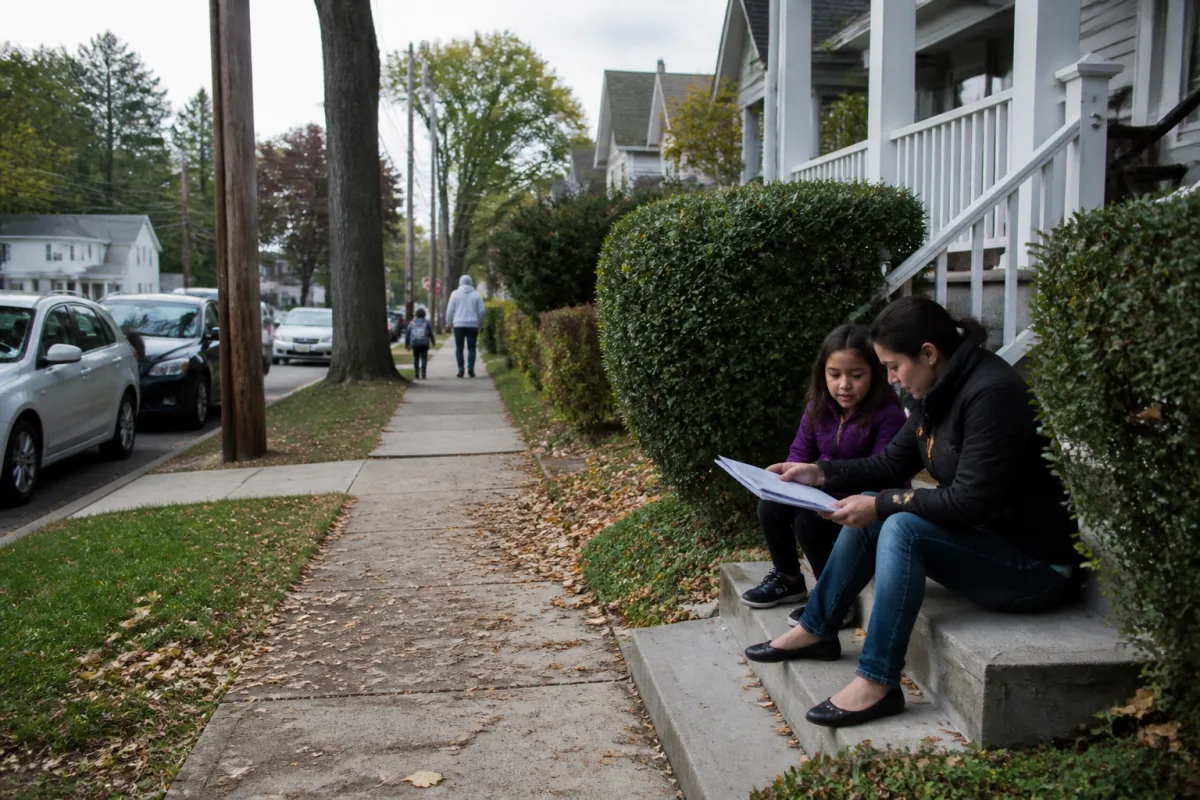
A good moral character denial doesn’t lead to deportation — you simply refile later. A denial alleging the green card was obtained unlawfully can end in a Notice to Appear in immigration court.
Two types of N-400 denial: different consequences
| Criterion | Good moral character denial | Denial over unlawful green card acquisition |
|---|---|---|
| Basis | Tax problems, minor offenses, and similar issues | USCIS questions whether the green card was ever lawfully obtained |
| Consequence | Application is denied | May result in a Notice to Appear in immigration court |
| Refiling | Possible once the required good moral character period has passed | Requires separate legal resolution; the process is more complex |
| Frequency | A common scenario | A rare but serious scenario |
What to do after a denial: appeal and refiling
An N-400 denial can be appealed by filing Form N-336 — a request for a hearing on the USCIS decision. The filing fee is higher than for the original N-400 application, and other case-related costs can add to the total.
A common fear among applicants is that a denial will trigger removal proceedings — in other words, deportation. That outcome is possible but unlikely. If the sole basis for the denial was failure to meet the good moral character requirement, the case does not move into immigration court: the applicant is simply denied naturalization.
After a denial on these grounds, a new N-400 can be filed as soon as the required good-character period has run its course. The law does not impose any waiting period after a denial — refiling is allowed immediately. In practice, this plays out exactly that way: if the required period (say, five years under the general rule) has already effectively been completed by the time the denial is issued, the applicant can refile the same day — provided USCIS doesn’t find a new reason to deny the case.
On a refiled application, the officer’s first move is to check why the previous application was denied and whether that issue has since been resolved. This means that when refiling, it matters to show clearly that whatever caused the first denial — a tax debt or any other issue — has already been closed out by the time of the new filing.

If the required good moral character period has already effectively passed by the time of the denial, a new N-400 can be filed right away — the law doesn’t require a separate waiting period.
Frequently asked questions
Can you file N-400 if a tax debt has already been fully paid off by the time of filing?
If the debt is cleared and there are no other tax problems within the review period, there’s no formal barrier to filing. A history of a late payment that has since been resolved is not the same as an open debt at the time of filing — the risk comes from obligations unmet as of the filing date, not from the mere fact that a problem existed in the past.
Should you cancel a tax payment plan before filing N-400?
If the balance is split into installments and not fully paid off as of the filing date, USCIS may treat that as an unmet tax obligation — even if the applicant is making every payment on schedule. A payment plan used not to stand in the way of naturalization as long as payments were made on time, but attorneys on closed forums note that simply having such a plan has started being used as grounds for denial.


Comments
Reader experience is useful, but it is not advice: check the rules on the official site.
No account needed: click Sign in, type any name, and you are done.