
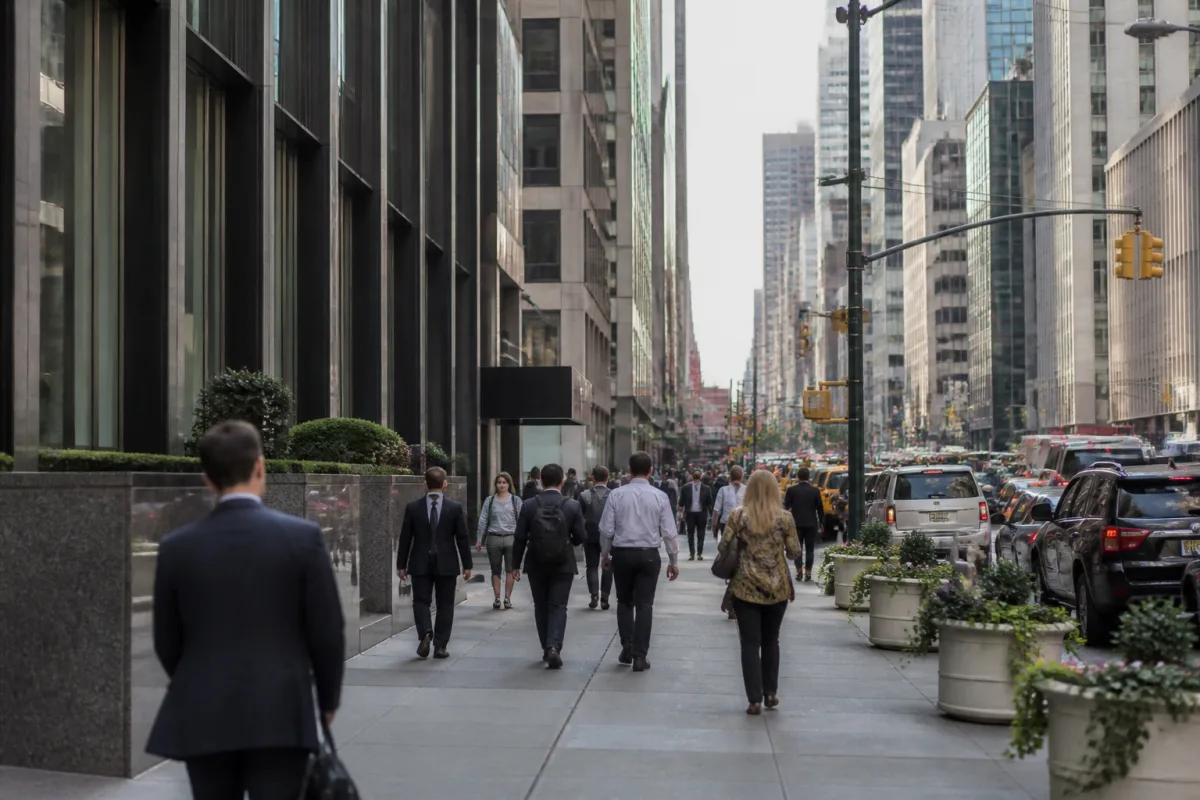

An appeals court has blocked the $100,000 H-1B fee rule over a procedural violation, and right now USCIS is not collecting the fee — though the agency says it’s ready to resume collection.
In short
- An appeals court blocked the $100,000 H-1B fee over a procedural violation — the agency didn’t collect public comments before adopting the rule
- The 20 states v. DHS lawsuit ended with the fee policy struck down, and USCIS currently isn’t collecting it in practice, though there’s no official guidance confirming it’s been dropped
- The administration is meanwhile preparing a separate new rule at $103,000 through the standard rulemaking process — it’s still in the public comment stage
- Starting November 30, 2026, EB-5 fees will more than double: the base I-526 fee rises from $3,675 to $7,615
- There’s still no mass release of H-1B and H-4 appointment slots, and a new court order could add document requests related to layoffs
What the court ruled on the $100,000 H-1B fee
The fee was blocked by a second-instance court — the appeals court hearing Global Nurse Force v. Trump. That lawsuit was filed on October 3, 2025, and was the first legal challenge to the proclamation imposing the $100,000 H-1B fee. The court issued a preliminary injunction, but granted the plaintiffs’ requests only in part: the judge found that the party challenging the rule was likely to succeed on the merits, and on that basis paused the fee — while denying the plaintiffs’ other requests, including dismissal of the case and class certification.
The basis for the injunction is a procedural failure in how the rule was adopted. The court found the rule arbitrary under the Administrative Procedure Act, which requires federal agencies to consider alternative approaches before imposing new requirements. According to the court’s findings, the agency failed to follow this procedure and did not collect public comments before introducing the fee — and that, rather than presidential authority itself, is what triggered the block.
that, rather than presidential authority itself, is what triggered the block
The plaintiffs included several affected parties: BA Industries, a company based in Michigan; a group of nephrology medical associations with a waiting list of roughly 100 patients; and an educational institution for which the fee came out to roughly double the normal cost.
This isn’t the only litigation surrounding the fee. In Chamber of Commerce v. DHS, a court at the appellate stage instead upheld the fee — a final ruling in that case has not yet been issued.
The court didn’t strike down the president’s authority to impose a fee — it found the agency rolled it out through a flawed process: no public comment period, no consideration of alternatives, as the law requires.
The fee’s backstory: Trump’s proclamation and the October 2025 lawsuit
The $100,000 fee was introduced by a proclamation President Trump signed in September 2025. The proclamation was later extended for another year by the same presidential order.
Global Nurse Force v. Trump was filed against it — the first lawsuit over this fee, filed on October 3, 2025. The dispute dragged on for nearly a year: only in early October 2026, roughly 12 months after the lawsuit was filed, did an update in the case emerge — the court issued a preliminary injunction, granting part of the plaintiffs’ requests.
The outcome of the 20 states v. DHS case: is USCIS collecting the fee now?
The lawsuit brought by 20 states against DHS ended in a win for the plaintiffs: the court struck down the fee policy and denied the government’s request to stay that ruling. The loss means the underlying basis for collecting the $100,000 fee has been removed, and DHS said it would comply with the ruling. In a third related case, the policy was also found invalid, with a hearing scheduled for the 27th of the month.
In practice, this means USCIS is currently not collecting the $100,000 fee — under either of the two cases that blocked it. At the same time, USCIS has not issued new official guidance: the agency has said it intends to keep collecting the fee, but in practice it is not doing so.
USCIS has not issued new official guidance: the agency has said it intends to keep collecting the fee, but in practice it is not doing so
Approvals without the fee are still few and far between. Based on feedback from immigration attorneys and applicant communities, there are known cases of approvals without the $100,000 fee being paid, but there’s no systematic data on how many. Many applicants, including those who filed with premium processing, are still waiting on decisions — it’s too early to treat the current situation as a stable practice.
USCIS currently isn’t collecting the $100,000 fee in practice, but there’s no official guidance confirming it’s gone for good. Approvals without the fee are still rare, and it’s too early to treat this as a stable practice.
A new $103,000 rule: what the Trump administration is proposing
Alongside the litigation over the $100,000 fee, the Trump administration is proposing new regulation — this time at $103,000. This isn’t a replacement for the struck-down proclamation; it’s a separate initiative moving through the standard rulemaking process.
The rule is currently at the public comment stage: interested parties are submitting feedback, and it has not taken effect. There’s no final publication date yet, nor confirmation that the $103,000 figure will survive the comment period unchanged.
For applicants, this means the court’s rollback of the old fee doesn’t close the book on elevated H-1B charges — a new requirement with similar logic but a different price tag could be on the way.
the court’s rollback of the old fee doesn’t close the book on elevated H-1B charges — a new requirement with similar logic but a different price tag could be on the way
EB-5 fees to more than double starting November 30, 2026
Starting November 30, 2026, EB-5 program fees will more than double across several forms at once.
| Form / fee item | Current | From November 30, 2026 | Change |
|---|---|---|---|
| I-526 (direct investor) | $3,675 | $7,615 | +107% |
| Regional center filing | — | — | +114% |
| Project approval form | $17,000 | $42,000 | — |
| New standalone fee | — | $10,000 (added) | — |
For an investor filing directly, the base fee for Form I-526 rises from $3,675 to $7,615 — a 107% increase. For those filing through a regional center, the fee rises by 114%. Separately, the fee for the project approval form climbs from $17,000 to $42,000, and a new standalone fee of $10,000 is added that didn’t exist before.
These amounts look steep on their own, but against the program as a whole they remain a relatively small line item: EB-5 still requires roughly $1 million in investment. The fee increase doesn’t replace that base amount — it’s added on top of it. EB-5 remains one of the paths applicants keep choosing despite the backlogs and long wait times in this category.
The EB-5 fee increase looks steep in percentage terms, but in absolute dollars it’s still a modest add-on to the roughly $1 million base investment.
EB-5 fee increases starting November 30, 2026
Table scrolls sideways
| Form / fee item | Current | From November 30, 2026 | Change |
|---|---|---|---|
| I-526 (direct investor) | $3,675 | $7,615 | +107% |
| Regional center filing | — | — | +114% |
| Project approval form | $17,000 | $42,000 | — |
| New standalone fee | — | $10,000 (added) | — |
EB-5 fee figures as of publication date
The October visa bulletin: what changed across EB categories
The October visa bulletin was released on September 29, 2026. For the first month of the new fiscal year, the Dates of Filing chart is traditionally used — this is how the agency gauges demand and sets quotas for the year ahead. The data behind the bulletin was collected only through September 4, without accounting for more recent numbers or spillover of unused visa numbers.
| Category | India | Rest of the world |
|---|---|---|
| EB-1 | advanced by roughly 3.5 months | unchanged |
| EB-2 | was unavailable, returned and advanced by 2 months | retrogressed by roughly 1 year 9 months |
| EB-3 | unchanged | retrogressed by roughly 3.5 months, date now May 15 |
| EB-5 (set-aside) | was unavailable, advanced by roughly 1 year 7 months | — |
For India, the bulletin brought improvement overall: EB-1 and EB-2 both moved forward, and EB-5 jumped from “unavailable” to advancing by almost two years at once. For applicants from the rest of the world, the picture is the opposite — EB-1 held in place, while EB-2 retrogressed by almost two years, which for applicants who already filed means a longer wait.
USCIS fee increases tied to inflation: who this affects
Starting with the new 2027 fiscal year, USCIS is raising a number of fees due to inflation indexing, and this is a separate change unrelated to the saga around the $100,000 H-1B fee. Form I-131 for a reentry/advance parole document used in immigration parole will rise to $1,020 — this form is used mainly by applicants in asylum programs, Humanitarian Parole, and TPS. Other forms in the ED category will see modest increases of roughly $30, $10, and $20 for annual renewals.
This increase does not apply to the typical employment-based immigration categories. Advance Parole and Form I-765 use similarly named applications, but their fees are not affected by the indexing and remain unchanged. In other words, the inflation-driven fee increase affects asylum applicants, parole-based immigration, and TPS holders — not H-1B holders, OPT participants, or other employment-based applicants.
H-1B and H-4 visa slots: why there’s still no mass release
There is still no mass release of appointment slots for H-1B and H-4 visas. The situation hasn’t changed in months: applicants remain stuck waiting. Anyone without an urgent family need should weigh the risks of traveling even with an appointment already scheduled — under the current slot freeze, there’s a real chance of a delayed return.
A new court order adds further uncertainty: it could lead to additional document requests on the subject of layoffs. How this will actually play out at consulates is still unknown — no field reports on this have come in yet. For now, anyone who falls into this category should keep a complete set of supporting documents on hand in case of additional requests.
There’s still no mass release of H-1B and H-4 appointment slots. Without an urgent family need, it’s worth weighing the risk of a delayed return even with an appointment already scheduled.
Key dates in October and November 2026 for these changes
Pulling together these scattered updates gives a short calendar for the coming weeks:
- October 16 — increased USCIS fees tied to inflation indexing take effect.
- October 18 — the agency must review previously filed LCAs (Labor Condition Applications) in light of the president’s executive order.
- November 30 — the increased EB-5 fee takes effect.
Calendar of changes for October–November 2026
Three key dates applicants should keep in mind
- Increased USCIS fees from inflation indexingOctober 16
- Review of previously filed LCAsOctober 18under the president’s executive order
- Increased EB-5 feeNovember 30
Frequently asked questions
Can I file an H-1B petition right now without paying the $100,000 fee, if I haven’t filed yet?
Yes, in practice USCIS is currently not collecting the $100,000 fee under either of the cases where the policy was blocked or struck down by courts. That said, the agency hasn’t issued new official guidance and has said it intends to collect the fee going forward, so it’s premature to treat the current situation as permanent.
Could the new $103,000 rule take effect before the litigation over the old fee wraps up?
Yes, it’s a separate initiative moving through the standard rulemaking process and isn’t tied to the timeline of the litigation over the $100,000 proclamation. The rule is currently at the public comment stage, and there’s no final effective date yet.
Will the inflation-related fee increases affect OPT holders?
No, the fee increases taking effect with the new 2027 fiscal year due to inflation indexing apply only to asylum applicants, Humanitarian Parole, and TPS. Forms used by OPT and H-1B holders, including Advance Parole and Form I-765, are not affected by the indexing and remain at their current price.
Why did the court only pause the fee instead of striking it down entirely?
The court granted the plaintiffs’ requests only in part: it found that the party challenging the rule was likely to succeed on the merits, and issued a preliminary injunction on that basis. But it denied other requests — dismissing the case entirely and certifying it as a class action — meaning a final ruling on the merits is still to come.
Does the EB-5 fee increase affect the $1 million minimum investment amount too?
No, the increase in EB-5 form fees doesn’t touch the investment amount itself — it stays at roughly $1 million. The higher fees for I-526, the regional center filing, and the project approval form are added on top of that base amount, not a replacement for or increase to it.
Is it worth traveling abroad right now on an H-1B or H-4 visa if there’s no urgent need?
Since there’s still been no mass release of H-1B and H-4 appointment slots for several months now, anyone without an urgent family need should weigh the risks of traveling even with an appointment already scheduled — under the current slot freeze, there’s a real chance of a delayed return.

Comments
Reader experience is useful, but it is not advice: check the rules on the official site.
No account needed: click Sign in, type any name, and you are done.