
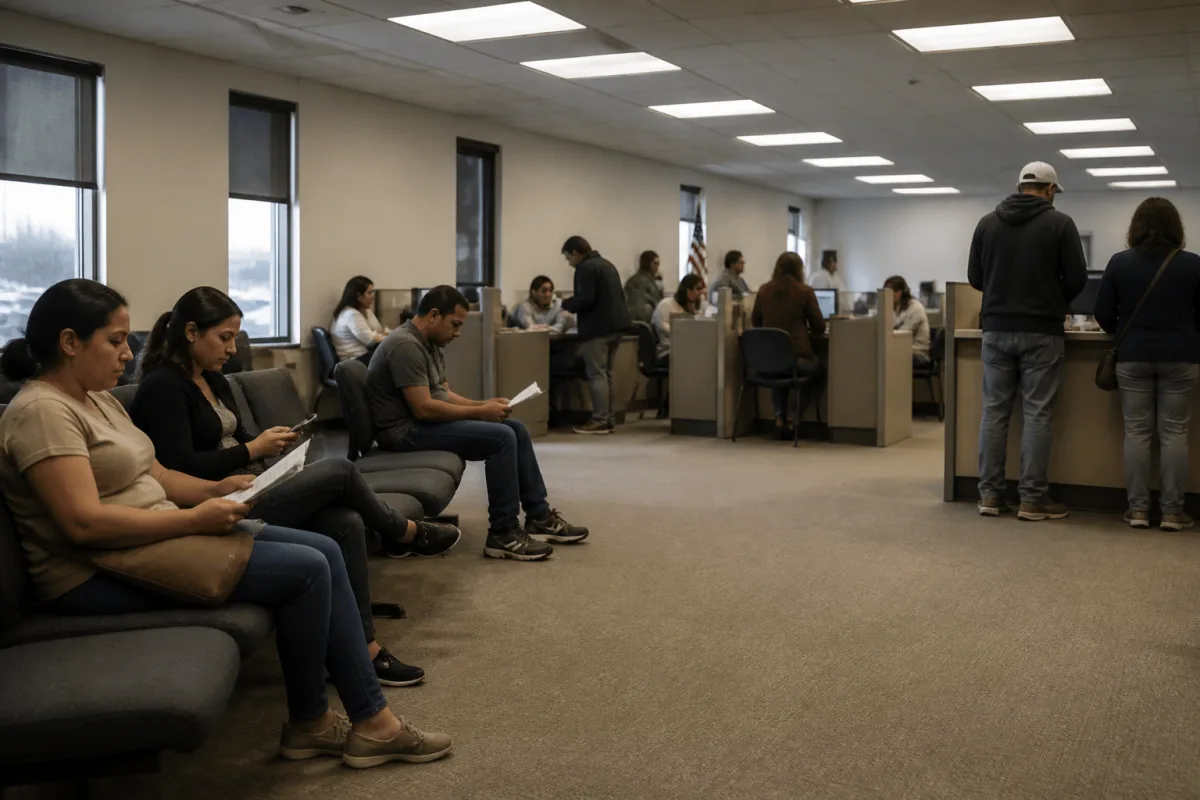

The State Department has given no official explanation for the delay of the October 2026 Visa Bulletin — as of September 27, 2026, the website still shows a “coming soon” status, and the delay coincides with a worldwide pause on immigrant visa interviews, litigation over visa fees, and new filing-deadline rules.
In short
- The October 2026 Visa Bulletin is delayed longer than it was in 2020, and the State Department hasn’t given an official reason
- Immigrant visa interviews have been suspended worldwide since August 25 with no resumption date
- Starting October 1, TN, TD applicants and media representatives must make their social media profiles public
- Starting October 23, age-dependent deadlines (aging out) no longer shift to Monday if they fall on a weekend
- A court struck down the $100,000 H1B fee, but there are no confirmed approvals yet without payment
Why the October 2026 Visa Bulletin Is Delayed
As of late September, the State Department’s website still lists the October bulletin as “coming soon” — no release date, no explanation. This is unusual: the October bulletin opens a new fiscal year (October 1) and determines how many applicants can file for adjustment of status in the coming months, so it’s normally expected well in advance.
By timing alone, this already lags behind previous years. The worst prior delay was in 2020 — at the height of COVID, the October bulletin didn’t come out until September 24. The current delay has already passed that date. The September 2026 bulletin was also late, released August 24 instead of the usual timing, so the pattern of delays was already visible beforehand.
There’s no official explanation from the State Department, so only theories exist. One is the suspension of immigrant visa interviews at consulates, which may have kept the department from collecting processed-case data from posts worldwide. A second theory involves litigation over a pause affecting more than 74,000 denied cases that could re-enter the queue — while the government appeals that ruling, those cases are hard to factor into bulletin calculations. A third, simpler theory: some categories have already hit their caps and become unavailable, and the department may be waiting before publishing numbers.
A telling detail: October dates are typically just a fresh allocation of numbers for the new year, and technically the bulletin could have been released without waiting for additional data. That’s exactly why this delay looks unusual even to people who track the bulletin every year.
A telling detail: October dates are typically just a fresh allocation of numbers for the new year, and technically the bulletin could have been released without waiting for additional data.
The October Visa Bulletin still hasn’t been released, even though it normally sets quotas for the new fiscal year well in advance. The delay has already surpassed the 2020 record, and the State Department has offered no official reasons — only theories.
When Will Immigrant Visa Interviews Resume
Immigrant visa interviews have been suspended worldwide since August 25 — consulates shifted staff to public charge assessment training, and no resumption date has been set.
At the same time, a court case is complicating matters further: a court struck down the pause on the so-called 74,000-case certification for certain countries, meaning tens of thousands of previously denied cases could return to the queue — the exact number varies by source, so it’s worth confirming as official data becomes available. The government is appealing that ruling, so these cases are currently considered stalled rather than resolved — they aren’t factored into current calculations.
A notice about the interview suspension was published about a month ago, but no further official clarification has followed since. It remains unclear whether the State Department is waiting for a separate decision on handling public charge at the consular level before folding it into the next Visa Bulletin, or whether interviews will resume independently of the bulletin.
Immigrant visa interviews have been paused worldwide since August 25, with no resumption date announced. At the same time, a court could send more than 74,000 previously denied cases back into the queue.
What Could Happen to EB2 and EB5 in the Next Bulletin
The EB2 category may return to a July 15, 2014 priority date — a mark that has appeared in previous bulletins, making its return likely, though not guaranteed. EB5 is expected to see similar movement, possibly retreating to dates seen before.
Because of accumulated caps (“bands”), spillover is likely — unused numbers flowing into other categories and regions — though the exact amount hasn’t been specified. Overall movement in the October bulletin is expected to be smaller than it was in October of last year.
A separate open question is which chart will be used: Dates of Filing, as in October of last year, or Final Action Dates, which have applied since May. Dates of Filing is typically used at the start of the season, but there’s no confirmation yet. The EB1 and EB2 retrogression recorded back in September is directly tied to this uncertainty — it’s unclear whether both categories will return to normal at the same time as a possible EB2 date rollback.
It’s also worth noting that the EB2 category for India, along with related positions, has been unavailable — this may be one of the reasons for the bulletin delay itself. Precise numerical predictions for dates are deliberately withheld here: published data is insufficient, and independent analysis isn’t finished, so throwing out numbers “just because everyone else does” isn’t the right approach.

New Public Social Media Rule for TN, TD, and Other Visa Categories
The State Department issued a press release on September 18: starting October 1, applicants must make all their social media profiles public. The news itself came late — the wording was released late, and the previous roundup didn’t cover it.
The requirement applies to:
- TN and TD visa applicants — categories tied to the professional-worker agreement between the U.S., Mexico, and Canada (USMCA);
- dependents of TN visa holders;
- foreign media representatives, for whom public profiles also become mandatory starting October 1.
For several categories, this rule isn’t new. F1, M1, J1, H1B, H3, K1, K2, R1, and R2 applicants are already subject to it. Timeline: F1 was added first, followed by H1B in December of last year.
Expanding the rule to TN and TD matters because of the sheer size of that group: TN applicants and their dependents make up one of the largest categories of applicants filing from outside the U.S., including Mexican nationals. Earlier rollouts of this same requirement have already led to canceled and rescheduled appointments and created backlogs for applicants located outside the country. TN applicants from Mexico should factor this into their filing timeline in advance.
The Public Social Media Requirement Expands
Who was already covered, and who was added starting October 1
- Visa categories under the requirement
Starting October 1, TN, TD, and several other visa applicants must make their social media profiles public. Earlier rollouts of this requirement have already led to canceled and rescheduled interviews.
New State Department Rules for Visa Record Requests
Starting October 21, the State Department is changing how requests for visa records under the Freedom of Information Act must be filed. The rule doesn’t change what can be requested — only how the request itself must be submitted.
- Online only. Requests must be filed exclusively online, and before filing, applicants should first check the online reading room — the answer may already be published.
- Mandatory link to a specific applicant. Previously, requests could target a broad case category; now, any visa-related request must include a specific applicant’s information.
- Expanded data requirements. The request must include the person’s name, all known name variants (aliases), email address, and location — detailed identification rather than a general description of the situation.
- Attorney consent requirement. If an attorney is filing the request, they now need signed consent from both the applicant and the petitioner.
This type of request is typically needed when a case is already in litigation with the State Department — for example, a mandamus lawsuit over visa delays — or when an applicant is independently trying to find out their case status.
Nothing changes for I-140-related requests: those go through USCIS, not the State Department, and USCIS retains its own separate inquiry portal.
New requirements for FOIA visa record requests starting October 21
How USCIS Now Counts Deadlines That Fall on a Weekend
USCIS has changed how it treats deadlines that fall on a Saturday or Sunday. This matters most for H4 visa holders and for anyone whose status is tied to their age — so-called “aging out” cases.
For responses to USCIS notices, the logic stays the same. If USCIS issues a request with a 30-day response window and the 30th day falls on a Saturday — say, November 21 — and mail isn’t accepted on weekends, the response still counts as timely if USCIS receives it the following Monday, the first business day after the weekend.
But for deadlines tied to an applicant’s age, the rule has changed. Previously, if a child turned 21 on Saturday, December 5, the document could still be filed with USCIS on Monday, December 7, and it would count. Starting October 23, a different rule applies: USCIS must receive the document by December 4, with no extension to the next business day.
The difference also depends on the filing method. For online applications, weekend extensions never applied in the first place: if a 60-day window for filing an OPT application ends on a Sunday, it must be filed that Sunday — there’s no extra day.
Bottom line: applicants can no longer count on an “extra” business day after a weekend. Exceptions are possible, but specifically for age-dependent deadlines, no additional time is built in.
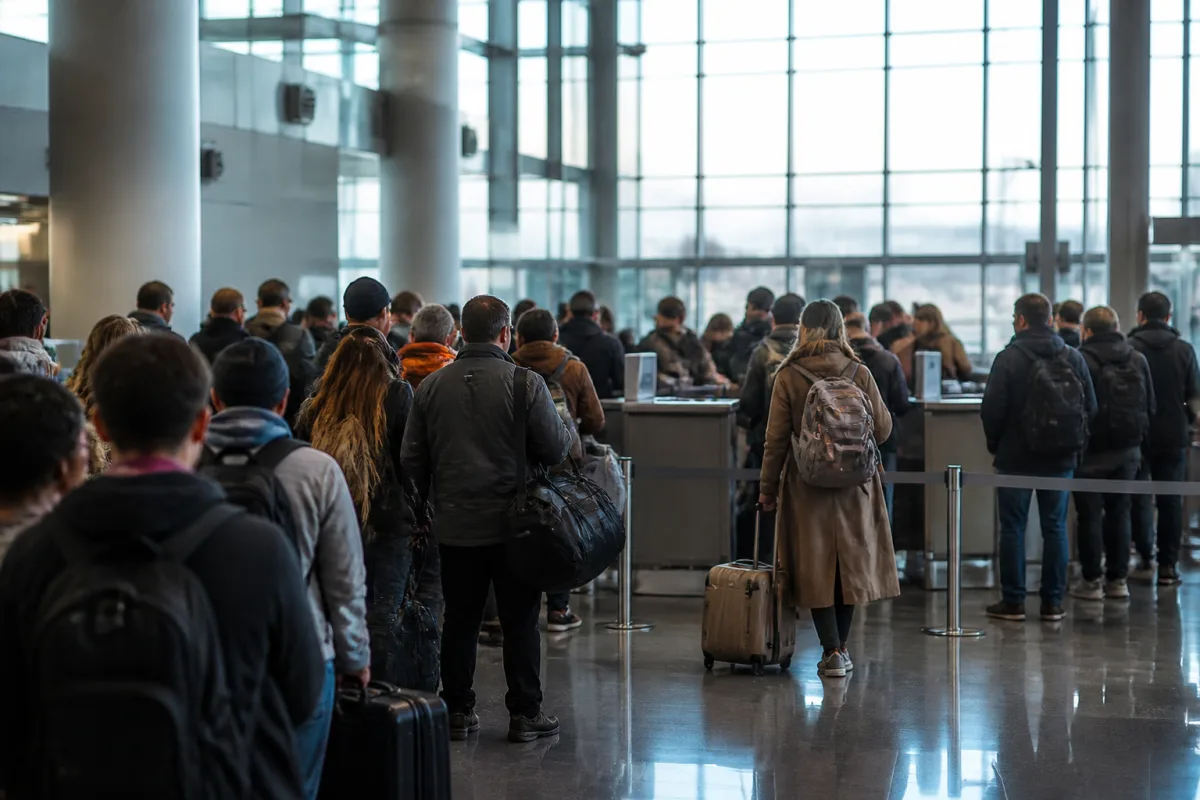
Starting October 23, age-dependent deadlines no longer shift to Monday if they fall on a weekend — USCIS must receive the document strictly by the original date.
Should You Travel Abroad Right Now on a U.S. Work Visa
There won’t be a mass release of new visa interview slots — this is being read as a deliberate policy shift, not a temporary glitch. The slot shortage has dragged on for months already: applicants are stuck in the waiting system, and some have already lost their jobs during that time.
There won’t be a mass release of new visa interview slots — this is being read as a deliberate policy shift, not a temporary glitch.
An additional risk comes from a new layoff-related executive order: a consular officer at an interview may ask about staff reductions at the applicant’s employer. There’s no official guidance on this point yet, and it’s unknown exactly how officers will apply this in practice.
Given both problems, it’s worth weighing the risk carefully: with interview slots scarce, traveling abroad could mean a long wait to get back into status. Many immigration attorneys are advising clients to postpone non-urgent trips for now, given the current state of visa interview scheduling.
Given the shortage of interview slots and the risk of questions about employer layoffs, many attorneys recommend postponing non-urgent international travel while on a work visa.
What’s Happening With the $100,000 H1B Fee, and Other Weekly Updates
A court struck down the $100,000 H1B fee, and an appeal of that ruling is still pending. Formally, the fee shouldn’t be charged, but there are no confirmed cases yet of approvals granted without payment — many applicants are still waiting, and premium processing on these cases has effectively stalled. According to the H&MP visa community, which brings together more than 190,000 users, quite a few people are stuck in this situation.
Formally, the fee shouldn’t be charged, but there are no confirmed cases yet of approvals granted without payment.
Meanwhile, a new fee is being prepared — $103,000 for cases subject to the H1B cap fee. The comment period on it closed September 24, and the Department of State is now reviewing submissions. This involves a large reserve of roughly $8–8.8 billion, and litigation is likely, though it’s not yet clear who has standing to file such a suit.
There are no new updates on the OPT fee rule. The old public charge rules also remain unchanged — no updates have come through. Immigrant visa fees remain frozen.
Key October dates to track:
- October 1 — the public social media rule takes effect;
- October 2 — a court hearing on the duration-of-status case, after which DHS may file an appeal;
- September 14 — PERM reform has been under review since this date;
- October 18 — the Department of Labor will conduct a review of previously filed labor condition applications (LCAs);
- October 21 — the State Department’s new visa records request rules take effect;
- October 23 — the new policy on weekend deadlines takes effect.
Key Dates in October 2026
What takes effect, and when, over the coming month
- PERM reform under reviewsince September 14
- Public social media ruleOctober 1
- Duration-of-status hearingOctober 2
- New State Department request rulesOctober 21
- New weekend-deadline policyOctober 23
- Review of filed LCAsOctober 18
Comments
Reader experience is useful, but it is not advice: check the rules on the official site.
No account needed: click Sign in, type any name, and you are done.