
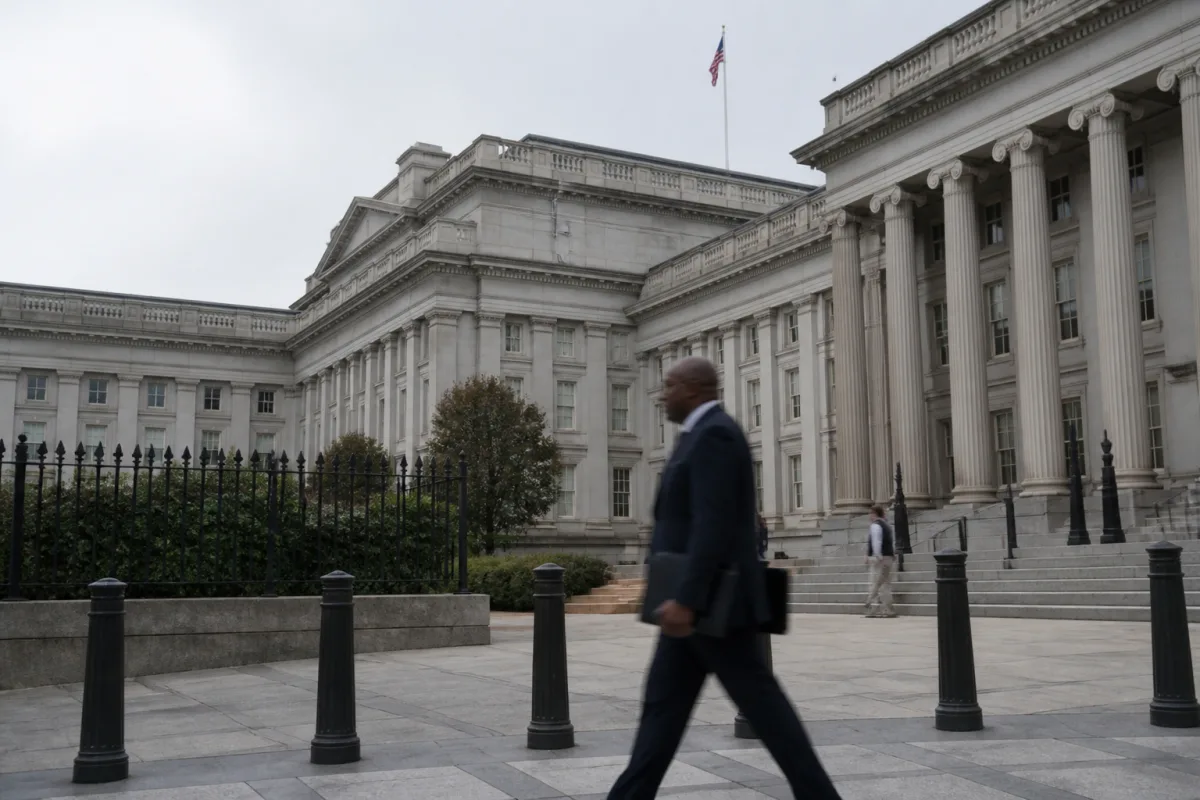

On September 18, 2026, a presidential proclamation extended the $100,000 H-1B filing fee requirement for another 12 months — through September 20, 2027 — but actual collection of that fee remains blocked by a court injunction while the government’s appeal is pending.
In short
- On September 18, 2026, two separate H-1B documents were signed: a proclamation on the $100,000 fee and an order on interagency employer reviews.
- The $100,000 fee is extended for 12 months (Sept. 21, 2026 – Sept. 20, 2027), but collection remains blocked by the ruling in State of California v. Mullen.
- The order requires six federal agencies to review layoffs by H-1B sponsoring employers — affecting LCAs, petitions, and visa applications.
- The Department of Labor must begin reviewing already-filed LCA data within 30 days of the order’s signing, including previously submitted filings.
- El Salvador’s TPS formally expired on September 9, but by law it is automatically extended 6 months absent a direct DHS decision — the benchmark is March 9, 2027.
What happened on September 18: two H-1B documents
On September 18, 2026, two separate presidential documents concerning the H-1B program were reportedly signed, and they should not be confused with one another. The first is a proclamation titled “Restriction on Entry of Certain Foreign Workers.” The second is an executive order, “Enhancing Program Integrity and Interagency Coordination in the Administration of the H-1B Nonimmigrant Visa Program” — this order was officially published in the Federal Register on September 23, 2026.
The proclamation extends the entry restrictions already in place along with the $100,000 payment requirement for H-1B petitions — that extension is covered separately below. The executive order addresses something different: it puts layoffs, wage levels, and the substance of H-1B petitions themselves at the center of attention, directing several federal agencies to coordinate program reviews. Both documents were signed the same day but govern different aspects of how this visa is administered.
Entry restrictions and the $100,000 fee extended for 12 months
The proclamation extends both the H-1B entry restrictions and the mandatory $100,000 payment for another 12 months — reportedly from September 21, 2026 through September 20, 2027 (the exact period should be verified against the official publication) (c6, c7). The administration justifies the extension by claiming the original restrictions and weighted selection process reduced registrations from large IT staffing and outsourcing firms and shifted selection toward higher-paid workers — this is the administration’s stated position, not a verified metric.
The $100,000 payment requirement remains in place for H-1B cases involving workers outside the United States (c8). The employer must obtain and retain proof of payment before filing the petition (c9). The payment also applies to those already in the United States who must obtain entry authorization to activate an approved petition — through consular notification, a port of entry, pre-flight inspection, or preclearance (c10, c11).
Separately, the proclamation addresses cases where a petition is filed as a change of status or extension of status request: formally, the fee could apply here too, but in practice USCIS rejects such requests and approves only the underlying petition itself (c12, c13).
National-interest exceptions remain available — granted at the discretion of the Secretary of the Department of Homeland Security (c14). Reportedly, the proclamation allows an exception for an individual, for workers at a specific company, or for an entire industry, but each such decision requires an affirmative DHS determination (c15, c16).
This extension may not be the last one: the proclamation requires relevant agencies to issue a recommendation, within 30 days after the next H-1B lottery concludes in March 2027, on whether the restrictions should be extended again (c17).
This extension may not be the last one: the proclamation requires relevant agencies to issue a recommendation, within 30 days after the next H-1B lottery concludes in March 2027, on whether the restrictions should be extended again.
H-1B entry restrictions and the $100,000 fee are extended another 12 months — from September 21, 2026 through September 20, 2027. Exceptions are possible at DHS’s discretion.
Why the $100,000 fee isn’t being collected right now: the court injunction
A federal district court in Massachusetts struck down the entire fee policy on June 8 in State of California v. Mullen, ruling that the charge operated as an unauthorized tax and violated the Administrative Procedure Act (c18, c19). This was not a temporary restraining order but a ruling on the merits after the court considered the legal questions.
The district court itself then stayed its own ruling, briefly allowing fee collection to resume. But in July, the First Circuit Court of Appeals declined to keep that stay in place (c20). As a result, collection of the $100,000 fee remains blocked while the government appeals the merits ruling (c21, c22). Filing an appeal by itself does not reinstate the fee — the rule continues to not apply until the appellate court says otherwise (c23).
Filing an appeal by itself does not reinstate the fee — the rule continues to not apply until the appellate court says otherwise.
The September 18 proclamation formally extends the payment requirement but is not a separate court ruling that has specifically reviewed it (c25). The legal takeaway is that extending the proclamation does not, by itself, grant authority to start collecting a fee that a court has blocked. It’s not out of the question that the administration will try to present the extended requirement as a new and independently operating action — in which case courts may need to quickly clarify whether the existing ruling covers this new action as well (c26).
A Massachusetts court ruled the $100,000 fee an unauthorized tax, and the appeal has not reversed that. Collection remains blocked despite the proclamation’s extension.
The H-1B employer-review order: what six agencies will be checking
The second document from September 18 is the executive order “Enhancing Program Integrity and Interagency Coordination in the Administration of the H-1B Nonimmigrant Visa Program” (c32). The administration justifies it by citing widespread abuse of the H-1B program, primarily through outsourcing and third-party contracting arrangements (c34): according to the order’s language, some employers used the visa to replace American workers, cut labor costs, and ultimately move jobs overseas (c35).
The order requires closer coordination among six federal agencies when processing H-1B petitions (c36). The State Department, the Department of Labor, and the Department of Homeland Security must consult with the Department of Commerce, the Department of Education, and the Small Business Administration (c37) — these agencies supply data on wages, employment, academia, industry, and other economic information (c38).
A separate requirement in the order is that layoffs be taken into account. Agencies are directed to review whether a sponsoring employer conducted layoffs in the prior year or plans to do so going forward (c39); this review extends to Labor Condition Applications (LCAs), petitions, visa applications, and admission to the country (c40). The order does not explicitly state that any layoff automatically leads to an H-1B denial (c41) — but an employer’s staffing decisions officially become part of the government review (c42).
an employer’s staffing decisions officially become part of the government review
A specific deadline is also set: within 30 days of the order being signed, the Department of Labor’s Wage and Hour Division must begin reviewing already-filed LCA data (c43) to determine whether further action against sponsoring employers is warranted (c44). The review covers not only new filings but previously submitted ones as well (c45). The order also authorizes relevant agencies to issue their own rules, policies, and operational guidance to carry out these directives (c46).
The review focuses on job duties, whether the position meets the “specialty occupation” requirements, wage levels, and workers’ academic qualifications (c47).
H-1B petition review: what happens and when
The September 18 order sets specific deadlines and areas of agency responsibility.
- H-1B review order signedSeptember 18, 2026
- Labor Department begins reviewing filed LCA datawithin 30 days of signing
- Order published in the Federal RegisterSeptember 23, 2026
- Recommendation on extending restrictions after the lottery30 days after the March 2027 lottery
Six federal agencies now review whether an employer has conducted layoffs — this affects LCAs, petitions, and visa applications.
What H-1B employers and applicants should do now
- Continue preparing for the March 2027 lottery season as usual. Even if the $100,000 fee ultimately survives in court, registering for the lottery does not itself trigger payment — the decision whether to file the actual H-1B petition can be made later, once the outcome of the litigation is known (c29, c30).
- The extension announcement by itself does not put prevailing-wage changes into effect. The Department of Labor’s proposed minimum wage changes have not been finalized yet, and that is a separate process not directly tied to the proclamation (c31).
- International hiring plans, petition-processing options, and potential costs should be reviewed with an immigration counsel now — the details of each specific filing matter, especially if a company’s budget is sensitive to a possible fee (c28).
- Given the employer-review order, there’s a separate checklist worth going through in advance:
- whether job duties and specialty-occupation requirements match the actual work performed, including the employee’s real qualifications;
- recent or planned layoffs, and how they align with petition sponsorship and workforce planning — these questions are worth discussing with counsel in advance, including restructuring decisions, rather than after the fact;
- accuracy of filed documents: they must reflect the actual position and the work actually performed (c53);
- an audit of public access files — worth doing now, rather than waiting for specific agency action (c54).
Audit public access files and check that job duties match the actual work performed before filing a petition — don’t wait for agency review.
What H-1B employers and applicants should check now
El Salvador’s TPS status: what’s known as of late September 2026
Temporary Protected Status (TPS) for El Salvador was set to expire on September 9, but it remains in effect in practice (c55). The reason is that the government did not issue the legally required clarification, leaving the situation unresolved (c56). Work authorization for Salvadoran TPS holders has already been extended, but whether that extension is 60 days or 6 months depends on how the statute is interpreted (c56).
Late in the evening of September 9, the government updated the TPS website with a notice that a decision on El Salvador will be announced “in due course” (c57). No official Federal Register notice from the Department of Homeland Security (DHS) has been issued as of now — there is only this website notice. Until such an announcement is made, individuals in the United States under TPS retain their protection, including work authorization (c58).
The statute provides that if DHS does not make an affirmative determination that a country no longer meets TPS conditions, the status is automatically extended for 6 months by operation of the statute itself (c59). Based on the current USCIS notice, a reasonable benchmark for the end of work authorization is March 9, 2027 (c60).
Employers are advised to work through Form I-9 compliance questions together with immigration counsel rather than on their own (c61). Any decision made should be documented, and copies of all USCIS publications on this topic should be retained (c62).
The formal deadline passed on September 9, but without an official DHS decision, the status is automatically extended 6 months by law — a reasonable benchmark is March 9, 2027.
Frequently asked questions
Does the $100,000 fee requirement apply to an H-1B extension or change of status filed within the United States
Formally, the proclamation allows the fee to apply to change-of-status or extension-of-status requests as well, but in practice USCIS rejects such requests and approves only the underlying petition itself. So when filing for an extension or change of status, actual collection of the $100,000 does not occur, even though the document’s wording doesn’t rule it out.
What happens if an employer already conducted layoffs before filing an H-1B petition
Layoffs conducted in the prior year, or plans for future layoffs, do not automatically lead to an H-1B denial — the order doesn’t establish that directly. But such staffing decisions officially become part of the government review and will be analyzed by agencies alongside Labor Condition Applications, petitions, and visa applications.
Does the new LCA review affect previously filed applications or only new ones
The Department of Labor’s Wage and Hour Division review covers not only new filings — it also extends to previously submitted LCA data. The agency must begin this review within 30 days of the order’s signing to determine whether further action against sponsoring employers is warranted.
Can a specific company or industry get an exemption from the $100,000 fee
Yes, the proclamation allows for national-interest exceptions — for an individual, for workers at a specific company, or for an entire industry. But this doesn’t happen automatically: each case requires an affirmative determination by the Secretary of the Department of Homeland Security.
What happens to El Salvador’s TPS holders if DHS never issues an official decision
The statute provides that if DHS does not make an affirmative determination that the country no longer meets TPS conditions, the status is automatically extended for 6 months by operation of the statute itself. Until such a decision is made, individuals with TPS status retain their protection, including work authorization, with March 9, 2027 serving as a reasonable benchmark for when work authorization would end.
Could the government start collecting the $100,000 fee if the appellate court sides with it
Until the appellate court reverses the district court’s ruling on the merits, the fee remains blocked regardless of what happens with the appeal. The proclamation’s extension by itself does not grant authority to start collecting the fee — that’s a separate legal question, and only the appellate court can lift the block.

Comments
Reader experience is useful, but it is not advice: check the rules on the official site.
No account needed: click Sign in, type any name, and you are done.